
March offers an improved chance to see the northern lights as a coronal hole high-speed stream boosts solar wind and the spring equinox (March 20) raises the odds of geomagnetic activity. NOAA briefly forecast a G1 geomagnetic storm but later cancelled that alert. The Russell–McPherron Effect explains why geomagnetic storms are more likely near equinoxes. Visibility still depends on the stream's magnetic orientation, storm strength, and local cloud cover; U.S. viewing is best between 10 p.m. and 4 a.m.
When To See The Northern Lights In March: Increased Chances Around The Spring Equinox
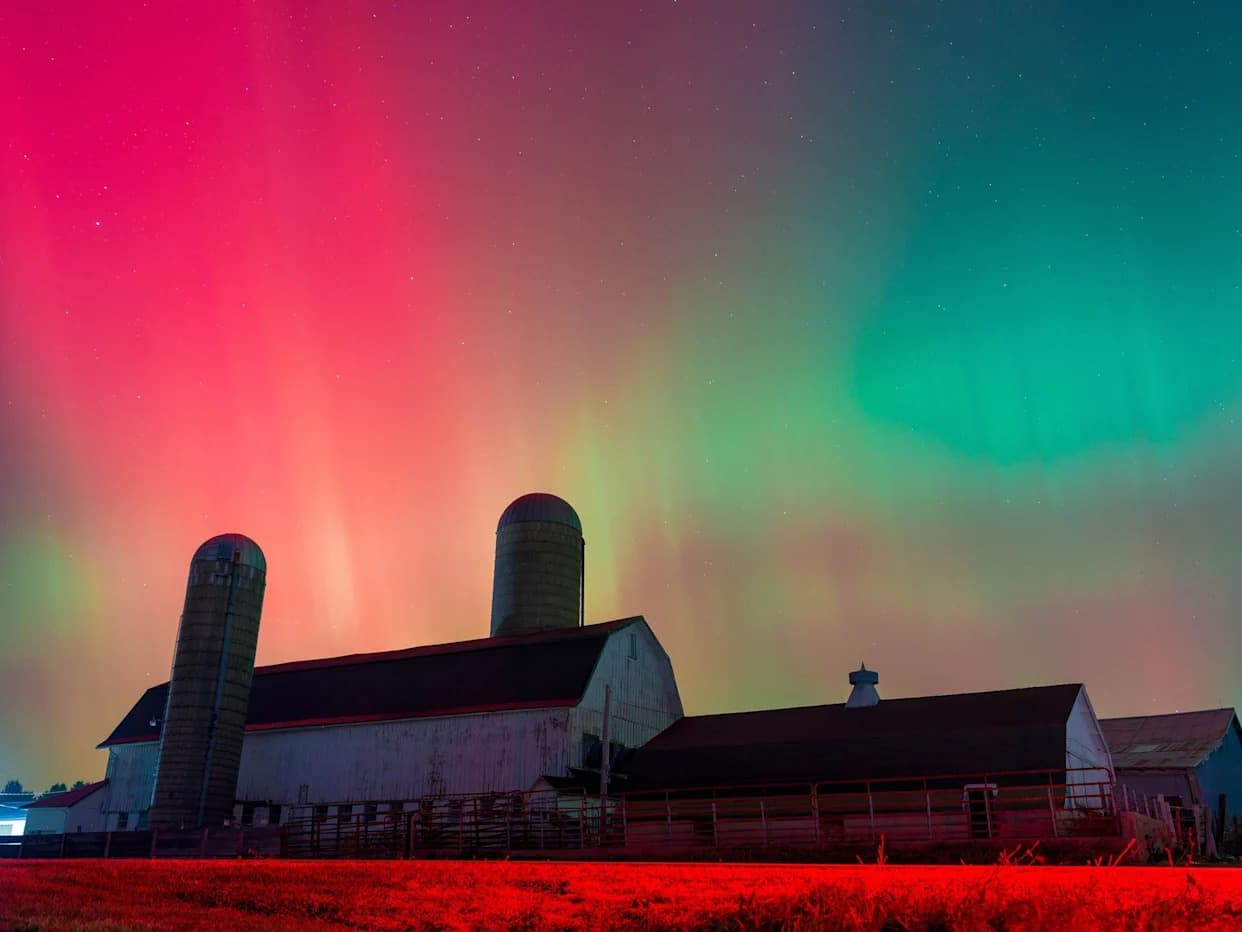
When to see the northern lights in the month of March
March can be one of the better months to see the northern lights, thanks to increased solar wind activity and the arrival of the spring equinox. In recent days, forecasters briefly issued a G1-class geomagnetic storm warning for Friday but later withdrew that alert after updated data, the National Oceanic and Atmospheric Administration’s Space Weather Prediction Center (SWPC) said.
NOAA says the current uptick in solar wind is driven by a negative-polarity coronal hole high-speed stream — a fast flow of charged particles that has opened from the sun’s atmosphere and is streaming outward. When those charged particles reach Earth they interact with atoms and molecules in the upper atmosphere, exciting them so they emit light and produce the colorful auroral curtains often called the northern lights.
Why March — and the Equinox — Matter
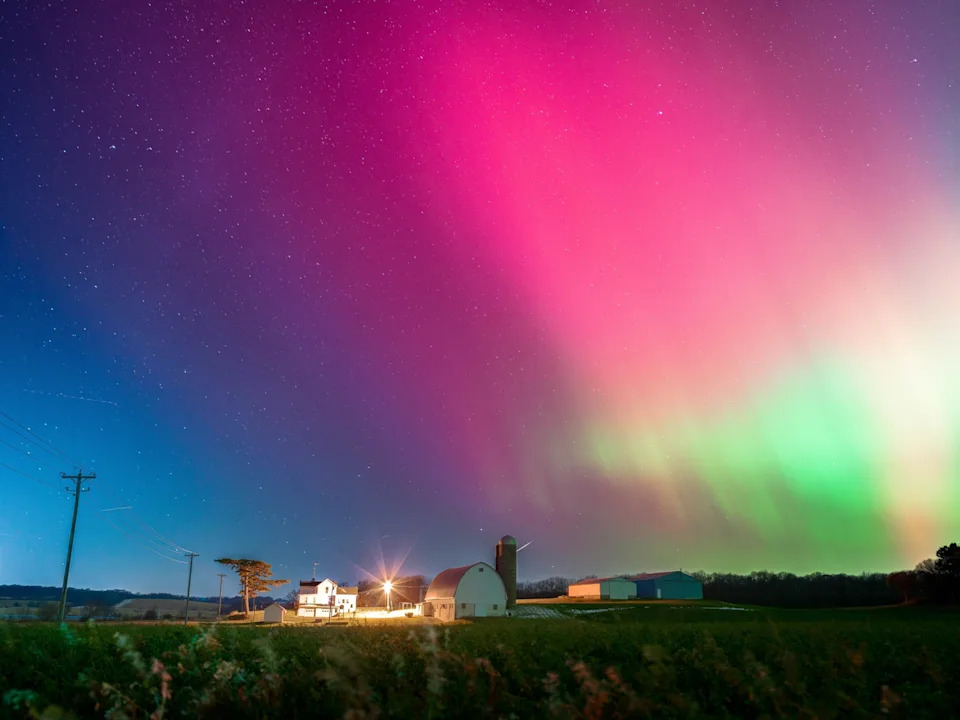
Ross Harried/NurPhoto via Getty Images - PHOTO: The Aurora Borealis lights up the night sky over Monroe, Wisconsin, on November 11, 2025.
The weeks around the spring and fall equinoxes are often called “aurora season.” The spring equinox for the Northern Hemisphere falls on March 20, when the geometry of Earth’s and the sun’s magnetic fields can make geomagnetic storms more likely. When Earth’s north-pointing magnetic field and a southward component in the sun’s field carried by the solar wind oppose each other, they can partially cancel. That partial cancellation opens an easier path for solar wind to enter the magnetosphere and reach high latitudes, increasing the chance of auroras. This process is known as the Russell–McPherron Effect, described in a 1973 Journal of Geophysical Research paper by Christopher Russell and Robert McPherron.
Will You See Them?
Visibility at any given location depends on several factors: the timing and magnetic orientation of the incoming high-speed stream, how strong the resulting geomagnetic activity is, and local conditions such as cloud cover and light pollution. Stronger geomagnetic disturbances (higher Kp values) push auroras farther from the poles, making them visible at lower latitudes.
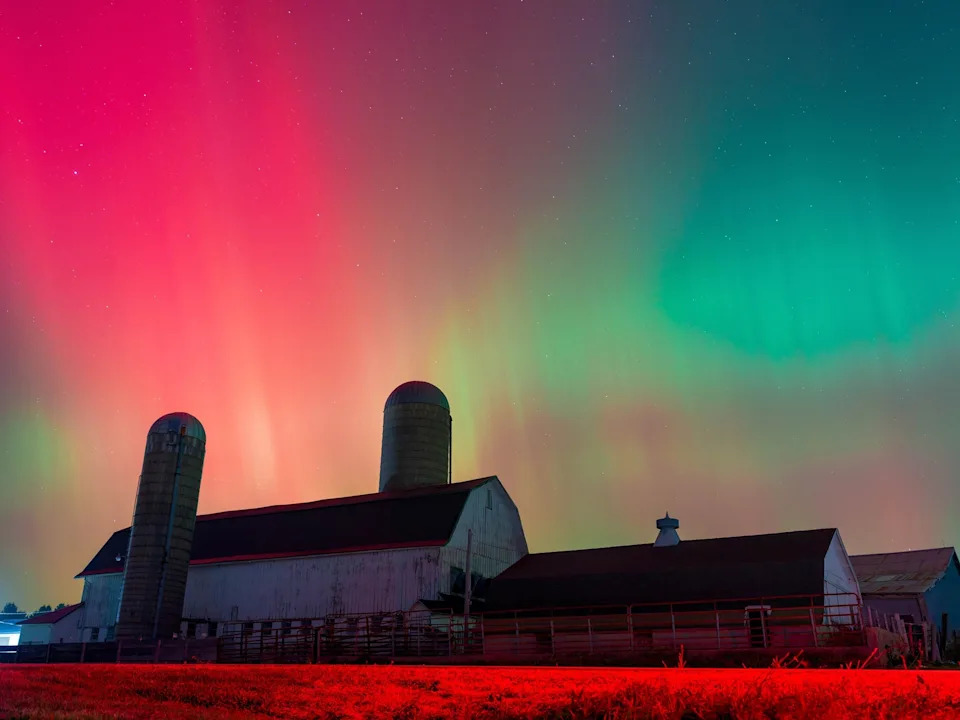
Ross Harried/NurPhoto via Getty Images - PHOTO: The Aurora Borealis lights up the night sky over Monroe, Wisconsin, on November 11, 2025.
Viewing Tips
For U.S. observers, NOAA recommends watching between about 10 p.m. and 4 a.m. local time and traveling to the darkest possible location away from city lights. Check current space-weather forecasts from NOAA SWPC, local cloud forecasts, and real-time aurora maps before heading out.
Finally, the seasonal equinox comes as the recent solar maximum has begun to wane. The sun’s roughly 11-year activity cycle peaked around late 2024, but strong solar events and recurrent geomagnetic storms have continued, contributing to more frequent auroral displays in recent months.
Help us improve.





















