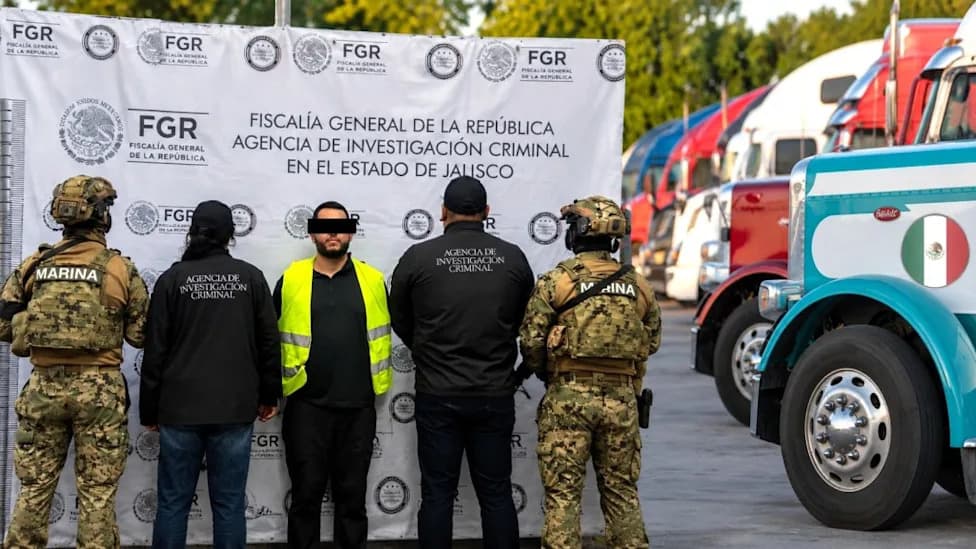
El Mencho's death provoked nationwide attacks by the CJNG, exposing the cartel's capacity to coordinate rapid, large-scale violence. Analysts say decades of U.S. demand and prohibition helped empower Mexican cartels; successive kingpin removals and military offensives have often intensified competition rather than ending it. Alternative policies — from cannabis legalisation to medically regulated heroin programmes — have reduced harms abroad, but current political pressures favor renewed security crackdowns.
Killing 'El Mencho' Sparked Nationwide Chaos — Why Removing Kingpins Won't End Mexico's Cartels
Killing Drug Lords Won't End Mexico's Cartels. Ending the Drug War Might.
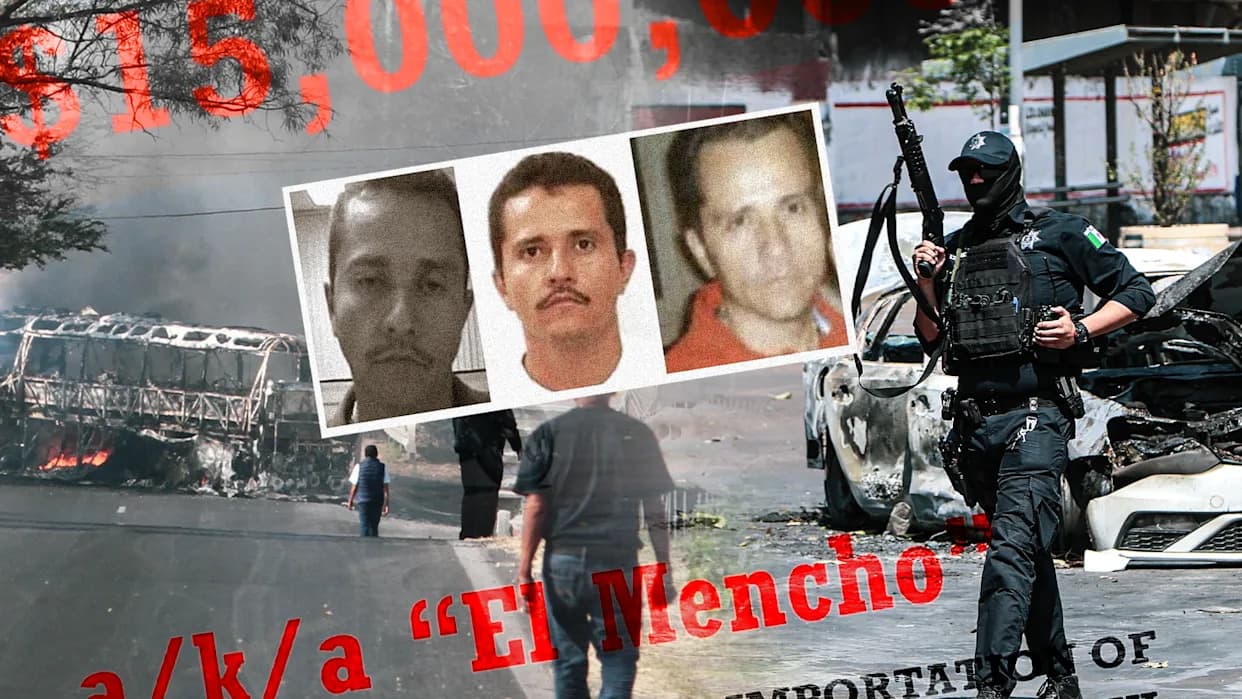
On a Sunday in February, Guadalajara — Mexico's second-largest city — was paralysed as gunmen set burning cars as barricades and blocked major routes in and out of the city. Zoo visitors sheltered overnight beside animals; similar disturbances were reported across roughly 20 Mexican states. The violence followed the death in a federal raid of Nemesio Oseguera Cervantes, known as "El Mencho," leader of the Jalisco New Generation Cartel (CJNG) and longlisted by U.S. authorities with a $15 million reward.
Immediate Aftermath
Mexican federal authorities reported at least 89 fatalities linked to the unrest, including 25 soldiers, a prison guard, a prosecutor, an unidentified woman, and 46 alleged gang members — some of whom may have been forcibly recruited. Analysts warned the scale and speed of the attacks demonstrated the CJNG's capacity to coordinate fast, nationwide operations in response to high-profile blows against its leadership.
"The nature of the unrest is not new in itself. The scale, however, is rather unprecedented and clearly demonstrates the CJNG's ability to coordinate at a fast pace, and at a nationwide scale," said Sandra Pellegrini, senior analyst at ACLED.
U.S. Role And Cross-Border Dynamics
Mexican officials acknowledged substantial U.S. intelligence support for the operation that located El Mencho, including surveillance from an aerial asset. Analysts say U.S. demand for drugs, decades of prohibitionist policy, and sustained cross-border cooperation have deeply shaped Mexico's drug trade and security responses. David Mora of the International Crisis Group argued the operation also sent a signal to Washington that Mexico can act with U.S. intelligence support without requiring boots on the ground.
Historic Roots Of A Regional Crisis
The rise of violent criminal organisations in Mexico is linked to a long history of prohibition and international demand. U.S. and Mexican drug policies throughout the twentieth century — from alcohol prohibition to the creation of the DEA and the global "war on drugs" — helped create highly profitable illegal markets. Early smuggling networks evolved into powerful cartels, often protected by corrupt officials.
Mexico briefly experimented with regulated supply in 1940 after psychiatrist Leopoldo Salazar Viniegra argued that cannabis did not produce madness. The experiment lasted only months before pressure from U.S. authorities helped reverse it. Later, the 1960s counterculture and growing U.S. demand expanded the market, and tighter interdiction elsewhere pushed Colombian traffickers to route cocaine through Mexico — turning Mexican intermediaries into major distributors.
Escalation: Private Armies And The Drug War
Political shifts and the introduction of militarised tactics deepened the crisis. As Mexico's long-ruling PRI lost its monopoly, cartels lost predictable political protection and began building private armies. The 2000s saw dramatic violence: Los Zetas — a group that sprang partly from former special-forces members — introduced brutal tactics, and President Felipe Calderón's 2006 military offensive produced further fragmentation as leaders were captured or killed and rivals vied for control.
El Mencho himself rose from that period: once a lieutenant in Sinaloa, he broke away after his boss's death and formed the CJNG, which became one of the country's most powerful and aggressive syndicates.
Scale Of Harm
The human costs are staggering. From 2007 through 2024 Mexico officially recorded more than 460,000 homicides, a large share linked to organised crime, and roughly 130,000 people are officially reported missing. Families continue to exhume mass graves searching for loved ones; violence and disappearances have become a daily reality in many regions, particularly borderlands and port cities.
Why Kingpin Removal Often Fails
Removing cartel leaders has frequently produced short-term headlines but not long-term stability. The capture of Joaquín "El Chapo" Guzmán in 2016 did not end Sinaloa's influence; instead, successors and splinter groups adapted. In many cases, enforcement raises the "risk premium" on illicit goods and increases potential profits, incentivising violent competition and innovation — including the pivot by some groups toward synthetic opioids such as fentanyl.
Alternatives And Evidence From Abroad
Policy alternatives exist. Cannabis legalisation in parts of the United States has reduced some cartel revenue from marijuana exports. Switzerland's regulated heroin programme, introduced in the 1990s, and other harm-reduction strategies have shown that a controlled supply approach can reduce disease, petty crime and fatal poisonings. These examples do not offer a single solution, but they illustrate tools beyond purely militarised responses.
Conclusion
The killing of El Mencho underscored how deeply intertwined Mexican cartel dynamics are with international demand, historic prohibition, and shifting enforcement strategies. While high-profile operations may weaken specific actors, they also risk provoking violent retaliation and fragmentation. Policymakers face a difficult choice: continue a primarily militarised approach that has produced vast human costs, or experiment more boldly with demand reduction, regulated supply and public-health–oriented strategies that have reduced harms elsewhere.
Help us improve.