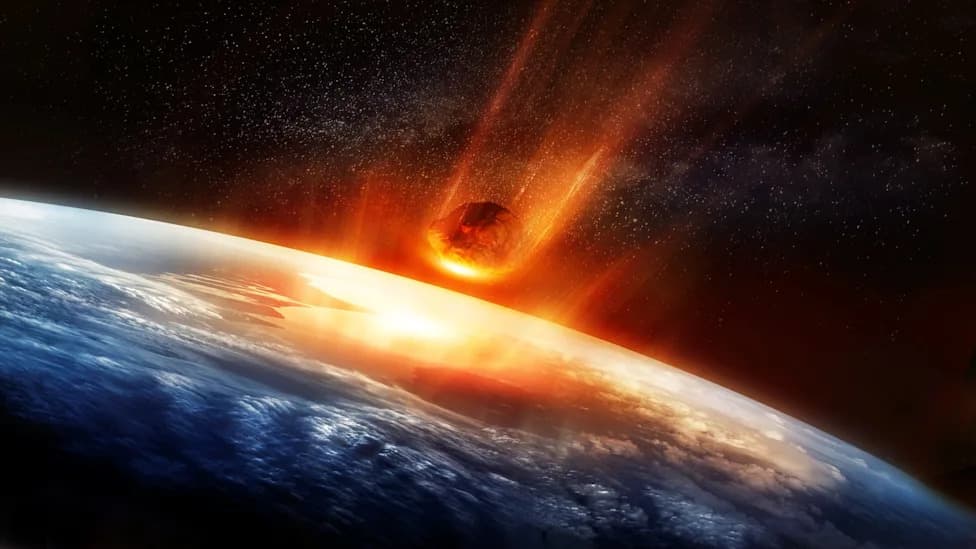
Researchers have mapped a new tektite strewn field in Brazil containing over 600 glass beads called "geraisites," produced when a meteorite melted ancient granitic crust. Low water content (71–107 ppm) and argon dating give a maximum age of about 6.3 million years. Geochemical signatures point to ~3-billion-year-old rocks of the São Francisco Craton as the source, but no corresponding impact crater has yet been found. The discovery expands Brazil's impact record and suggests more tektite deposits may be overlooked.
Hundreds of Glass Beads in Brazil Reveal an Ancient Meteor Impact — But the Crater Is Missing
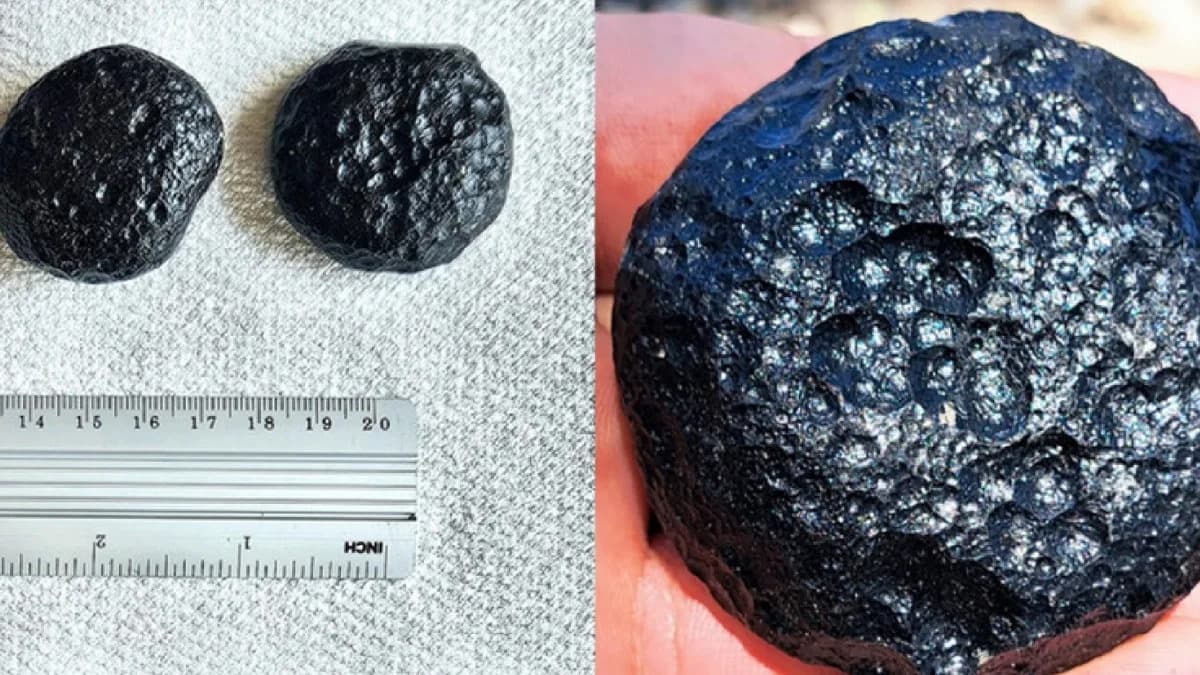
Some of the small glass blobs originating with a mysterious ancient impact. (Crósta et al., Geology, 2025)
Scientists have identified more than 600 small glass beads across Brazil as tektites — fragments of rock melted and flung into the air by a meteorite impact millions of years ago. The new finds, nicknamed "geraisites" after the state of Minas Gerais where they were first recovered, form a strewn field now mapped to more than 900 kilometers.
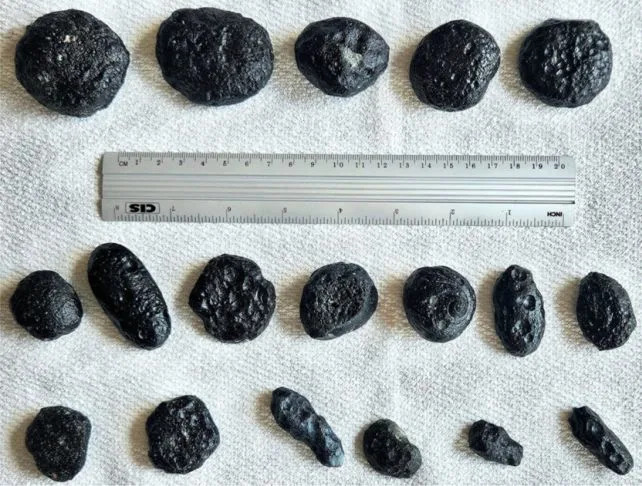
Some of the tektites collected from Brazil. (Crósta et al.,Geology, 2025)
Discovery and Fieldwork
The discovery began with reports from local residents in Minas Gerais who found curious glassy beads and contacted researchers. After photographing and then analyzing physical samples, geologists Álvaro Penteado Crósta (University of Campinas) and Gabriel Silva (University of São Paulo) confirmed the material's impact origin and launched field surveys that recovered hundreds of additional specimens.
YouTube Thumbnail
What Makes These Tektites?
Tektites are droplets of terrestrial rock melted by the intense heat of a meteorite strike and rapidly cooled into glass as they travel through the air. A key diagnostic for distinguishing impact glass from volcanic glass is water content: volcanic obsidian typically contains 700 ppm to 2% water, while the geraisites measured just 71–107 ppm — a signature consistent with near-complete dehydration during an impact.
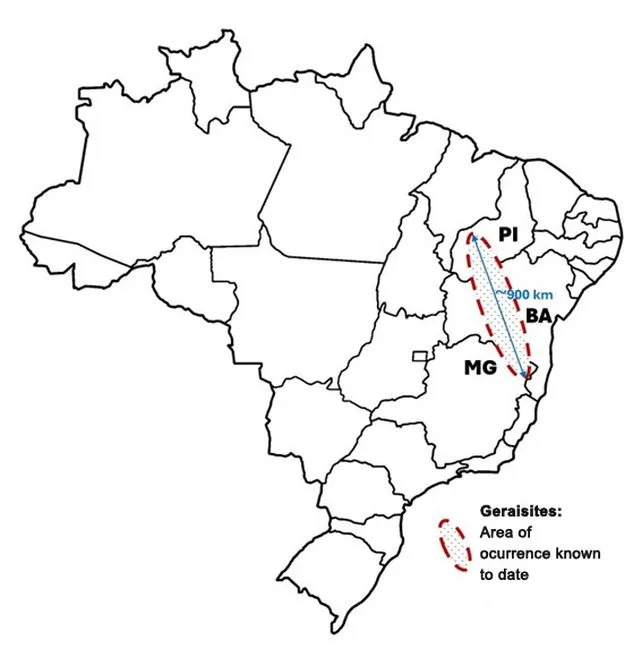
The known size and location of the geraisite strewn field. (Álvaro Penteado Crósta/IG-UNICAMP)
"I was very surprised! Tektites are a very rare material on Earth," Crósta told ScienceAlert.
Age and Source Rocks
Argon isotope dating returns a maximum age of about 6.3 million years for the geraisites (the true age could be younger if the samples contain inherited argon). Geochemical and isotopic analyses point to ancient continental crust — most likely granitic rocks from the São Francisco Craton — as the target material melted by the impact. Those source rocks themselves formed roughly 3 billion years ago during the Mesoarchean.

Subscribe to ScienceAlert's free fact-checked newsletter
The Missing Crater
Despite the wide strewn field and strong constraints on source-rock chemistry, researchers have not yet identified a matching impact crater of the appropriate age. This is not unprecedented: only three known tektite strewn fields have clearly associated craters, and the largest strewn field (the Australasian field) likely has a crater buried beneath the ocean.
Why This Matters
Mapping the geraisite strewn field fills a gap in Brazil's impact record and suggests that additional tektite occurrences may remain undiscovered or misidentified as other kinds of glass. Researchers are now modeling the impact conditions — energy, velocity, and melt volume — and expanding field searches to narrow down candidate crater locations.
The team's results have been published in the journal Geology.
Help us improve.