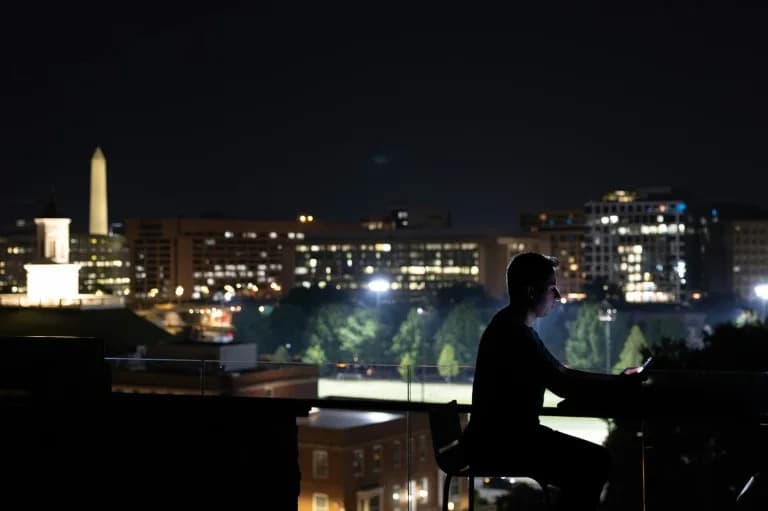
Members of the Iranian diaspora report intense anxiety and helplessness as conflict and reported strikes affect cities across Iran. People living in Madrid, London and elsewhere survive on fragmented updates about loved ones, scanning footage for familiar places while fearing the worst. Many interviewees are veterans of earlier protests and repression; the psychological toll is disrupting sleep, work and studies. Independent verification of the full scale of casualties and damage remains limited.
“Living Between Updates”: Iranians Abroad Gripped By Anxiety As Conflict Unfolds
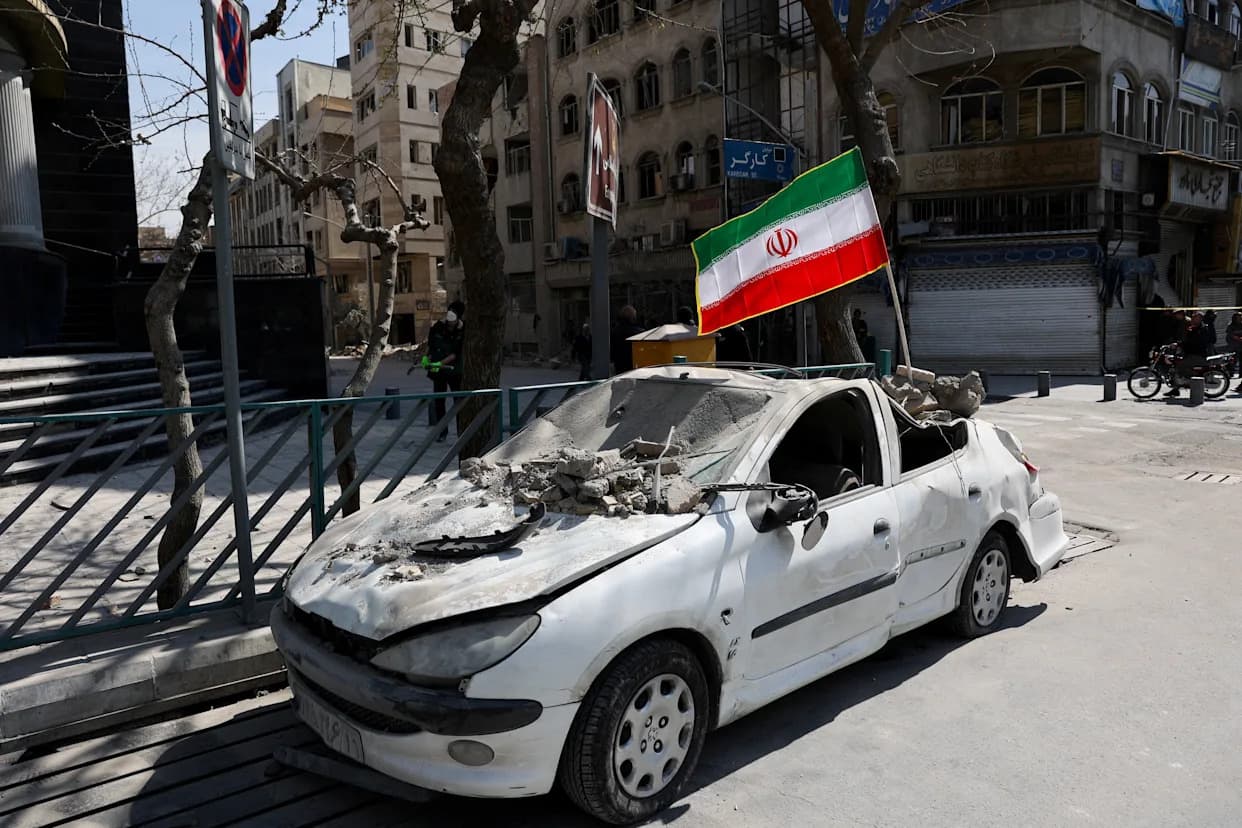
An Iranian flag is mounted on a damaged car following a strike on a police station, amid the United States-Israeli conflict with Iran, in Tehran, Iran, March 4, 2026 [Majid Asgaripour/WANA (West Asia News Agency) via Reuters]
Maryam’s life stopped last Saturday. Since then she has measured every minute by the fragments of news she receives when relatives in Iran can contact her, and by the long stretches in between, when she is left wondering about their safety.
Maryam, who asked to be identified by a pseudonym for safety reasons, is far from alone. The Iranian diaspora — one of the world’s largest, including people who left before and after 1979 for political reasons or economic opportunity — now lives on intermittent updates about loved ones caught up in a widening conflict.
“What is happening now is my worst fear,” Maryam, 33, tells us from Madrid. She last visited Tehran in January but returned to Spain after mass protests earlier this year. “This is what I search for at 3 a.m. when I can’t sleep: ‘US Iran’ — just to check.”
“Every piece of that land is like a cell in my body,” she says. “My dad is from the south, my mother from the north, so every inch of that land is me. An aggression against that land is an aggression against me.”
Across communities abroad, a shared sense of helplessness and dread has intensified since a build-up of foreign forces off Iran’s coast and subsequent reported strikes in late winter. Independent verification of the full scale and casualty figures is limited; international observers and some media outlets have reported substantial casualties and widespread damage to infrastructure and homes.
Sara, a student now living in London, spends hours scanning footage from Iran for any sign of her family’s house high on the hills above Tehran. “My grandfather built it on the side of a hill,” she says. “It’s our family home — where my parents were married, where I spent my childhood. It’s my family’s soul.” She describes the “torture” of watching the city where she grew up burn and feeling powerless to help.
Hiwa, 35, an Iranian Kurd from Sanandaj (Sine) now in the United Kingdom, last heard from his father before reported strikes began. His home region has not been a primary target so far, but he cannot be certain that will remain the case. Hiwa fled Iran three years ago after friends active in pro‑democracy campaigns were arrested; he says he was detained twice previously in 2011 and 2014.
“It is a big paradox,” he says. “In the UK I can go for a coffee, people smile at me, but my mind is back home. I can’t sleep. It’s affected my studies, my work — everything.”
Even before the current escalation, Iranians have coped with recurring unrest. January’s demonstrations prompted a harsh government crackdown; the United Nations and international human rights organisations have accused security forces of killing large numbers of protesters, while Iranian authorities have blamed violent elements for many deaths.
Many in the diaspora are familiar with repression. Maryam’s mother was a political prisoner, and Maryam herself took part in the 2009 Green Movement. She recently found a photograph from those protests and remembered sitting peacefully in the sun: “We always pretend it’s new, but it isn’t. All I see are repeats of what’s gone before.”
“My mother was just taking her daughters into town, in the beautiful homeland she would never let anyone take away from us,”
None of those interviewed claim to know what the future will bring. For now, the overriding concern is immediate: the safety and welfare of friends and relatives who must try to live through the unfolding violence.
Psychological Cost
Across continents, the emotional toll is clear: disrupted sleep, diminished concentration, interrupted work and study, and a relentless cycle of hope and dread while awaiting news. For many, memories of past imprisonment and protest mix with the present fear — reinforcing resilience for some, and deepening trauma for others.
As Maryam puts it, remembering her mother’s determination after release from Evin Prison: “She was passing all this darkness and not letting it impact her. That’s what I think of when I think of Iran. I will never allow the ugliness and hate to distract me from that homeland.”
Help us improve.