
Since US and Israeli strikes widened the confrontation with Iran, social media has been flooded with recycled footage, video-game clips and AI-generated imagery shared as real combat scenes. Fact-checkers and watchdogs say both pro-Iranian and opposing accounts have spread misleading material that has reached millions of viewers. Platforms like X have moved to punish undisclosed synthetic war content, but verification tools such as Google’s reverse-image feature are also producing flawed results, deepening public confusion.
‘Narrative War’: Disinformation Explodes as Middle East Conflict Fuels Fake Images and AI Deepfakes
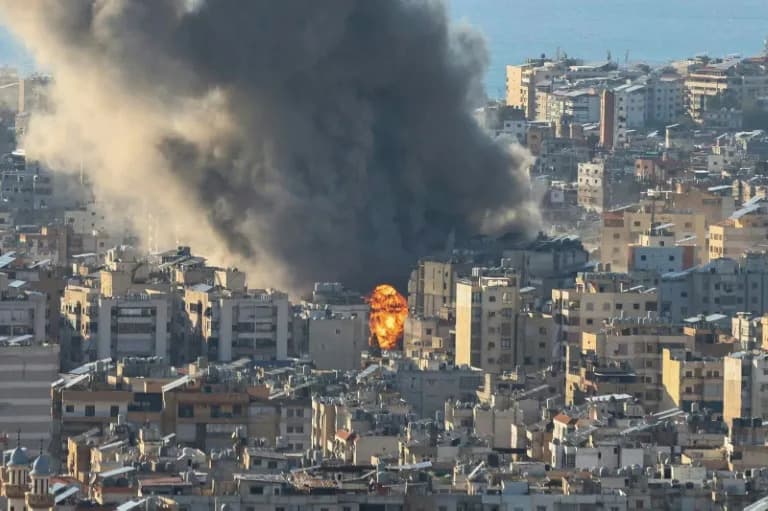
An online information war is unfolding in parallel with the regional conflict in the Middle East. (IBRAHIM AMRO)(IBRAHIM AMRO/AFP/AFP)
Recycled photos, video-game footage repackaged as real strikes, and AI-generated battle imagery have flooded social media since US and Israeli strikes widened a regional confrontation with Iran — producing what experts call a “narrative war.”
As combat operations and retaliatory strikes unfolded, a concurrent information battle erupted: supporters on all sides drowned platforms with misleading posts that frequently outpaced verified reporting from the ground.
Misleading Visuals and Fast-Moving Falsehoods
AFP fact-checkers and other verification teams have repeatedly exposed pro-Iranian accounts resharing old or unrelated footage to exaggerate the damage from Tehran’s missile launches against Israel and Gulf states, including the UAE and Saudi Arabia. At the same time, video-game clips have been passed off as real missile strikes, and AI-created images — including fabricated scenes of US warships sinking — have drawn millions of views.
“There is definitely a narrative war unfolding online,” said Moustafa Ayad of the Institute for Strategic Dialogue (ISD). “The goals often appear to be to rationalize attacks, to boast of military strength, or to wear down perceived adversaries.”
Platforms Respond — But Verification Tools Struggle
NewsGuard reports that contrived visuals tied to the conflict have garnered more than 21.9 million views on X alone. In response to rising synthetic-content threats, X announced creators who post AI-generated videos of armed conflict without disclosure will be suspended from its revenue-sharing program for 90 days.
X’s head of product, Nikita Bier, said: “During times of war, it is critical that people have access to authentic information on the ground.” Companies face pressure to balance free expression with preventing malicious or deceptive content that can inflame violence and confusion.
Wider Verification Gaps and Impersonation Risks
Beyond platform policy changes, analysts warn that common verification tools are not infallible. A NewsGuard study found Google’s reverse-image feature sometimes produced inaccurate AI-generated summaries for fabricated or repurposed visuals tied to the Middle East fighting, highlighting risks in widely used image-authentication systems.
ISD and other groups also flagged fake social media accounts impersonating senior Iranian figures, while opposition outlets circulated unverified claims — for example blaming a strike on an Iranian girls’ school on the government — further complicating the information environment.
Ground Reality
The United States and Israel carried out strikes that escalated tensions, and Iran has launched retaliatory missile and drone attacks across the region. Reports of specific high-profile casualties or leadership deaths have been inconsistent and in some cases unverified; fact-checkers urge caution and verification before amplifying dramatic claims.
What this means: In fast-moving crises, images and video can be easily manipulated or reused to craft political narratives. Consumers, journalists, and platforms must apply careful verification, label synthetic content, and prioritize reliable sources to reduce harm from disinformation.
Help us improve.





















