
Mark Carney, a prominent Canadian public figure and former central banker, condemned recent U.S. and Israeli strikes on Iran as evidence of a "failure of the international order" and urged rapid de‑escalation. He reiterated Canada's long-held concern about Iran's nuclear activities while expressing regret that diplomacy has not resolved the threat. Reports of senior Iranian casualties and more than 780 deaths have circulated but were not independently verified at the time of reporting. Carney called for renewed multilateral diplomatic engagement, protection of civilians, and efforts toward a broader political solution.
Mark Carney Says U.S. and Israeli Strikes on Iran Expose a 'Failure of the International Order' — Calls For Rapid De‑Escalation
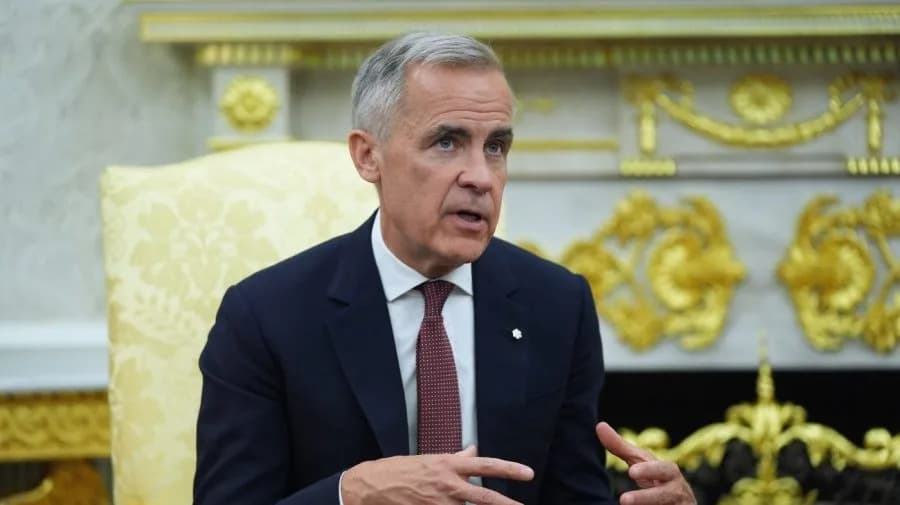
Canadian PM Carney says US and Israel’s strikes on Iran mark ‘failure of the international order’
Mark Carney, a prominent Canadian public figure and former central banker, speaking in Sydney on Tuesday, criticized what he described as a "failure of the international order" in response to recent U.S. and Israeli strikes on Iran.
Carney said Canada has long viewed Iran as "the principal source of instability and terror in the Middle East," while regretting that "more than two decades of negotiations and diplomatic efforts" have not halted Iran's nuclear program or enrichment activities.
"Canada stands with the Iranian people in their long and courageous struggle against the regime's oppressive rule," Carney said, adding that Canada supports efforts to prevent Iran from obtaining a nuclear weapon and to curb threats to international peace and security.
He added that Canada takes that position "with regret," calling the current conflict "another example of the failure of the international order," and urged urgent diplomatic action to prevent further escalation.
Reports say U.S. and Israeli forces began strikes on Iran on Saturday. Some accounts claimed the strikes targeted senior political and military leaders; certain outlets described the death of Iran's Supreme Leader, Ayatollah Ali Khamenei, and other senior figures. These claims are highly consequential and, at the time of reporting, were not independently verified. Casualty figures cited by the Iranian Red Crescent Society—more than 780 dead as of 4:10 a.m. EST—are also reported by local sources and may not be independently confirmed.
The strikes reportedly followed talks the previous week: U.S. and Iranian negotiators, mediated by Oman, met to discuss curbing Iran's nuclear program and ballistic missile development. Carney noted that "decades of United Nations Security Council resolutions, the tireless work of the International Atomic Energy Agency, and a succession of sanctions and diplomatic frameworks" have so far failed to eliminate the nuclear threat.
"Diplomatic engagement is essential to avoid a wider and deeper conflict. Innocent civilians must be protected, and all parties must commit to finding enduring agreements to end both nuclear proliferation and terrorist extremism," Carney said.
Carney also criticized what he called the unilateral nature of the strikes, saying the United States and Israel acted "without engaging the United Nations or consulting allies, including Canada," and urged renewed multilateral diplomacy to secure a broader political solution and protect civilians.
Note on Reporting: This article corrects and clarifies earlier descriptions of Mark Carney's role. Carney is not the Canadian prime minister; he is a well-known Canadian public figure and former central banker. Some dramatic claims about the strikes (including reports of the Supreme Leader's death) were circulating in initial reports and remain unverified; readers should treat such claims cautiously and look to official confirmations and independent reporting as events develop.
Help us improve.





















