
President Trump threatened to "cut off all trade" with Spain and ordered Treasury Secretary Scott Bessent to halt dealings amid a dispute over the use of jointly operated U.S.-Spanish air bases. Spain barred use of the Morón and Rota bases for strikes on Iran, citing international law and a 1953 agreement that gives Madrid oversight. The White House said the Supreme Court's recent ruling did not remove the president's ability to impose embargoes, and Mr. Trump claimed higher global tariffs despite no formal proclamation. The dispute raises legal, NATO and EU trade-policy complications.
Trump Threatens To Cut Trade With Spain Over Use Of Joint U.S.-Spanish Air Bases
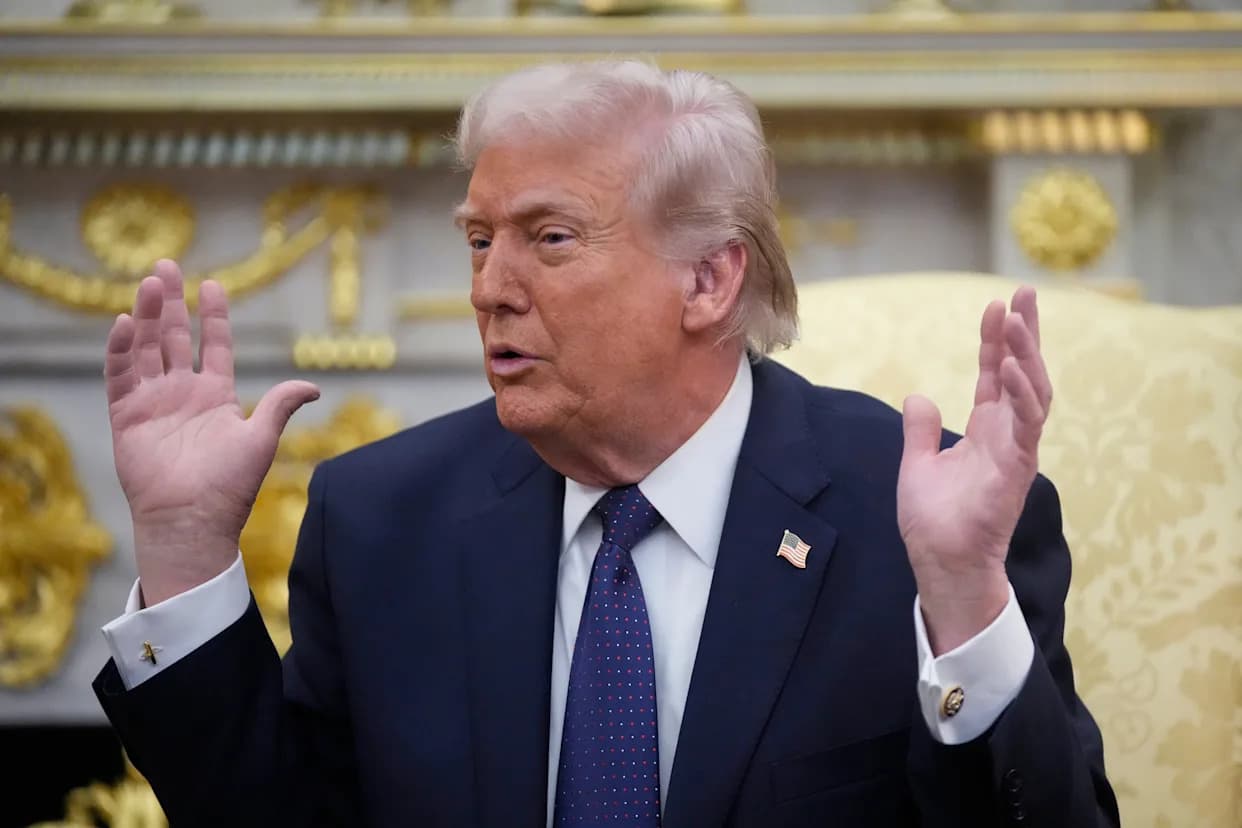
President Donald Trump on Tuesday threatened to halt trade with Spain and said he had instructed Treasury Secretary Scott Bessent to "cut off all dealings" with Madrid amid a dispute over how jointly operated U.S.-Spanish military bases on Spanish soil are being used.
Oval Office Exchange
Speaking in the Oval Office during a meeting with German Chancellor Friedrich Merz, Mr. Trump declared: "We’re going to cut off all trade with Spain. We don’t want anything to do with Spain." He pressed U.S. Trade Representative Jamieson Greer and Treasury Secretary Bessent about whether an economic embargo could be imposed.
Greer: "Well, sir, I think we’re going to talk about it with you. I know that you have strong power that the Supreme Court clarified. We know you can use it and if you need to use it to assure national and economic security, we’ll do it."
Bessent: "I agree. The Supreme Court reaffirmed your ability to implement an embargo."
Legal And Trade Context
The U.S. Supreme Court recently struck down the administration’s use of a 1977 emergency statute to impose tariffs at will. Administration officials, however, argue the ruling did not eliminate the president’s authority under that statute to pursue other economic measures, such as an embargo. Mr. Trump also said his administration has "instituted a 15 percent tariff on everybody," an increase from the 10 percent global duty invoked after the court decision — a claim for which no formal proclamation has yet been issued.
Any effort to single out Spain would carry broader implications because Spain is a member of the European Union, which conducts a common trade policy. Targeting Madrid could therefore create friction with other EU capitals, including Germany, France and Italy.
Dispute Over Spanish Bases
The dispute intensified after Spain refused this weekend to permit U.S. forces to use jointly operated air bases — notably Morón de la Frontera and Rota — for offensive operations against Iran as a U.S.-launched campaign entered its fourth day. Spanish Defense Minister Margarita Robles said American personnel at those bases must "operate within the framework of international law," and that the facilities would be barred from "providing support except if it is necessary from a humanitarian perspective."
A 1953 agreement gives Madrid a voice over how American forces stationed on Spanish territory are employed. Robles said the two bases did not participate in recent strikes on Iran and would not be used for related maintenance and support operations.
Flight-tracking site FlightRadar24 reported that more than a dozen U.S. aircraft, including several Boeing KC-135 aerial refueling tankers, departed Morón and Rota over the weekend, with seven aircraft routed to Rammstein Air Base in Germany. Spanish officials suggested the U.S. likely moved those planes because they could not be used from Spanish bases for the planned missions.
Reactions And Implications
The episode drew sharp criticism from some U.S. lawmakers. Senator Lindsey Graham (R-S.C.) called Prime Minister Pedro Sánchez’s government "an aberration" and accused European leaders of weak leadership. The Spanish government issued a statement underscoring Spain’s NATO contributions and global trade role:
"Spain is a key member of NATO, fulfilling its commitments and making a significant contribution to the defense of European territory. It is also a major exporting force within the EU and a reliable trading partner for 195 countries worldwide, including the United States... Any U.S. review of the relationship must respect the autonomy of private companies, international law, and bilateral agreements between the European Union and the United States."
The incident highlights ongoing tensions over allied defense commitments and the use of trade measures as a diplomatic tool. The administration retains other, more limited trade authorities it could use to impose duties — notably Section 122 of the Trade Act of 1974, which was used to implement a 10 percent tariff after the court decision but limits any tariff to 150 days without congressional approval.
Contributors: Doug Palmer
Help us improve.





















