
The U.S.-Israeli strike that killed Iran’s Supreme Leader Ayatollah Ali Khamenei has sparked widespread shock across Shiite communities from Pakistan to Lebanon, triggering deadly protests, missile exchanges and large-scale displacements. Pakistan saw violent demonstrations that left at least 34 dead and more than 120 injured. Hezbollah launched missiles at Israel, prompting heavy Israeli airstrikes and mobilization of roughly 100,000 reservists. Analysts warn of unpredictable regional fallout while noting growing local frustration with Iran’s influence may temper long-term sectarian escalation.
Khamenei’s Killing Sends Shockwaves Across Shiite World — Protests, Strikes and Regional Uncertainty
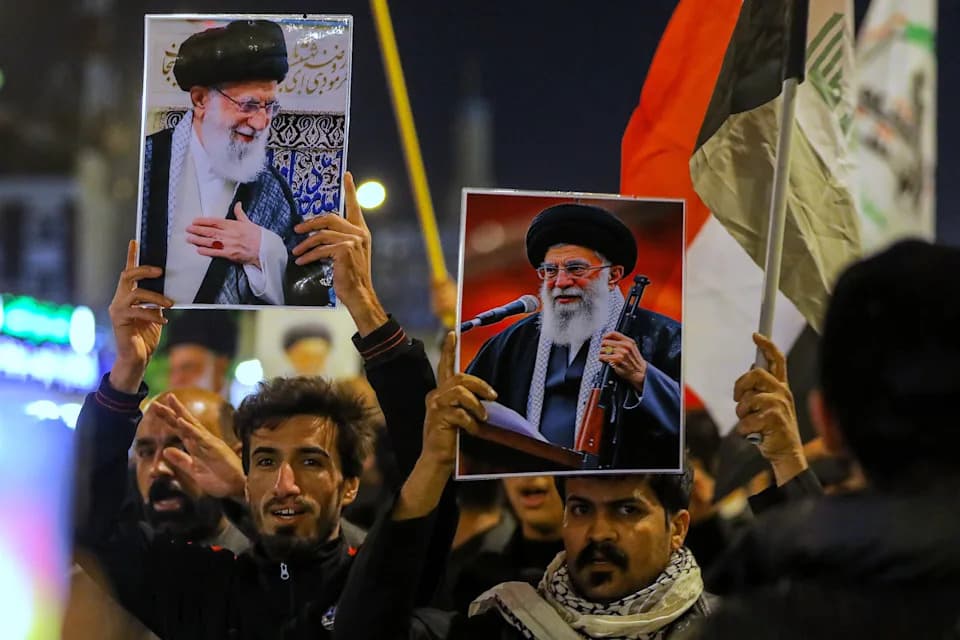
Iraqi Shiites hold pictures of Iranian Supreme Leader Ayatollah Ali Khamenei, who was killed by a U.S. airstrike in Tehran, during a symbolic funeral, in Najaf, Iraq, Sunday, March 1, 2026. (AP Photo/Anmar Khalil)(ASSOCIATED PRESS)
The U.S.-Israeli strikes that killed Iran’s Supreme Leader, 86-year-old Ayatollah Ali Khamenei, have reverberated far beyond Tehran, igniting anger, protests and military exchanges across Shiite communities from Pakistan to Lebanon.
Regional Reactions and Unrest
For many Shiites, Khamenei was not only Iran’s theocratic head since 1989 but also a leading religious and political figure. His death in a joint U.S.-Israeli operation has inflamed emotions across the region and raised fears of broader retaliation.
In Pakistan, thousands of protesters poured into the streets within hours of the news. Demonstrators tried to storm the U.S. Consulate in Karachi, clashed with police near the U.S. Embassy enclave in Islamabad and attacked United Nations offices in northern cities. Security-force confrontations left at least 34 people dead and more than 120 injured.
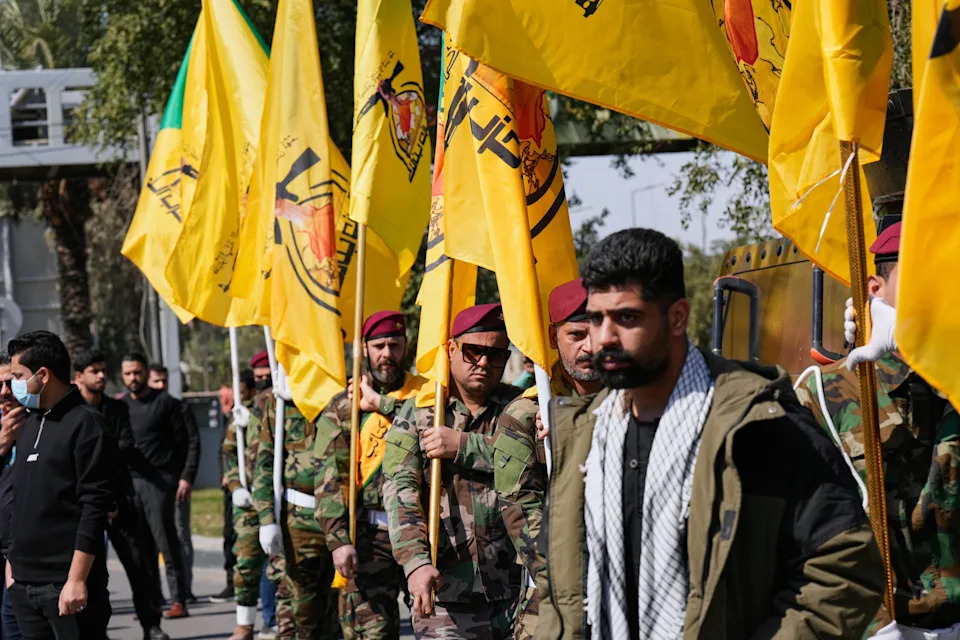
Members of an Iraqi Shiite militant group attend a funeral of a fighter of the Kataib Hezbollah, who was killed in a U.S. airstrike, in Baghdad, Iraq, Monday, March 2, 2026. (AP Photo/Hadi Mizban)(ASSOCIATED PRESS)
Lebanon, Iraq And Militancy
In Lebanon, Hezbollah — aligned with Iran — fired missiles toward Israel for the first time in more than a year, triggering heavy Israeli airstrikes that killed dozens and forced tens of thousands to flee predominantly Shiite areas in southern and eastern Lebanon. Israel mobilized roughly 100,000 reservists and warned of further operations along the border.
Protests and demonstrations also flared in Iraq, with crowds confronting police near diplomatic compounds. Analysts and officials warned the situation remains volatile and unpredictable.
Wider Military Fallout
Tehran’s response has included hundreds of missiles and drones launched across the Middle East and as far as Cyprus, prompting some Gulf states to scramble air defenses. The United Arab Emirates and Qatar temporarily closed airspace and grounded flights after intercepting incoming missiles or drones, leaving many passengers stranded.
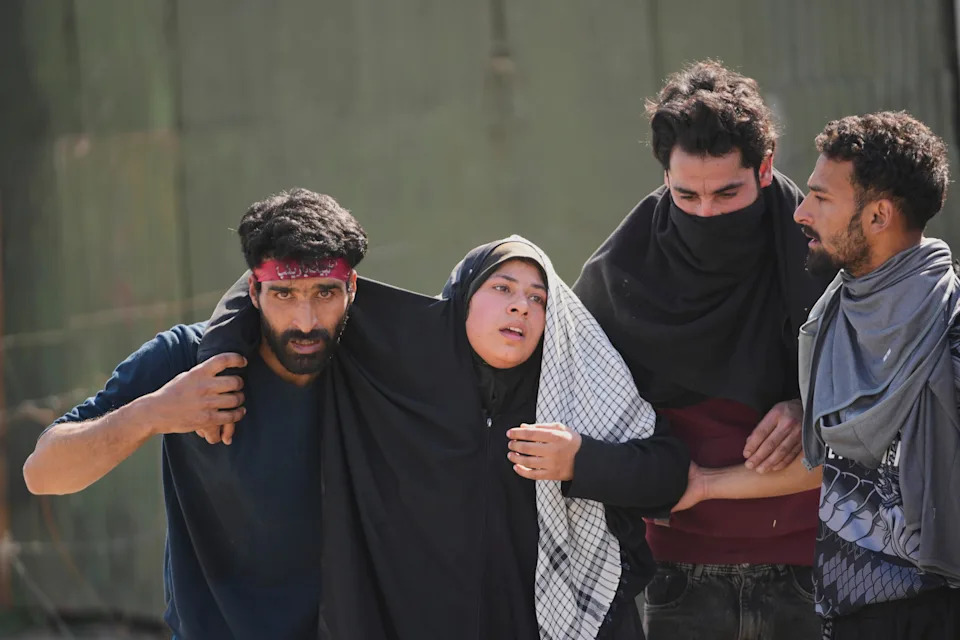
An injured Shiite Muslim woman is taken to medical help during a protest against the killing of Iran's Supreme Leader Ayatollah Ali Khamenei, in Srinagar, Indian controlled Kashmir, Monday, March 2, 2026. (AP Photo/Mukhtar Khan)(ASSOCIATED PRESS)
Politics, Proxies And Public Sentiment
Iran’s foreign policy for decades has combined state-to-state ties with support for armed groups in states with significant Shiite populations — notably Hezbollah in Lebanon and the Houthi movement in Yemen, as well as militias in Iraq and Syria. Tehran presents this network as protecting Shiite interests, while critics say it undermines national sovereignty and regional stability.
Analysts note that while anger toward Khamenei is widespread, there is also growing frustration among some Shiite populations — particularly younger Iraqis — with Iran’s deep political and economic influence. That resentment could limit the scale or duration of sectarian mobilization in some countries.
“There is reason to be concerned about how Shia minorities across the Middle East, and in particular … the Shia majority in Iraq might respond to this,” said Burcu Ozcelik, a senior research fellow on Middle East security at the Royal United Services Institute (RUSI) in the U.K.
Recent Precedents
In recent years, U.S. and Israeli operations have targeted prominent figures tied to Iran’s regional network — most notably the 2020 U.S. airstrike that killed Gen. Qassem Soleimani and Iraqi militant leader Abu Mahdi al-Muhandis. The article also cites a September 2024 Israeli strike that reportedly killed Hezbollah leader Hassan Nasrallah; that report should be independently confirmed by news agencies and officials.
The assassination of Khamenei is widely seen as the most consequential blow to Tehran’s leadership to date, and some analysts warn Iran may now consider it has fewer political constraints on retaliation.
Reporting from multiple correspondents. Details and casualty figures are evolving; some reports remain unconfirmed and should be treated as provisional.
Help us improve.





















