Verdict: False — The viral video of a soldier called "Bishop" crying in the Gulf is an AI-generated deepfake. Analysts detected visual anomalies such as tears that appear to start at the chin, an oversized phone, flowing skin textures, and inconsistent lighting. Detection tools including Google’s Gemini and Hive Moderation flagged the clip as likely synthetic, and the posting account has a history of fabricated footage. Verify emotionally charged videos with independent fact-checks before sharing.
Fact Check: Viral ‘Bishop’ Clip Is An AI-Generated Deepfake — Not A U.S. Soldier Crying In The Gulf

Lead Stories says: AI Video
A viral Instagram clip purporting to show a U.S. soldier named "Bishop" weeping in the Gulf is not authentic. Analysis by multiple fact-checkers and AI-detection tools found the clip to be AI-generated, containing visual artifacts and inconsistencies typical of synthetic video models.
What The Post Claimed
The Instagram post (published March 1, 2026) claimed the footage showed an American servicemember breaking down in the Gulf amid heightened tensions after reports that Iran’s supreme leader had been killed in an airstrike. That narrative amplified emotional reactions and helped the clip spread rapidly across social platforms.

Image Source: Lead Stories screenshot of Instagram post.
How Analysts Determined The Clip Is Fake
Fact-checkers ran the video through several AI-analysis tools, including Google’s Gemini model and Hive Moderation’s AI detection. Key findings included:
- Visual Artifacts: Textures in the background and on skin appear to "flow" or crawl even when the subject is still—an artifact of temporal inconsistency in AI video generation.
- Tear Anomalies: The tears appear to originate unnaturally near the man's chin rather than following realistic tear paths down the cheeks.
- Object Proportions: The cellphone in the clip looks unusually large and poorly integrated into the subject's hands.
- Physics And Interaction Errors: Hair, hands, or fabric sometimes blend or pass through one another in ways that defy normal spatial relationships.
- Lighting Inconsistencies: The light source seems to shift or pulse across frames instead of remaining consistent with a single environment light.
Platform Signals And Account History
As of 2026, platforms like Instagram may attach labels such as "AI Info" or "Made with AI" to synthetic content; these labels are sometimes visible in metadata or in the platform's menu. Independent detection tools also flagged this clip—Hive Moderation estimated it to be about 83.4% likely to be AI-generated. Additionally, analysts noted the originating account has previously shared fabricated videos, increasing reason to doubt its credibility.
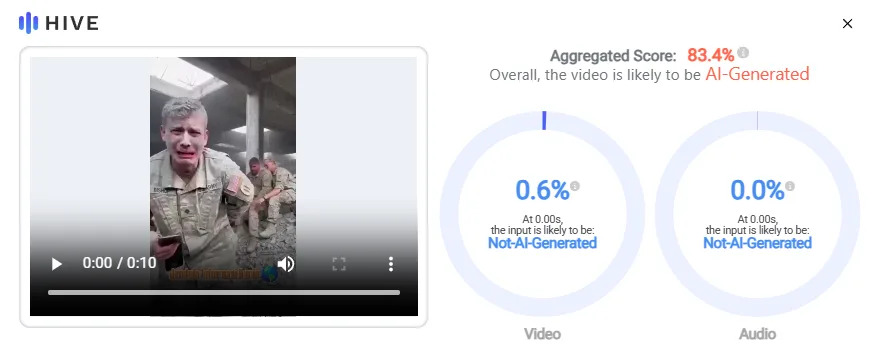
Image source: Lead Stories screenshot hivemoderation.com's Chrome browser plugin
Conclusion
Based on visible visual errors, automated detection results, and the posting account’s history, fact-checkers concluded the video is a synthetic deepfake. The claim that it shows a real U.S. servicemember named "Bishop" mourning in the Gulf is false.
How To Verify Similar Content
Tips for readers: Pause before sharing emotionally charged clips. Check for platform AI labels, reverse-image or reverse-video search, and independent fact-checks from reputable outlets. Look for visual artifacts (unnatural tears, inconsistent lighting, strange object sizes) that often indicate AI generation. When in doubt, treat viral clips as unverified until they are corroborated by reliable sources.
Help us improve.