
The Oct. 7, 2023 Hamas assault set off a prolonged Israeli campaign that over 2½ years weakened Iran’s regional influence and degraded many of its proxy militias. Targeted strikes, supply-line disruptions and offensives—including a June campaign aimed at perceived nuclear advances—have chipped away at Tehran’s ability to project power. Many Iran-aligned groups have largely avoided full-scale retaliation, calculating the risks of escalation, though exchanges such as Hezbollah’s missile fire and Israeli strikes on Beirut demonstrate how fragile the situation remains.
From Oct. 7 to Strikes on Iran: How 2½ Years of Conflict Eroded Tehran’s Regional Power
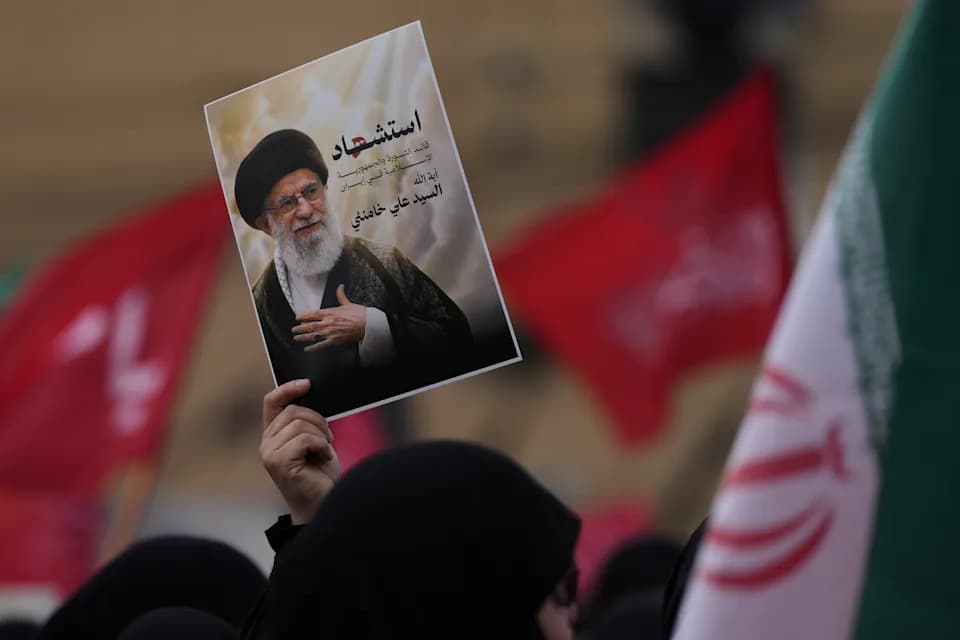
A Hezbollah supporter holds up a portrait of the late Iranian Supreme Leader Ayatollah Ali Khamenei during a gathering in the southern suburbs of Beirut, Lebanon, Sunday, March 1, 2026. The Arabic words on the portrait read:"Martyrdom of the leader of the Islamic revolution in Iran, sayyed Ayatollah Ali Khamenei." (AP Photo/Hassan Ammar)(ASSOCIATED PRESS)
As Israel mounted a broad military campaign after the brutal Oct. 7, 2023, Hamas assault, its operations evolved into a sustained effort that targeted not only Hamas but also the wider network of Iran-backed militias across the Middle East. Over the following 2½ years, those operations—together with diplomatic and military actions by the United States and other partners—contributed to a notable weakening of Tehran’s regional influence.
Gaza As The Catalyst
Israel’s response to Oct. 7, when militants killed about 1,200 people and seized roughly 251 hostages, quickly expanded beyond Gaza. Israeli operations within the territory have been intense; Gaza’s Hamas-run Health Ministry reports more than 72,000 deaths there since the start of the campaign, a figure that does not distinguish between combatants and civilians.
Spillover To Lebanon, Yemen And Beyond
The Gaza conflict widened into a regional confrontation involving groups commonly described as part of Iran’s “Axis of Resistance.” In Lebanon, Hezbollah launched rocket attacks into Israel in support of Hamas, prompting an Israeli military response that inflicted heavy damage on the group’s infrastructure and weapon stockpiles. Israel also reported strikes against senior commanders, and the fighting escalated into a broader Israel–Hezbollah confrontation in late 2024 before a U.S.-brokered pause.
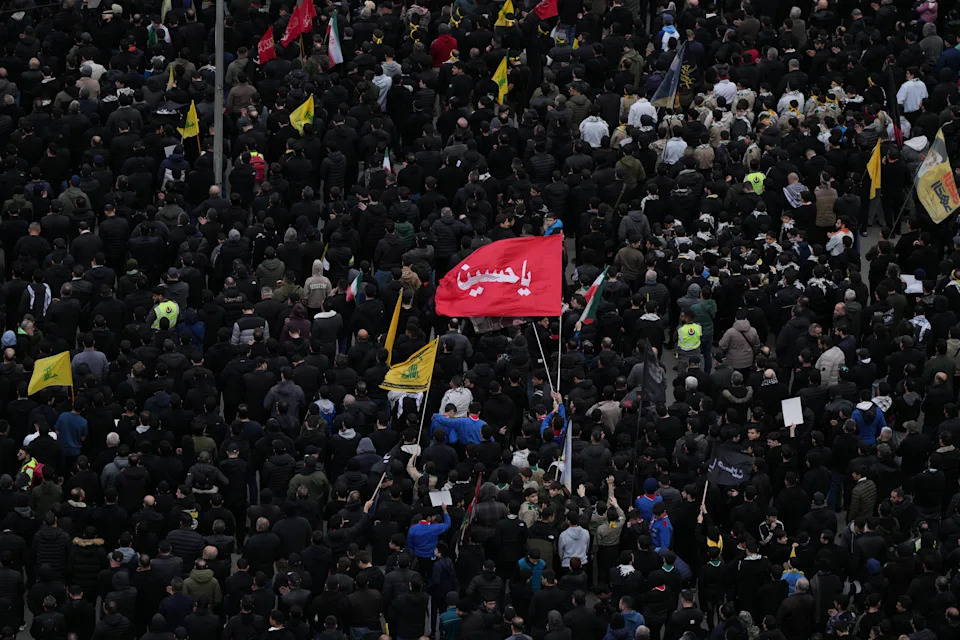
Hezbollah supporters gather to mourn the death of Iranian Supreme Leader Ayatollah Ali Khamenei in the southern Suburb of Beirut, Lebanon, Sunday, March 1, 2026. (AP Photo/Hassan Ammar)(ASSOCIATED PRESS)
Yemen’s Houthi rebels, backed by Tehran, targeted commercial shipping and Israeli-linked interests in the Red Sea, drawing defensive and retaliatory action from U.S. and Israeli naval forces. Across Iraq and the broader Levant, Iran-backed militias have carried out episodic attacks—at times striking U.S. positions—but many groups have been measured in their responses, often calculating the existential risks of broad escalation.
Pressure On Iran
Analysts say the pressure on Iran itself increased markedly in the intervening period. In June, Israel launched a surprise offensive aimed at disrupting what it described as an advancing Iranian nuclear capability; reports described a roughly 12-day campaign that included strikes on energy and defense-related sites. Separately, disruptions to supply routes—most notably after changes in Syria—and sustained strikes on proxy arsenals degraded Iran’s ability to project power through allies.
“Certainly the Oct. 7 events were a turning point in this long conflict between Iran and Israel,” said Mehrzad Boroujerdi, an Iran politics expert at Missouri University of Science and Technology. “I think it provided Israel with the argument or justification to deliver a strong blow.”
Proxy Calculations And Limited Escalation
Experts note that many Iran-aligned groups have made independent calculations about whether and how to respond. Renad Mansour of Chatham House observed that these organizations increasingly weigh their own survival above automatic deference to Tehran’s strategic aims. That calculus helps explain why several proxies initially limited direct engagement even as their sponsor faced strikes.
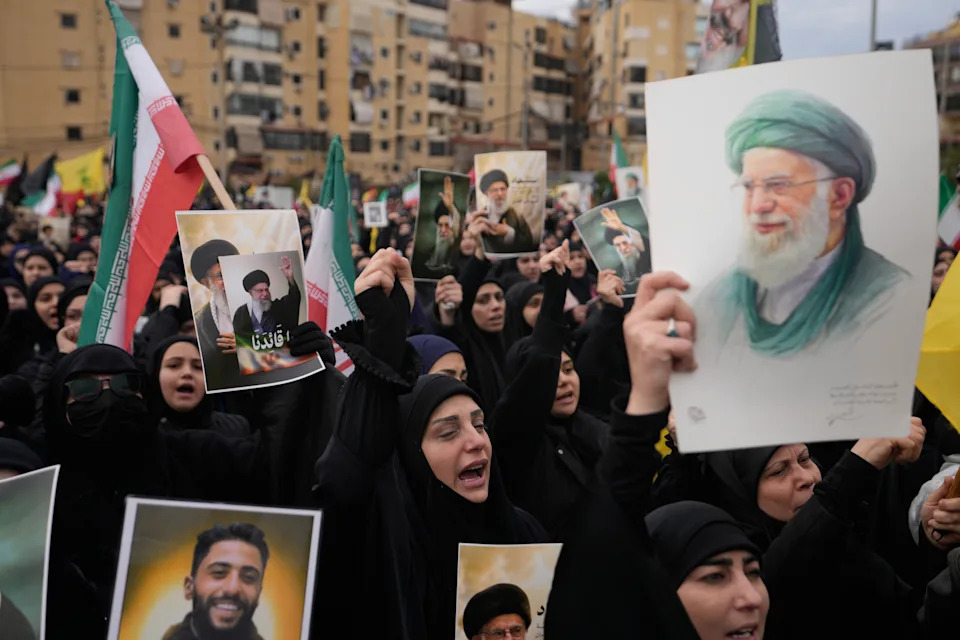
Hezbollah supporters shout slogans as they gather to mourn the death of Iranian Supreme Leader Ayatollah Ali Khamenei in the southern Suburb of Beirut, Lebanon, Sunday, March 1, 2026. (AP Photo/Hassan Ammar)(ASSOCIATED PRESS)
Nevertheless, the situation remained volatile. Following recent strikes on Iranian targets by U.S. and Israeli forces, Hezbollah issued statements condemning the attacks and launched missile fire across the Israeli border; Israel responded with strikes on Beirut’s southern suburbs. The episode underscored how quickly localized exchanges can risk broader escalation.
Iraq And Reported Planning Meetings
In Iraq, a coalition of Iran-backed militias calling itself the Islamic Resistance in Iraq has claimed a series of drone strikes on bases in and around Erbil. Two militia officials told reporters that Iranian representatives and allied Iraqi groups met in recent months to coordinate possible responses to attacks on Iran; those officials, speaking anonymously, said plans included potential actions against U.S. forces and regional sites.
What Comes Next
The past 2½ years have, according to analysts, reshaped regional balances and reduced Tehran’s margin for action in some theatres. Yet the dynamics remain fluid: weakened arsenals, disrupted supply lines and targeted strikes change calculations, but they do not remove the risk of wider conflagration. As Renad Mansour put it: “It’s a very bloody, a very violent but transformative moment that the Middle East is going through. We don’t know where this will end up.”
Note on Reporting: Casualty figures and some operational details are drawn from local authorities and media reports; attributions vary by source and, in contested environments, claims are sometimes disputed.
Help us improve.





















