
Archaeologists analysed over 3,000 characters on 260 Paleolithic artifacts from southern Germany and found recurring sequences of dots, notches and crosses that date back as far as 45,000 years. Statistical patterns in sign use and predictability suggest these marks carried information with a density comparable to the earliest proto-cuneiform tablets. While the precise meanings remain unknown, the work indicates sophisticated symbolic behaviour well before Mesopotamian writing.
45,000-Year-Old Symbol Sequences in Germany Suggest an Early Form of Writing
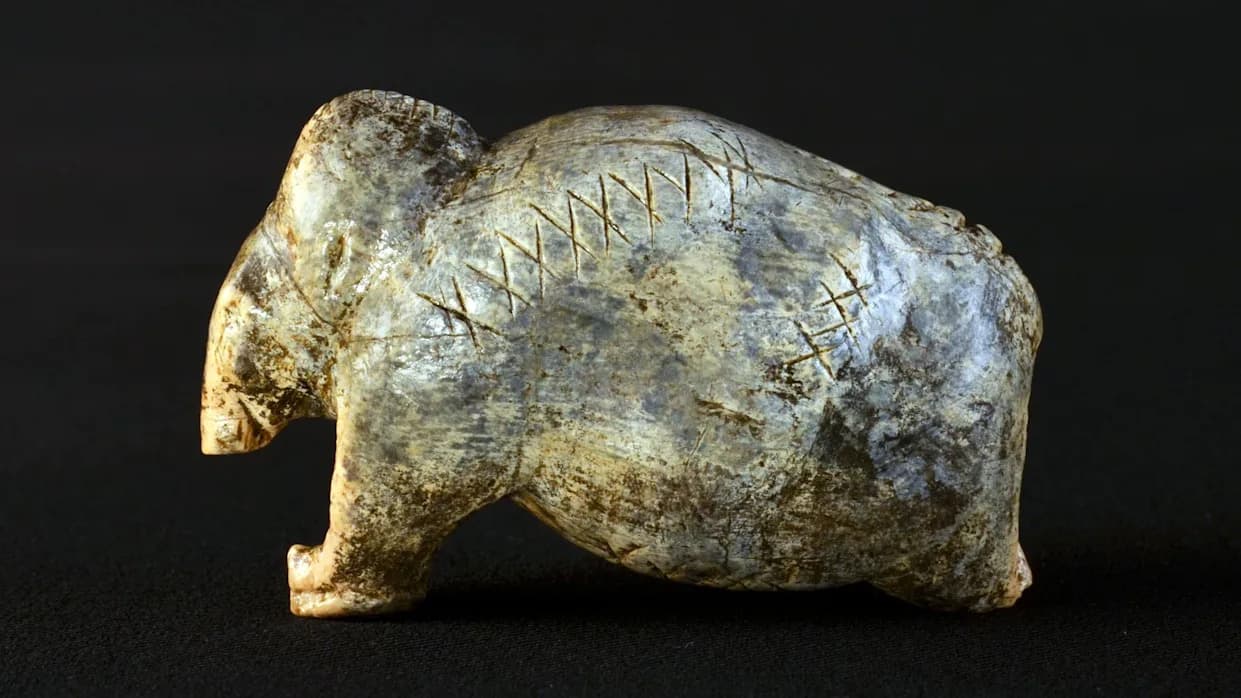
A 40,000-year-old mammoth figurine with engraved rows of crosses and dots [University of Tübingen / Hildegard Jensen]
Archaeologists report that patterned sequences of lines, dots, notches and crosses incised on Paleolithic objects from southern Germany may represent an early form of symbolic communication — and could push the origins of writinglike systems tens of thousands of years earlier than previously thought.
Researchers analysed more than 3,000 individual characters across 260 artefacts recovered from sites including the Geißenklösterle and the Lonetal cave system in Baden-Württemberg. Some of the objects date to about 45,000 years ago, a period shortly before modern humans expanded into Europe from Africa and encountered Neanderthals.
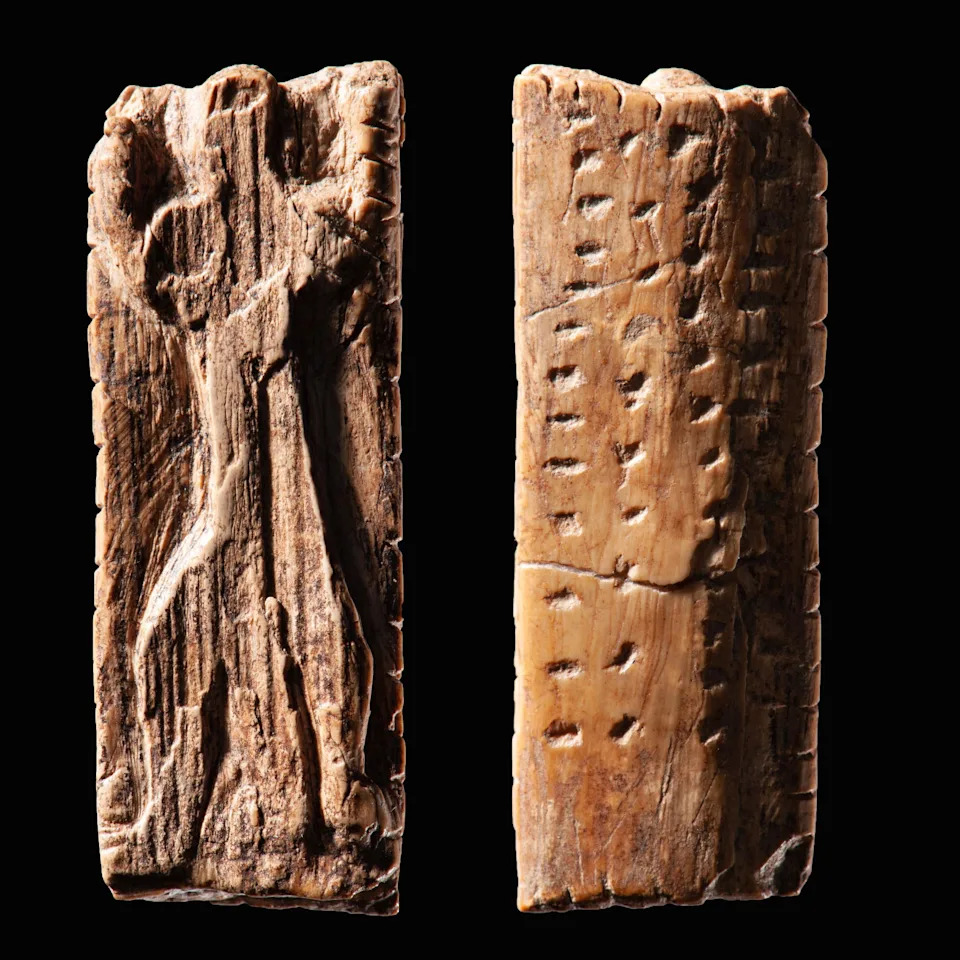
The so-called "adorant" has a human-like figure and several rows of notches and dots. [Landesmuseum Württemberg / Hendrik Zwietasch]
Patterns, Not Pictures
Rather than pictorial scenes, the team focused on repetitive sign sequences on small portable items such as carved mammoth ivory figurines and an ivory plaque nicknamed the "adorant," which also depicts a lionhuman figure. On these pieces the researchers identified repeated, predictable arrangements of marks — especially clustered dots and rows of notches — that they say resemble structural features of later written systems.
"The Stone Age sign sequences are an early alternative to writing," says Prof. Christian Bentz of Saarland University, a coauthor of the paper published in PNAS.
Lead researcher Ewa Dutkiewicz of Berlin’s Museum of Prehistory and Early History adds that the findings highlight advanced symbolic and cognitive capacities in Paleolithic hunter-gatherers: "So far, we've only scratched the surface of what can be found in terms of symbol sequences on a wide variety of artifacts."
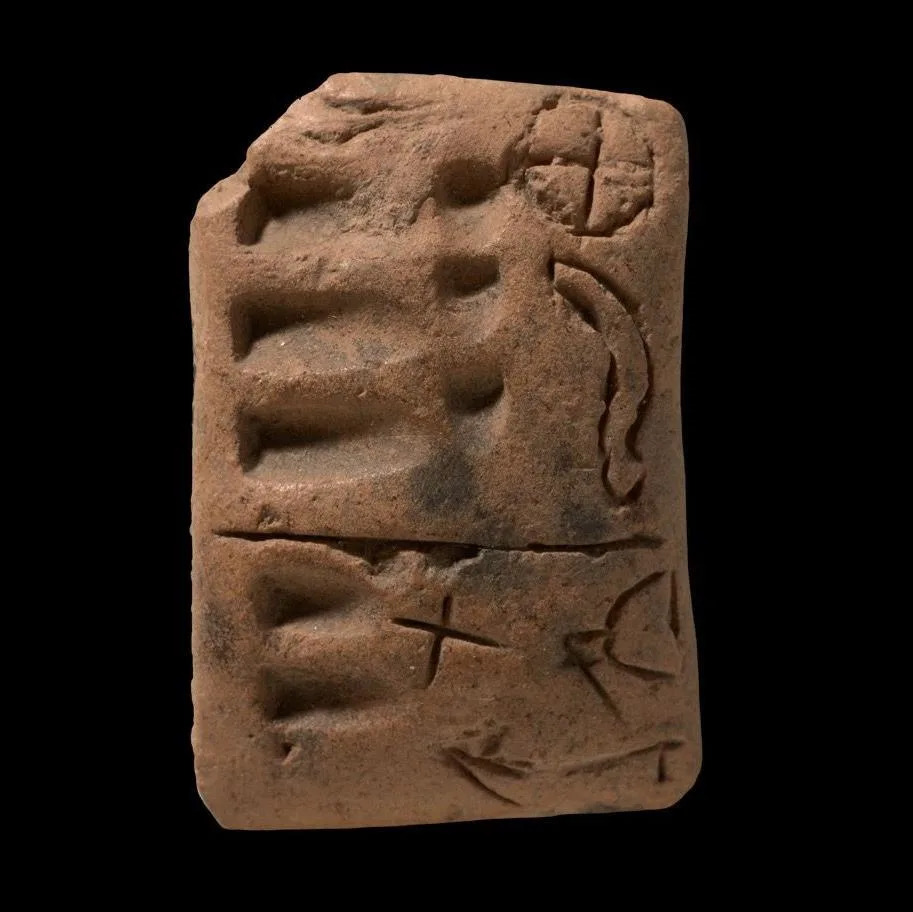
A proto-cuneiform tablet from around 3350 years ago [Staatliche Museen zu Berlin, Vorderasiatisches Museum / Olaf M. Tesmer]
Statistical Evidence
The team applied quantitative analyses to measure sign density, repetition and predictability. They report that the information density and statistical regularities of these Stone Age sequences are comparable to those found in the earliest proto-cuneiform tablets from ancient Mesopotamia — which appear roughly 40,000 years later. The researchers caution, however, that the precise meanings of the symbols remain unknown.
Patterns tended to be denser on figurative objects than on functional tools, suggesting different uses or communicative intents. Many items are small and well finished, implying they were carried and used repeatedly.
What We Know And What Remains Unclear: The marks show structure and repetition consistent with purposeful coding of information, but without a key or bilingual inscription their exact semantics cannot yet be reconstructed. The study strengthens the case for complex symbolic behavior much earlier in human prehistory, while leaving open important questions about who used these marks and for what specific purposes.
The full study appears in the journal PNAS.
Help us improve.





















