
Hezbollah vowed to "confront aggression" after a joint US–Israeli strike killed Iran's Supreme Leader Ayatollah Ali Khamenei. The group condemned the attack and called for nationwide mourning, but had not launched retaliatory strikes by Sunday. Lebanese leaders urged restraint, saying decisions on war and peace remain the prerogative of the state. Tensions are high as Lebanon continues to recover from last year's Hezbollah–Israel war amid allegations of ceasefire violations.
Hezbollah Vows Retaliation After US-Israeli Strike Kills Iran's Supreme Leader
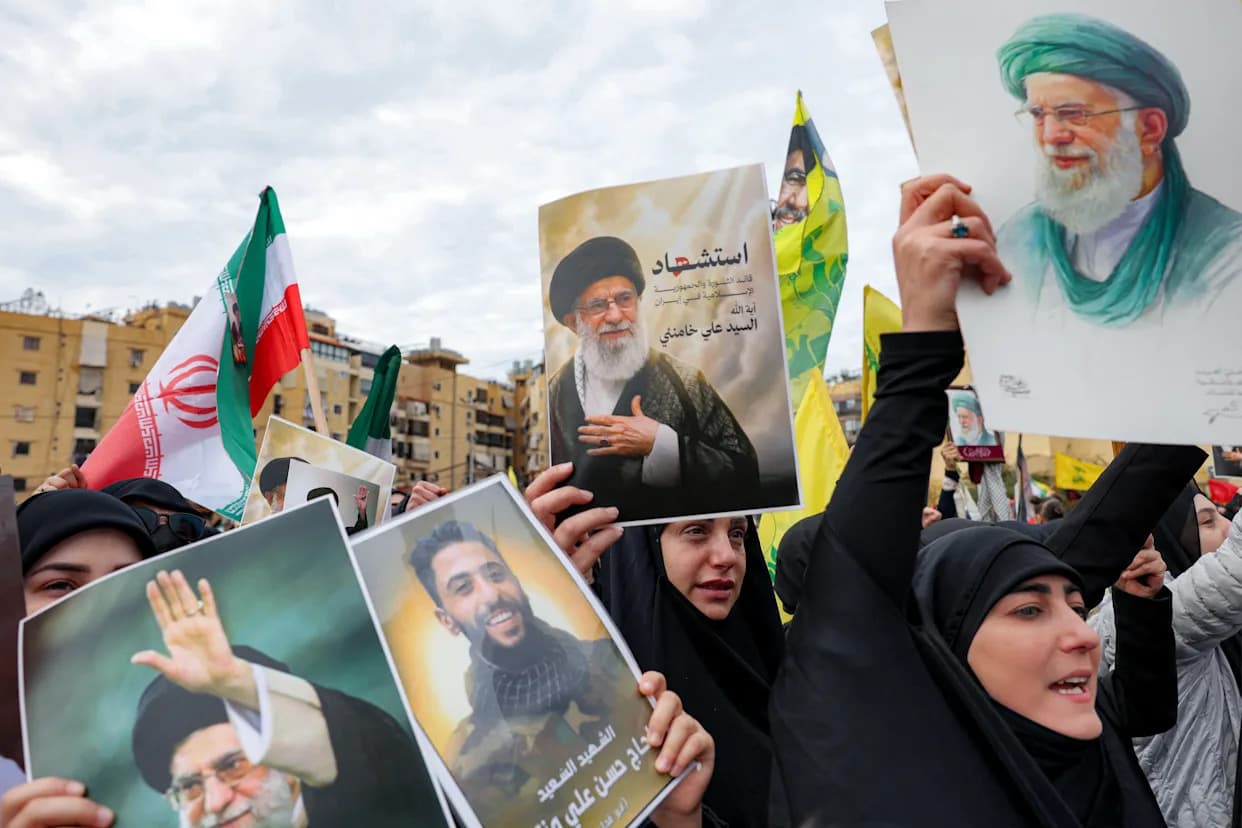
Mourners chant slogans during a memorial rally held by supporters of Lebanon’s Shia Muslim Hezbollah movement, a day after Iran’s supreme leader was assassinated during a US-Israeli offensive on Tehran, in Beirut’s southern suburbs [AFP]
Hezbollah has pledged to "confront aggression" following a joint US–Israeli strike early on Saturday that killed Iran's Supreme Leader, Ayatollah Ali Khamenei, along with other Iranian officials. The Iran-aligned group issued condolences and condemned the attack as a criminal act.
Hezbollah's Response
In a statement released on Sunday, Hezbollah described the strike as "the height of criminality" and said: "We will fulfill our duty in confronting aggression, confident in Allah’s victory, guidance, and support… No matter how great the sacrifices, we will not abandon the field of honour and resistance, nor the confrontation against American tyranny and Zionist criminality, in defence of our land, our dignity, and our independent choices."
On-the-Ground Situation
Despite the group's strong rhetoric, Hezbollah — which operates as a semi-autonomous armed force within Lebanon — had not launched retaliatory attacks against Israel or US assets by Sunday, the day after the strike. Thousands of supporters gathered in Beirut to mourn Khamenei, chanting slogans including "Death to America, death to Israel." Hezbollah also called on mosques in areas under its influence to recite the Quran and hold mourning ceremonies.
Lebanese Leadership Urges Restraint
Lebanese President Joseph Aoun, speaking after an emergency meeting of the country's Higher Defence Council, stressed that "the decision of war and peace rests solely with the Lebanese state." Prime Minister Nawaf Salam warned against allowing the country to be "dragged into adventures that threaten its security and unity," urging citizens to act with wisdom and patriotism and to put Lebanon's interests first.
Regional Context
Lebanon is still recovering from a yearlong war between Hezbollah and Israel that ended with a ceasefire in November 2024. Lebanese officials and analysts have accused Israel of continued strikes and maintaining military positions inside Lebanese territory in violation of the ceasefire, a factor that heightens the risk of renewed escalation.
Key Quote: "The decision of war and peace rests solely with the Lebanese state," — Lebanese President Joseph Aoun.
Authorities in Beirut are attempting to contain tensions as non-state actors issue vows of retaliation. The coming days will be closely watched for any change in Hezbollah's posture or further developments across the region.
Help us improve.





















