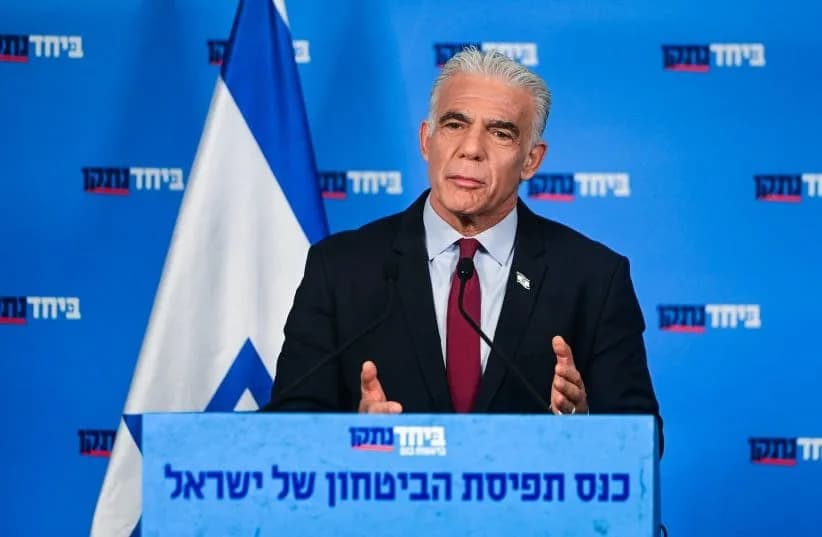
Israeli opposition leader Yair Lapid publicly backed Prime Minister Benjamin Netanyahu’s strikes on Iran, calling the campaign a “just war against evil” after emerging from a Tel Aviv bomb shelter. The U.S. and Israel targeted senior Iranian figures and urged regime change, prompting Iranian missile barrages at Israel and Gulf states. Lapid said Iran’s missile and nuclear programs — and potentially its leadership — should be eliminated, and he thanked President Donald Trump for U.S. leadership.
Yair Lapid Backs Netanyahu’s Strikes On Iran, Calls For Regime Change
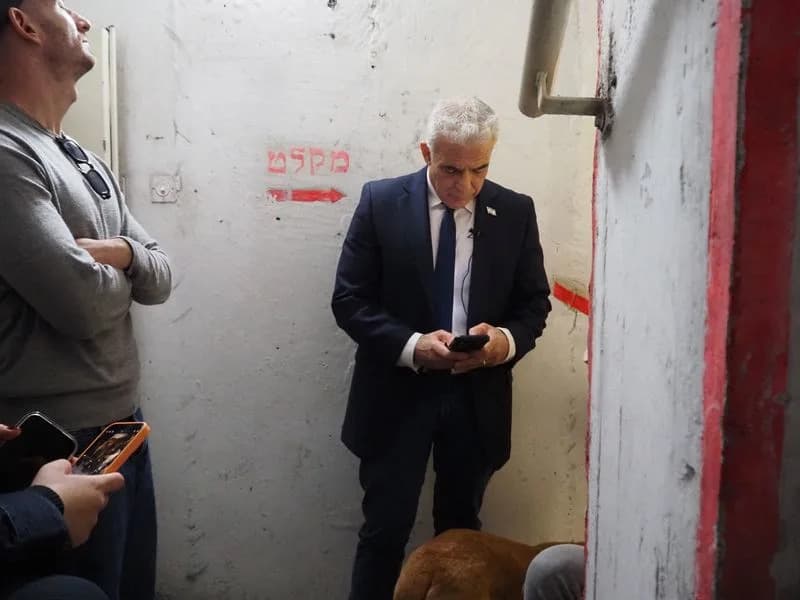
Israeli opposition leader Yair Lapid uses his phone in a shelter as sirens sound after missiles were launched towards Israel from Iran following strikes by Israel and the U.S. on Iran, in Tel Aviv, Israel February 28, 2026. REUTERS/Alexander Cornwell
TEL AVIV — Israeli opposition leader Yair Lapid on Saturday publicly endorsed Prime Minister Benjamin Netanyahu’s decision to carry out strikes on Iran, calling the operation a “just war against evil.” Lapid spoke to Reuters after emerging from a Tel Aviv bomb shelter following sirens that warned of an incoming Iranian attack.
The United States and Israel launched a series of strikes that targeted senior Iranian figures and included calls for the overthrow of Iran’s government. Those strikes prompted waves of Iranian missile barrages fired at Israel and at Gulf states, including the United Arab Emirates and Qatar.
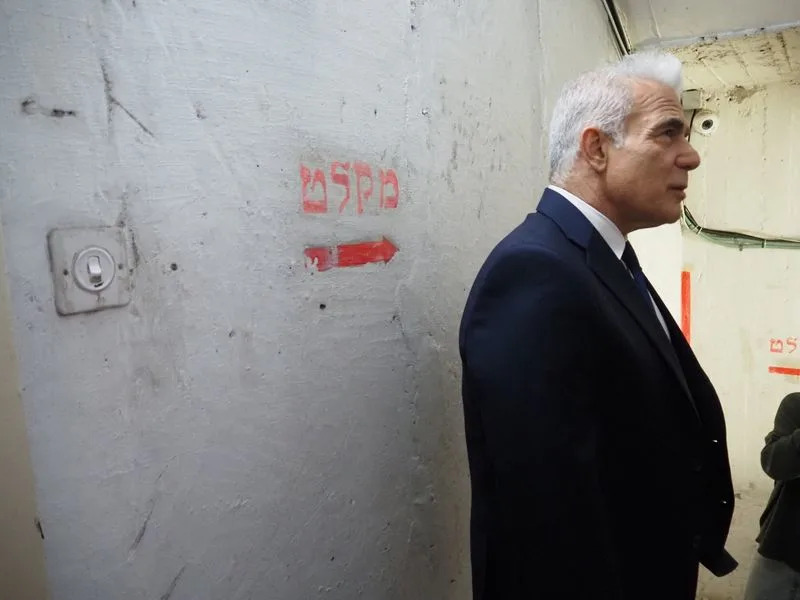
Israeli opposition leader Yair Lapid takes cover in a shelter as sirens sound after missiles were launched towards Israel from Iran following strikes by Israel and the U.S. on Iran, in Tel Aviv, Israel February 28, 2026. REUTERS/Alexander Cornwell
"We are going to stand united against this threat," Lapid told Reuters in Tel Aviv.
Lapid said Iran’s ballistic missile and nuclear programs should be eliminated and added that, if feasible, the country’s leadership should be “obliterated.” His stance underscores a rare moment of unity in Israel’s fractured politics, where many leaders—including Netanyahu—long view Iran as an existential threat.
Rivalry Set Aside As Conflict Escalates
Although a fierce critic of Netanyahu and briefly prime minister in 2022, Lapid said political differences would be put on hold for the time being. He also publicly thanked President Donald Trump for what he described as U.S. leadership in the operation against Iran, saying Trump had shown courage.

An Israeli security personnel stands by a protected area after missiles were launched towards Israel from Iran following strikes by Israel and the U.S. on Iran, in Latrun, Israel, February 28, 2026. REUTERS/Amir Cohen
Last June, a surprise Israeli attack on Iran escalated into a 12-day conflict between the two regional powers that concluded after the United States joined Israel in strikes on Iranian targets. More than 30 people were killed in Israel when Iranian missiles struck parts of the country, including densely populated Tel Aviv, while Israeli strikes on Iran were reported to have killed over 900 people.
Asked whether Israel could sustain a conflict lasting weeks or months, Lapid said Israel was “way stronger” than many assumed and expressed doubt that Iran could endure a protracted war in the same way.
Israel is due to hold a national election by October. Polls suggest Netanyahu’s coalition may struggle to form a government, and the opposition remains fragmented—though some parties aim to assemble an anti-Netanyahu coalition. Lapid’s Yesh Atid could lose seats but may still play a pivotal role in post-election coalition-building.
Reporting by Alexander Cornwell; Editing by Louise Heavens.
Help us improve.