
Retired Adm. James Stavridis warned that President Trump is underestimating the difficulty and risks of occupying Venezuela after reports that President Nicolás Maduro and his wife were captured. Stavridis compared any occupation to the Iraq experience and highlighted Venezuela's high level of violent deaths in 2024. Trump celebrated the operation, signaled willingness to put 'boots on the ground,' and suggested potential expansion of operations to neighboring countries.
Top Admiral Warns U.S. Faces 'You Break It, You Own It' Risk After Trump's Venezuelan Troop Boasts

Trump ordered the arrest of Nicolas Maduro in an early-morning raid Saturday. The Venezuelan dictator will now face trial in New York. / Pedro Rances Mattey/Anadolu via Getty Images
A retired U.S. Navy admiral is sounding a stark warning about the risks of a potential U.S. military occupation after what U.S. officials described as the surprise capture of Venezuelan President Nicolás Maduro and his wife, Cilia Flores.
Adm. James Stavridis, a four‑star admiral and CNN senior military analyst who served as NATO's Supreme Allied Commander, told Erin Burnett on OutFront that U.S. confidence about quickly securing Venezuela is dangerously optimistic.
'I'm massively concerned about the thinking here. It's one of the most violent countries in the world. So the idea that it can be suddenly subdued, I think, is highly questionable,' Stavridis said.
Stavridis, who spent 37 years in the Navy, cautioned that any occupation would be logistically complex and politically fraught. He drew a blunt comparison to the U.S. experience in Iraq, noting that at its peak the U.S. had about 220,000 ground troops and still failed to achieve lasting stability.
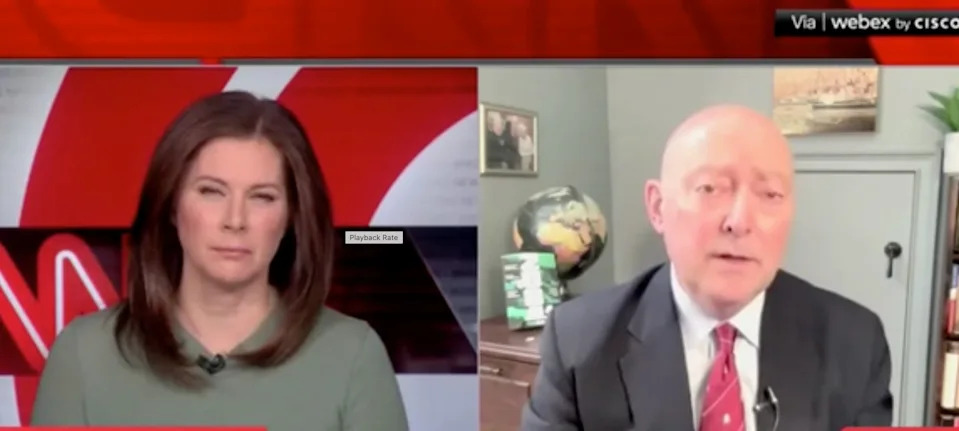
“I‘m massively concerned about the thinking here,” said CNN senior military analyst James Stavridis. / CNN / CNN
The admiral highlighted Venezuela's high levels of lethal violence as a significant complicating factor, citing a reported 6,884 violent deaths in 2024 in a country of just under 30 million people. By comparison, the United States recorded roughly 16,924 violent deaths in 2024 across a population exceeding 340 million.
Stavridis summed up the risk with a simple warning: 'You break it, you own it.' The remark underscores the potential long-term political, humanitarian, and security responsibilities that would fall to the U.S. if it attempts to run or occupy another country.
President Donald Trump praised the operation while at his Mar‑a‑Lago club, saying he had watched it 'literally like I was watching a television show.' At an 11 a.m. news conference, he announced the U.S. would run Venezuela 'until new, American‑approved leadership was installed' and said the administration planned to seize Venezuelan oil reserves.
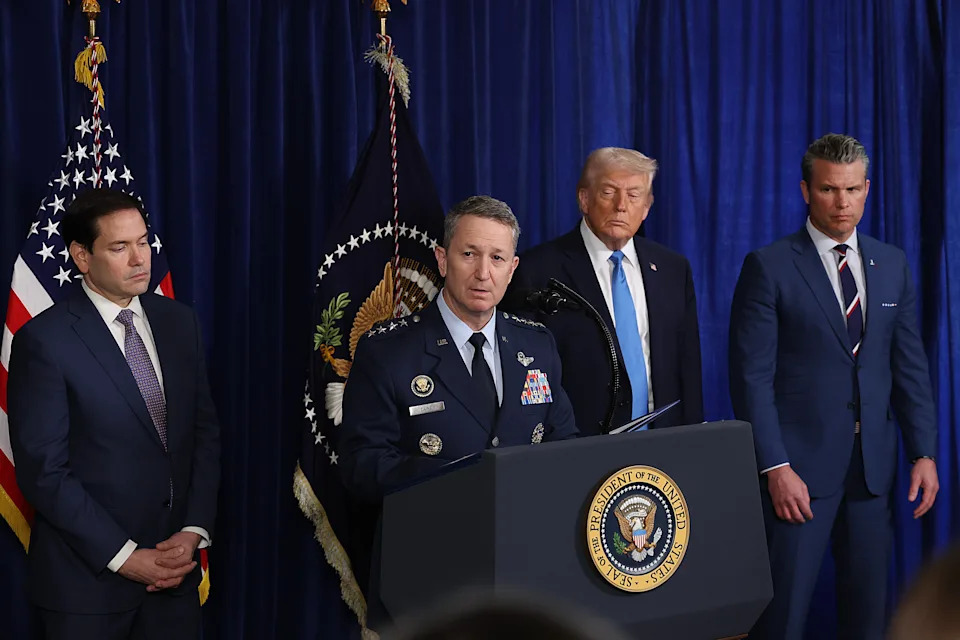
President Donald Trump's eyelids fluttered during the Saturday morning press conference where he announced Maduro's capture. / Joe Raedle/Getty Images
Trump also warned, 'We're not afraid to have boots on the ground,' and later said a 'second wave' of strikes had been prepared but not launched. He reported that Maduro and his wife were in U.S. custody and said no U.S. forces were killed, though there were 'few' injuries.
On Fox & Friends and at the news conference, Trump threatened harsh consequences for Maduro loyalists who remain in Caracas: 'Well, if they stay loyal, the future is really bad, really bad for them.' He added, 'All political and military figures of Venezuela should know what happened to Maduro can happen to them, and it will happen to them if they do bad to their people.'
Trump also suggested the campaign could expand beyond Venezuela, naming the possibility of actions involving Colombia and criticizing Mexico with renewed claims that it is controlled by drug cartels. Those comments raised further concerns among experts about regional escalation and the diplomatic fallout of unilateral military moves.
This unfolding episode has sparked urgent debate among military and foreign‑policy experts about the feasibility and consequences of U.S. occupation, the humanitarian costs, the likely insurgent resistance, and the long‑term strategic implications for the Western Hemisphere.
Note: The Daily Beast has reached out to the White House for comment.
Help us improve.


