
The U.S. conducted a covert, months-long operation called "Absolute Resolve" to capture Venezuelan President Nicolás Maduro. After rehearsals on a replica of his compound and detailed intelligence on his routines, U.S. forces carried out a nighttime raid that breached Maduro’s residence and airlifted him and his wife to a U.S. warship. Officials said the operation lasted under 30 minutes, involved precision aviation through a narrow weather window, and caused some Venezuelan casualties; U.S. forces reported injuries but no fatalities.
Inside “Absolute Resolve”: How U.S. Forces Captured Venezuelan President Nicolás Maduro

U.S. military aircraft are parked on the tarmac at Jose Aponte de la Torre Airport in Ceiba, Puerto Rico, Saturday, Jan. 3, 2025. (AP Photo/Alejandro Granadillo)(ASSOCIATED PRESS)
For months, U.S. military and intelligence assets built a coordinated presence near Venezuela while publicly striking vessels they said were used for drug trafficking. Behind the scenes, U.S. agencies tracked Venezuelan President Nicolás Maduro’s daily routines and lifestyle while special operations forces rehearsed a plan to remove him by force.
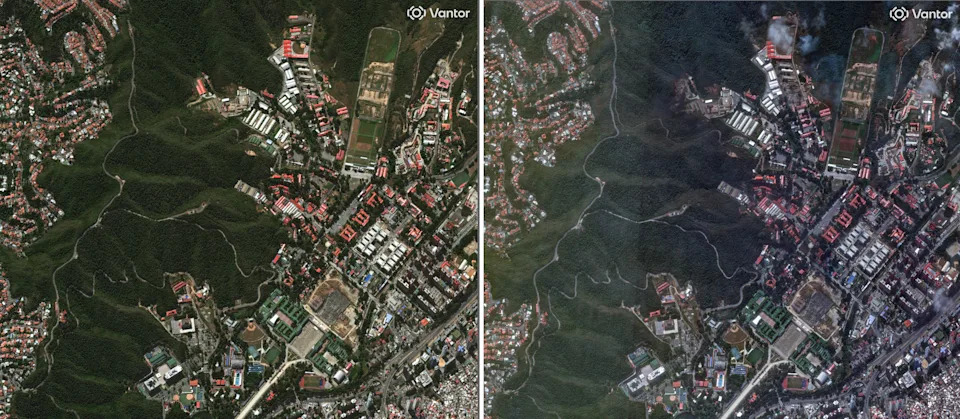
This satellite image provided by Vantor shows from left, the Fuerte Tiuna neighborhood of Caracas, Venezuela on Dec. 22, 2025 and Fuerte Tiuna neighborhood after U.S. strikes on Saturday, Jan. 3, 2026. (©2026 Vantor via AP)(ASSOCIATED PRESS)
Overnight Raid and Capture
The months of clandestine planning culminated in a nighttime operation — dubbed "Absolute Resolve" — after President Donald Trump authorized the mission. U.S. forces cut power in parts of Caracas, breached Maduro’s residence and transported him and his wife, Cilia Flores, by helicopter to a U.S. warship, officials said. The administration plans to bring charges against Maduro in New York.
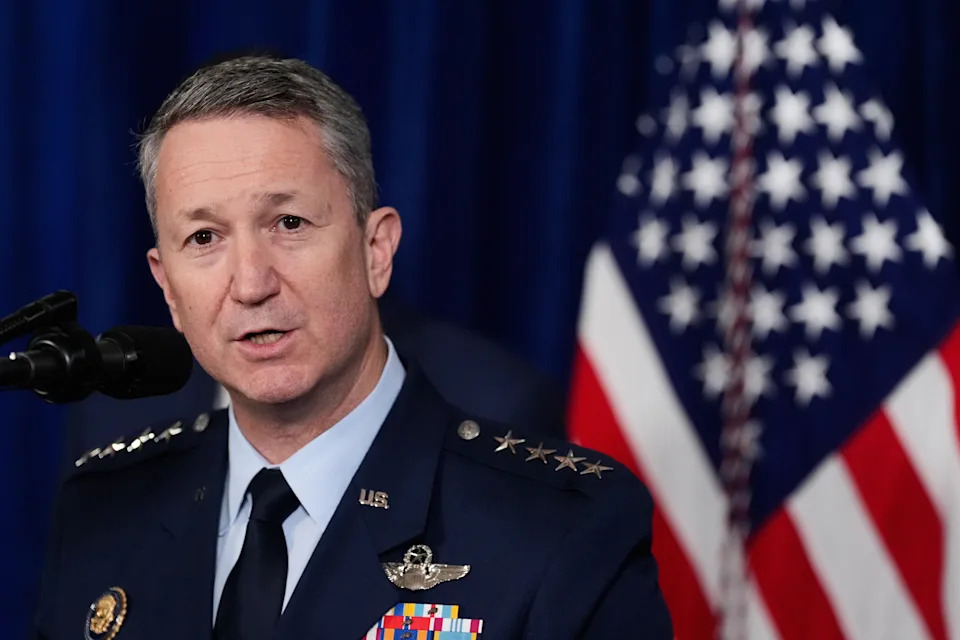
Chairman of the Joint Chiefs of Staff Gen. Dan Caine speaks during a news conference with President Donald Trump at Mar-a-Lago, Saturday, Jan. 3, 2026, in Palm Beach, Fla. (AP Photo/Alex Brandon)(ASSOCIATED PRESS)
Meticulous Preparation
Gen. Dan Caine, chairman of the Joint Chiefs of Staff, said troops had rehearsed their movements for months and studied even minor details of Maduro’s life, from his daily whereabouts to his pets and clothing. Commanders reportedly built a full-scale replica of the presidential compound to practice the extraction and prepared for contingencies — including cutting into a reinforced safe room if necessary.

A destroyed armored vehicle sits at La Carlota airport in Caracas, Venezuela, Saturday, Jan. 3, 2026, after explosions were reported at the site. (AP Photo/Ariana Cubillos)(ASSOCIATED PRESS)
"We think, we develop, we train, we rehearse, we debrief, we rehearse again, and again," Caine said, adding the force was "set" by early December.
Execution and Aftermath
Officials said the raid lasted less than 30 minutes. Defense Secretary Pete Hegseth described it as a "massive joint military and law enforcement raid." At least seven explosions were reported in Caracas. Venezuelan Vice President Delcy Rodríguez, who by law assumed authority after the operation, said some civilians and members of the military were killed and demanded the U.S. free Maduro; she also left open the possibility of dialogue.

Smoke raises at La Carlota airport after explosions and low-flying aircraft were heard in Caracas, Venezuela, Saturday, Jan. 3, 2026. (AP Photo/Matias Delacroix)(ASSOCIATED PRESS)
Trump said a few U.S. personnel were injured but believed there were no American fatalities; Gen. Caine said one U.S. helicopter was struck by enemy fire but returned safely. Trump posted a photo on Truth Social of Maduro in a gray sweatsuit wearing protective headphones and a blindfold.
Context: A Series of Escalations
The operation marked a sharp escalation after months of U.S. strikes on vessels the U.S. said were carrying drugs and, on Dec. 29, a CIA drone strike against a dock area alleged to be used by Venezuelan drug cartels. U.S. officials said commanders waited for a narrow weather window that allowed skilled aviators to fly low over water into Caracas while protective aircraft covered them.
Political and Legal Questions
Trump said the U.S. would "run" the country until a new leader can be chosen and suggested U.S. personnel might remain if necessary. Legal and diplomatic questions about the operation and Maduro’s capture have already emerged, drawing criticism at home and abroad.
Reporters: The original reporting was contributed by Kinnard in Chapin, S.C., with Regina Garcia Cano and Juan Arraez in Caracas.
Help us improve.


