
Modern winter jackets merge classical heat-transfer physics with advanced materials to keep wearers warm while remaining breathable. They limit heat loss through insulation (slowing conduction), windproof shells (reducing convection) and reflective linings (cutting radiative losses). Innovations such as aerogel-infused fabrics, water-repellent down and breathable membranes make jackets lighter, drier and more effective. Researchers are also developing adaptive textiles that could adjust venting, loft and reflectivity automatically.
New Materials, Old Physics: How Modern Winter Jackets Keep You Warm

Modern winter jackets use a few time-honored physics principles to keep you warm.Magda Indigo/Moment via Getty Images
As temperatures drop, winter jackets do more than add a layer — they combine centuries-old thermal physics with modern materials engineering to keep you warm, dry and comfortable.
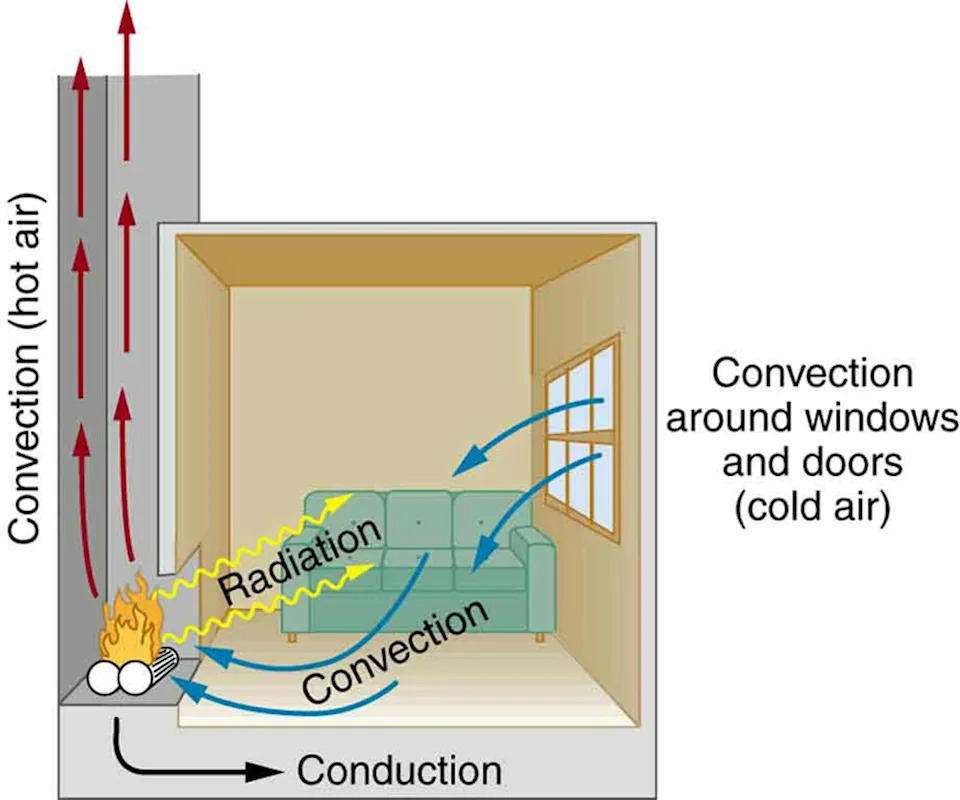
In a fireplace, heat transfer occurs by all three methods: conduction, convection and radiation. Radiation is responsible for most of the heat transferred into the room. Heat transfer also occurs through conduction into the room’s floor, but at a much slower rate. Heat transfer by convection also occurs through cold air entering the room around windows and hot air leaving the room by rising up the chimney.Douglas College Physics 1207,CC BY
How Jackets Control Heat
Jackets manage warmth by controlling the three classical modes of heat transfer: conduction, convection and radiation. At the same time they must remain breathable so moisture from sweat can escape. The physics underlying these processes is well established — from Newton's description of convective cooling to Fourier's work on conduction and the Stefan–Boltzmann and Planck advances in radiative heat transfer — but recent textile innovations let those principles work far more effectively than before.
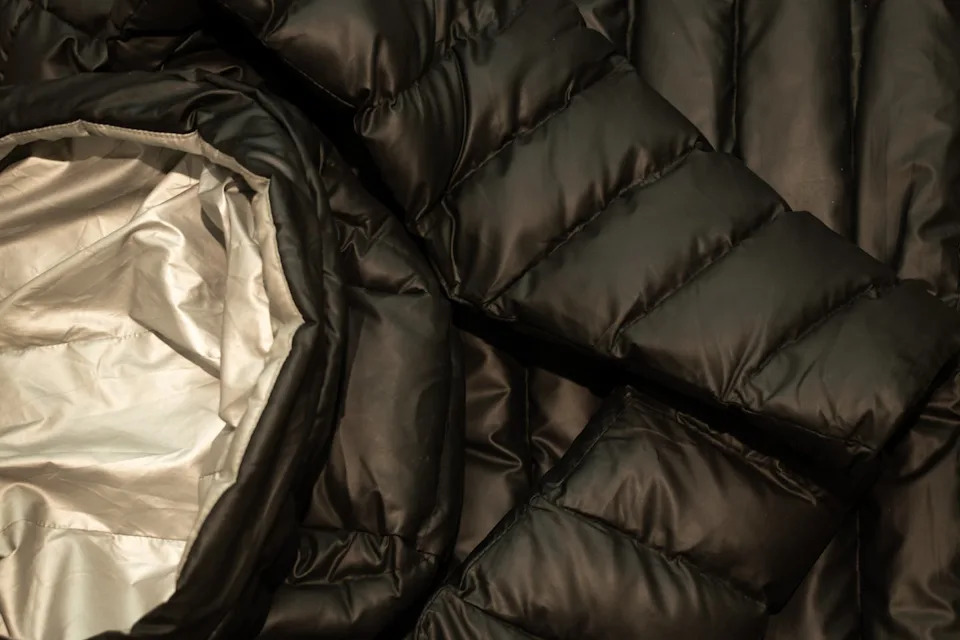
The puffy segments in a jacket are filled with down.Victoria Kotlyarchuk/iStock via Getty Images
Conduction and Insulation
Conduction is the direct flow of heat from your warm body into colder surroundings. Insulation slows that flow by trapping still air in many tiny pockets, increasing the path heat must travel to escape. High-loft down provides bulky air-trapping clusters; modern synthetic fibers and aerogel-infused fabrics pack similar insulating power into thinner, lighter layers.
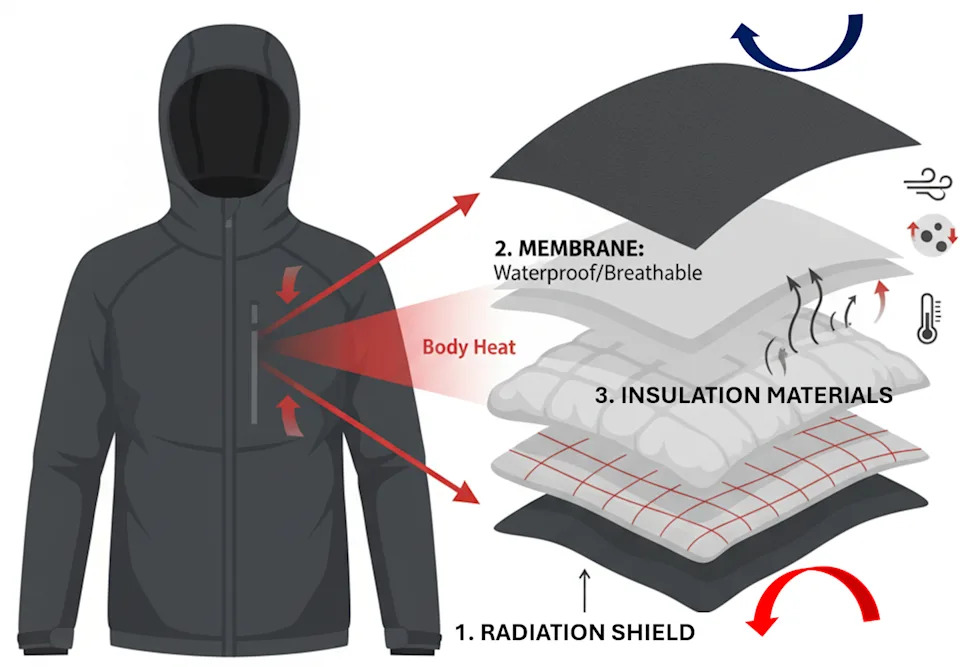
How modern jackets manage heat: Left, a typical insulated shell; right, layers that trap air, block wind, and reflect infrared heat without adding bulk. Wan Xiong and Longji Cui
Convection and Windproofing
Wind strips away the thin boundary layer of warm air that clings to your body. A well-designed outer shell resists this by using tightly woven fabrics, laminated membranes and careful seam and cuff design to block cold air and moisture. Preventing wind intrusion preserves the warm microclimate between your body and the insulation.

Thin reflective surfaces bounce infrared heat – similar to the ‘space-blanket’ effect used in aerospace and modern jacket liners.Vincent Besnault/The Image Space via Getty Images
Radiation and Reflective Linings
Even in still air you lose heat by emitting infrared radiation. To limit radiative losses, many jackets use reflective linings that bounce a portion of your body heat back toward you — a subtle "space-blanket" effect that adds warmth without bulk. Manufacturers balance reflectivity and breathability by using patterned coatings (for example, micro-dot reflective liners) so vapor can still escape between reflective areas.
Material Innovations That Make a Difference
- Ultrafine synthetic fibers that trap heat more efficiently.
- Water-repellent treatments for natural down so it retains loft when damp.
- Breathable waterproof membranes with microscopic pores that pass vapor but block liquid water.
- Aerogel-infused textiles that provide high insulation with minimal bulk.
- Micro-dot and patterned reflective coatings that improve radiative retention without blocking breathability.
Staying Dry Is Key
Insulation loses effectiveness when wet: down collapses and synthetic fills become less insulating when saturated. That is why the best systems combine moisture-wicking inner layers, vents and membranes whose pores let vapor escape while keeping rain and snow out.
The Future: Adaptive Textiles
Most jackets today are passive — designed for the conditions you expect. Researchers are developing adaptive textiles that respond to environmental changes: fabrics that open microscopic vents as humidity rises, linings that adjust reflectivity in sunlight, or insulation that puffs up outdoors and relaxes indoors. These smart behaviors could let clothing sense conditions, decide, and reconfigure without the wearer having to change layers.
In short, modern winter wear relies on time-tested thermodynamics coupled with precise materials engineering. That combination explains why contemporary jackets feel warmer, lighter and drier than earlier designs.
This article is republished from The Conversation. Written by Longji Cui and Wan Xiong, University of Colorado Boulder. The authors report no relevant conflicts of interest beyond their academic appointments.


