Summary: Several cross-border attacks from Afghanistan this month have killed more than a dozen people along the Tajik–Afghan frontier, including Chinese workers. Tajikistan accuses the Taliban of failing to secure the border; Kabul blames unnamed armed groups and promises cooperation. Analysts suspect ISKP seeks to undermine the Taliban’s credibility, while China has urged evacuations and demanded protection for its citizens.
Tajikistan–Taliban Border Clashes Escalate: Attacks That Threaten Regional Stability and Endanger Chinese Workers

A Taliban flag flies on top of a bridge across the Panj river on the Afghan-Tajik border as seen from Tajikistan’s Darvoz district [File: Amir Isaev/AFP]
Tensions along the Tajikistan–Afghanistan frontier have surged this month, with a series of cross-border attacks that have killed more than a dozen people and drawn China into the diplomatic and security fallout. Tajik officials say several armed incursions originated in Afghanistan’s Badakhshan province and have targeted border areas where Chinese companies operate.
Recent Incidents
In the most recent clash, officials reported at least five people killed in Tajikistan’s Shamsiddin Shokhin district, including three alleged intruders who crossed the border and engaged Tajik border guards. Authorities said they recovered a weapons cache at the scene that included three M-16 rifles, a Kalashnikov assault rifle, three foreign-made pistols with silencers, 10 hand grenades, a night-vision device and explosives.
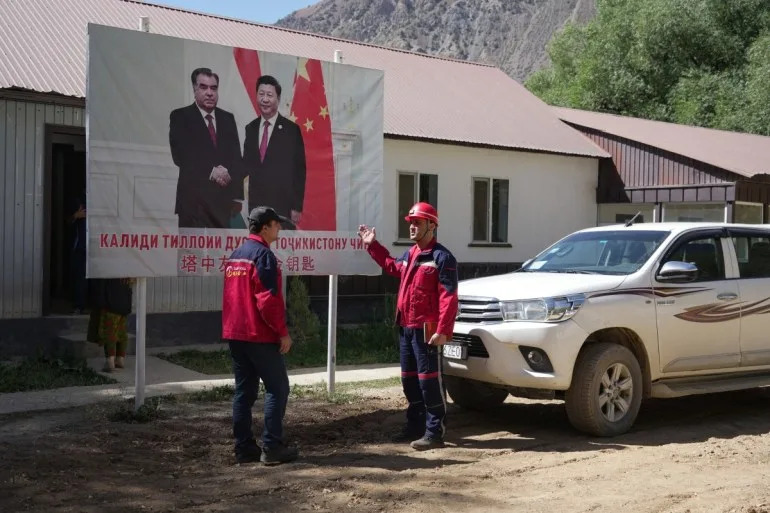
Workers of Talco Gold, a joint Tajik-Chinese mining firm, speak in front of a poster of Chinese President Xi Jinping and Tajik President Emomali Rahmon at the Saritag antimony mine in western Tajikistan [File: AFP]
Two attacks on Chinese nationals in late November highlighted the international stakes. On November 26, a drone-borne explosive hit a compound belonging to Shohin SM, a private Chinese gold-mining firm in Khatlon, killing three Chinese citizens. On November 30, gunmen attacked workers for the state-owned China Road and Bridge Corporation in Darvoz district, killing at least two people. Tajik officials said both strikes originated from villages in Afghanistan’s Badakhshan province.
Claims, Denials and Responsibility
Dushanbe has publicly accused the Taliban government of failing to secure the shared border and demanded that Kabul apologise and take effective measures to prevent further incursions. The Tajik statement called the recent attacks evidence of the Taliban’s 'serious and repeated irresponsibility' in meeting international obligations on border security.
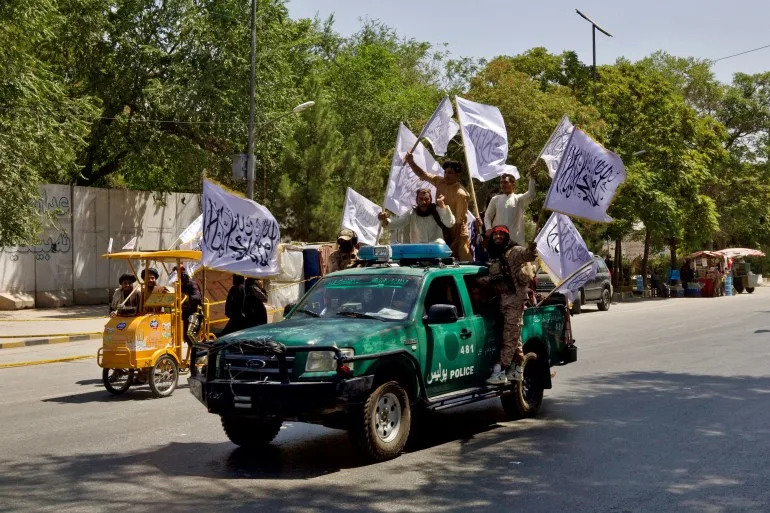
Taliban members participate in a rally to mark the third anniversary of the Taliban’s seizure of Kabul in the Afghan capital on August 14, 2024. [Sayed Hassib/Reuters]
Taliban response: Kabul expressed sorrow for the deaths of Chinese workers, blamed an unnamed armed group for trying to 'create chaos and instability', and promised cooperation. Sirajuddin Haqqani, the Taliban interior minister, said Afghanistan posed no threat to neighbors and reaffirmed commitment to the 2020 Doha Agreement.
While no group has publicly claimed responsibility, analysts point to the Islamic State Khorasan Province (ISKP) as a likely perpetrator. Observers argue ISKP has repeatedly targeted foreigners to undermine the Taliban’s image as an effective security provider and to drive a wedge between Kabul and regional governments.
Regional and Strategic Implications
China is a major economic partner and creditor to Tajikistan and has a substantial presence in infrastructure and mining projects in border regions. Beijing’s embassy in Dushanbe advised Chinese firms and personnel to evacuate vulnerable border sites and publicly demanded that Tajik authorities ensure the safety of Chinese enterprises and citizens.
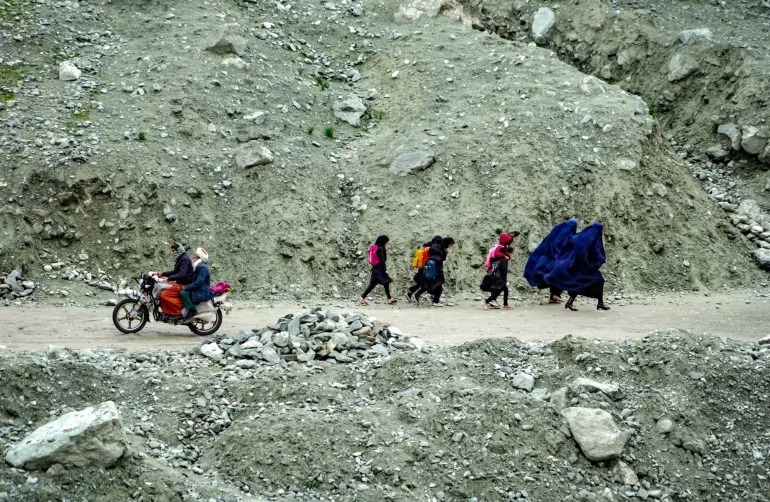
Afghans travel along a border road as seen from Tajikistan’s Darvoz district [File: Amir Isaev/AFP]
The Tajik–Afghan border is also a long-standing transit route for heroin and synthetic drugs bound for Central Asia, Russia and Europe. The area’s rugged terrain, weak policing and the presence of multiple armed factions make it a persistent security flashpoint.
A United Nations sanctions-monitoring report has documented the presence of several armed groups inside Afghanistan, including ISKP, Tehreek-e-Taliban Pakistan, al-Qaeda, the Turkistan Islamic Party, Jamaat Ansarullah and others. Jamaat Ansarullah, a Tajik-language group with links to al-Qaeda-aligned networks, is active near the Tajik border.
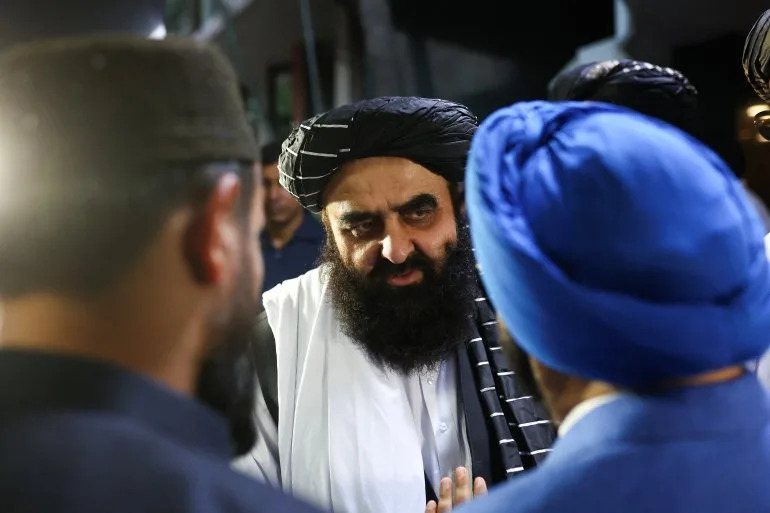
Afghanistan’s Taliban Foreign Minister Amir Khan Muttaqi called his Tajik counterpart early this month to express regret about the attacks on Chinese nationals and say his government was prepared to boost cooperation between their border forces [Anushree Fadnavis/Reuters]
Political Context
Tajikistan has long been distrustful of the Taliban—rooted in ideological and ethnic divides and in Dushanbe’s alignment with the anti-Taliban Northern Alliance in the 1990s. After the Taliban’s return to power in 2021, Tajikistan initially refused recognition, though pragmatic engagement began around 2023 amid shared concerns about ISKP. In November, a high-level Tajik delegation visited Kabul—the first such visit since 2021.
Complicating the security picture are broader regional tensions: Pakistan accused Afghanistan of harbouring Tehreek-i-Taliban Pakistan fighters, prompting cross-border strikes and retaliatory attacks in November that were later subject to a Qatar- and Türkiye-brokered ceasefire. The Taliban has also sought new ties with India amid worsening relations with Pakistan.
What Comes Next?
The rising frequency of incursions raises urgent questions about whether a new threat is emerging along this remote frontier and whether the Taliban can impose effective control over armed groups in northern provinces like Badakhshan. The Taliban’s recent crackdowns on poppy cultivation have also provoked resistance in areas where poppies are a primary cash crop, complicating stabilization efforts.
For now, the clashes have amplified regional anxieties: they jeopardise foreign investment and personnel safety, test fragile diplomatic ties, and underscore the risk that Afghanistan-based militant groups could export violence beyond the country’s borders.
Help us improve.