
The article critiques a recurring sports metaphor used by some Republican lawmakers that casts President Trump as a "coach" and Congress as his "players." It highlights statements from Sens. Michael Crapo, Tommy Tuberville and Markwayne Mullin and Rep. Troy Nehls as evidence of deference to the executive. The piece argues the analogy is flawed because Congress holds distinct oversight powers—subpoenas, budgetary control and impeachment—that players do not. Treating legislators as subordinates risks undermining the Madisonian separation of powers and congressional independence.
‘He’s the Coach, We’re the Players’: Why That Metaphor Misreads the Trump–GOP Power Dynamic

As Donald Trump prepared to return to the White House, a number of congressional Republicans signaled they would defer to the incoming president rather than assert independent oversight — using language that framed lawmakers as subordinates of the White House.
Sen. Michael Crapo (R‑Idaho), poised to lead the Senate Finance Committee, said he planned to back White House nominees rather than use the committee’s full oversight role: “My position is what President Trump decides to do is what I will support.” Around the same time Sen. Tommy Tuberville (R‑Ala.) suggested senators should not be responsible for “determining” the merits of Cabinet picks, and Rep. Troy Nehls (R‑Texas) urged colleagues to accept “every single word” of the president’s directives, joking, “If Donald Trump says, ‘jump three feet high and scratch your head,’ we all jump three feet high and scratch our heads.”
“President Trump’s our champion, but we’re the players. He’s the coach, and we’re the players.” — Sen. Markwayne Mullin (R‑Okla.)
That sports analogy is misleading. In athletics, coaches design strategy and instruct players, who execute game plans. But the U.S. federal government is built on a different premise: Congress is a separate, coequal branch with constitutional responsibilities and tools that have no parallel in a player–coach relationship.
Why The Metaphor Falls Short
Players do not oversee, investigate, discipline, or remove their coaches. Members of Congress, by contrast, have concrete authorities to check the executive branch, including:
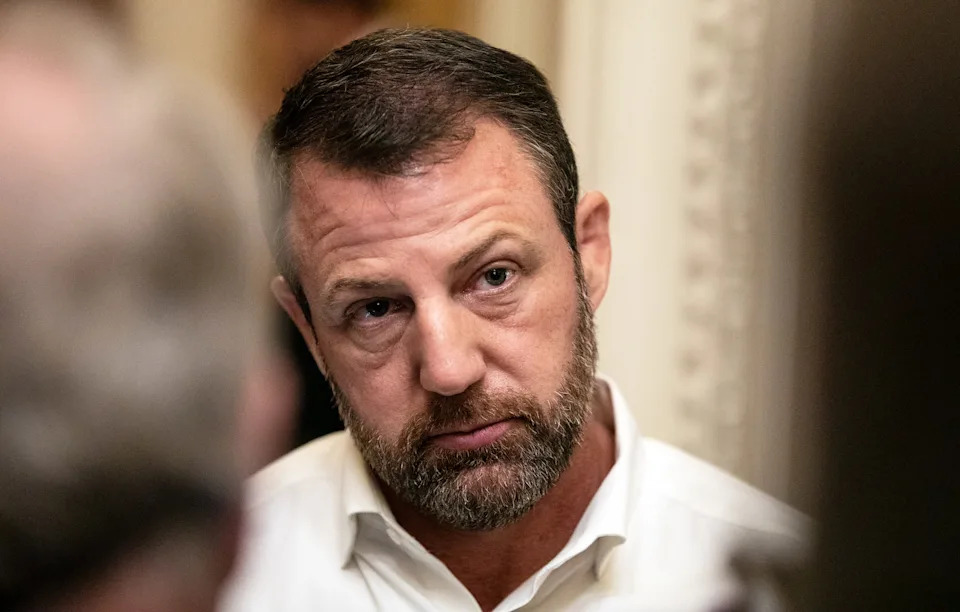
Sen. Markwayne Mullin speaks to reporters following a Republican conference meeting on Nov. 9, 2025 on Capitol Hill.(Anna Rose Layden / Getty Images)
- Subpoena Power: Congress can compel testimony and documents from the White House and its aides.
- Budgetary Authority: Lawmakers control appropriations and can withhold or condition funding.
- Impeachment: The House can impeach and the Senate can convict federal officials for high crimes and misdemeanors.
These are not coaching tools; they are constitutional checks designed to preserve the separation of powers. When legislators treat the president like a coach whose orders must be followed without question, they risk surrendering those responsibilities and eroding institutional independence.
Consequences For Governance
In sports, players who resist a coach’s orders face internal team consequences. In a constitutional system, members of Congress owe their primary duty to constituents and the Constitution, not to party leaders or a president. If lawmakers allow the executive to dictate legislative priorities and oversight practices unchecked, the balance of power shifts — with long‑term implications for accountability and democratic norms.
As debates about Congress’s posture continue, the more lawmakers accept the “coach and players” framing, the deeper the risk that oversight will weaken and that the Madisonian separation of powers will erode.
Disclosure: This article draws on public remarks by senators and representatives and examines how a familiar sports metaphor misrepresents institutional roles in U.S. government.


