
Bangladesh has scheduled national elections for Feb. 12, with a simultaneous referendum on proposed political reforms from the "July National Charter." The vote — to elect 300 lawmakers — follows the 2024 uprising that removed former Prime Minister Sheikh Hasina, who is now in exile. An interim government led by Nobel laureate Muhammad Yunus has banned Awami League activities, drawing criticism from human rights groups over rule-of-law issues and the trial that resulted in Hasina's death sentence. More than 120 million voters are eligible.
Bangladesh Sets Feb. 12 For National Elections And Referendum After 2024 Uprising

People watch Bangladesh's Chief Election Commissioner A.M.M. Nasir Uddin's address to the nation on a television, in Dhaka, Bangladesh, Thursday, Dec. 11, 2025. (AP Photo/Mahmud Hossain Opu)(ASSOCIATED PRESS)
DHAKA, Bangladesh — Bangladesh's chief election commissioner, A.M.M. Nasir Uddin, announced that national parliamentary elections will be held on Feb. 12, with a simultaneous national referendum on proposed political reforms. The vote will elect 300 lawmakers and comes roughly 18 months after mass protests that led to the removal and exile of former Prime Minister Sheikh Hasina.
Election Schedule
The commissioner outlined the election calendar: nominations may be filed from Dec. 12 to Dec. 29, nomination scrutiny will run from Dec. 30 to Jan. 4, and the final date to withdraw nominations is Jan. 20. Authorities say more than 120 million registered voters will be eligible to take part.
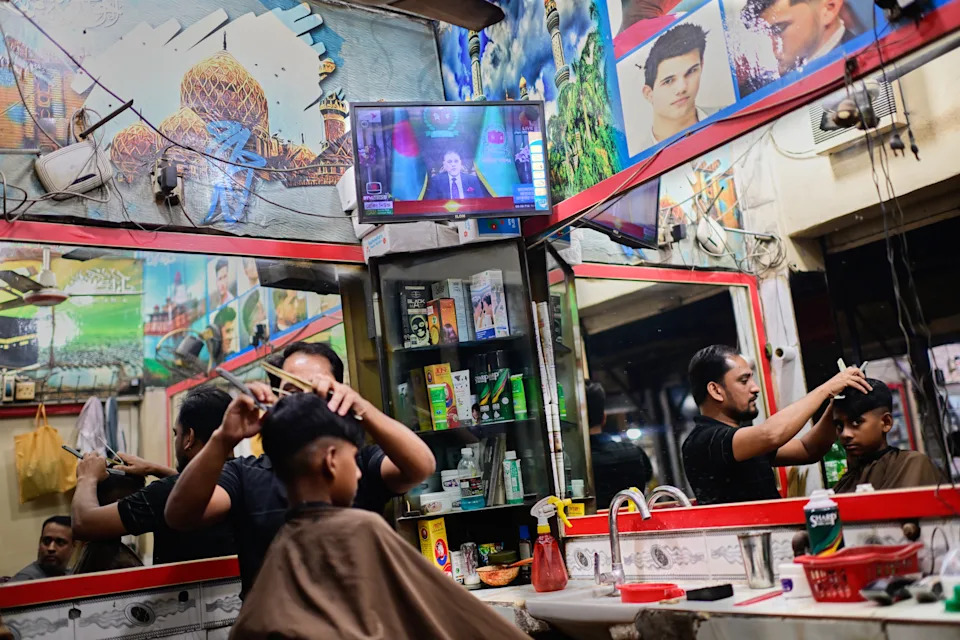
A man gets a haircut in a salon where a television broadcasts Bangladesh's Chief Election Commissioner A.M.M. Nasir Uddin's address to the nation, in Dhaka, Bangladesh, Thursday, Dec. 11, 2025. (AP Photo/Mahmud Hossain Opu)(ASSOCIATED PRESS)
Referendum On The 'July National Charter'
Nasir Uddin confirmed a referendum will be held on the same day as voting to decide whether proposed measures in the so-called "July National Charter" — a package of political reforms born from the 2024 uprising — should be made legally binding. Supporters say a referendum would cement the charter's reforms in law; critics note that only Parliament can amend the constitution under Bangladesh’s parliamentary system.
Background And Political Context
The last general election, held in January 2024, returned Sheikh Hasina to power for a fourth consecutive term amid accusations of fraud and a boycott by key opponents. In July and August 2024, weeks of protests and unrest culminated in Hasina's removal from office; she subsequently fled to India and now lives in exile. An interim administration led by Nobel Peace Prize laureate Muhammad Yunus has governed since Aug. 8, 2024.
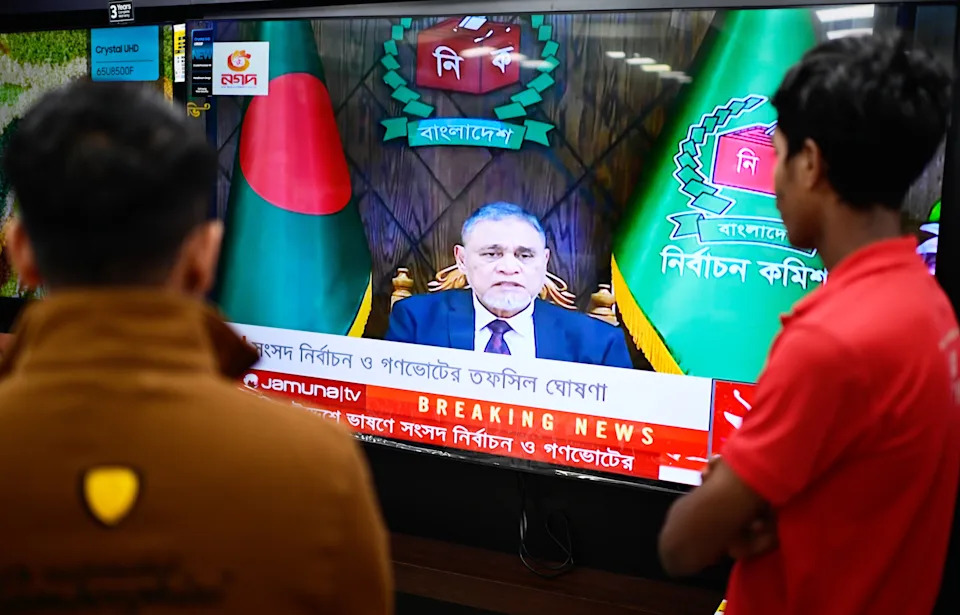
People watch Bangladesh's Chief Election Commissioner A.M.M. Nasir Uddin's address to the nation on a television, in Dhaka, Bangladesh, Thursday, Dec. 11, 2025. (AP Photo/Mahmud Hossain Opu)(ASSOCIATED PRESS)
The Yunus-led interim government has banned all activities of Hasina's Awami League, effectively preventing the party from participating in the upcoming vote. Hasina's supporters and her family have called for lifting the ban and for an inclusive election to stabilize the country.
Rights Concerns And Political Landscape
Human Rights Watch and Amnesty International have publicly raised concerns about rule-of-law issues and political repression under the interim government. Both organizations have questioned the fairness of legal proceedings that resulted in Hasina being sentenced to death on charges related to crimes against humanity tied to the 2024 unrest — a development that has intensified international scrutiny.
Bangladesh has more than 50 registered political parties; nearly half have stayed away from formal dialogue with the interim government. Observers note efforts to reduce the long-standing dominance of two dynastic camps: Sheikh Hasina's Awami League and the Bangladesh Nationalist Party, long associated with former Prime Minister Khaleda Zia, who is reported to be in poor health. With the Awami League sidelined, Zia's party is now seen as a principal contender, while the growing prominence of Islamist-leaning groups has alarmed many liberal observers.
What’s At Stake
If held as scheduled, the Feb. 12 vote will mark Bangladesh's 13th national election since independence in 1971 and will be a key test of the country's efforts to restore democratic governance and broad political participation amid serious rights and rule-of-law concerns.


