
The gift of tank-shaped advent calendars by defence firm Rheinmetall to German MPs has ignited controversy. Modelled on the Lynx infantry fighting vehicle, the cardboard calendars — three variants in total — contain 24 chocolates and were intended to symbolise Germany’s role in European defence. Critics called the move tasteless and accused politicians of cosy ties with the arms industry, while some officials defended the calendars as reflecting new security realities.
German MPs Sent Tank-Shaped Advent Calendars by Rheinmetall, Sparking Outcry Over ‘Militarisation’ of Christmas
04:21 AM, 12/11/2025

The chocolates are hidden behind doors on the side of the tank
Members of the German parliament this year received an unusual seasonal gift: a shoebox-sized advent calendar shaped like a battle tank and filled with 24 small chocolates. The calendars were produced by major defence contractor Rheinmetall and modelled on the Lynx infantry fighting vehicle — a platform the company supplies to Ukraine.
What Happened
Rheinmetall sent three variants of the calendar to MPs: one tank design and two armoured transport vehicles. Each cardboard model features 24 small doors along its chassis, one for each day of Advent. The manufacturer presented the design as symbolic of Germany’s role in European defence.
Public Reaction
The gift provoked a strong backlash. Critics said the calendars romanticised warfare and signalled a creeping militarisation of German culture. Henri Schmidt, a member of parliament from Chancellor Friedrich Merz’s Christian Democrats (CDU), posted an Instagram video showing one of the models and quipped:
“So many advent calendars landed in Berlin in the last few weeks, I could almost open my own Christmas market.”
The post drew fierce criticism from constituents and commentators, and Mr Schmidt later disabled comments on the Instagram entry. A trade magazine published by German precious-metals firm Kettner Edelmetalle condemned the calendars as a sign of an “unholy alliance” between politicians and the defence industry, arguing that Christmas should be about family and peace rather than the glorification of weapons.
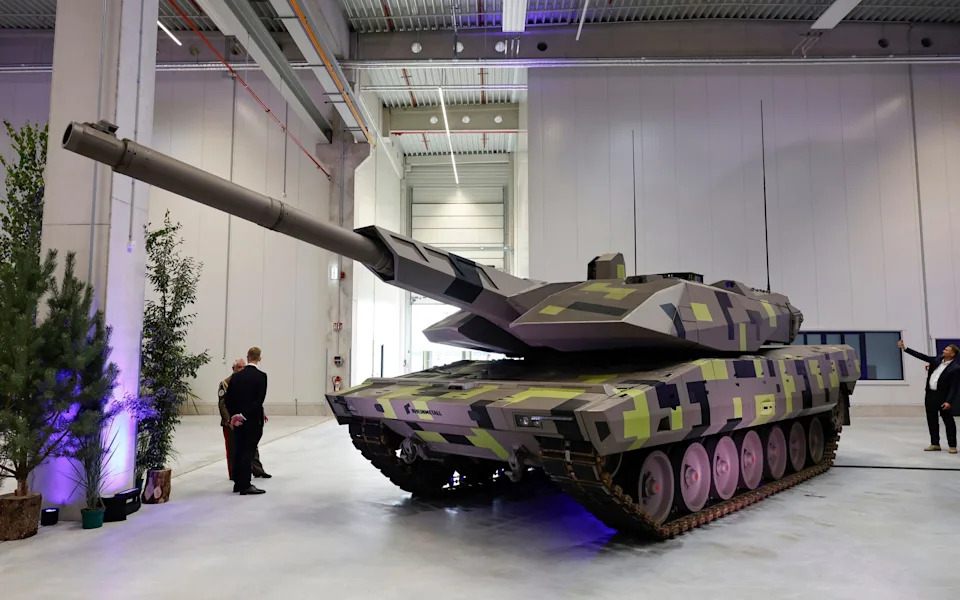
There is significant debate in Germany about the role of the arms industry - Morris MacMatzen
Political Context
The controversy comes amid a broader national debate over Germany’s defence posture. Chancellor Friedrich Merz, in office since last May, has pushed landmark reforms to expand defence spending and pledged to transform the Bundeswehr into what he calls the “strongest conventional army in Europe.” Rheinmetall is widely expected to benefit from increased procurement and national defence projects.
Supporters of the calendar said it reflects a changed security environment in Europe and can be seen as a show of pride in German defence engineering. Gregor Golland, the commissioner for armed forces in the Düsseldorf state parliament, told Bild the Lynx is a “top-quality product of the German defence industry” and described the calendar as “very creative.”
Why It Resonated
Germany’s arms industry remains a sensitive subject. The legacy of the Nazi era continues to influence public debate about the country’s military role, and attitudes vary regionally — particularly in parts of the former East Germany where views on Russia are more sympathetic. That historical and political backdrop intensified the reaction to what many regarded as an inappropriate seasonal gift.
Rheinmetall Response
A Rheinmetall spokesman confirmed the company produced three different models and said they were distributed as promotional items. The firm declined to expand on the rationale beyond presenting the designs as a product tie-in to its well‑known platforms.
Fact Check: The calendars are cardboard promotional items containing 24 chocolates/doors and are modelled on the Lynx infantry fighting vehicle, which Rheinmetall supplies internationally, including to Ukraine. Recipients included members of the German parliament.
Similar Articles

Germany’s Tightrope on Israel and Gaza: Merz’s Visit, Arms Exports and Ceasefire Fragility
German Chancellor Friedrich Merz visited Israel soon after Berlin ended a three-month pause on certain weapons export licence...

Germany Reintroduces Voluntary Military Service to Boost Bundeswehr After Bundestag Vote
Germany's Bundestag voted 323-272 on Dec. 5 to reintroduce voluntary military service as part of a wider effort to strengthen...

European Christmas Markets Tighten Security as Terror Threats Drive Up Costs and Operations Change
Christmas markets across Europe have increased security and operational costs this season after a series of recent attacks an...

Merz Reaffirms Germany’s 'Unchanging' Support for Israel on Visit to Yad Vashem
German Chancellor Friedrich Merz visited Yad Vashem in Jerusalem to reaffirm Germany's historic and ongoing support for Israe...

Chancellor Friedrich Merz Makes First Official Visit To Israel to Mend Strained Ties
German Chancellor Friedrich Merz made his first official visit to Israel since taking office, meeting regional leaders after ...

Eighty Years After the Holocaust, Israel Is Arming Germany — A Complex Turn in History
Germany under Chancellor Friedrich Merz is accelerating rearmament and is increasingly dependent on Israeli defence technolog...

Germany Unveils Free Driving Licences and Higher Pay to Boost Military Recruitment Amid Russia Tensions
Germany's coalition government has approved incentives to boost voluntary military recruitment amid growing concern over Russ...

Germany Investigates Theft of About 20,000 Rounds from Parked Contractor Trailer
The German Defense Ministry says about 20,000 rounds of ammunition were stolen from a civilian contractor's parked trailer be...

Bundestag Approves Contested Pension Package as Merz Quells Party Revolt
The Bundestag approved a contentious pension reform by 318-224, with 53 abstentions, freezing the state pension level at 48% ...

Germany Chooses Canadian CMS 330 in Deal Exceeding C$1 Billion — Major Win for Ottawa's Defence Industry
Canada’s trade minister Maninder Sidhu announced that the German Navy will acquire Lockheed Martin Canada’s CMS 330 combat ma...

Germany's Big Military Push: New Conscription Bill Aims to Build Europe’s Strongest Army
Germany’s coalition has agreed a major defence reform to grow the Bundeswehr to 260,000 active troops and add 200,000 reservi...

German MPs Restore Business Class For Flights Over Two Hours After Economy Rule Reversed
Germany's Bundestag has relaxed 2024 travel rules, allowing MPs to claim business-class tickets on flights lasting longer tha...

Germany to Resume Arms Exports to Israel Citing Gaza Ceasefire; Critics Warn of Ongoing Humanitarian Crisis
Germany will lift a temporary ban on certain arms exports to Israel, effective November 24, citing a ceasefire in Gaza since ...

Germany's Coalition Agrees Voluntary Military Service Plan with Contingency Draft
The German coalition has agreed a voluntary military service model with nationwide conscription rules and troop-expansion tar...

Germany Keeps Military Service Voluntary, Introduces Questionnaire and Physical for 18‑Year‑Olds
Germany's coalition has agreed to maintain voluntary military service but will require 18‑year‑old men to complete a question...