
Researchers used enhanced terrain models and electrical resistivity tomography to show that the long, abrupt trenches along the Nullarbor Plain are caused by the progressive collapse of ancient karst caves. Field work in Clay Dam Cave confirmed sagging rock layers and sediment fills that match the subsurface imaging. Formed as groundwater carved limestone during the Oligocene–Early Miocene, these buried systems may help locate hidden caves on Earth and potential subsurface habitats on Mars.
Mystery Trenches on Australia’s Nullarbor Plain Formed by Collapsing Ancient Caves, Study Finds
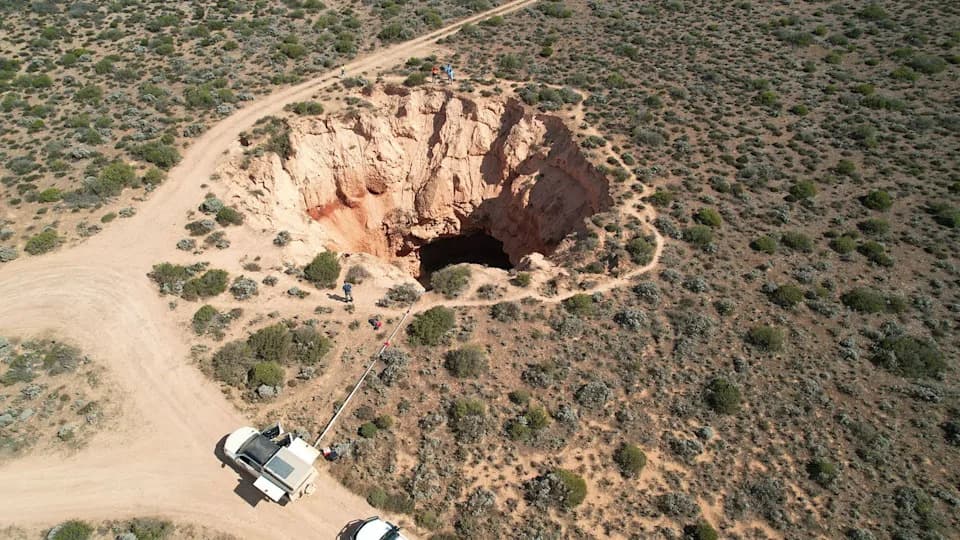
A sinkhole is seen in Australia's Nullarbor Plain. | Credit: Matej Lipar
New research shows that the long, linear trenches scoring the eastern edge of Australia’s Nullarbor Plain are not river channels or wind scars but the surface expression of enormous underground caves whose roofs progressively collapsed over millions of years.
What Researchers Found
Using enhanced digital terrain models and electrical resistivity tomography (ERT), researchers identified steep-sided voids more than 130 feet (≈40 m) below the surface beneath several miles-long, north–south trenches. The subsurface profiles show these voids are packed with sediment—coarser sand near the top grading to finer silt and clay at depth—consistent with cave systems that have filled and sagged over time.
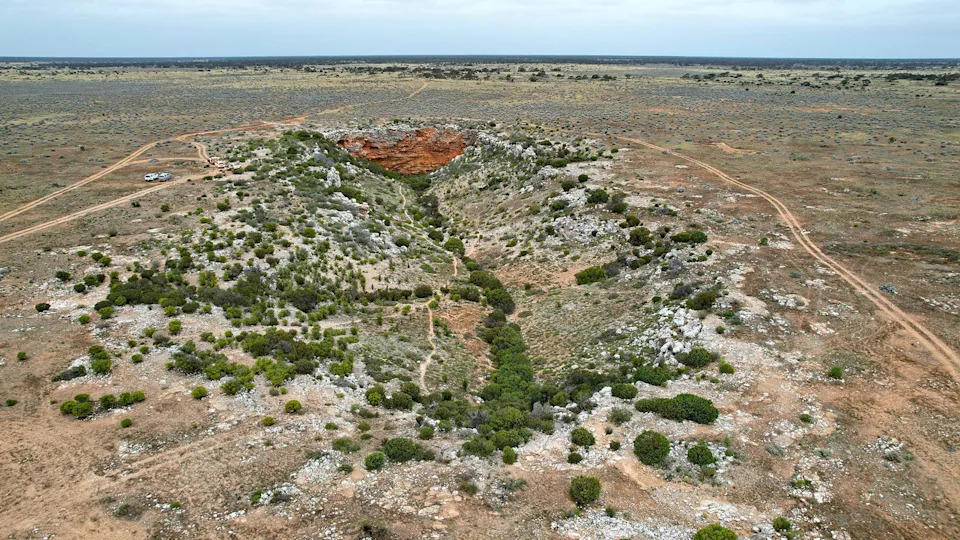
An aerial view of one of the trenches on the Nullarbor Plain. | Credit: Matej Lipar
How The Trenches Formed
Matej Lipar, lead author and researcher at the Anton Melik Geographical Institute, told Live Science that the trenches "resemble river channels, yet their abrupt beginnings and endings made us question that interpretation." Comparing their imaging to maps of known caverns, the team found that large cave passages—including those accessed through sinkholes or dolines—lie aligned beneath the trenches.
The authors conclude these caves developed in porous karst limestone as groundwater drained toward the coast during the Oligocene (about 33.9–23 million years ago) and the Early Miocene (about 23–16 million years ago). Over time, cave roofs collapsed in sections, causing the overlying ground to sag and form the shallow, elongated depressions visible today.
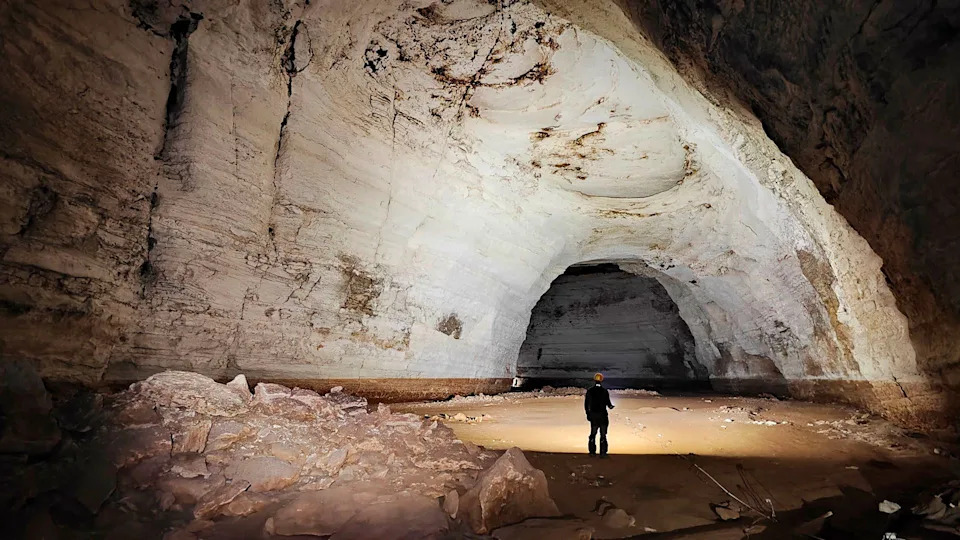
The researchers explored one of the caves beneath the plain. | Credit: Matej Lipar
Field Confirmation
To confirm their model, the team entered Clay Dam Cave, accessible via a sinkhole within one of the trenches. Inside they found sagging strata and sandy sediment infill matching the ERT signatures detected elsewhere along the trench system, strengthening the interpretation that progressive underground collapse produced the surface features.
Broader Implications
Independent reviewers praised the study’s synthesis of remote sensing, geophysical imaging and field exploration. Andrea Zerboni, an Earth scientist at the University of Milan, said the work "skillfully shows that the linear depressions along the margin of the Nullarbor Plain are probably the surface expression of the progressive collapse of ancient underground cavities."
The fragmentation of some trench segments suggests the collapse process continues in places today, and future surface failure remains possible. Geoscientists also note that recognizing such collapsed-karst signatures could help locate similar subsurface systems elsewhere on Earth (for example, parts of the Arabian Peninsula) and even guide the search for potential habitable niches on other planets. Linear depressions on Mars, often interpreted as collapsed lava tubes, might in some cases reflect karst-like processes, making subsurface cavities promising targets in the search for preserved biosignatures.
Key Details
- Trenches run north–south along the Nullarbor’s eastern margin, from several miles up to more than 12 miles (≈20 km) in length.
- Widths typically range from ~330 to 1,640 feet (100–500 m); surface depths are shallow (≈3–30 feet / 1–9 m).
- Subsurface voids extend >130 feet (≈40 m) and are filled with sand, silt and clay.
- Study published Sept. 17 in Communications Earth & Environment.
Why this matters: The work improves our understanding of karst landscape evolution, helps locate previously unknown caves, and highlights methods that could be applied in planetary geology as well as Earth-based conservation and hazard assessment.
Help us improve.





















