The SAT was first administered in 1926 and has been repeatedly revised in format, content and delivery. Major changes include the rise of test-optional admissions around 2000 and widespread waivers during the COVID-19 pandemic. Evidence on the SAT's ability to predict college success is mixed: the test adds information but also reflects socioeconomic disparities. In 2024 the SAT became shorter and fully digital, and participation rebounded in 2025.
SAT at 100: How It Evolved — And Why Its Role in Admissions Still Divides Opinion
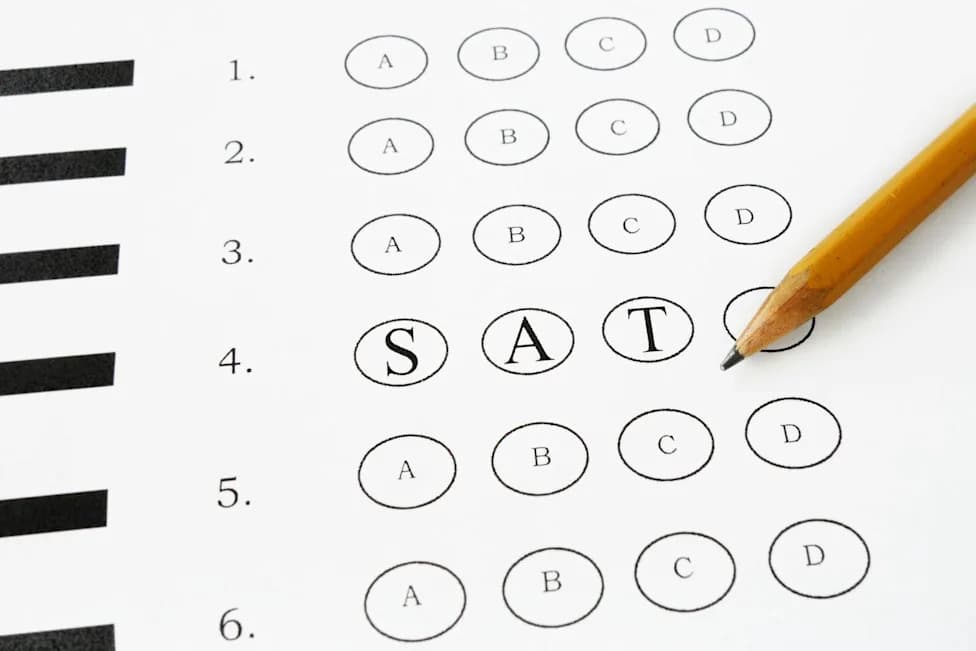
More than 2 million students took the SAT exam in 2025.zimmytws/iStock/Getty Images Plus
The Scholastic Aptitude Test (SAT) debuted in June 1926 when roughly 8,000 high school students sat for a single, standardized college-entry exam. Over the past century the SAT has changed in format, length, scoring and delivery — yet debate persists about how well it measures student potential and whether it contributes to educational inequities.
Origins and Early Years
The College Board developed the SAT in the 1920s to replace the many university-specific entrance exams that were essay-based and graded by professors. The first standardized SAT (1926) had 315 questions and a 97-minute time limit, giving test-takers about 18 seconds per item. Early versions included unusual sections such as an "artificial language," and the test's content and format shifted repeatedly in its first decades: there were periods without math questions and years when math items were free-response.
Growth, Standardization, and ETS
In 1947 Educational Testing Service (ETS) began administering the SAT and developing other standardized exams, helping expand the test's reach. After World War II, the GI Bill drove a surge in college applicants and universities increasingly used the SAT to screen candidates. The University of California system required the SAT in 1960 — the same year the ACT was introduced — and many other schools soon followed.
The COVID-19 pandemic offered an experiment for universities that hadn't already made the SAT optional for applicants.Alex Brandon/Associated Press
Changes to Reduce Coaching Effects
To limit the influence of private tutors and test coaching, test designers periodically revised question types and length. In 1994 students were allowed to use physical calculators for the first time. Over time multiple-choice formats made scoring faster and more objective and enabled broader access by allowing students to test closer to home.
Equity, Predictive Power, and Debate
Research on the SAT's predictive validity is mixed. Some studies find the SAT provides useful information about students' skills and likelihood of college success when combined with high school GPA. Other research highlights persistent disparities: higher family income correlates with higher SAT scores; wealthier students are more likely to afford tutors, test prep and better-resourced schools, and they are about 13 times more likely than low-income peers to score 1,300 or higher on the 1,600-point scale. Racial achievement gaps on standardized tests have also been widely documented and debated.
The Test-Optional Movement and the Pandemic
Concerns about fairness prompted roughly 280 colleges around 2000 to make SAT/ACT submission optional. The COVID-19 pandemic produced a natural experiment: in 2020–2021 many testing sites closed and most universities waived testing requirements, leading to a rapid expansion of test-optional policies. As of 2026, more than 2,000 colleges remain test-optional, though some scholarships and programs still consider scores.

The achievement gap between different racial groups on standardized test scores has been well documented and debated for decades.Shawn Patrick Ouellette/Portland Press Herald via Getty Images
Recent Revisions and Current Trends
In 2024 the SAT moved to a fully digital format and was shortened from about three hours to roughly two hours and 15 minutes — closer in length to the original 97-minute test. Participation rebounded post-pandemic: in 2025 more than 2 million students (approximately 47% of graduating seniors) took the SAT, the largest cohort since before the pandemic; about 1.38 million students (roughly 36%) took the ACT that year.
What This Means For Students and Colleges
The SAT is not a perfect reflection of student potential, but for many high schoolers it remains an important milestone in the college application process. When combined with high school GPA and other measures, SAT results can provide useful information for admissions and scholarship decisions — though concerns about socioeconomic and racial disparities drive ongoing calls to reassess its role.
Bottom Line: The SAT has evolved substantially in 100 years, but questions about equity and predictive power continue to fuel debate about its centrality in college admissions.
Disclosure: This article is based on analysis by Beth Kania-Gosche (Missouri University of Science and Technology). She has received funding from the National Science Foundation and serves as president of the Missouri Association of Colleges for Teacher Education.
Help us improve.