Players, developers and charities are using practical solutions to make video and tabletop games accessible. Blind players such as Cristian M. Amores moved from braille and QR codes to NFC tags that work with screen readers, enabling faster, independent play. Industry tools (Microsoft and Sony) and initiatives like the Accessible Games Initiative show progress, but accessibility remains uneven and often relies on grassroots fixes rather than inclusive design from the start.
Nobody Left Out: How NFC Tags, Mods and Adaptive Controllers Are Making Games Accessible
Accessibility in video games and board games: the game nobody wants to miss
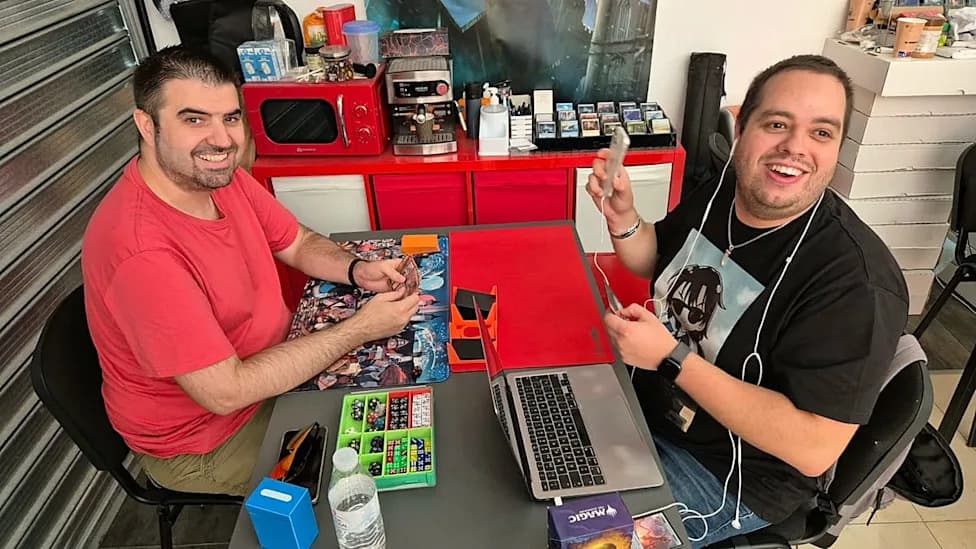
Cristian M. Amores doesn’t read cards the usual way. Blind since late 2020, he now brings his iPhone close to a marked, sleeved card and waits for VoiceOver to announce what he has drawn. Card by card, he has adapted how he plays Magic: The Gathering, sharing the project online as Magic Accessible.
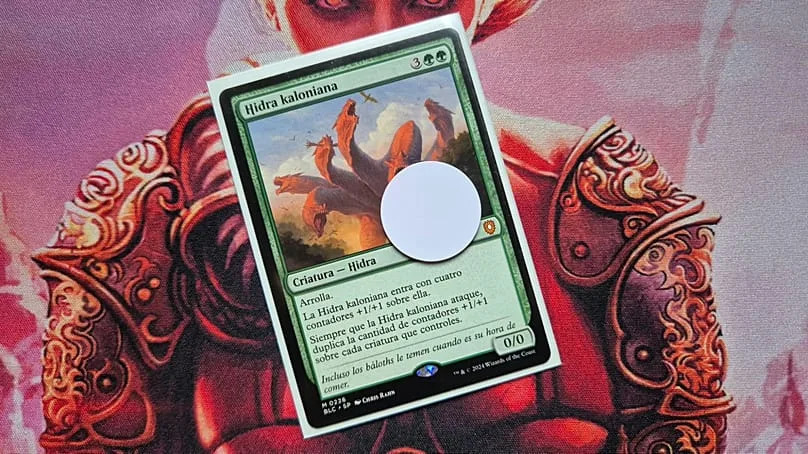
One of the cards Cristian has adapted so that he can play - Imagen cedida Cristian Muñoz Amores
From Braille and QR Codes to NFC
Amores’ early experiments began with braille labels. He used a Dymo-style label maker to mark cards with raised numbers and relied on an external database for full details. That approach proved impractical: labels made decks harder to shuffle and, in official settings, any distinguishable marking can be interpreted as a signal and lead to disqualification.
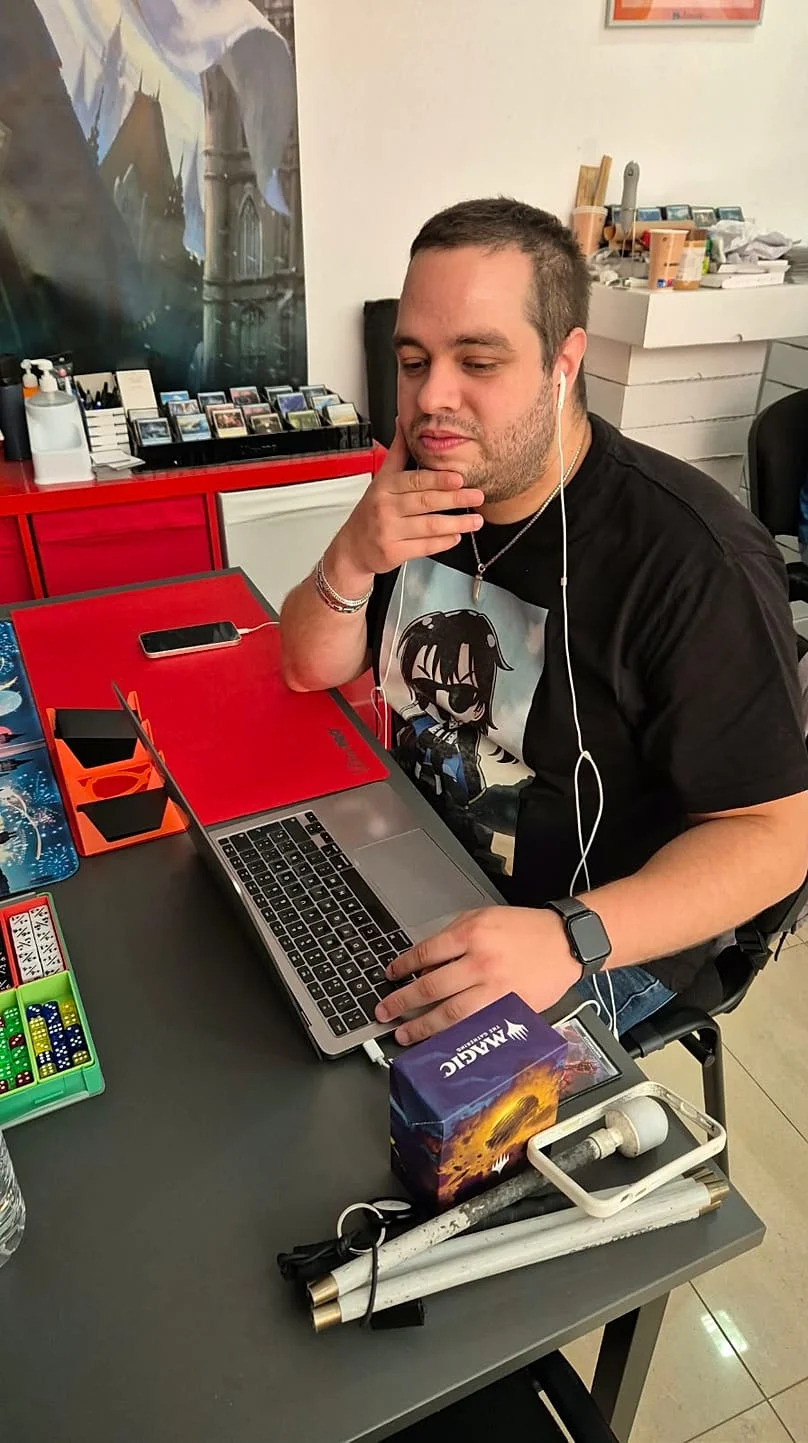
Cristian, with his computer and his white cane during a tournament - Imagen cedida Cristian Muñoz Amores
He then tried QR codes, scanning each card with the iPhone camera and following the results with VoiceOver. That method also slowed play because it required careful alignment and verification. The best practical solution he found was NFC tags: place the phone near the sleeve and the screen reader reads the entire card aloud without aiming or delay. “Since then I’ve taken a huge leap as a player,” he says.
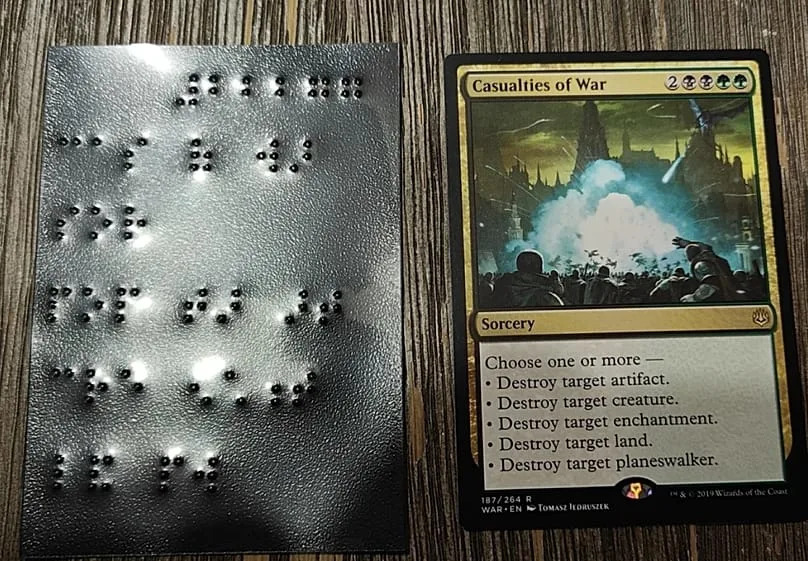
Image of a - Reddit u/jerichodarkstar
Community Solutions And The Limits Of Official Support
The Magic Accessible project still needs helpers — someone to read new cards aloud when they’re added and a print shop to produce tiny markers — but it has allowed Amores to play in local stores and at events such as the National Modern Championship in Soria. He has demonstrated the system to tournament judges and plans to notify organisers in advance when he plays competitively, explaining the adaptations and the occasional extra time he needs per round.
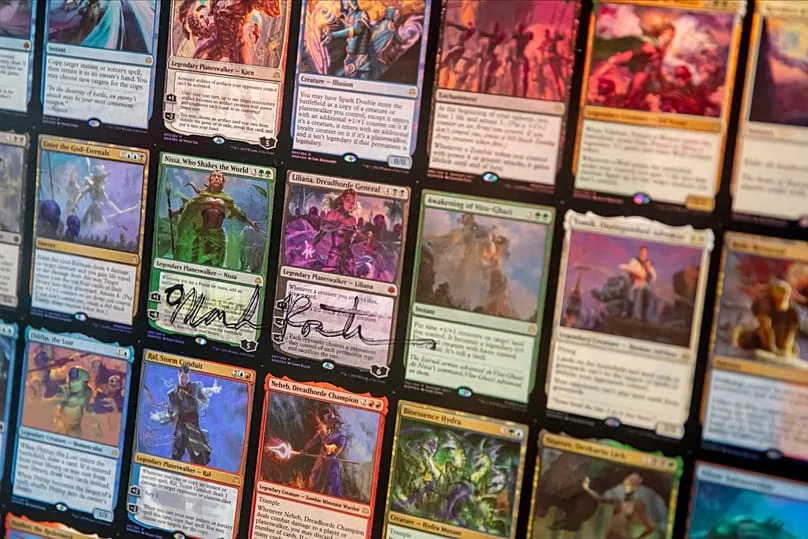
A sheet with several cards from the game - AP Photo
Amores asks one clear thing of publisher Wizards of the Coast: an accessible version of Magic Arena, the game’s PC client. A community-made mod already provides screen-reader compatibility for some players, but it is unofficial and could break after updates. For physical cards he envisages factory-printed markers linking to the official Gatherer database, though he doubts widespread adoption is realistic.

Sony controller, with the pieces laid out ready to be assembled - Playstation y Sony
How Others Solved The Problem
Similar NFC-based fixes have emerged elsewhere. On Reddit, a player known as jerichodarkstar described adapting a Commander deck for a teammate with a degenerative visual impairment. After a short-lived brailling experiment that produced bulky, quickly-wearing sleeves, the group switched to NFC stickers in the card sleeves linked to notes via the iPhone Shortcuts app. The screen reader reads the full card text through an earpiece, eliminating shorthand systems and camera alignment problems. What once took days to prepare now takes a few hours per 100-card deck.
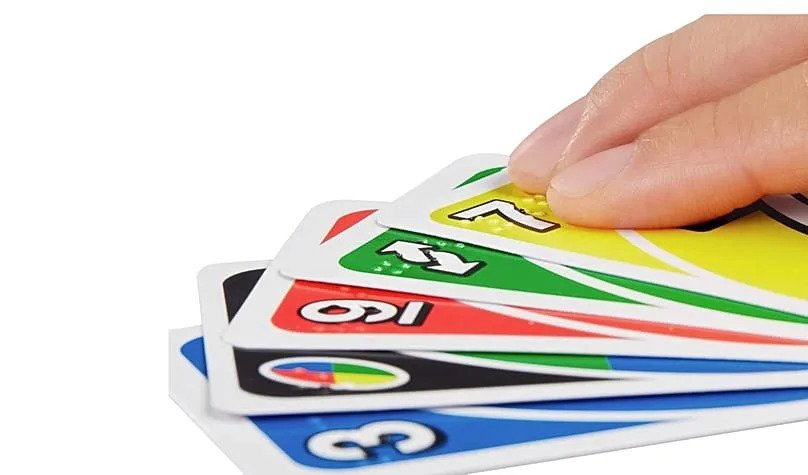
Close-up of cards from the game - Mattel
Nonprofit Work And Design Guidance
Outside major companies, grassroots projects are filling gaps. In Spain, Proyecto Glirp — run by Gloria and Iria since 2014 — evolved from a blog into an accessibility consultancy focused on tabletop games. They published Jugar Sin Límites, a guide that highlights common design mistakes: low contrast between text/icons and their background, tiny fonts, and unnecessarily complex visual layouts.
Gloria and Iria emphasize that small changes help everyone: clearer contrast and larger, simpler typography reduce the effort required to understand a game. They also stress that many accessibility issues can be addressed by people at the table — simply narrating actions and board state can make a title playable for someone with visual impairment — though some mechanics make narration insufficient.
Hardware And Industry Moves
Hardware makers have produced standardized accessibility tools. Microsoft’s Xbox Adaptive Controller (2018) is a configurable flat panel with large buttons and ports for external switches. In 2025 Microsoft added the Xbox Adaptive Joystick, a one-handed add-on. Sony’s Project Leonardo, released as the Access Controller (2023), is a circular, mountable controller with interchangeable pieces and multiple profiles; critics note it lacks DualSense touchpad and motion features that some games rely on.
Industry data supports investment in accessibility. The Entertainment Software Association’s 2025 survey found 21% of adult U.S. players report a disability and nearly half consider accessibility options important when choosing games. The World Health Organization estimates more than 1 billion people worldwide live with a disability. In 2025 the ESA joined major publishers and tech companies to launch the Accessible Games Initiative, a voluntary labelling system that signals features like remappable controls, narrated menus and adjustable text.
Accessible Tabletop Titles
Publishers and organisations have released accessible boxed games for years. Mattel’s UNO Braille was developed with the National Federation of the Blind, and in Spain ONCE has adapted titles such as Katamino, Apalabrados, adapted Scrabble and a braille edition of the card game Virus!. Classic games such as chess and ludo are widely available with raised boards and braille-labelled decks.
Conclusion
The persistent challenge is translating visual information — especially dense card text — into tactile or audible formats without disrupting gameplay. Players, small teams and charities are innovating with NFC tags, screen-reader-compatible apps and adapted hardware to keep everyone at the table. While industry-level solutions and voluntary labelling are promising, much of the progress still comes from grassroots fixes and late-stage improvements rather than universal inclusive design from the start.
Bottom line: Practical, low-cost tech like NFC plus smarter design and clearer labelling can make a huge difference — and keep nobody out of the game.
Help us improve.