Iran's top security official Mohsen Rezaee has said Tehran is ready to return to the mid-June 14-point framework as the basis for ending hostilities with the United States. His conditions include an end to fighting on all fronts, the release of frozen assets and the lifting of the US naval blockade. The framework included a 60-day aim to secure toll-free passage through the Strait of Hormuz and envisaged US unfreezing of assets pending further negotiation. Analysts say Iran has limited appetite for a prolonged conflict, but implementation details remain contentious.
Tehran Signals Readiness To Revert To June Framework To End Hostilities With US
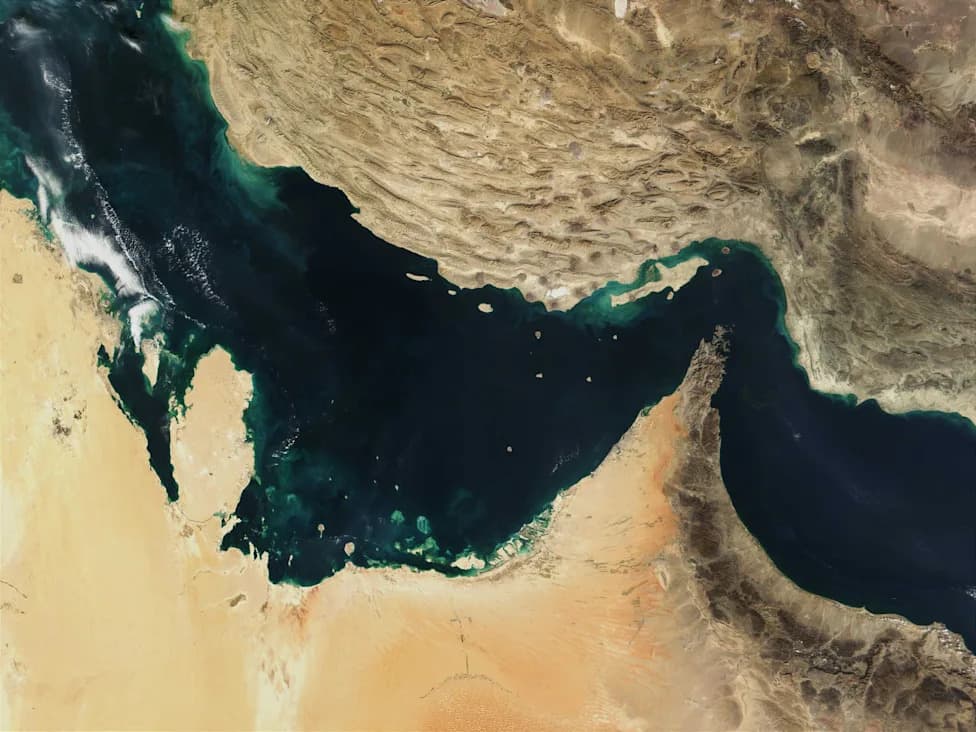
FILE PHOTO - A satellite picture provided by the National Aeronautics and Space Administration (NASA), shows the Arabian Gulf (Persian Gulf), the Strait of Hormuz, and the Gulf of Oman. (is associated with: «Signal from Tehran: Iran wants to return to the framework agreement») -/The Visible Earth/NASA/dpa
Iran's top security official, Mohsen Rezaee, said Tehran is prepared to revert to the June framework agreement as the basis for ending hostilities with the United States. Rezaee, secretary-general of Iran's National Security Council, identified three principal conditions: an end to fighting on all fronts, the release of frozen Iranian assets, and the lifting of the US naval blockade.
What Rezaee Told Al Jazeera
Speaking to Al Jazeera, Rezaee said these demands are contained within the 14-point framework signed in mid-June. He added that Iran is also seeking a cessation of the conflict between the Houthi militia in Yemen and Saudi Arabia.
Rezaee described the framework as the most practical route to a durable pause in hostilities, provided each side implements its commitments.
Background And Key Provisions
The mid-June framework was designed as an initial roadmap toward a final agreement to permanently end confrontations. It committed both sides to negotiate a final accord within an initial 60-day window, with the option to extend by mutual consent; no formal extension has been agreed.
One contentious clause required Iran to do its utmost to ensure the safe, toll-free transit of merchant vessels through the Strait of Hormuz for 60 days. That provision became a flashpoint between Tehran and Washington. In exchange, the United States agreed to end its naval blockade of Iranian ships and ports and to unfreeze Iranian assets, with specific sums and procedures to be worked out in subsequent negotiations.
Analysts' Take
Israeli Iran expert Danny Citrinowicz noted on X that Iran appears to have limited appetite for an open-ended conflict, suggesting Tehran may prefer a negotiated pause to prolonged escalation. Ultimately, the success of any return to the framework will depend on how the parties interpret and implement key clauses on maritime security and asset unfreezing.
Help us improve.