
As the U.S. celebrated its 250th year, leaders and visitors rediscovered how presidential homes, libraries and small historic sites reveal complex truths beyond textbooks. New institutions — the Obama Presidential Center and the Theodore Roosevelt Presidential Library — broaden the national story to include civic participation, conservation and community. Sustaining that interest requires visiting, volunteering and supporting local and national sites so future generations inherit a richer, more inclusive history.
Don't Pack Away History After the 250th: Why Visiting Presidential Sites Matters
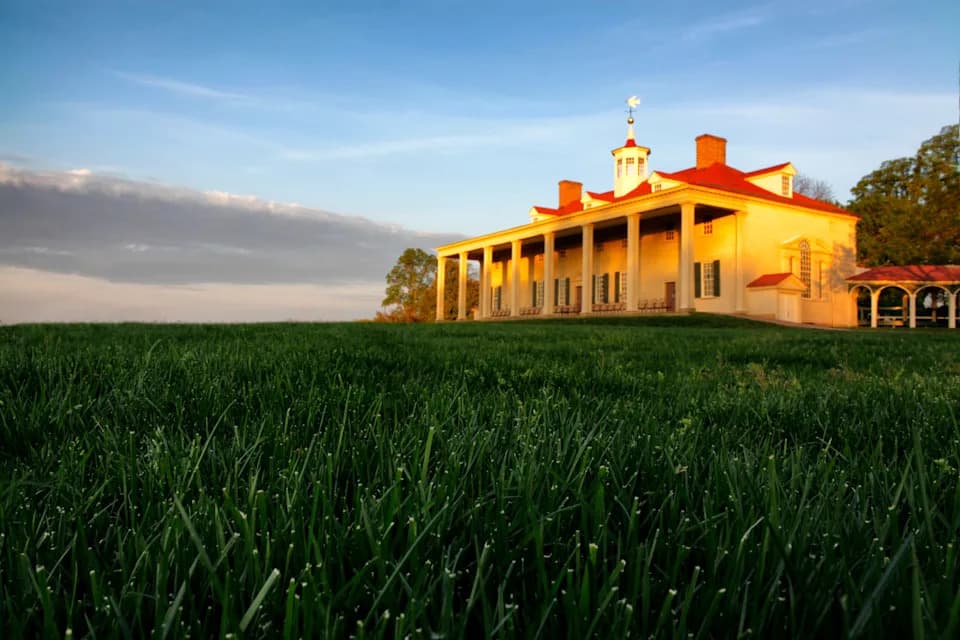
Mount Vernon in Northern Virginia is the historic home of America's first president, George Washington.
As the United States marked its 250th birthday, the nation spent a year reflecting on the ideals that launched it, the people who shaped it and the defining moments that tested it. The harder question now is whether that curiosity will outlast the decorations and anniversary coverage.
History Is More Than Dates And Names
History should not be treated as an occasional pastime reserved for milestone anniversaries, school trips to Washington or Fourth of July celebrations. Understanding where the country has been — the achievements, the failures and the debates that shaped it — is essential to understanding the country we live in today.
Places Where History Comes Alive
Some of the richest lessons are found in plain sight: presidential birthplaces and childhood homes, presidential libraries and museums, historic houses, civic-education organizations and the colleges attended by presidents and first ladies. Some are nationally famous; others are sites you might drive past without realizing their importance.
At George Washington's Mount Vernon, visitors confront more than a founding father: they encounter Washington's farming practices, his dependence on enslaved labor, his evolving views on slavery, the flow of goods in an international economy and the daily lives of people on the estate. At sites associated with Abraham Lincoln, visitors engage with the Civil War, emancipation and the struggle to preserve the Union. At 20th-century presidential libraries, guests learn about world wars, economic upheaval, the fight for civil rights and America's changing global role.
New Centers, Broader Stories
This year added two very different presidential institutions to that landscape. The Obama Presidential Center opened on Chicago's South Side, and on July 4 the Theodore Roosevelt Presidential Library opened in the Badlands of North Dakota. One is rooted in a major urban community; the other rises from the rugged land that shaped a young Roosevelt. Both expand the narrative beyond an individual, probing topics like civic participation, conservation, economic power and America's international role.
Why Visiting Matters
A textbook can list what a president decided. Standing in the rooms where decisions were shaped helps explain the pressures leaders faced, the debates around them and the consequences that followed. History in place complicates simple narratives — revealing achievement alongside misjudgment, courage alongside contradiction. That complexity is not a weakening of history; it is a sign that we are taking it seriously.
How To Keep The Momentum Going
If these places matter to you, support them: visit, bring children or grandchildren, read the letters, study the objects, ask questions and talk about what surprised you on the way home. Some of the most memorable encounters happen in small local sites where a volunteer opens a door and tells a story you never knew.
Practical ways to help:
- Visit and bring others — students, family, community groups.
- Volunteer, donate or become a member to sustain local institutions.
- Encourage schools to use nearby historic sites as classrooms.
- Support programs that expand whose voices are preserved and interpreted.
Preserving history has always depended on one generation deciding it is worth passing on to the next. America's 250th offered a powerful occasion to celebrate; its more lasting gift can be the curiosity it planted. The anniversary may be ending — our curiosity about the country that produced it should not.
Stewart D. McLaurin is president of the White House Historical Association, a private nonprofit, nonpartisan organization founded by First Lady Jacqueline Kennedy in 1961, and director of The People's House: A White House Experience multimedia educational center and museum.
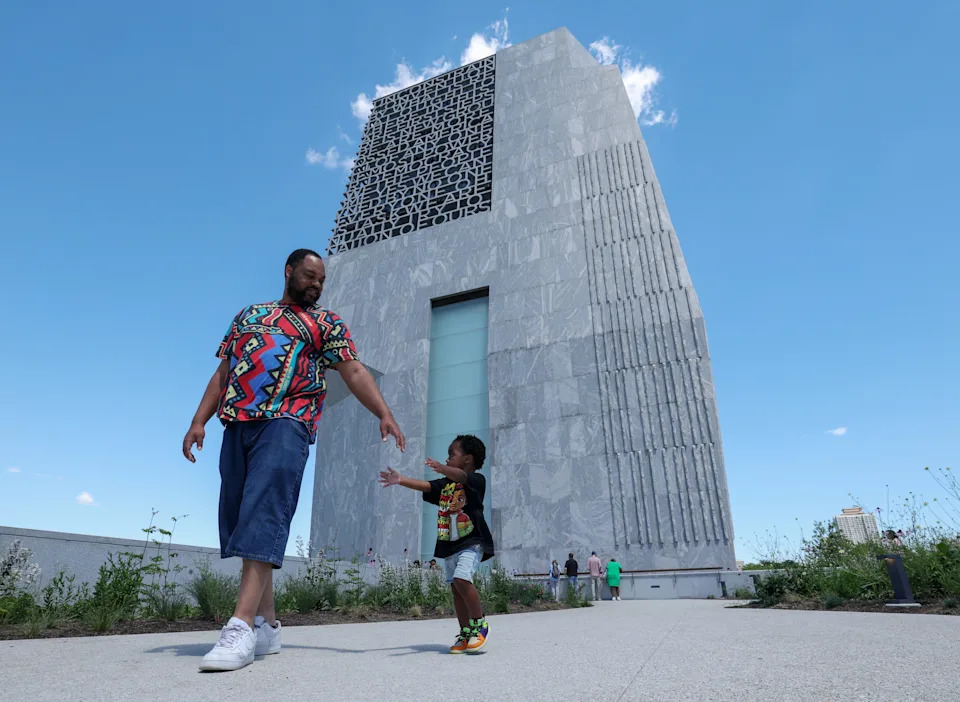
The Obama Presidential Center was dedicated June 18, 2026, on the South Side of Chicago.
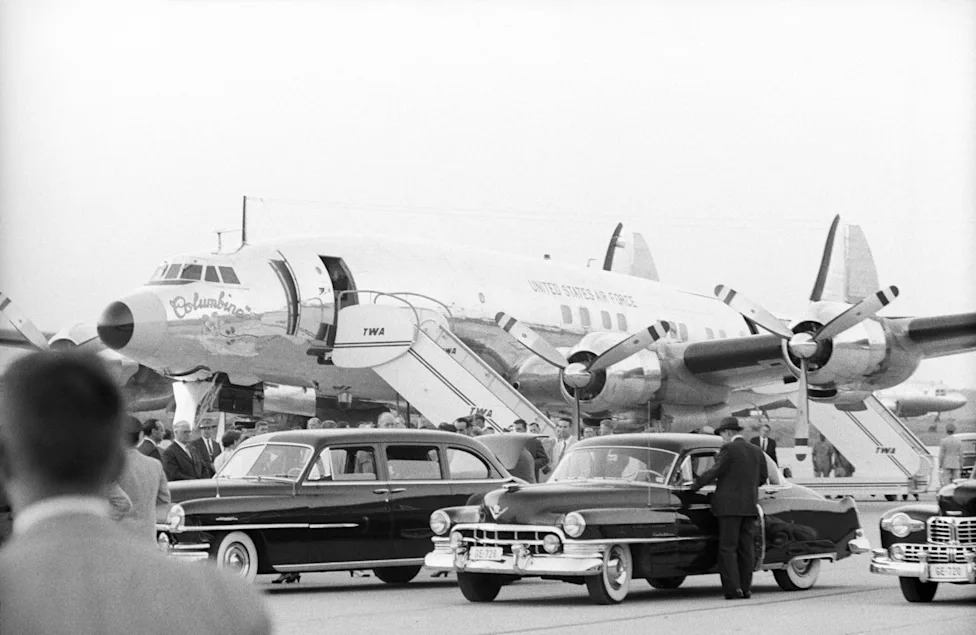
People waiting for Dwight Eisenhower at the airport in front of Lockheed Constellation's airplane on July 18, 1955. The President is going to take part in the Geneva Summit discussing issues about security, German reunification and disarmament.(Mondadori via Getty)
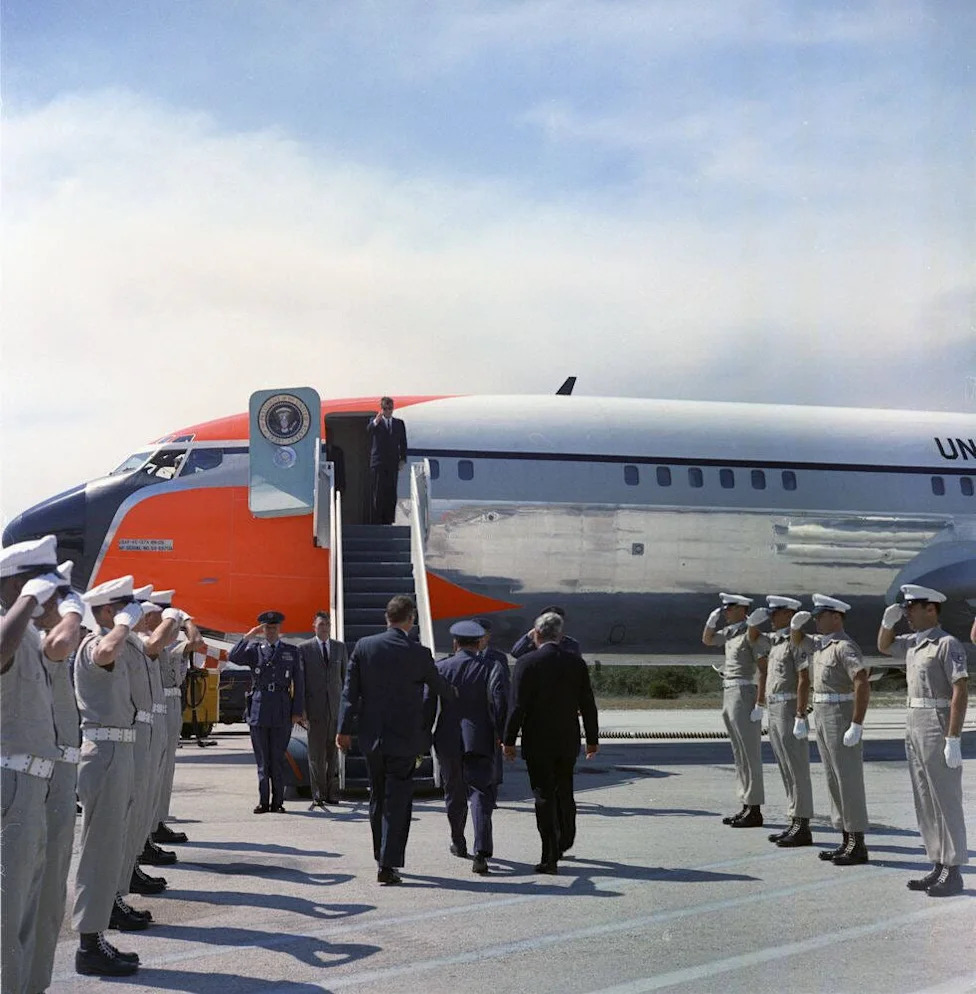
President John F. Kennedy exits Air Force One upon his arrival at Cape Canaveral Air Force Station for the presentation ceremony of the National Aeronautics and Space Administration NASA Distinguished Service Medal to astronaut Lieutenant Colonel John H. Glenn, Jr. White House Secret Service Agent Emory Roberts stands at the bottom of the stairs, at left United States Air Force Honor Guard stands at attention in the foreground at Cape Canaveral, Fla. in 1960.(IMAGO/piemags via Reuters Connect)
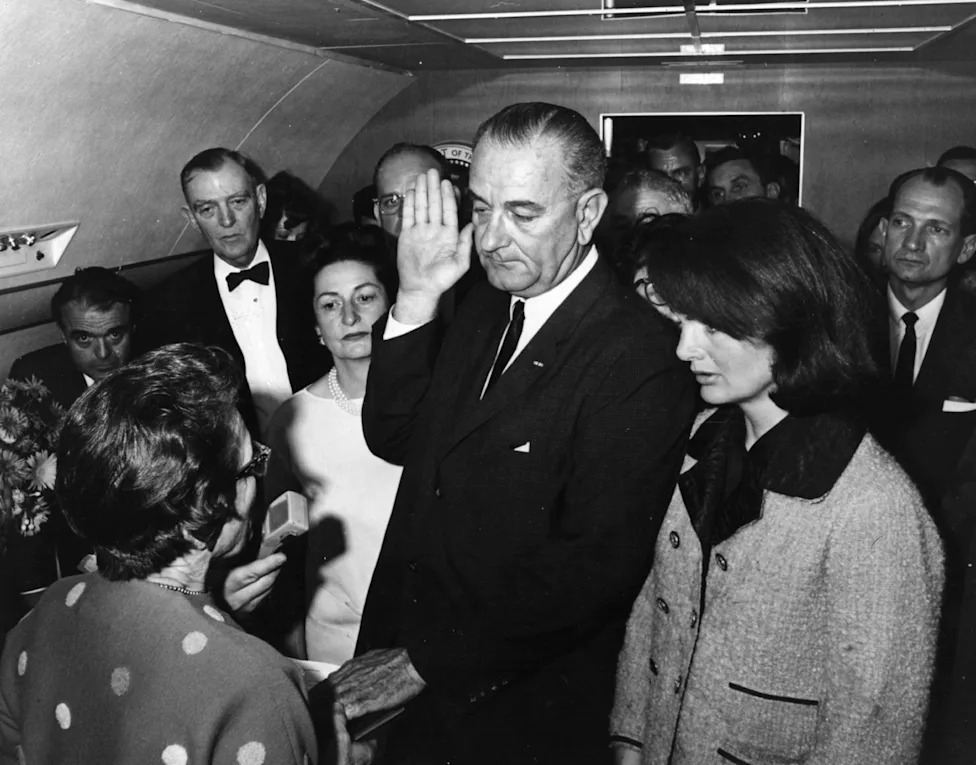
Lyndon Johnson is sworn in as the 36th President of the United States of America on board Air Force One after the assassination of President John F. Kennedy on Nov. 22, 1963. Mrs Johnson is behind him, left, and to his right is the grief stricken Jackie Kennedy.(Keystone, Getty Images)
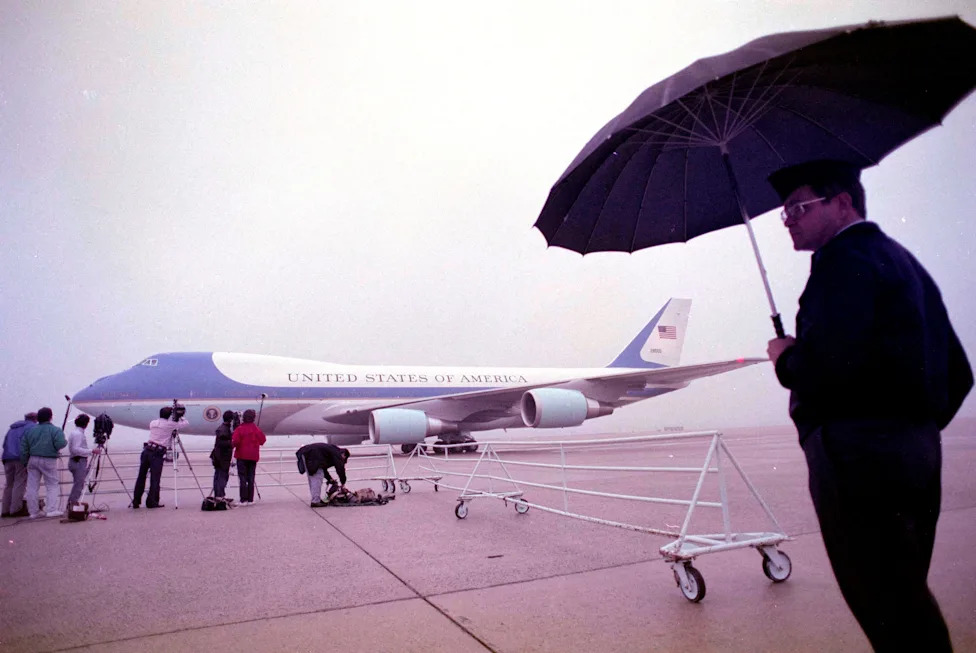
The new Presidential air plane, Air Force One, a Boeing 747 on Aug. 23, 1990 at Andrews Air Force Base in Maryland.(Win Mcnamee, REUTERS)
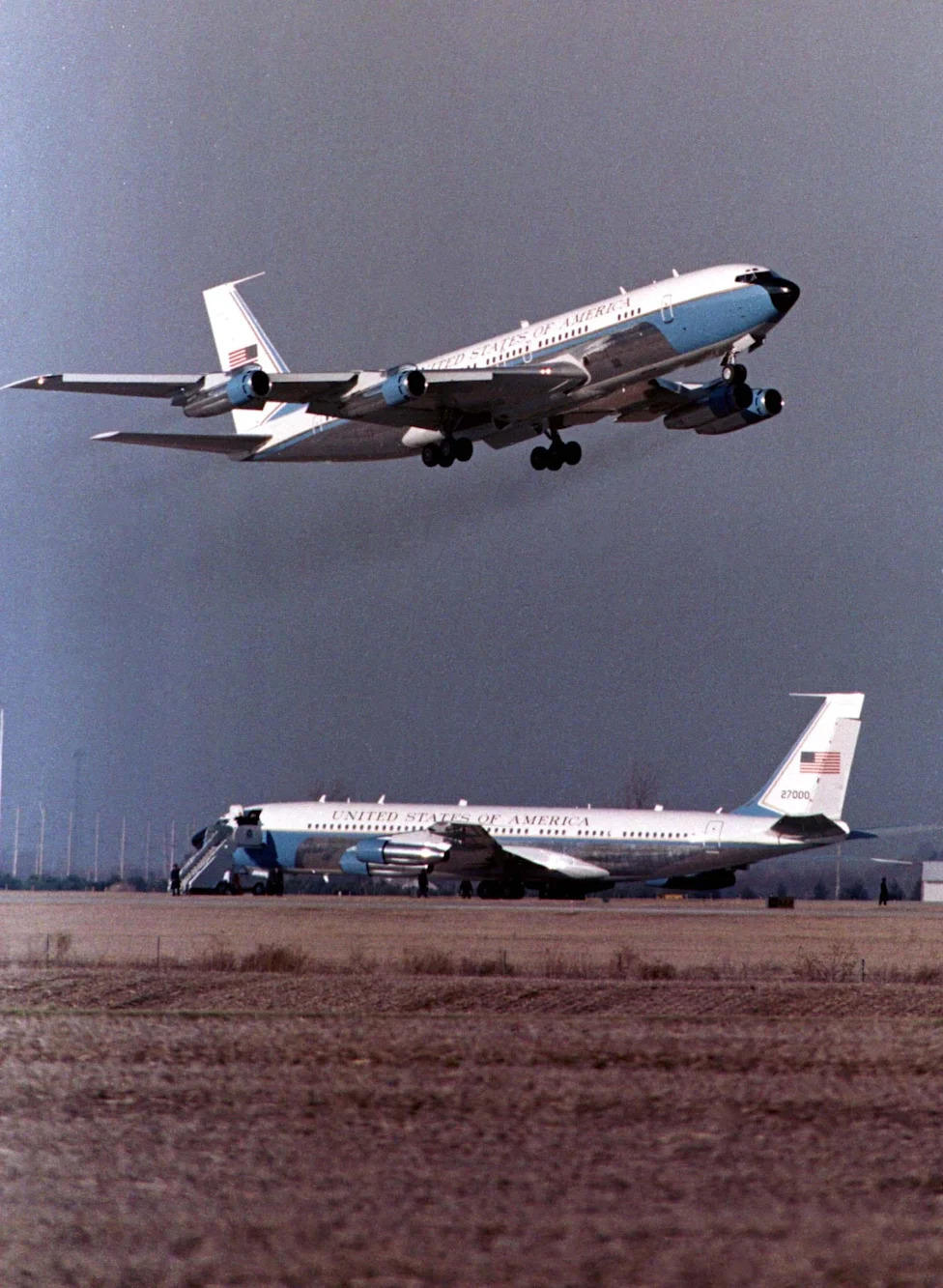
A back-up Air Force One flies over Air Force One after the first plane carrying President Bill Clinton got stuck in the mud as it taxied on a Willard Airport runway in Champaign, Illinois enroute to LaCrosse, Wisconsin Jan. 28, 1998. The Boeing 707 aircraft was moving slowly to its designated runway for takeoff when it left the tarmac. The pilot revved the plane's engines twice to try to generate enough power to move it, but without success.(Scott Olson, Reuters)
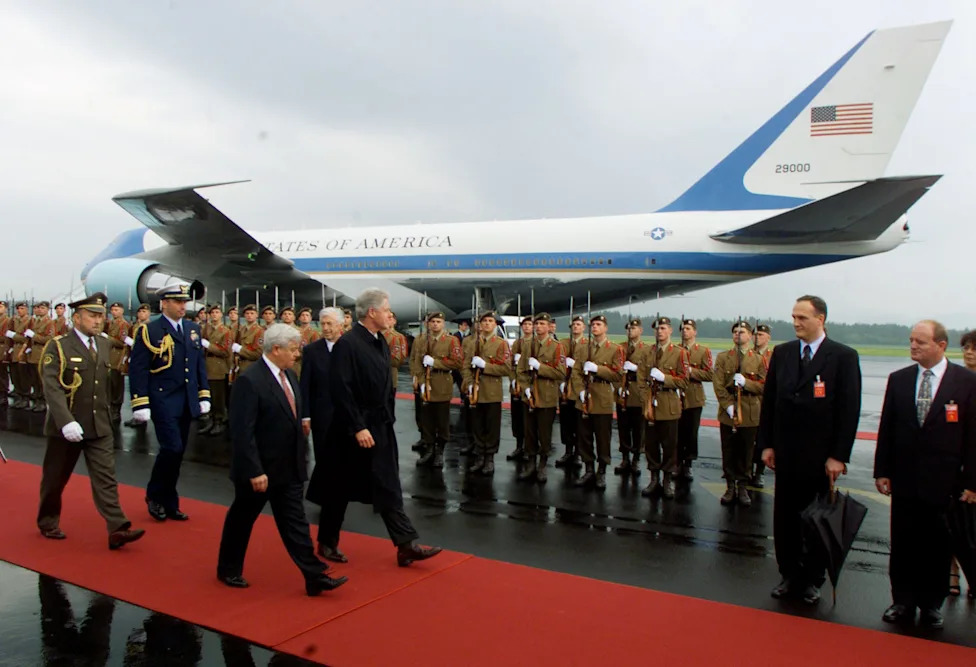
President Bill Clinton accompanied by Slovenian President Milan Kucan reviews an honor guard with Air Force One in the background during his arrival ceremony in Slovenia June 21, 1999.(Larry Downing, REUTERS)
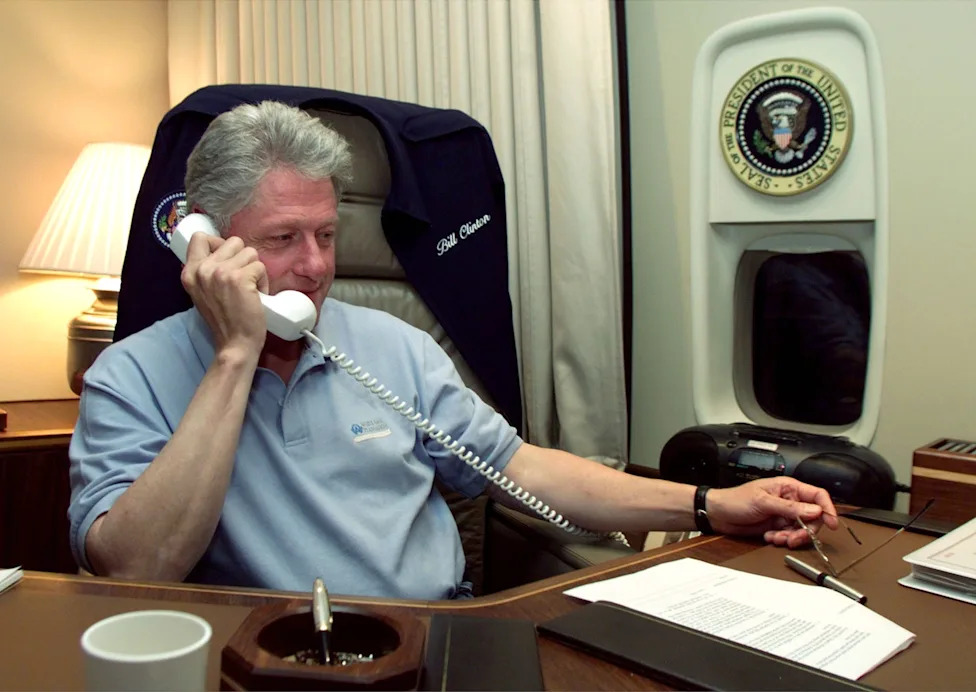
President Bill Clinton makes phone calls to U.S. congressman to discuss the Gun Control Bill while flying towards Europe aboard Air Force One, June 16,1999.(Larry Downing, Reuters)
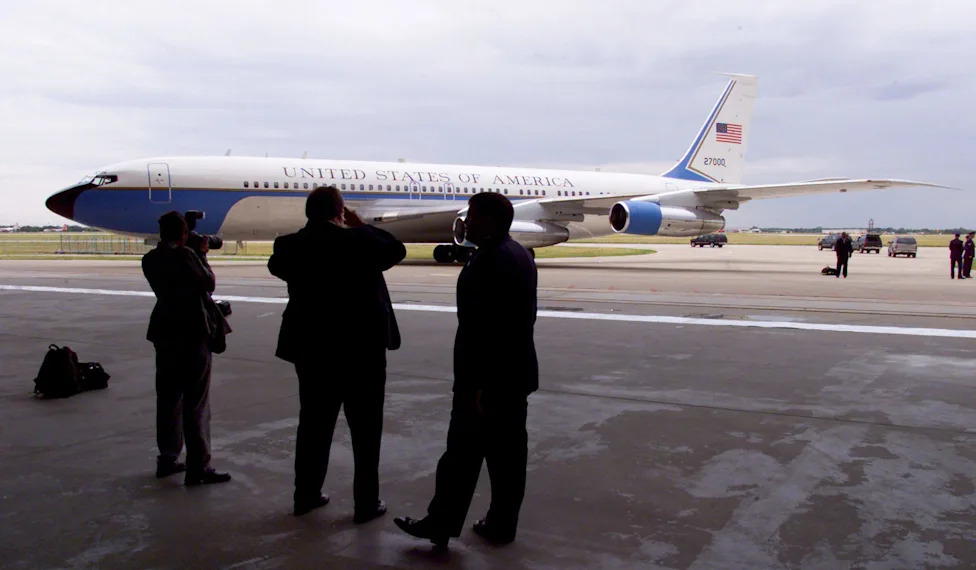
President George W. Bush and first lady Laura Bush drive away from Air Force One tail number 27000 as staff watch and take pictures in Waco, Texas after the last flight of plane carrying a U.S. president Aug. 29, 2001. The Boeing 707 was put into service under the Nixon administration and has flown every U.S. president since then.(Rick Wilking, REUTERS)
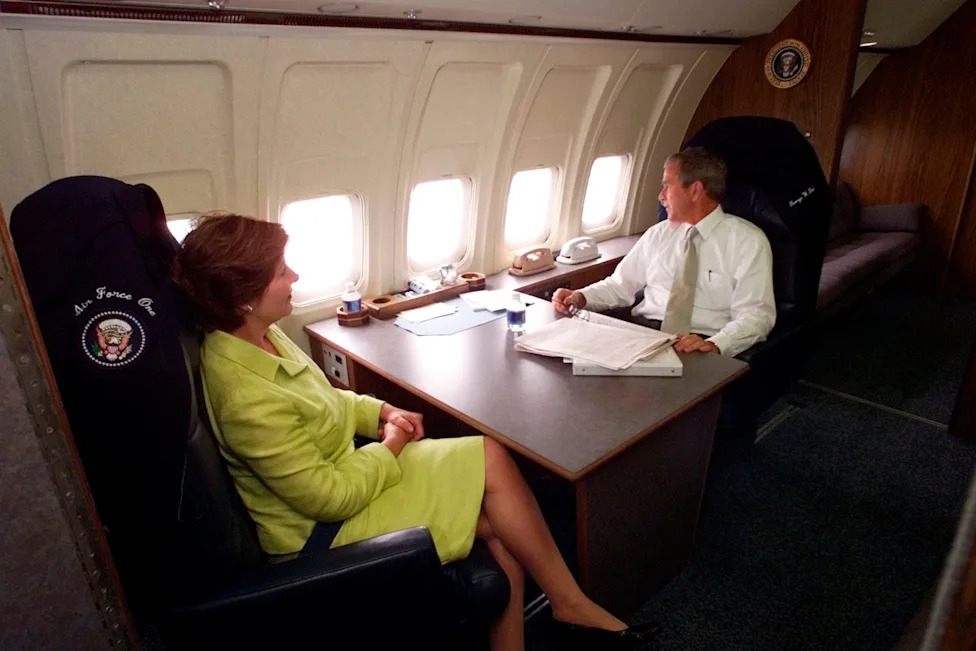
U.S. President George W. Bush and First Lady Laura Bush are seen in the president's office aboard Air Force One tail number 27000 on the last flight of plane carrying a U.S. president, flying from San Antonio, Texas to Waco, Texas, August 29, 2001. The Boeing 707 was put into service under the Nixon administration and has flown every U.S. president since then.(Rick Wilking, REUTERS)
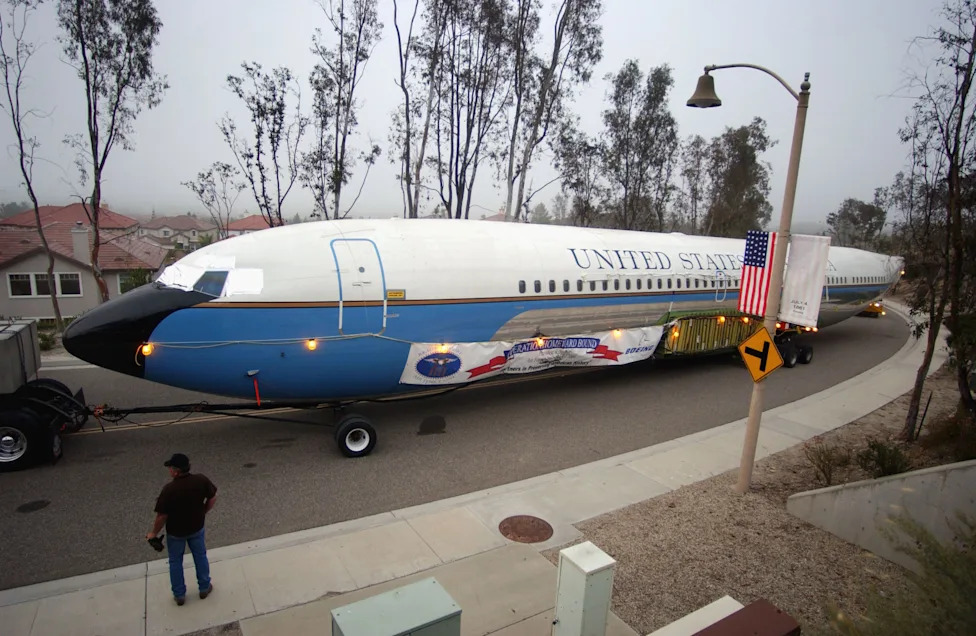
The fuselage of Air Force One, the Boeing 707 jet that served as transport for U.S. presidents for 28 years, is trucked from San Bernardino Airport, where it was disassembled to make the 100-mile trip, to the Ronald Reagan Presidential Library on June 21, 2003 in Simi Valley, California. The historic aircraft will be reassembled by spring 2004, restored to museum quality, and go on public display by late 2004. Air Force One served the administrations of presidents Richard Nixon, Gerald Ford, Jimmy Cater, Ronald Reagan, George Bush, Sr., Bill Clinton, and George W. Bush.(David McNew, Getty Images)
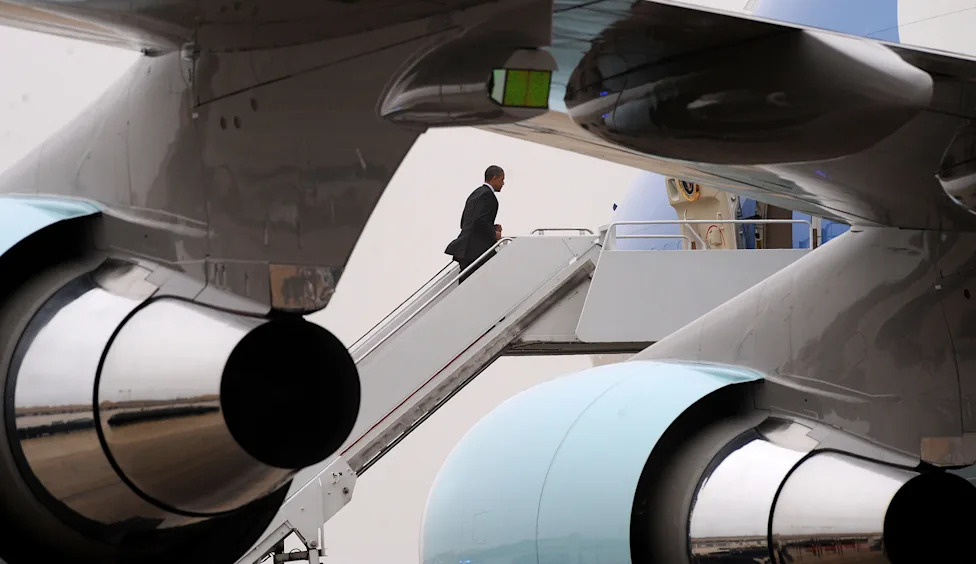
President Barack Obama walks up the steps of Air Force One on March 21, 2012 at Andrew Air Force Base, Md. Obama is traveling to Boulder City, Nevada to visit the largest solar power plant in the U.S.(Pool photo via Getty Images)
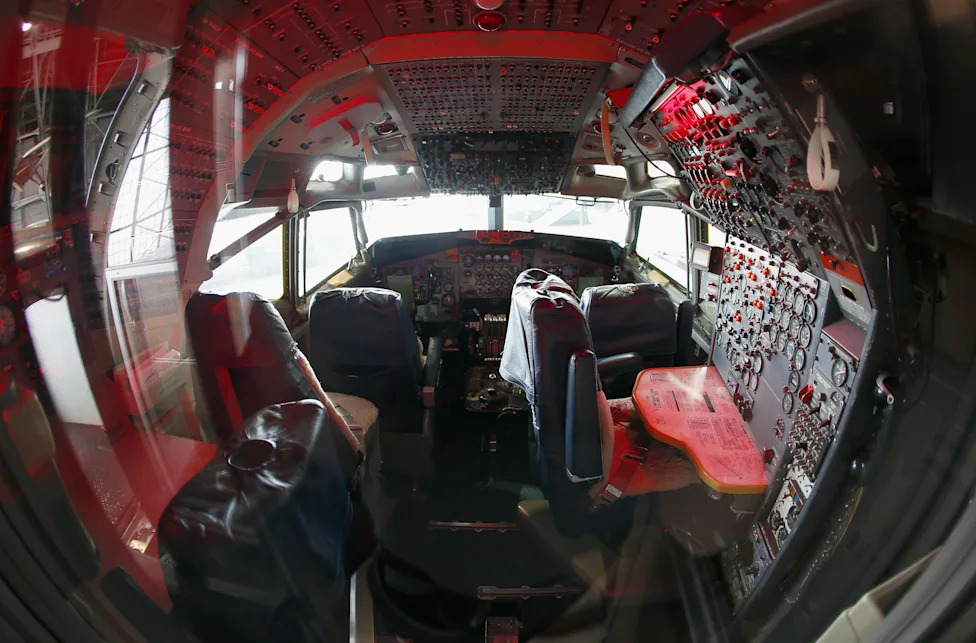
The cockpit of the Special Air Mission (SAM) 26000, U.S. President John F. Kennedy's Air Force One, sits on display at the National Museum of the United States Air Force in the Presidential Gallery on Nov. 20, 2013 in Dayton, Ohio. This SAM 26000 flew JFK's body from Dallas after he was assassinated on November 22, 1963 and where Vice President Lyndon B. Johnson was sworn in as the new president while onboard.(Matt Sullivan, Getty Images)
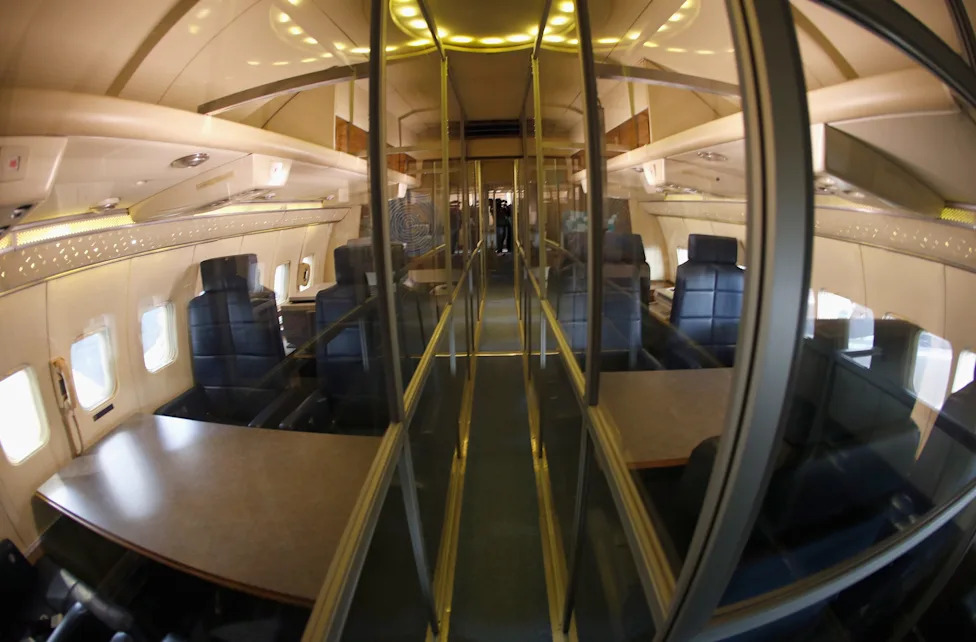
The cabin of the Special Air Mission (SAM) 26000, U.S. President John F. Kennedy's Air Force One, on display at the National Museum of the United States Air Force in the Presidential Gallery on Nov. 20, 2013 in Dayton, Ohio. This SAM 26000 flew JFK's body from Dallas after he was assassinated on November 22, 1963 and where Vice President Lyndon B. Johnson was sworn in as the new president while onboard.(Matt Sullivan, Getty Images)
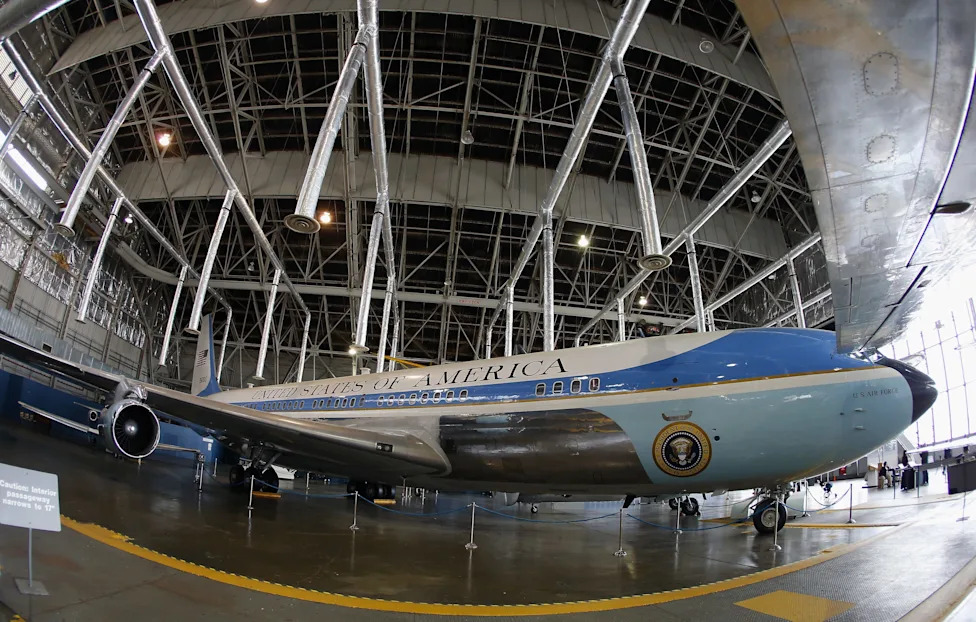
Special Air Mission (SAM) 26000, President John F. Kennedy's Air Force One, sits on display at the National Museum of the United States Air Force in the Presidential Gallery on Nov. 20, 2013 in Dayton, Ohio. SAM 26000 flew JFK's body from Dallas to Washington D.C. Vice President Lyndon B. Johnson was sworn in as the new president on the plane earlier in the day.(Matt Sullivan, Getty Images)
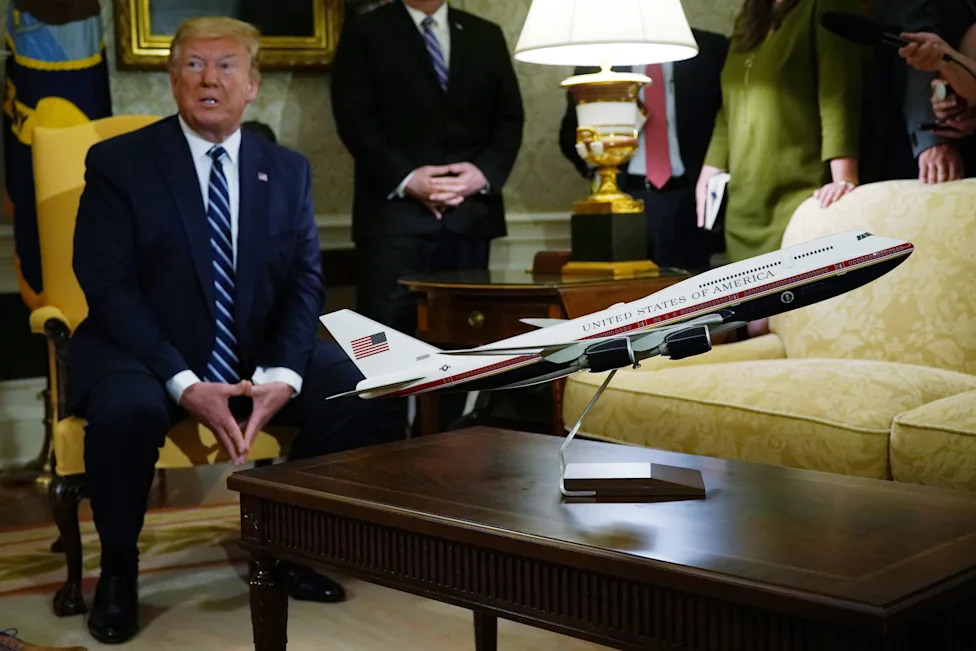
A model of the proposed paint scheme of the next generation of Air Force One is on display during a meeting between U.S. President Donald Trump and Canadian Prime Minister Justin Trudeau in the Oval Office of the White House June 20, 2019 in Washington, DC.(Alex Wong, Getty Images)
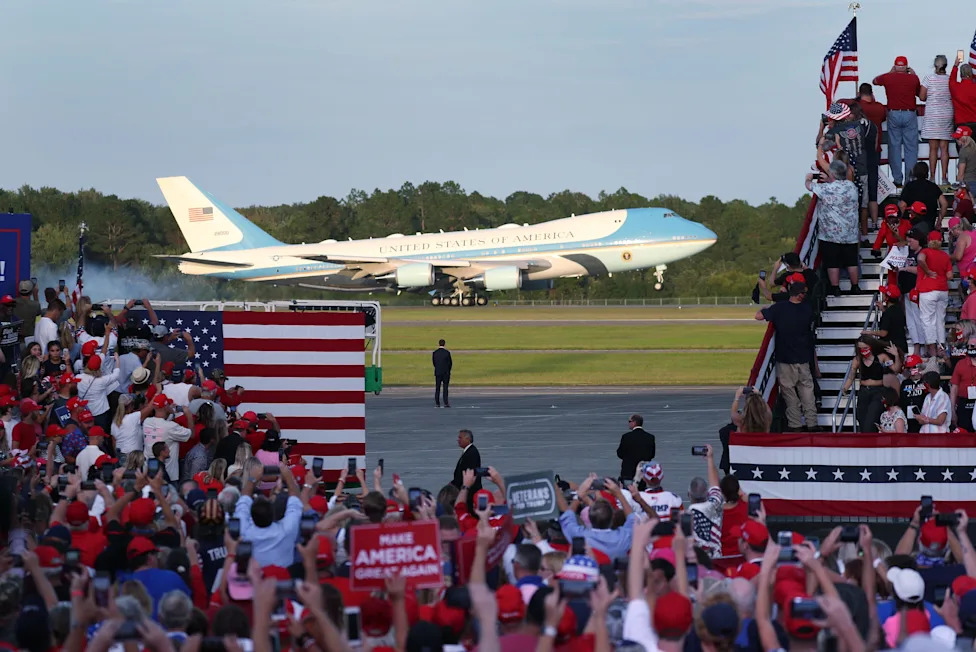
President Donald Trump arrives on Air Force One for his, 'The Great American Comeback Rally', at Cecil Airport on Sept. 24, 2020 in Jacksonville, Fla. President Trump continues to campaign against Democratic Presidential Candidate Joe Biden.(Joe Raedle, Getty Images)
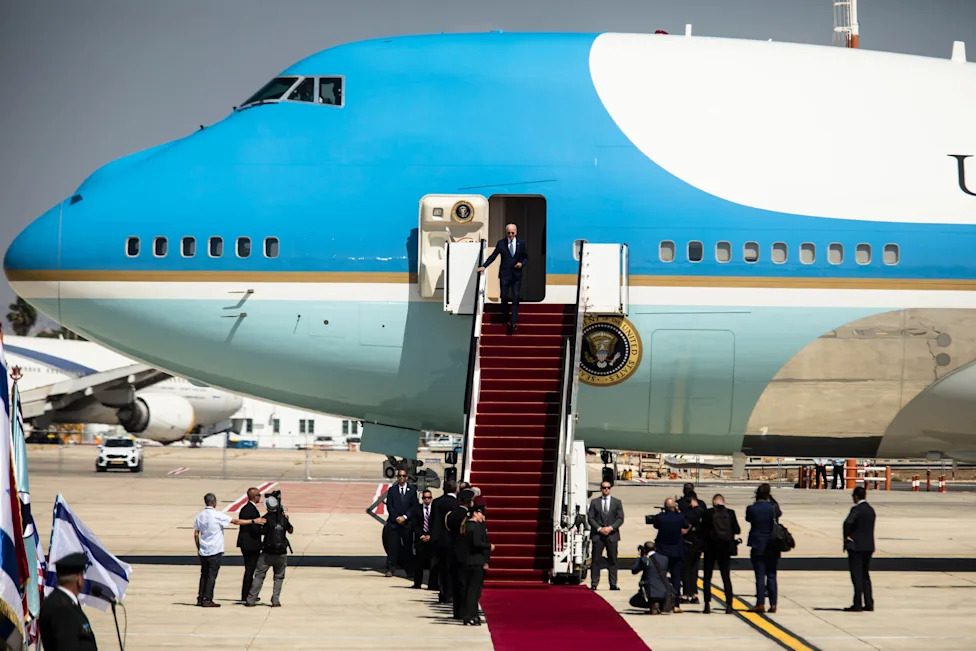
President Joe Biden descends from Air Force One at Ben Gurion International Airport during Biden's visit to Israel on July 13, 2022 in Lod, Israel. Biden will spend two days in Israel, his first visit here as president, before traveling to Saudi Arabia.(Amir Levy, Getty Images)
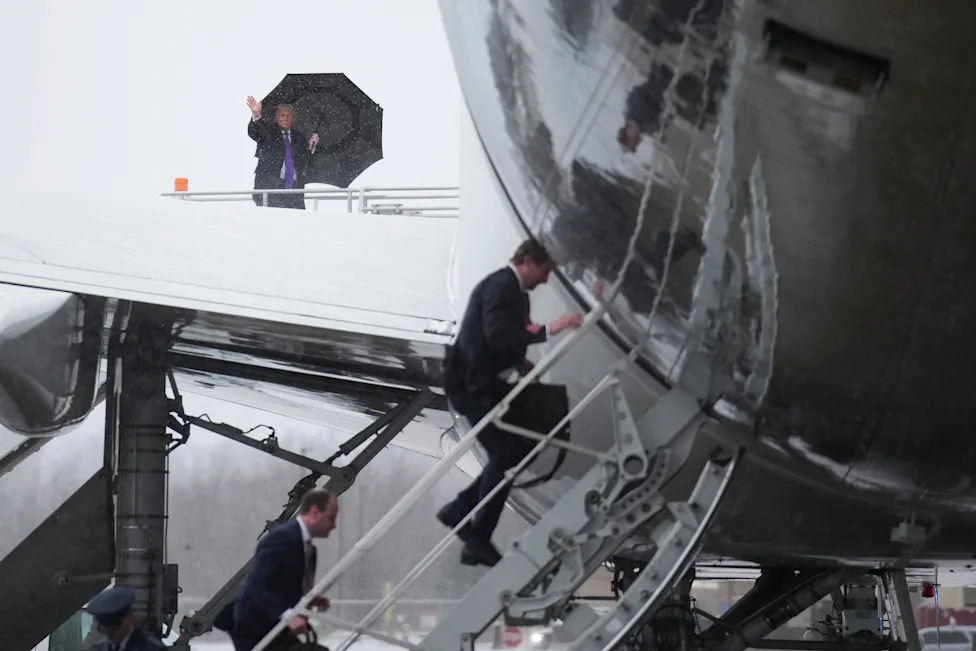
President Donald Trump waves as he boards Air Force One at Cincinnati/Northern Kentucky International Airport on March 11, 2026 in Hebron, Kentucky. President Trump traveled to Ohio and Kentucky where he visited two local businesses.(Andrew Harnik, Getty Images)
Help us improve.





















