The Tel Aviv University–led study reports that modern human males evolved a forward‑shifted hip joint that acts like a built‑in spring, cushioning each walking step and storing energy for the next. Two nearly complete Neanderthal male pelves (Kebara Cave and Sima de los Huesos) resemble modern female pelves, suggesting that the male pelvis is the derived form. The authors highlight implications for biomechanics, prosthetic design and clinical research, while noting limitations due to small fossil samples.
Modern Human Males Evolved a Built‑In Hip “Spring,” Study Finds — A Pelvic Change That Boosted Walking Efficiency
A reconstruction of the skeleton. (photo credit: TAU)
A Tel Aviv University–led team reports that the modern human male pelvis evolved a distinct forward placement of the hip joints that functions like a built‑in “spring,” cushioning each step and storing energy to improve walking efficiency. The paper, published in Scientific Reports, argues that this male pelvic configuration is a derived feature, while Neanderthals and modern human females retain an older, ancestral pelvic blueprint.
What the Researchers Did
Prof. Yoel Rak (TAU) and collaborators from Spain, the Technion, Bar‑Ilan University and Ono Academic College compared two nearly complete male Neanderthal pelves — one from Kebara Cave (Israel) and one from the Sima de los Huesos site (Spain) — with dozens of modern human pelvic specimens. Despite Neanderthals' overall robust skeletons, the researchers found that the Neanderthal male pelves often matched the proportions and many measurements of modern human females more closely than those of modern human males.
Proposed Biomechanical Mechanism
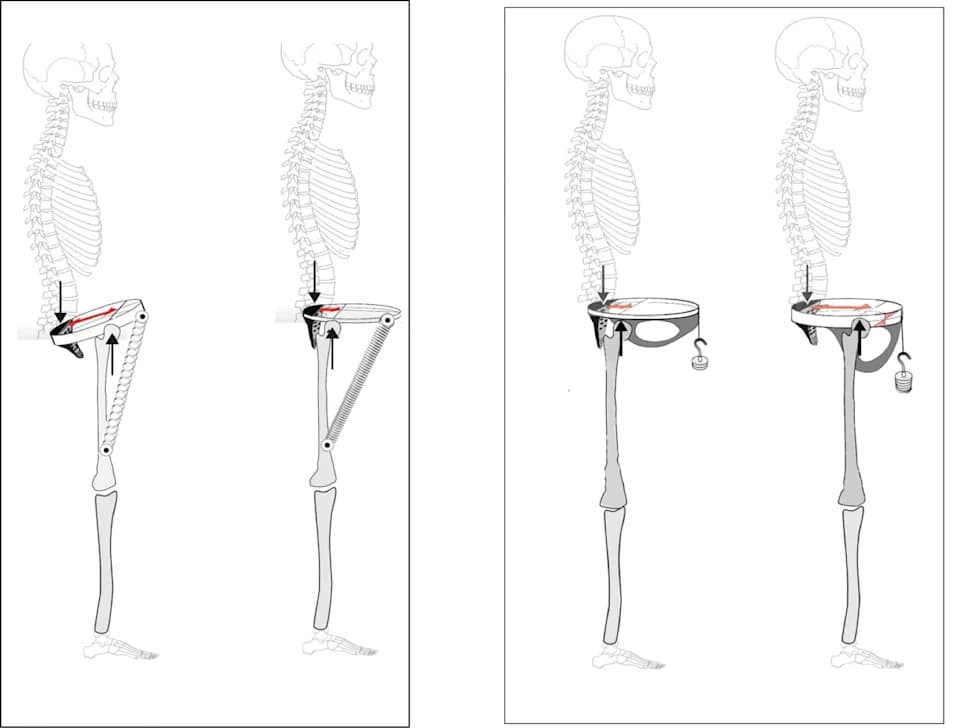
The team identifies the anterior (forward) migration of the acetabula — the hip sockets — in modern human males as the key difference. This shift increases the horizontal anteroposterior distance between the hip joint and the body's line of gravity. According to their biomechanical model, that geometry lets thigh flexor muscles act as a shock absorber: they cushion the downward drop of the center of mass during each step, store potential energy, and then release it to help propel the body upward into the next step.
"The forward migration of the hip joints transforms the modern human male pelvis into a shock‑absorbing device that cushions the drop of the center of mass with every step and, at the same time, stores potential energy in the flexor muscles of the thigh," the authors write.
Evolutionary Interpretation and Sexual Dimorphism
The authors challenge a long‑standing view that Neanderthal pelves are unusually derived. Instead, they propose that the Neanderthal pelvis — and the pelvic form retained by many modern females — represents the ancestral configuration. Childbirth constraints, the researchers argue, have limited how narrow or anteriorly shifted the female pelvis could become, preserving a shallower, wider birth canal. By contrast, the male pelvis appears to have undergone substantial evolutionary modification that enhanced walking economy.
Implications and Limitations
The study suggests potential applications beyond paleoanthropology: understanding this pelvic geometry may inform biomechanics, musculoskeletal medicine, rehabilitation, prosthetic hip design and research into back pain and osteoarthritis. Prof. Ella Been (Ono Academic College) highlights that evolutionary perspective can yield clinically relevant insights.
However, the authors acknowledge limits: the Neanderthal sample is small (two near‑complete male pelves), female Neanderthal pelvic data remain sparse, and the model focuses on walking rather than running. The paper also notes the scarcity of Denisovan skeletal material and that many questions remain about population variation and selective pressures.
Conclusion
The study reframes pelvic evolution by proposing that the modern male pelvis is a derived, energy‑saving adaptation for long‑distance walking, while Neanderthals and many modern females retain an older pelvic plan shaped in part by childbirth constraints. The findings open new avenues for comparative anatomy and applied biomechanics but call for more fossil data and biomechanical testing to confirm the model.
Help us improve.