The NTSB concluded a deadly August 2024 crash at the I‑80 toll plaza near Swanton, Ohio, could have been prevented if the plaza used fully electronic tolling and clearer signage. An SUV slowed to reach a low-speed cash lane and was struck from behind by a tractor‑trailer traveling at 70 mph, killing two passengers and seriously injuring three others. Investigators found over 1,000 similar last‑minute lane changes in the three weeks prior and recommended eliminating manual toll booths to reduce dangerous merging and lane‑change collisions.
NTSB Urges Removal of Cash Toll Booths After Deadly I‑80 Crash Near Swanton, Ohio
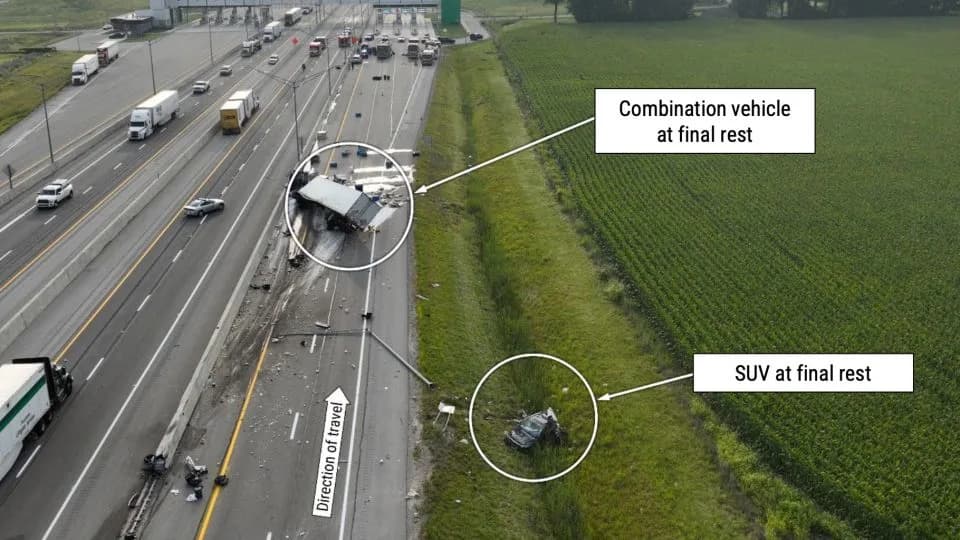
Aerial police photo showing the aftermath of the wreck between a semi truck and SUV on August 15, 2024 with annotations from NTSB investigators. The SUV slowed to 15 mph as it merged from the left, high speed lane, and was hit by the truck going 70 mph. - Ohio State Police/NTSB
The National Transportation Safety Board (NTSB) on Wednesday recommended eliminating manual, cash-access toll booths from highway plazas after investigators concluded a deadly August 2024 crash at the Interstate 80 toll plaza near Swanton, Ohio, could have been prevented with fully electronic tolling and clearer signage.
Crash Details and Findings
According to the NTSB's final report, the collision occurred around 5:30 a.m. when a Toyota Highlander SUV traveling in the left of two high-speed lanes abruptly slowed and merged right to reach a low-speed, cash lane. The SUV decelerated to about 15 mph in the right high-speed lane while preparing to cross a median to access a slow lane posted with a 10 mph advisory. A tractor-trailer traveling at the 70 mph speed limit struck the rear of the SUV. The SUV then hit a concrete barrier; both vehicles overturned.
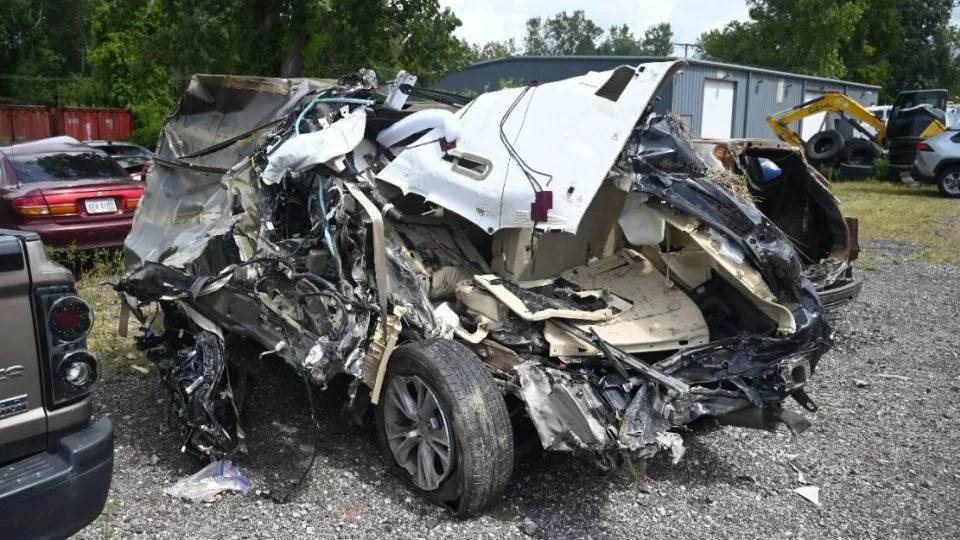
The wreckage of the Toyota Highlander SUV that was hit by a truck on August 15, 2024. - NTSB
Two passengers in the Toyota were killed. Another passenger in the SUV and both vehicle drivers were seriously injured. Investigators reported that the only occupant wearing a seat belt was the SUV driver.
"Had the Swanton Toll Plaza been configured for fully electronic tolling, the crash would have been avoided," the NTSB wrote in its report.
Systemic Problems Identified
Investigators found the SUV driver suffered a loss of situational awareness, likely related to fatigue, and that the truck driver had insufficient time to react to the sudden lane incursion and rapid deceleration. Surveillance-video review showed more than 1,000 drivers made similar last-minute lane changes in the three weeks before the crash—an average of more than twice per hour—indicating the behavior was a recurring safety hazard, not an isolated incident.
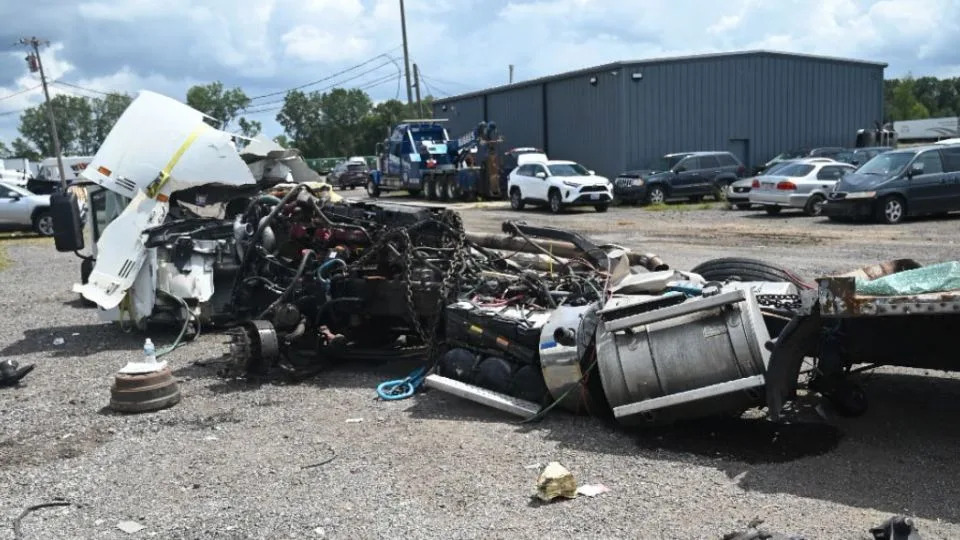
The wreckage of the Mack truck-tractor that hit the SUV on August 15, 2024. - NTSB
The high-speed lanes were equipped to accept transponders and also had license-plate readers that allow post-trip billing. However, advance signs indicated the high-speed lanes were for vehicles with an E-ZPass transponder only, creating confusion for drivers who might have assumed electronic billing was accepted in those lanes.
Recommendations
The NTSB recommended that the Federal Highway Administration, Ohio authorities and the toll operators' association move toward fully electronic tolling and improve how payment options are presented to motorists. The board argued that removing slow-speed, cash-access lanes would reduce dangerous lane changes between high-speed and low-speed lanes and cut the risk of similar crashes.
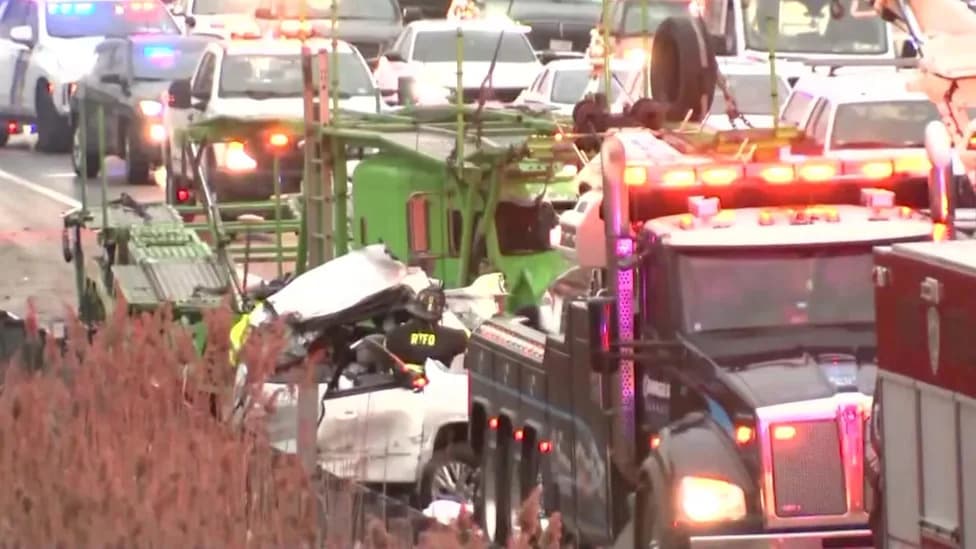
Investigators also highlighted secondary impacts: the initial collision caused a traffic backup that resulted in at least two additional multi-vehicle crashes involving several cars.
What This Means For Drivers
- Fully electronic tolling removes the need for abrupt speed changes and last-second lane shifts at plazas.
- Clear, consistent signage about which lanes accept electronic billing can reduce confusion and risky maneuvers.
- Proper seat-belt use remains a critical safety measure: investigators noted most occupants were unbelted.
The NTSB's recommendations aim to address the "inherent safety risk" posed by mixed-speed toll plazas and to encourage a nationwide transition to electronic tolling to prevent similar tragedies.
Help us improve.