Trinidad and Tobago has ended a state of emergency that allowed detention without charge, with Prime Minister Kamla Persad-Bissessar saying the government will not seek further extensions and will instead draft permanent legislation. The decision follows criticism over mass arrests—more than 5,800 detained since March, about 2,250 uncharged—and calls for human rights investigations. Lawyer Criston Williams has described degrading treatment of detainees and expects legal challenges, while police report a drop in recorded killings from 624 in 2024 to 369 in 2025.
Trinidad and Tobago Ends Sweeping State of Emergency Amid Backlash Over Mass Arrests
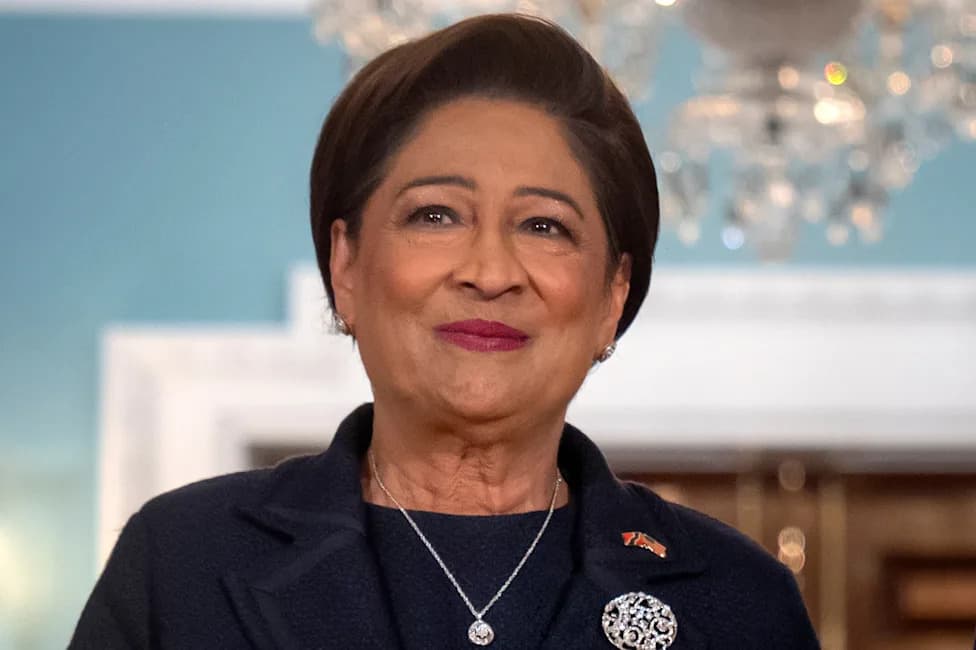
Trinidad and Tobago Prime Minister Kamla Persad-Bissessar stands at the State Department in Washington, DC, on September 30, 2025 [File: Mark Schiefelbein/AP]
Trinidad and Tobago has ended a state of emergency that granted the government extraordinary powers, including the authority to detain people without charge. Prime Minister Kamla Persad-Bissessar told parliament the government will not seek another extension and will instead pursue legislation to create a permanent legal framework for targeted anti-crime operations.
Background and Government Response
One state of emergency was first imposed in 2024 and a second in 2025, with subsequent extensions prolonging both measures. In a social media post, Persad-Bissessar said the proposed law would "establish a permanent legal framework for targeted operations against violent crime, gangs, illegal weapons and the criminal networks that finance them, while providing safeguards for law-abiding citizens, judicial oversight and parliamentary accountability."
Criticism and Rights Concerns
The government faced widespread criticism for a campaign of mass arrests that suspended key civil liberties in the name of cracking down on crime. Authorities say more than 5,800 people were arrested since a March extension; roughly 2,250 of those arrested have not yet been charged. It remains unclear how many of those detained will be released now that the emergency measures have ended.
"They are transported to us blindfolded, shackled, hands behind their backs, a gray knapsack over their heads," said lawyer Criston Williams, who has urged the Inter-American Commission on Human Rights to investigate possible abuses. He also said meetings between detainees and lawyers often occurred under heavy supervision by armed officers, raising concerns about attorney-client privilege.
A prominent businessman and his wife were among those arrested over alleged involvement in a plot to assassinate the prime minister; they were never charged and were later released. Williams said he expects some detainees held without charge to file lawsuits against the government.
Crime Trends
Police reported a record 624 killings in 2024 in the country of about 1.4 million people, a figure they say fell to 369 in 2025. Authorities report 255 killings so far this year, compared with 268 over the same period in 2025.
With the formal emergency lifted, the government faces the twin challenges of shrinking violent crime while responding to national and international concerns about due process and civil liberties as it drafts the proposed permanent legal framework.
Help us improve.