Key Finding: Two viral videos claimed to show recent Indonesian eruptions are actually from 2018. The Anak Krakatau night footage dates to October 2018, and the clip of children fleeing ash is from Mount Sinabung in February 2018. Both clips were cropped or altered and later reshared as if they were new. Indonesia's many active volcanoes can produce coincidental clusters of eruptions, which can fuel misinformation.
Viral Clips of Indonesian Volcanoes Are From 2018 — Not Recent Eruptions
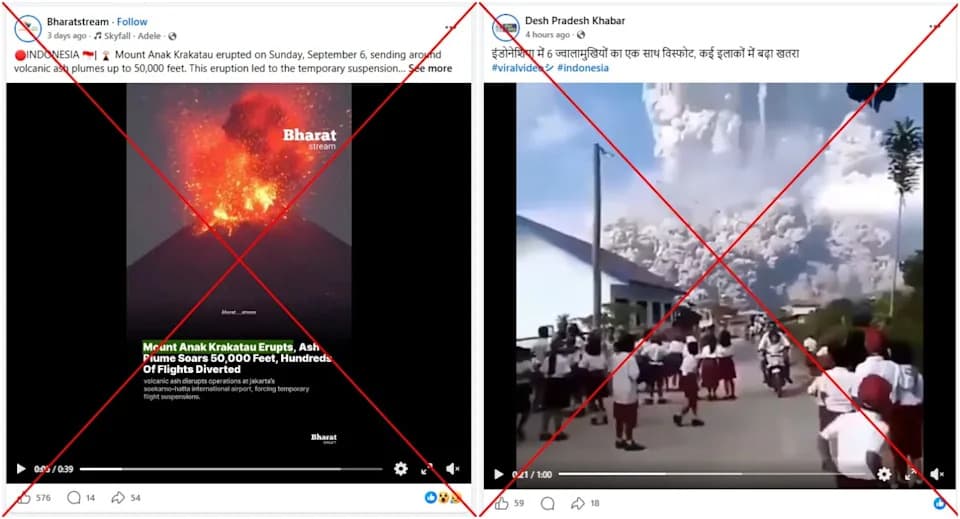
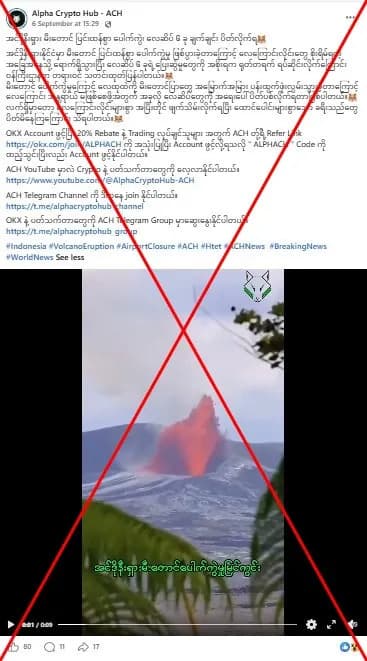
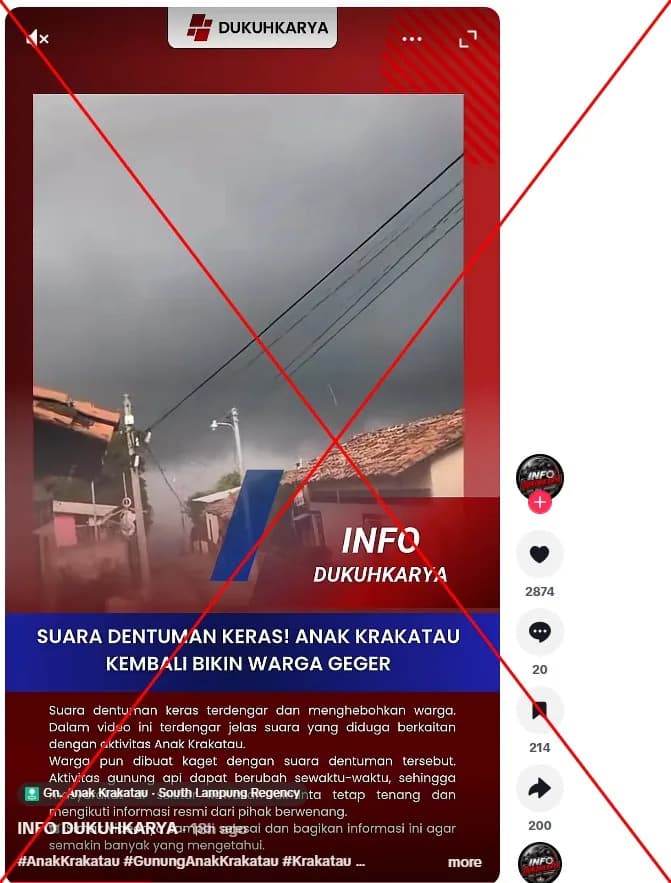
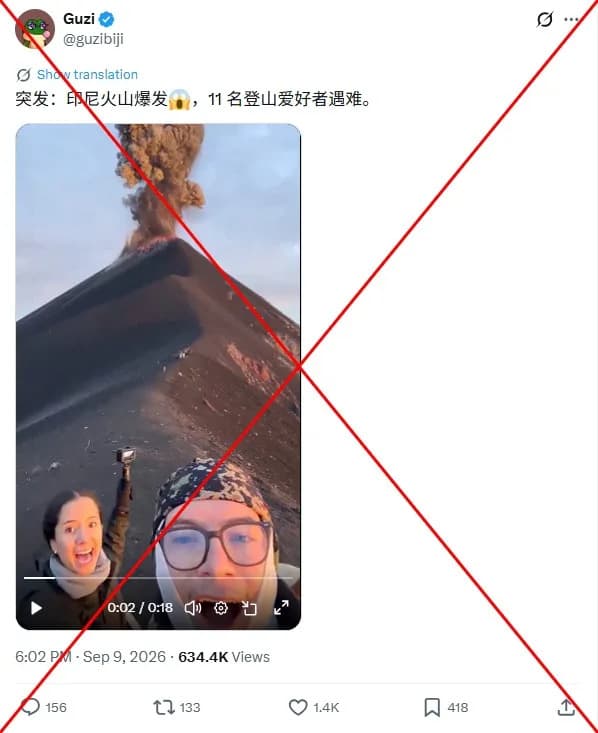
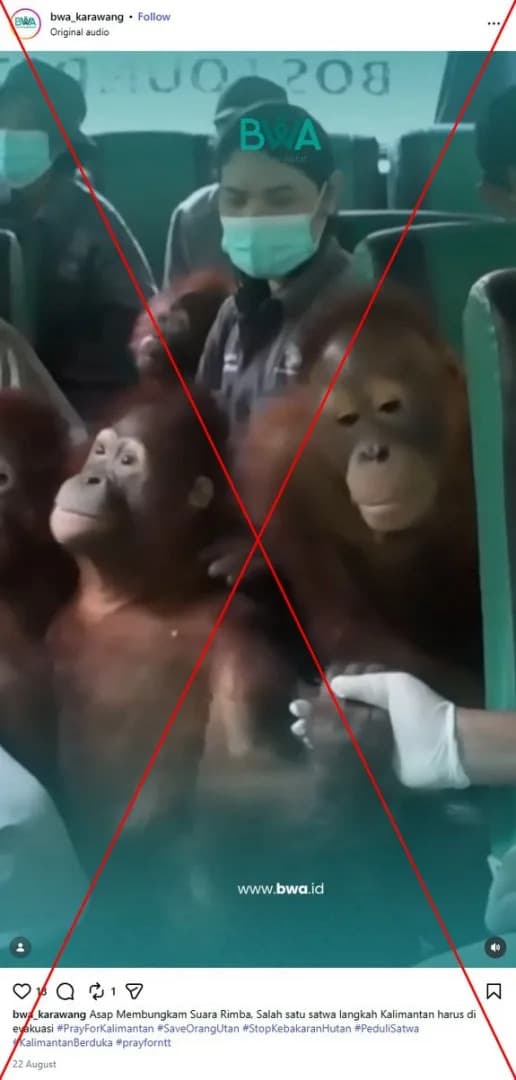
Screenshot of the false posts captured on September 11, 2026, with red Xs added by AFP
Old footage of volcanic eruptions circulating online has been repurposed and falsely presented as new. Verification shows the dramatic night-time footage of Anak Krakatau and the video of children fleeing ash are authentic recordings — but from 2018, not recent events.
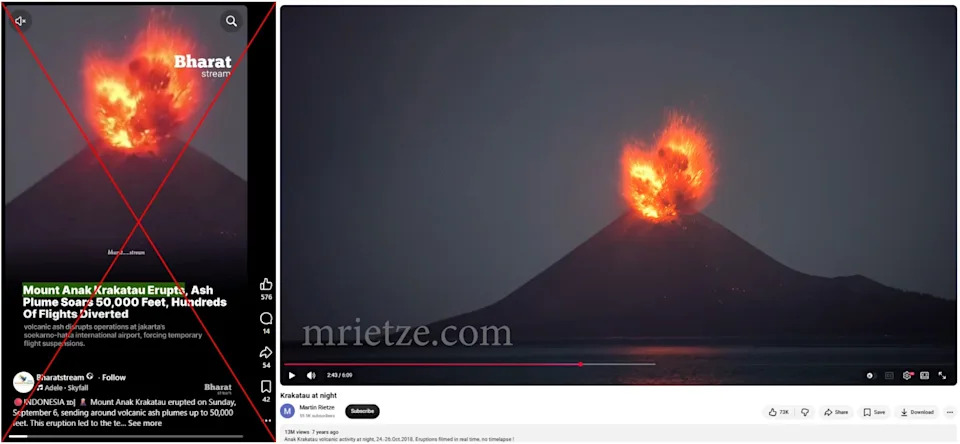
Screenshot comparison of the falsely shared video (L) and the November 2018 YouTube video
What Was Shared
Two widely reshared clips claimed to depict current volcanic activity in Indonesia. One night-time video purported to show Anak Krakatau erupting on September 6; another showed schoolchildren running as a massive ash cloud rose in the distance and was presented as part of multiple simultaneous eruptions.
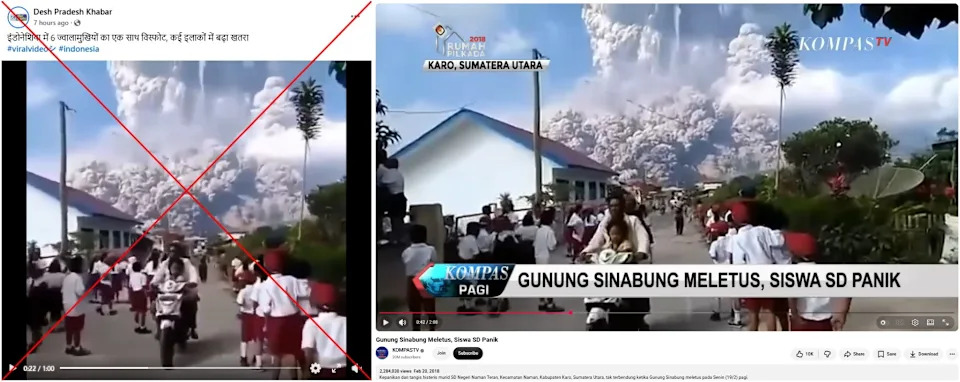
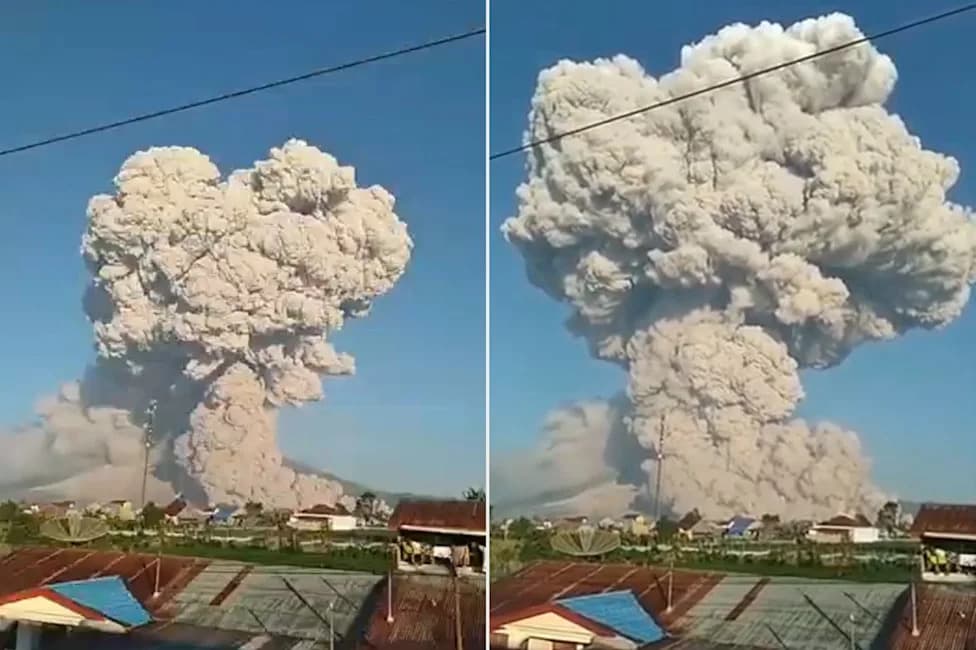
Screenshot comparison of the falsely shared video (L) and the February 2018 YouTube clip
How The Videos Were Verified
Investigators used reverse image searches and frame-by-frame comparisons to trace the clips to original sources and dates. Keyframes from the night eruption matched a longer YouTube upload from late 2018; frames from the schoolchildren clip matched a 2018 Kompas TV report and local news stills. Google Street View imagery further confirmed the school location.
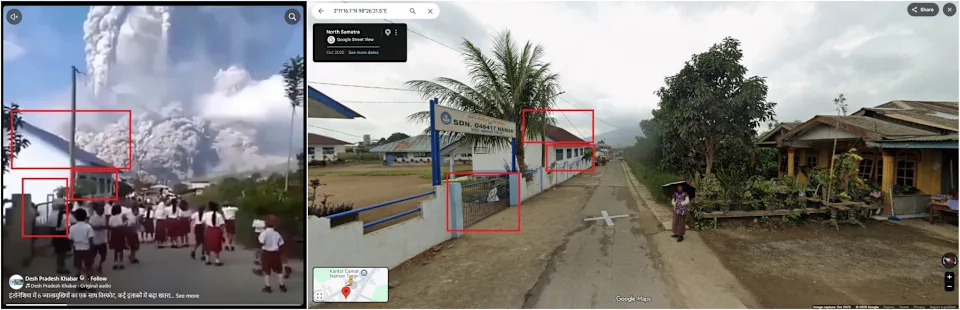
Screenshot comparison of the falsely shared video (L) and Google Street View imagery, with matching element highlighted by AFP
Anak Krakatau Night Footage
The night-time eruption clip matches a YouTube video uploaded in November 2018 titled 'Krakatau at night,' which documents activity from 24–26 October 2018. The circulated clip was cropped, zoomed and sped up from that original recording. The footage was posted by photographer and videographer Martin Rietze and later distributed by video agencies.

Mount Sinabung Schoolchildren Footage
The clip showing children running corresponds to a Kompas TV report uploaded on 20 February 2018. The footage was filmed near Naman Teran State Elementary School in North Sumatra following a Mount Sinabung eruption that sent an ash column roughly 5,000 metres into the sky. Local news coverage and Google Street View corroborate the timing and location.
Context
Indonesia sits on the Pacific Ring of Fire and has about 127 active volcanoes. That density makes it possible for multiple volcanoes to erupt within a short time frame without being physically linked. Rita Susilawati, head of the Centre for Volcanology and Geological Hazard Mitigation, has described clusters of eruptions as coincidences rather than signifying a single connected event.
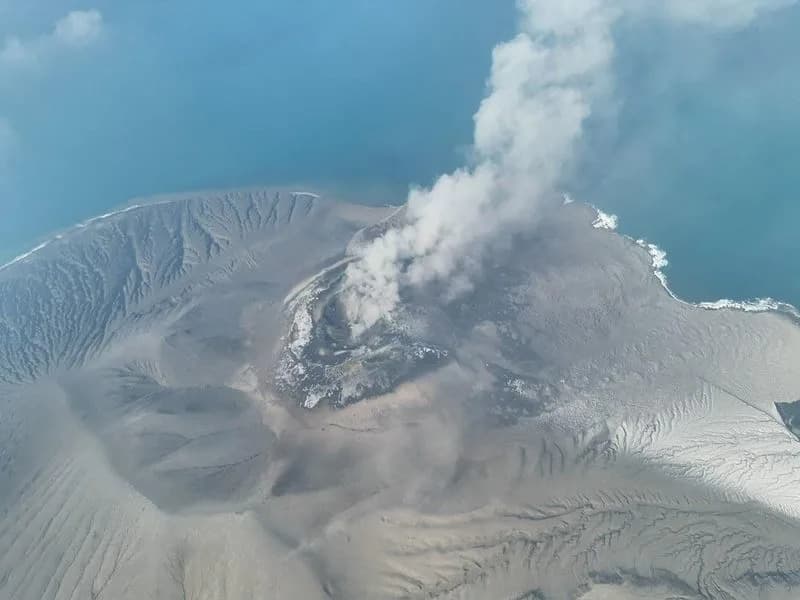
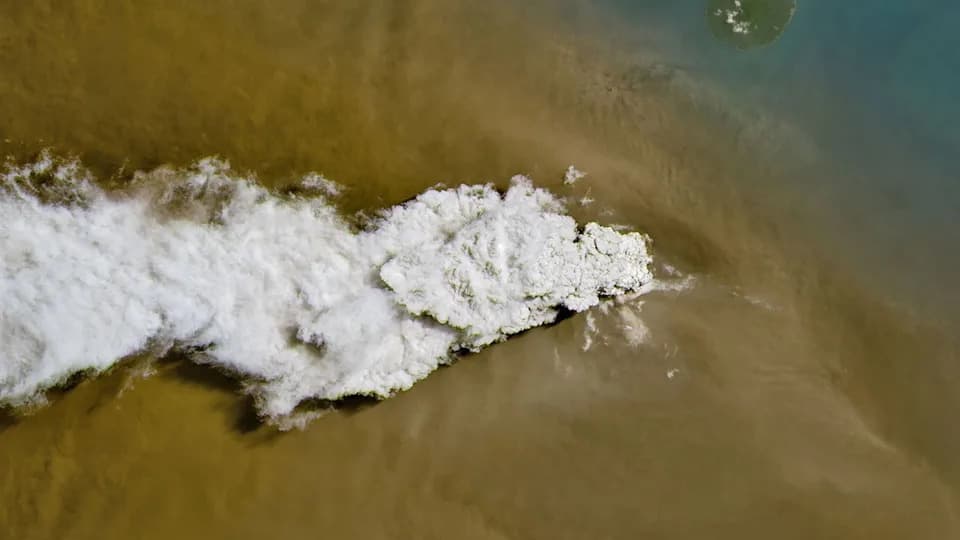
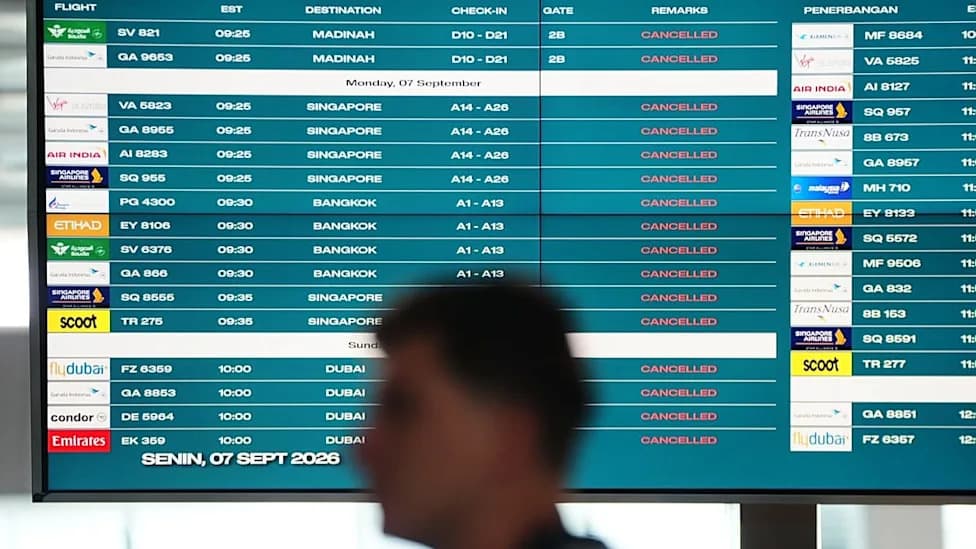
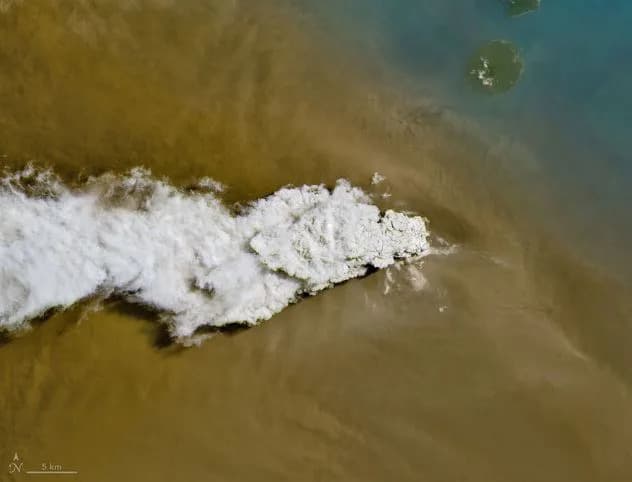
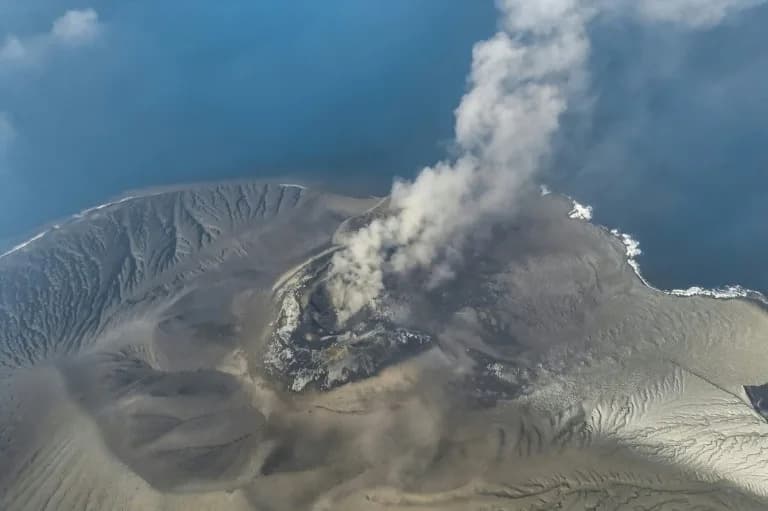
Separately, Anak Krakatau experienced a period of sustained explosive activity in early September that disrupted airports and blanketed parts of Java, including Jakarta, with ash. Its partial collapse in December 2018 triggered a tsunami that killed more than 400 people and displaced thousands.
Takeaway
The two viral clips are real recordings but not recent: the Anak Krakatau night footage dates to October 2018, and the schoolchildren fleeing ash is from Mount Sinabung in February 2018. The videos were repurposed (cropped, sped up, and re-captioned) and reshared during renewed interest in Indonesian volcanic activity.
How To Verify Similar Clips
- Use reverse image search or reverse video search on keyframes.
- Look for longer or original uploads on YouTube and news outlets.
- Cross-check with reputable sources such as national geological agencies and recognized news organizations.
- Compare landmarks in footage with Google Street View to confirm locations.
Note: Repurposed historical footage often resurfaces during high-profile natural events. Always verify dates and sources before sharing.
Help us improve.