Lady in Blue, Tschabalala Self’s new bronze sculpture, was unveiled on Trafalgar Square’s Fourth Plinth on Sept. 10, 2026. The 10-foot figure (nearly 17 feet with its pedestal) features a full-figured Black woman finished with a lapis-inspired patina and will stand in the square for two years. Critics praised the work for its color, scale and contemporary focus, while some public commentators objected on grounds of race, body and representation. Self says the piece is intended to celebrate everyday metropolitan Londoners and to prompt questions about who is commemorated in public spaces.
On the Fourth Plinth, a Black Woman Takes the Stage: Tschabalala Self’s 'Lady in Blue' Sparks Praise and Debate
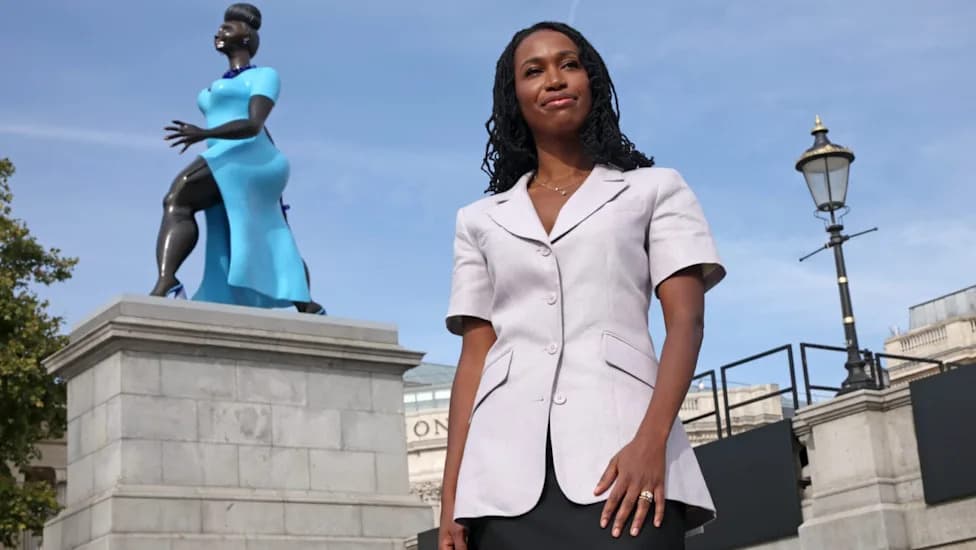
Tschabalala Self poses by her Lady in Blue sculpture as it is unveiled on Trafalgar Square's Fourth Plinth on September 10, 2026 in London, England. Lady in Blue by artist Tschabalala Self has been selected as the 16th official commission for Trafalgar Square's Fourth Plinth, scheduled for unveiling on September 10, 2026. The 10-foot-tall painted bronze sculpture features a Lapis Lazuli blue finish and depicts an everyday metropolitan woman to represent the modern spirit of London. (Photo by Dan Kitwood/Getty Images)
Last week, American contemporary artist Tschabalala Self unveiled Lady in Blue on Trafalgar Square's Fourth Plinth, placing an ordinary, full-figured Black woman in one of London’s most prominent public sites.
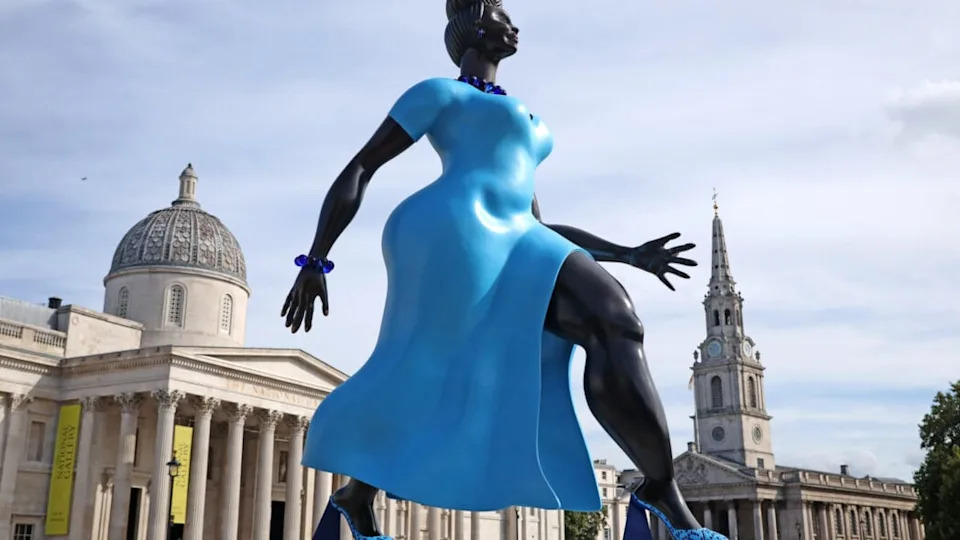
The Lady in Blue sculpture by artist Tschabalala Self is unveiled on Trafalgar Square's Fourth Plinth on September 10, 2026 in London, England. Lady in Blue by artist Tschabalala Self has been selected as the 16th official commission for Trafalgar Square's Fourth Plinth, scheduled for unveiling on September 10, 2026. (Photo by Dan Kitwood/Getty Images)
The Work And Its Unveiling
Unveiled on Thursday, Sept. 10, 2026, and commissioned by the Mayor of London’s Culture Team as the 16th official Fourth Plinth commission, the bronze sculpture is Self’s largest public work to date. The figure stands 10 feet tall (nearly 17 feet including the pedestal), is more than 6 feet wide and weighs roughly 7,050 pounds. An ebony finish with a custom patina inspired by lapis lazuli gives the piece a deep, jewel-toned sheen. The woman is depicted mid-stride in a turquoise dress, matching pumps and hoop earrings, leaning forward with a purposeful gaze as she surveys the square. She will remain in place for two years.
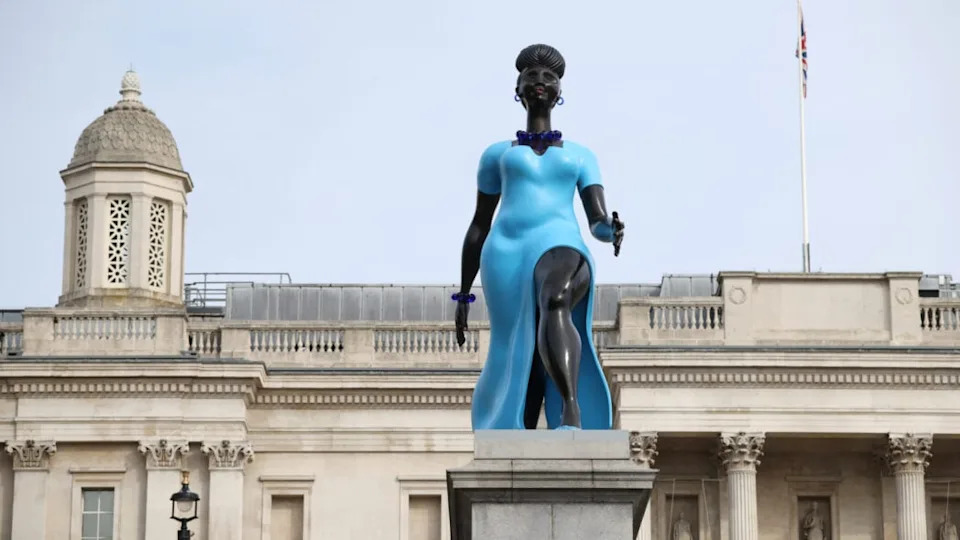
The Lady in Blue sculpture by artist Tschabalala Self is unveiled on Trafalgar Square's Fourth Plinth on September 10, 2026 in London, England. Lady in Blue by artist Tschabalala Self has been selected as the 16th official commission for Trafalgar Square's Fourth Plinth, scheduled for unveiling on September 10, 2026. (Photo by Dan Kitwood/Getty Images)
Reception: Acclaim and Controversy
The installation has drawn strong reactions across the international press and the public. Reviewers called the work a "masterpiece" and "joyful," praising its color, scale and the way it centers a contemporary Black woman in a civic space. At the same time, some members of the public objected — raising questions about race, body size, fashion, and representation, and labelling the commission "too woke" in some corners.
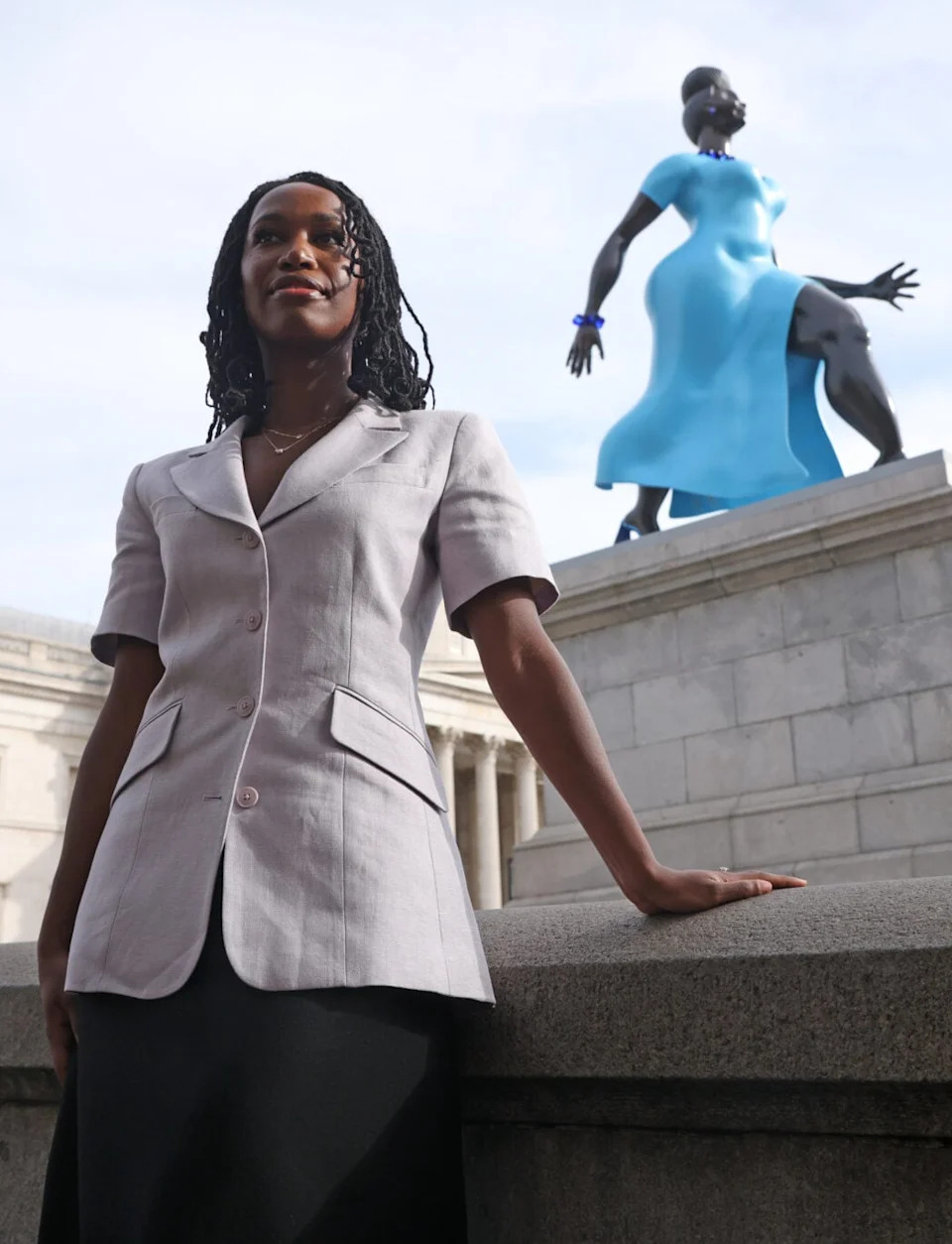
Artist Tschabalala Self poses by her Lady in Blue sculpture as it is unveiled on Trafalgar Square's Fourth Plinth on September 10, 2026 in London, England. (Photo by Dan Kitwood/Getty Images)
"People are allowed to develop their own relationship with it, and I encourage people to do so," Self told reporters at the unveiling, while also urging viewers to consider her intentions.
Why The Debate Matters
That mix of admiration and discomfort is integral to the sculpture’s impact. For centuries, public monuments have elevated monarchs, military leaders and other predominantly white historical figures — many of whose legacies include colonial violence. By placing an anonymous Black woman on a pedestal once intended for a king, Self invites passers-by to reconsider who is deemed worthy of civic recognition and to imagine everyday citizens occupying symbolic heights historically reserved for elites. Critics have compared the reaction to the response to other recent public works portraying Black women, such as the April 2025 installation 'Grounded in Stars' in New York.
Artist, Process And Context
Self, who grew up in Harlem and whose work is held in the collections of institutions such as the Whitney, MoMA and the Art Institute of Chicago, is known for vibrant color, exaggerated proportions and collage-like surfaces that center Black female identity. An independent Fourth Plinth Commissioning Group selected Self’s proposal from an international pool in March 2024; she then spent roughly 30 months developing and producing the sculpture.
The Fourth Plinth itself dates to 1841, when funds ran out for a planned equestrian statue of King William IV; the empty pedestal stood for more than 150 years until a rotating public-art program began in 1998. Self’s piece continues that tradition of using the plinth to stage timely conversations about public art, history and belonging.
Significance
Whether celebrated or contested, Lady in Blue has succeeded in drawing attention and provoking discussion. It puts an ordinary Black woman into civic prominence, asking Londoners and visitors to ask who belongs on public pedestals — and why.
Help us improve.