Customs officers at Turin’s Sandro Pertini Airport discovered a dried crocodile head wrapped in paper inside a passenger’s suitcase after a flight from Miami via Istanbul. The animal is from a species protected under CITES, and the traveler lacked the required import/export permits. He has been reported to prosecutors and could face fines of €20,000–€200,000 or six months to one year in prison. The seizure was part of a targeted summer operation aimed at flights from higher-risk destinations.
Crocodile Head Seized in Suitcase at Turin Airport — Passenger Reported for Illegal Import
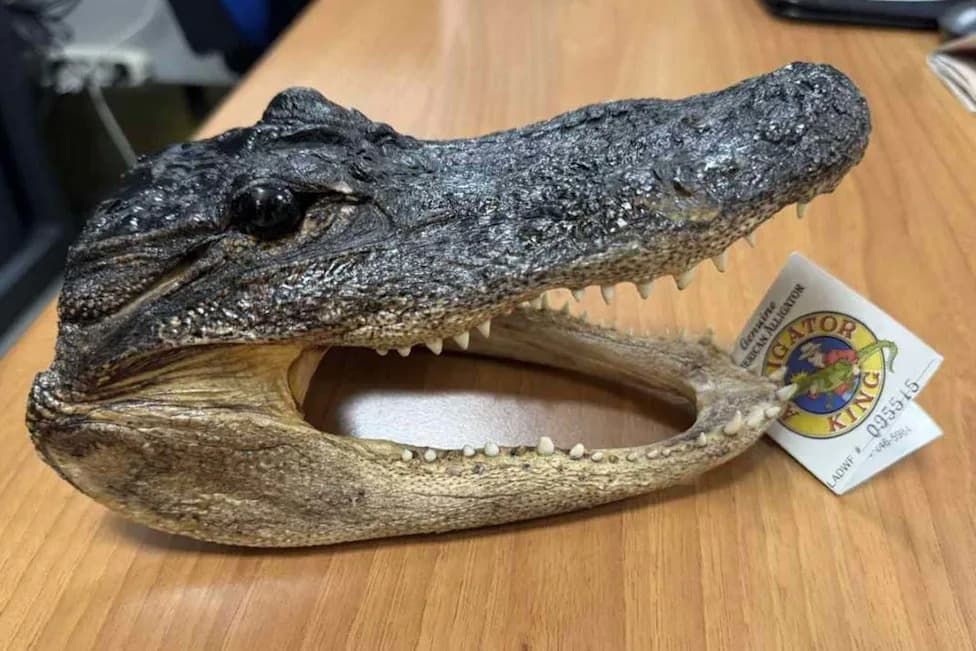
Crocodile head found in a passenger's luggageCredit: Gdf.gov
Italian customs officers at Turin’s Sandro Pertini Airport detained a traveler after discovering the head of a crocodile packed in his luggage, authorities said.
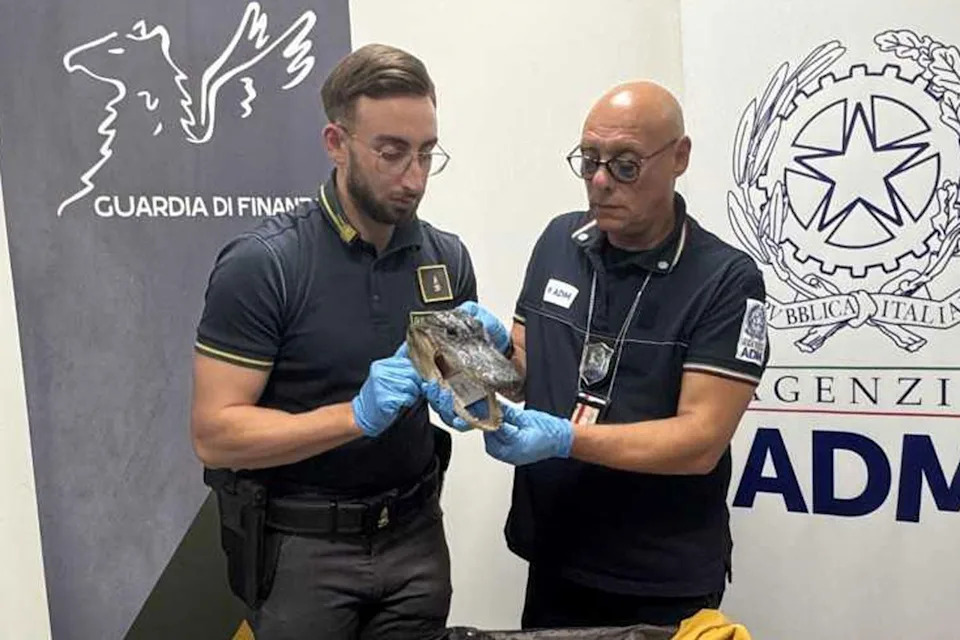
Customs agents share images of the crocodile head found in the man's suitcase.Credit: Gdf.gov
The Guardia di Finanza, Italy’s financial police and customs agency, said the passenger arrived at Caselle Torinese on a flight from Miami with a connection through Istanbul. During a targeted baggage inspection, officers opened his suitcase and found the crocodile head dried and wrapped in ordinary paper — a method the agency said appeared intended to evade checks at the departure airport.
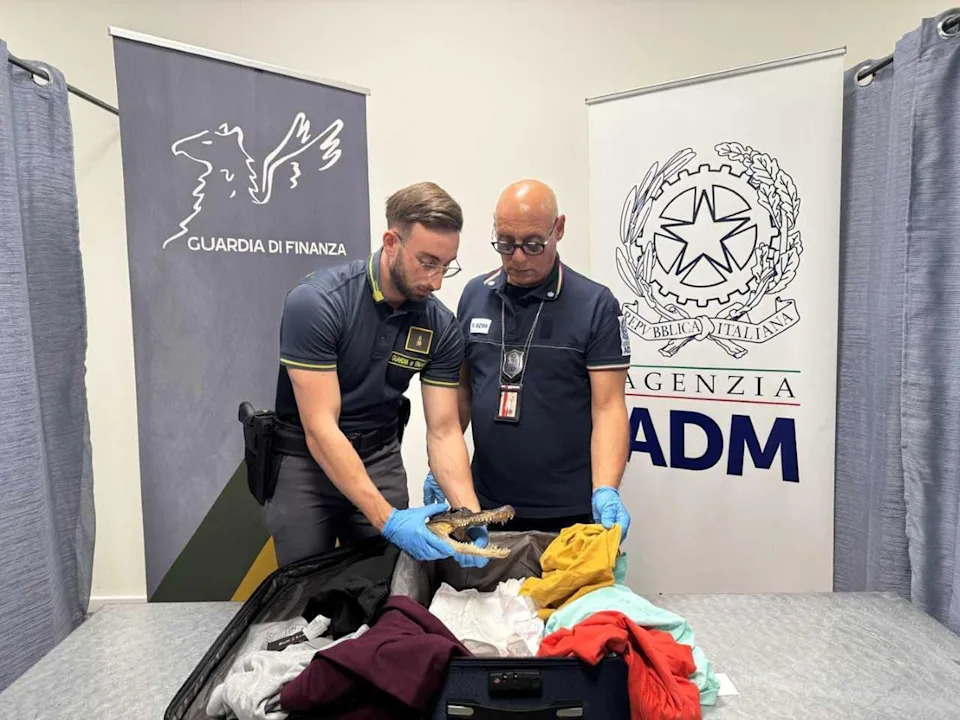
Customs agents found the crocodile head "dried and wrapped in ordinary wrapping paper"Credit: Gdf.gov
The specimen is protected under CITES — the Convention on International Trade in Endangered Species of Wild Fauna and Flora — and the agency determined the passenger did not hold the required export or import permits. He has been reported to prosecutors for illegally importing a protected species, and criminal proceedings have been initiated.
Under Italian law, illegally bringing in a specimen of a protected species carries severe penalties: fines from €20,000 to €200,000 (about $23,200 to $232,000) or imprisonment of six months to one year, the Guardia di Finanza said.
The seizure was part of a summer operation focused on flights judged to be at higher risk because of increased passenger traffic from so-called “exotic” destinations. Officials also released images of the seized item in the suitcase as a warning against attempts to traffic protected wildlife into Italy. The traveler’s identity has not been made public while the investigation continues.
Why it matters: The case highlights continued international efforts to curb illegal wildlife trade and the role of targeted airport inspections in intercepting protected species without proper documentation.
Help us improve.