Hungary presented two Lipizzaner horses — Nelson and Iveco — to King Charles III in 2024, but a misworded July letter from Hungary's agriculture ministry briefly demanded their return. Officials now say the communication was an administrative error and the animals will remain at the Royal Mews as intended. The horses were transferred under a loan agreement and technically remain state property, although Hungary says it intends to formalise the gift. Observers link the mix-up to a review of past state gifts after a recent change of government.
How Two Hungarian Lipizzaners Sparked An Unexpected Diplomatic Furor Over King Charles's Gift
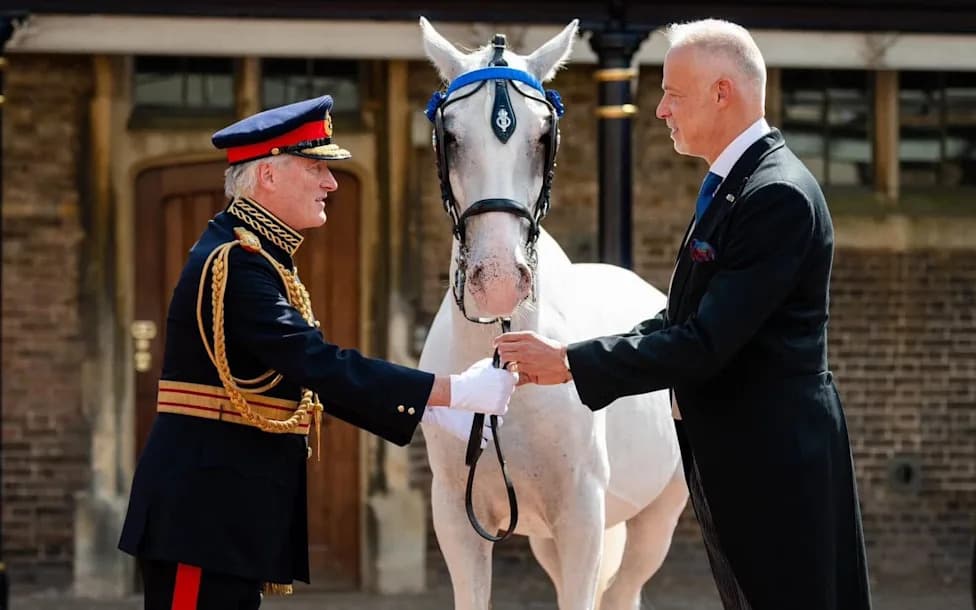
One of the two Lipizzaner horses is presented to King Charles by Kristóf Szalay-Bobrovniczky, Hungary's then-defence minister, in June 2024 - Kristóf Szalay-Bobrovniczky/Facebook
The Lipizzaner — famed for its immaculate white coat and aristocratic bearing — was a fitting coronation present for King Charles III. In 2024 Hungary presented two such horses, Nelson and Iveco, to the Royal Mews, but a poorly worded July letter from Hungary’s agriculture ministry briefly triggered an international flap about whether the animals should be returned.
What Happened
In early 2024 two Buckingham Palace officials visited Szilvásvárad, the Hungarian state stud farm two hours north of Budapest, to select Lipizzaner horses for the Royal Mews. They chose Neapolitano XXVII-44 (stable name Nelson) and Incitato XVIII-3 (stable name Iveco). The pair — aged six and eight — were handed over at Windsor by Kristóf Szalay-Bobrovniczky, then Hungary’s defence minister and former ambassador to London.
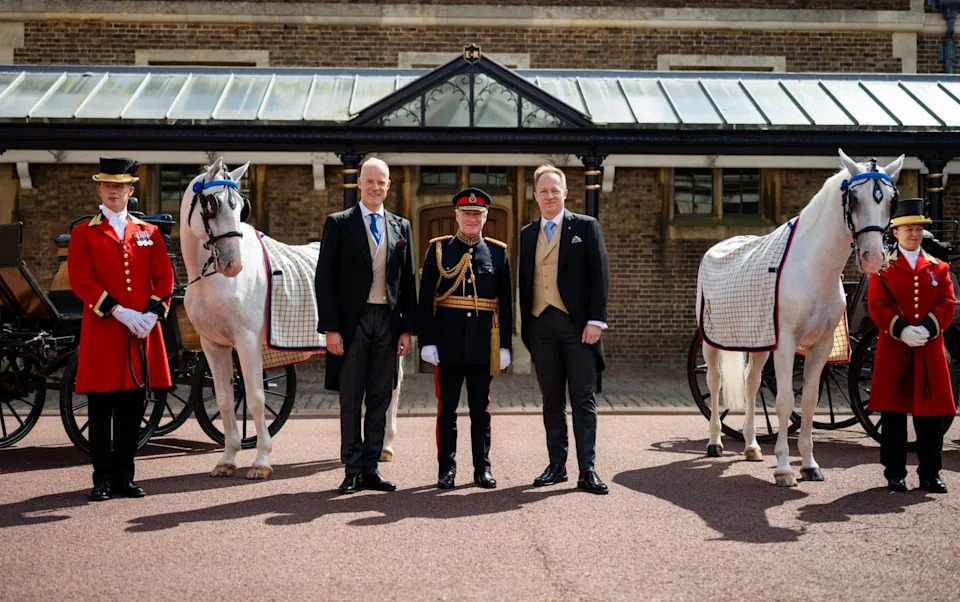
The Hungarian government has now clarified that the horses will remain in Britain 'as originally intended' - Kristóf Szalay-Bobrovniczky/Facebook
The July Letter And The Backlash
In July, Buckingham Palace reportedly received a strongly worded communication from Hungary’s agriculture ministry that was widely interpreted as demanding the horses' return to Szilvásvárad. The message prompted intense media coverage in Hungary and criticism from opposition politicians, who demanded the original letter be published and labelled the episode the "Hungarian-British Horse War."
Ministry statement: The ministry later said the letter was "worded inaccurately," that the error had been corrected and that it did not wish to bring the horses home — adding that the animals should remain in Britain "as originally intended."
Legal And Practical Details
The agriculture ministry disclosed that Nelson and Iveco were transferred to the Royal Mews under a 2024 loan agreement, meaning they technically remain the property of the Hungarian state. Nonetheless, officials say they view the animals as a gift and are working to formalise the transfer so the horses can become the King's property "permanently and with a settled legal background." Buckingham Palace and the Embassy of Hungary have since described the matter as resolved.
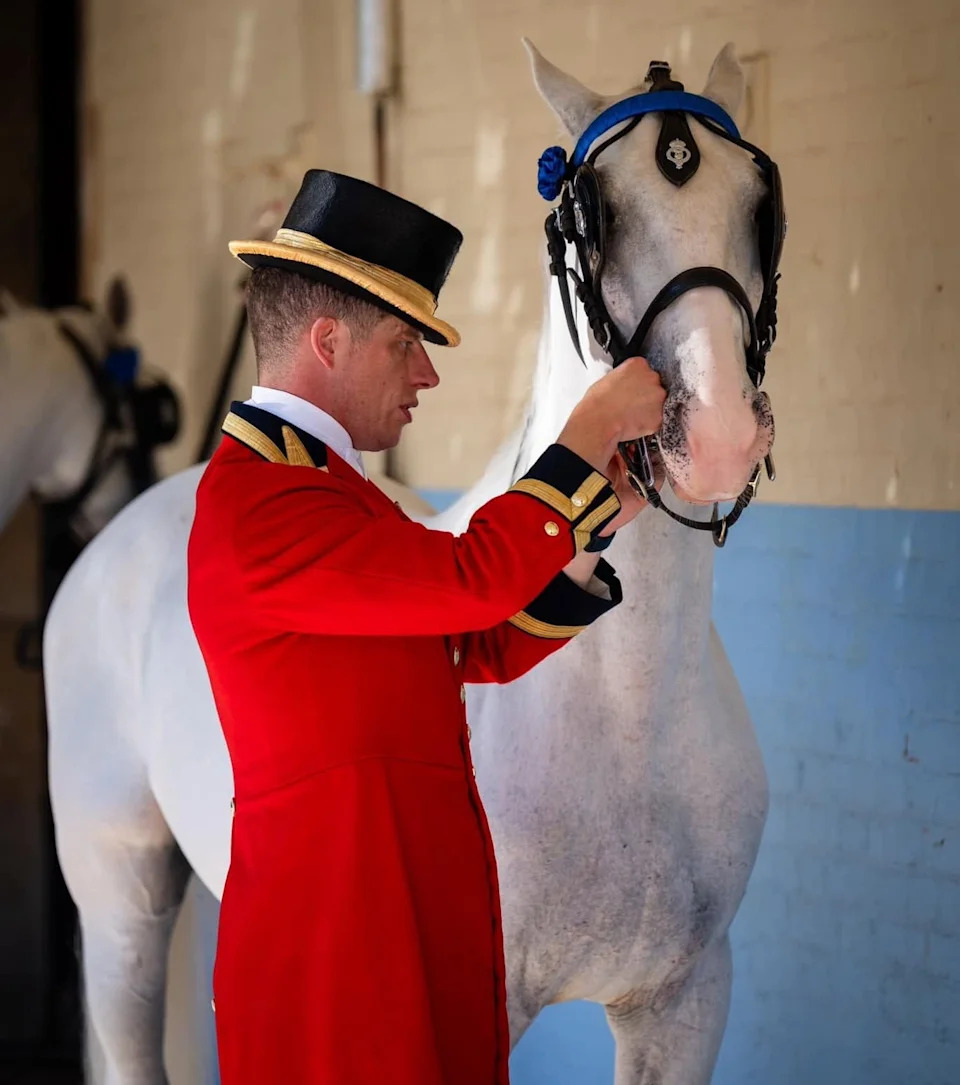
Szalay-Bobrovniczky accompanied a social media post about gifting the horses with the caption: 'Hungarian horses at the service of the British Royal family!' - Kristóf Szalay-Bobrovniczky/Facebook
Context: Politics, Procedure And Pride
Commentators say the episode largely reflects the aftershocks of a change of government in Hungary. The horses were provided under Viktor Orbán's administration; the new government under Peter Magyar has been reviewing previous state dispositions. Martyn Rady, professor emeritus of Central European history at University College London, suggested a junior official reviewing past transfers may have triggered a routine notice that was overplayed in tone. Hungarian commentator András Hont described the affair as a product of procedural amateurism — a clerk following a list and sending a circular letter.
The controversy also touched on national sporting pride: Hungary will host the 2027 World Pair Driving Championships in Budapest, and Lipizzaners are highly prized for carriage-driving competitions. With only a few thousand Lipizzaners in Europe, the presence or absence of two skilled animals matters to Hungary's competitive prospects.
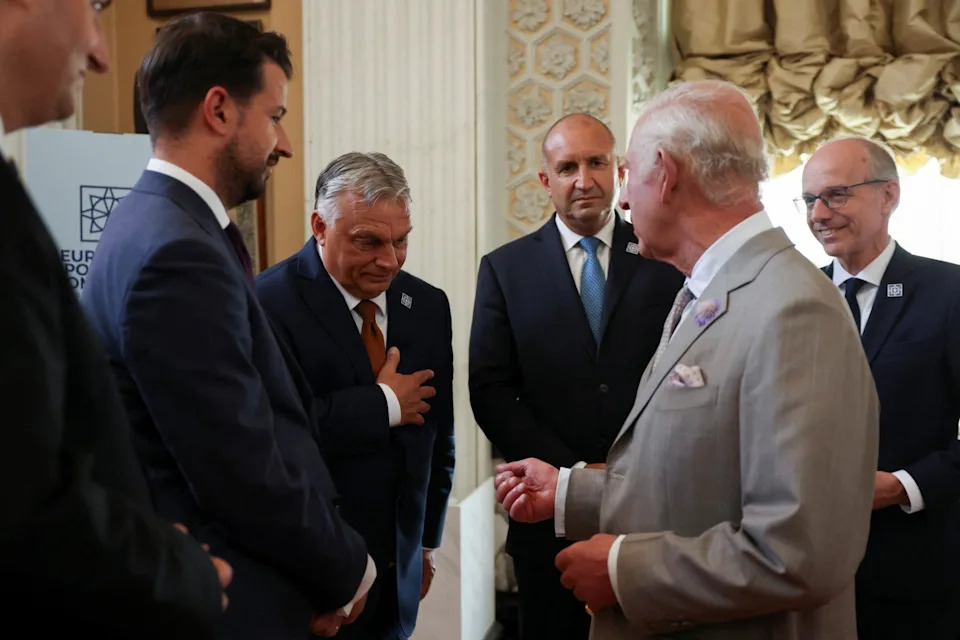
King Charles with Viktor Orbán, Hungary's then-prime minister, at a meeting of European leaders at Blenheim Palace in July 2024 - Hollie Adams/WPA Pool/Getty
People And Moments
The handover at Windsor was photographed by Adam Csomor, a Hungarian photographer based in London, and posted on social media by Szalay-Bobrovniczky with the caption: "Hungarian horses at the service of the British Royal family!" At Szilvásvárad some stable staff were disappointed to lose Iveco, who had been ridden and competed by local carriage driver Marcell Dani, but Dani told reporters he accepted the decision.
Where Things Stand
Both horses remain at the Royal Mews and, by all accounts, are well cared for though not frequently used for high-profile ceremonial duties. Hungarian officials say they are working to finalise the legal status of the animals so the gift becomes permanent. For now, both governments appear to be treating the dispute as an avoidable administrative embarrassment rather than a diplomatic rupture.
Key names: Nelson (Neapolitano XXVII-44), Iveco (Incitato XVIII-3), Kristóf Szalay-Bobrovniczky, Toby Browne, Matthew Powers, Martyn Rady, András Hont.
Help us improve.