The NTSB found that SEPTA's lack of a formal catenary inspection and maintenance program was the probable cause of a Sept. 25, 2025 trolley accident in Springfield, Pa., in which a pantograph tore off and pierced the car roof, injuring four people. Investigators identified sagging wires—likely from inadequate tension or improper configuration—and noted SEPTA initially could not produce adequate inspection procedures. SEPTA closed the 11.9‑mile D Line for 18 days, found 46 repair sites, and implemented a new catenary program in April 2026.
NTSB: SEPTA Catenary Inspection Failures Caused 2025 Trolley Accident, Triggering System Overhaul
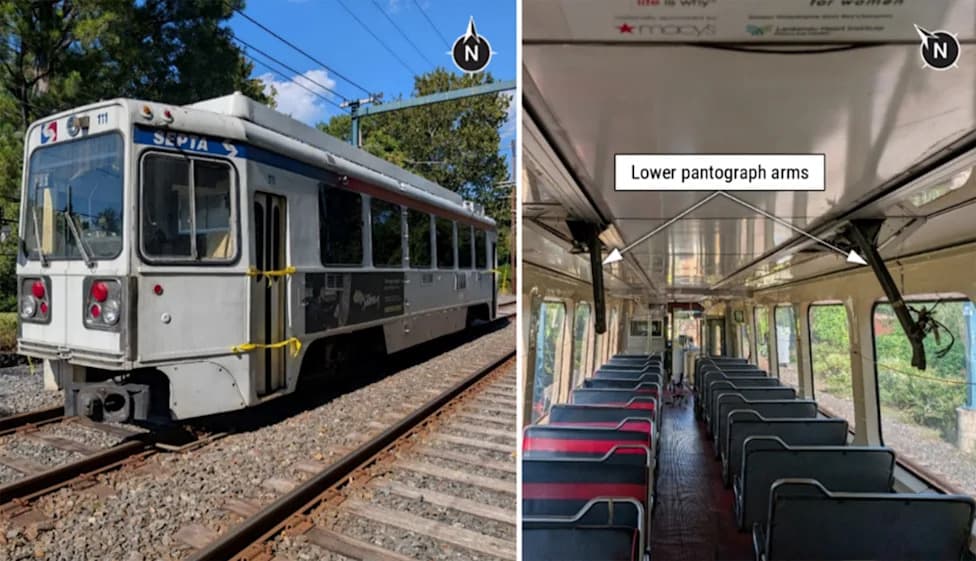
The SEPTA trolley damaged in the Sept. 25, 2025, incident in Springfield, Pa., and the interior after portions of the pantograph penetrated the roof. Two photos, NTSB
WASHINGTON — The National Transportation Safety Board concluded that the Southeastern Pennsylvania Transportation Authority's lack of a formal inspection and maintenance program for its overhead catenary system was the probable cause of a Sept. 25, 2025 trolley accident in Springfield, Pa., the agency said.
What Happened
At about 6:58 a.m.38 mph. The pantograph was torn off the vehicle, sending two pieces through the roof and into the carbody. The operator and three passengers were treated at a hospital for minor injuries. Damage was estimated at $254,000.
NTSB Findings
Investigators determined the pantograph snagged on sagging wires at a crossover. The sagging was likely caused by inadequate tension or an improper catenary configuration. The NTSB cited the absence of a comprehensive, documented inspection and maintenance program for the D Line catenary as the probable cause of the accident.
When first asked for documentation, SEPTA could not produce written procedures for inspecting and maintaining the D Line catenary. About six months later the agency located a two‑page 2009 document, but it lacked required details such as inspection frequencies and other procedural specifics.
Problems Before And After The Crash
Before the accident, SEPTA's equipment maintenance department had noted an increase in pantograph damage. However, the traction power department did not perform extensive inspections or corrective actions. After the accident SEPTA closed the 11.9‑mile D Line for 18 days and identified 46 locations needing repair.
Oversight And Remedial Action
The NTSB also found a contributing factor was inadequate oversight by the Pennsylvania Department of Transportation, which had not ensured SEPTA corrected deficiencies identified in audits conducted in 2016 and 2019. In response to the NTSB findings, SEPTA developed a formal catenary inspection and maintenance program that went into effect in April 2026.
Key takeaway: The crash highlights how gaps in documented procedures, insufficient inspections, and weak oversight can combine to create systemwide safety risks.
The NTSB report lays out the investigation's findings and the sequence of events that led to its recommendations for improved inspection, maintenance, and oversight of catenary systems.
Help us improve.