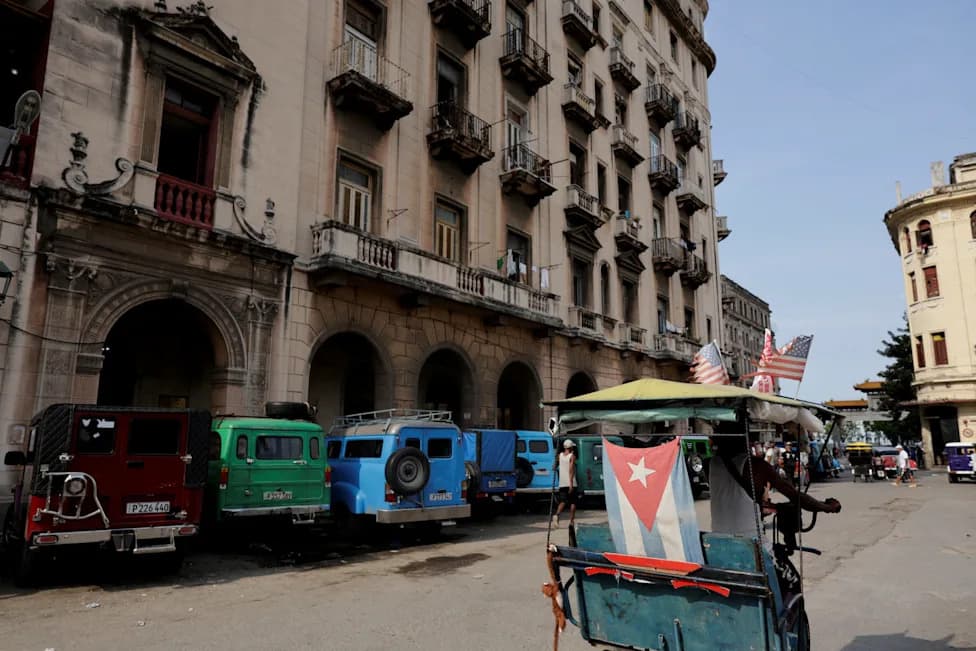
Óscar Fernández turned a converted pizza oven into Deshidratados Habana, now exporting dried fruit to Europe and planning a larger factory near Havana. Recent Cuban reforms have expanded private-sector rights, but U.S. sanctions, licensing hurdles and an energy crisis are blocking access to U.S. retailers. Entrepreneurs are investing in solar panels, wells and logistics to survive while awaiting clearer trade pathways and political change.
From Pizza Ovens to Trader Joe’s: Why Cuban Dried Mangoes Are Struggling To Reach U.S. Shelves
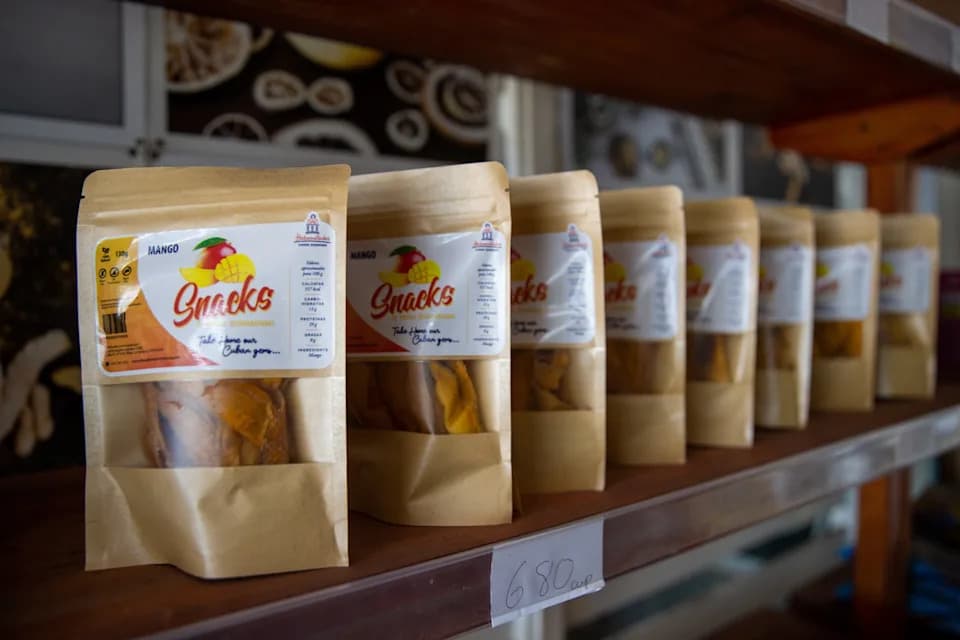
Deshidratados Habana (Dehydrated Havana) sells packages of dried fruit, like mango, from its storefront in Havana's Miramar neighborhood. Company officials would like to sell to Trader Joe's and Whole Foods in the U.S. some day but recent sanctions and longstanding restrictions prevent it from doing so.
Óscar Fernández stood in a Trader Joe’s aisle in Washington, D.C., inspecting rows of dried mango and pineapple, wondering how his Havana-based company might earn a spot on those shelves. Back home, Fernández runs Deshidratados Habana, a small business that began in 2021 by converting an old pizza oven into a fruit dehydrator and has since grown into an exporter to Europe.
Bootstrap Beginnings and Rapid Growth
Fernández started with roughly 60 pounds of dried fruit a day. Through experimentation and improvisation — including attaching discarded computer fans to his makeshift dehydrator — output rose to more than 660 pounds daily. He now ships to distributors in France, Italy and Germany and built a compact factory from repurposed shipping containers outside Havana.
Bigger Plans, Bigger Obstacles
Fernández has leased a 20-year site near Boyeros and plans a container-built facility that could produce about five tons of dried fruit per day. Employment is expected to rise from 21 today to 84 when the factory opens and potentially to 250 within two years. He also won an Eisenhower Fellowship in 2024, which exposed him to U.S. retail opportunities and inspired ambitions to target chains such as Trader Joe’s.
“Our products fit perfectly with what they sell,” Fernández told USA TODAY while showing visitors around his Havana facility.
Policy, Sanctions and Energy Woes
Despite legal changes in Havana — including 176 reforms announced in June and a Sept. 2 change allowing some private businesses to trade directly with foreign firms — Fernández faces external barriers. U.S. sanctions, an oil embargo and licensing complexity have left many Cuban entrepreneurs waiting for import approvals. Two U.S. companies applied to import Fernández’s product but, two years later, are still awaiting decisions.
At the same time, Cuba’s damaged energy grid has produced frequent blackouts and water shortages. Entrepreneurs are investing in workarounds: Fernández’s new factory will use a 96-panel solar array and a dug well to secure power and water. Other business owners have bought generators or retrofitted kitchens to run on coal. Those coping costs reduce capital available for growth.
Supply Chains and the Wider Economic Debate
Cuban officials say sanctions and fear of U.S. repercussions prompted shippers to reroute containers, disrupting supply chains and delaying food, medicine and other essentials. Officials also credit recent reforms with expanding private-sector participation: the government reports that private firms now import about 40% of the country’s goods, up from roughly 17 a year earlier, and more than 11,300 micro, small and medium predominantly private enterprises are operating across the island.
Analysts caution that reforms could be reversed while Cuba’s Communist Party retains control, and they note that sanctions targeting state entities often harm private businesses too because the sectors are deeply intertwined.
What Comes Next?
Fernández argues that improved U.S.-Cuba relations — including lifting the oil embargo and clarifying trade licensing — could rapidly accelerate private-sector growth. Critics, including some U.S. officials, blame Cuba’s centralized economic model for the island’s problems and call for political and structural change in Havana.
For now, Fernández is focused on survival and scaling sustainably: finishing his factory, coordinating incoming solar panels at the Port of Mariel, and keeping production running through blackouts. His company’s journey — from a converted pizza oven to a container factory with international buyers — highlights both the resilience of Cuban entrepreneurs and the complex policy barriers that stand between them and U.S. markets.
— Jervis is a national correspondent for USA TODAY based in Austin, Texas. He reported this story from Havana.
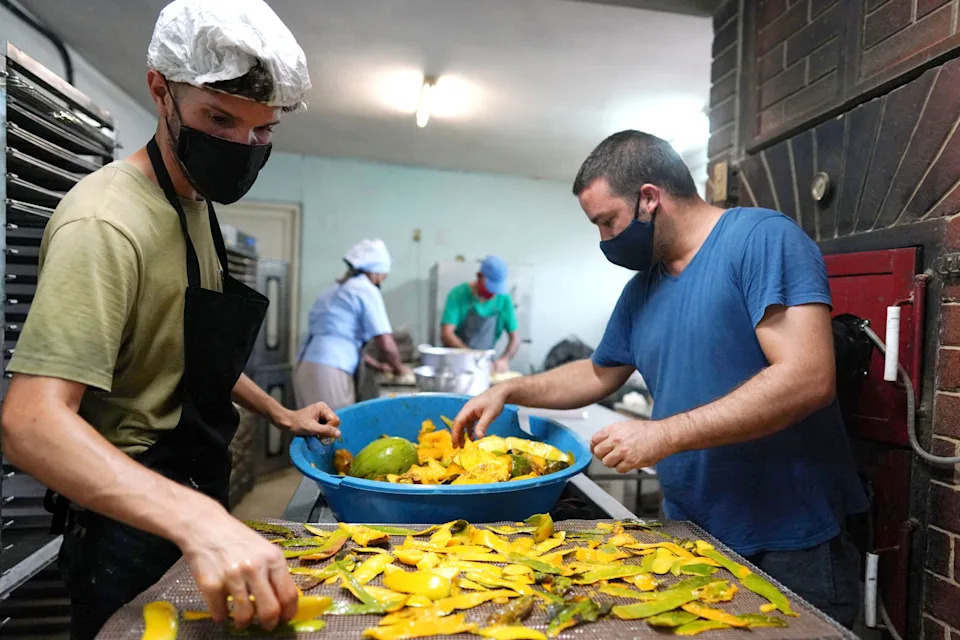
Ricardo Fernandez (R), cofounder of the Deshidratados Habana company, prepares mango skin to dry at his business in Havana, Cuba, Aug. 15, 2022.
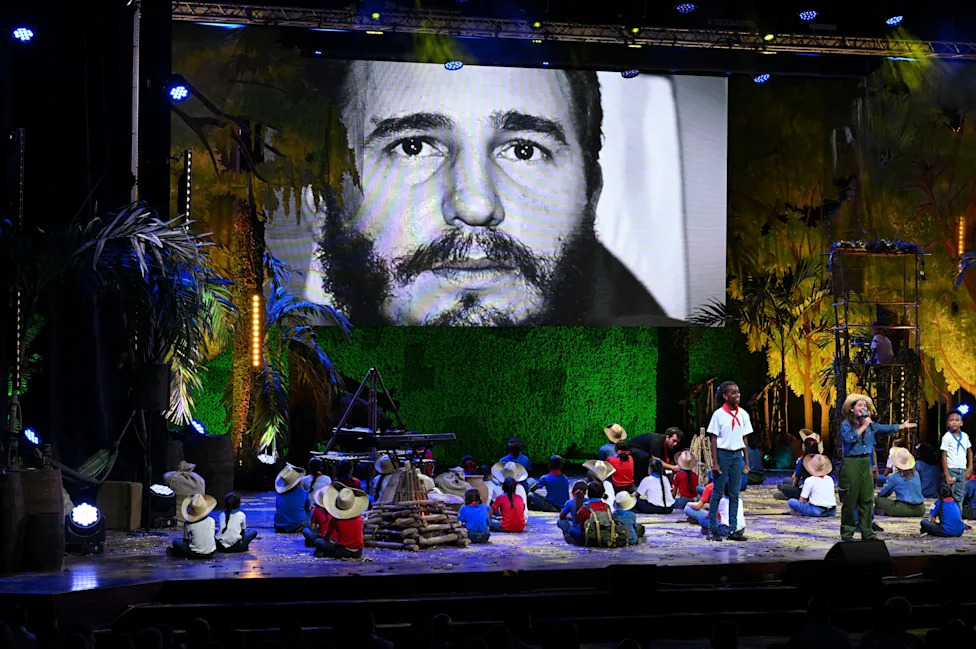
An image of the late leaderFidel Castrois projected during a gala commemorating the 100th anniversary of his birth at the Karl Marx Theatre in Havana, on Aug. 13, 2026. The 95-year-old and US-indicted Cuban leader Raul Castro received a standing ovation as he appeared in public for the first time in months on Aug. 13, 2026, attending an event in Havana to mark the centenary of his brother Fidel's birth.(YAMIL LAGE, AFP via Getty Images)
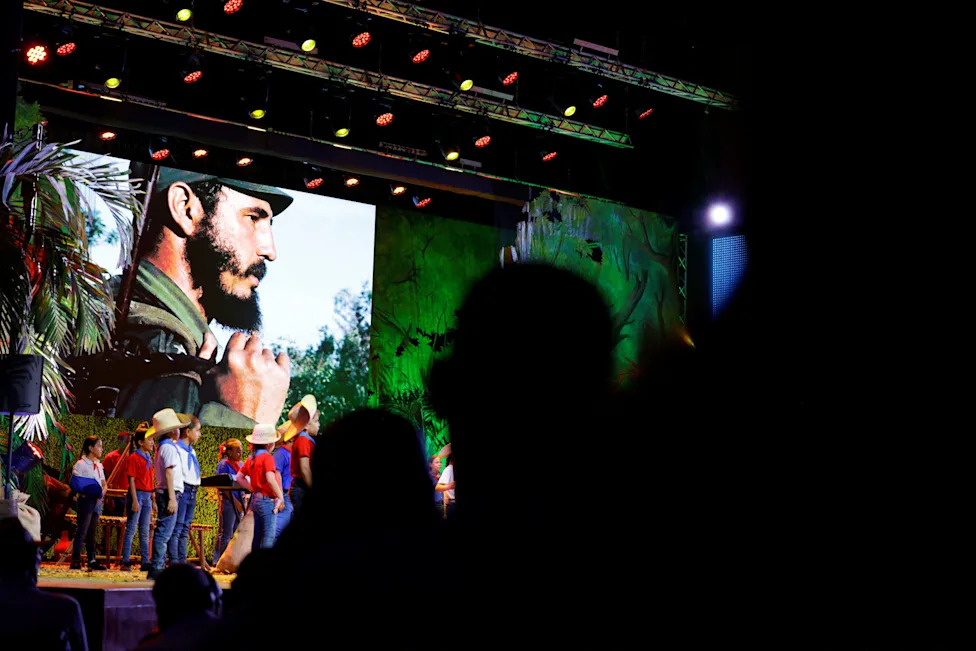
People attend a political and cultural show paying tribute to the late Cuban President Fidel Castro as Cuba marks what would have been his 100th birthday, in Havana, Cuba, on Aug. 13, 2026.(Norlys Perez, Reuters)
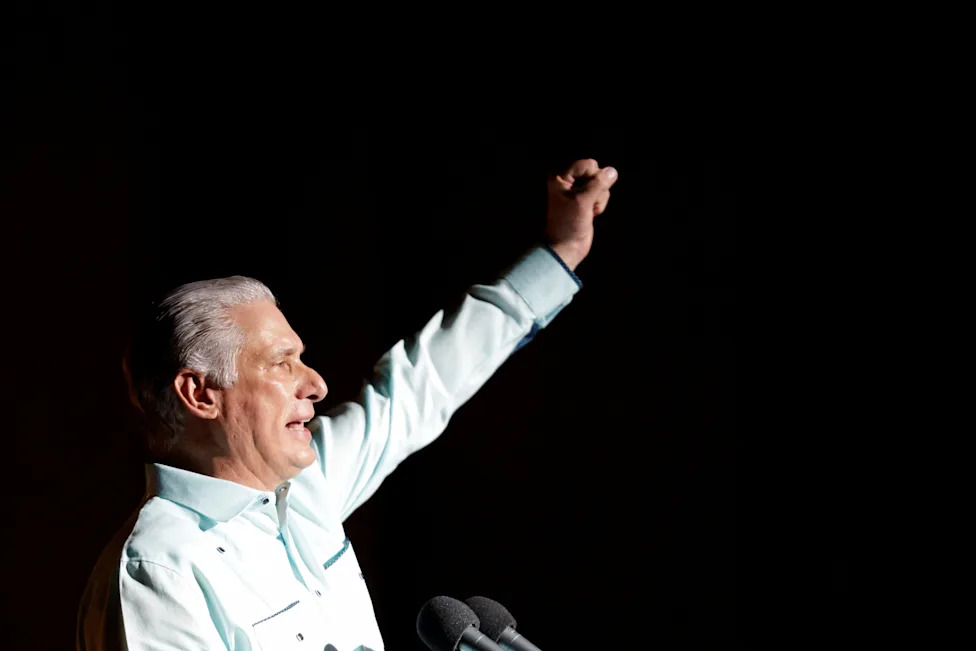
Cuban President Miguel Diaz-Canel speaks during a political and cultural show paying tribute to the late Cuban President Fidel Castro as Cuba marks what would have been his 100th birthday, in Havana, Cuba, on Aug. 13, 2026.(Norlys Perez, Reuters)
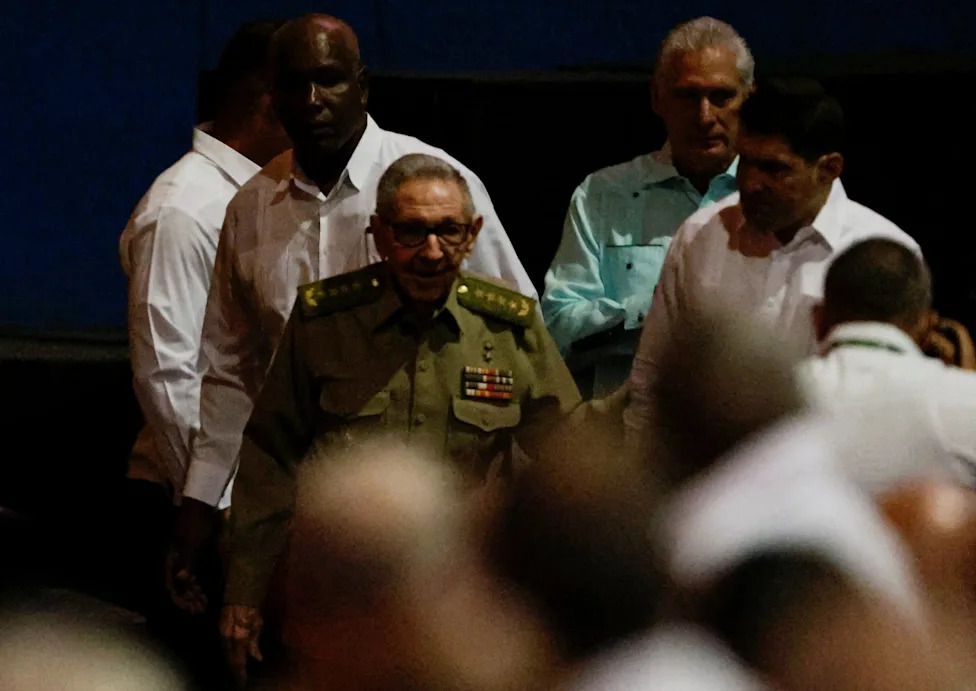
Former Cuban President Raul Castro attends a political and cultural show paying tribute to late Cuban President Fidel Castro as Cuba marks what would have been his 100th birthday in Havana, Cuba, on Aug. 13, 2026.(Norlys Perez, Reuters)
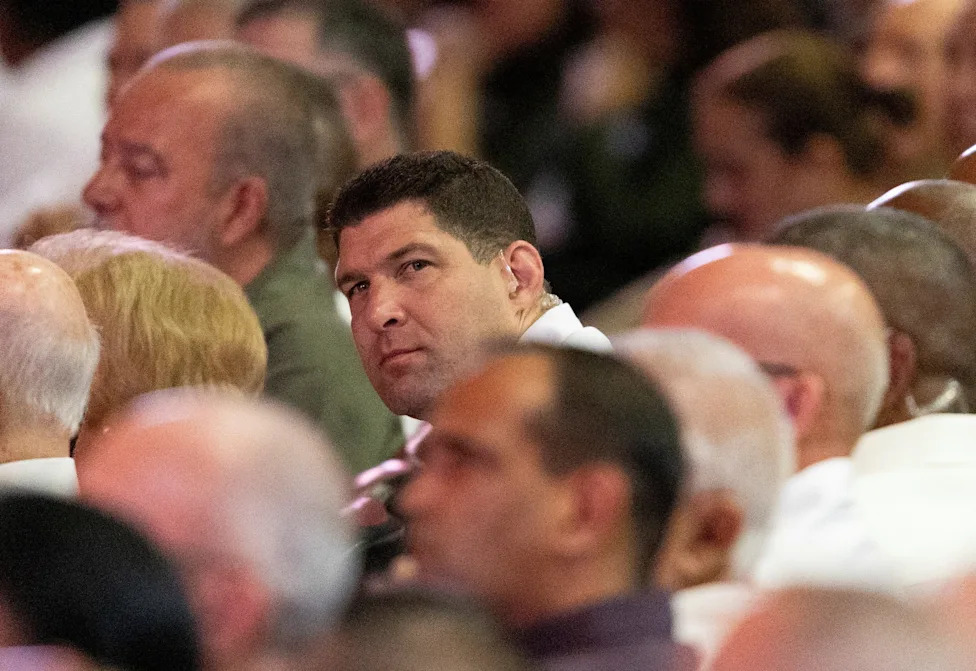
Raul Guillermo Rodriguez Castro, known as "El Cangrejo", grandson of former Cuban President Raul Castro, attends a political and cultural show paying tribute to late Cuban President Fidel Castro as Cuba marks what would have been his 100th birthday in Havana, Cuba, on Aug. 13, 2026.(Norlys Perez, Reuters)
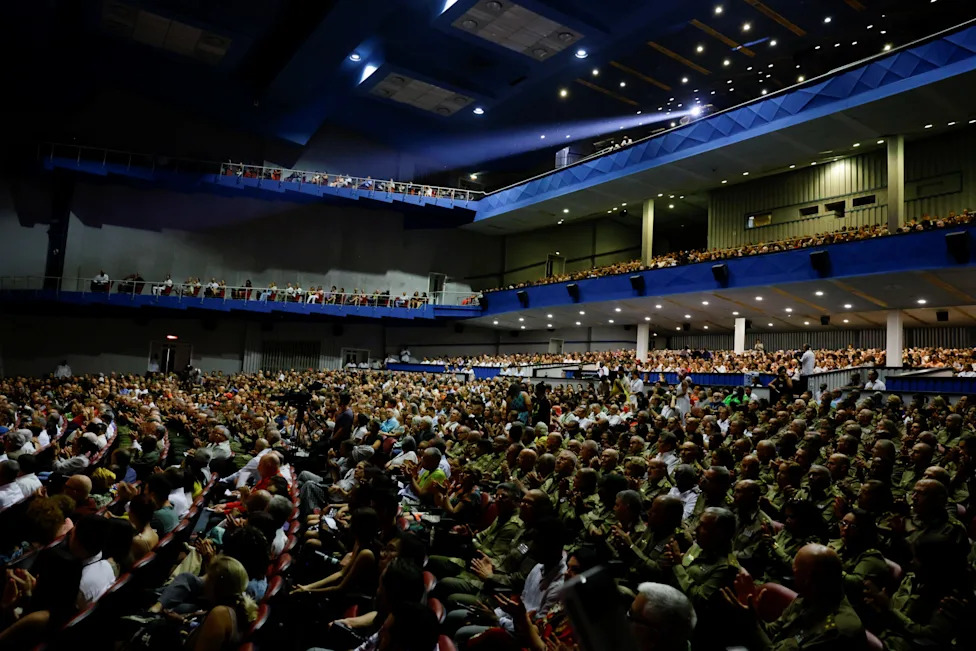
People attend a political and cultural show paying tribute to the late Cuban President Fidel Castro as Cuba marks what would have been his 100th birthday, in Havana, Cuba August 13, 2026. REUTERS/Norlys Perez(Norlys Perez, Reuters)
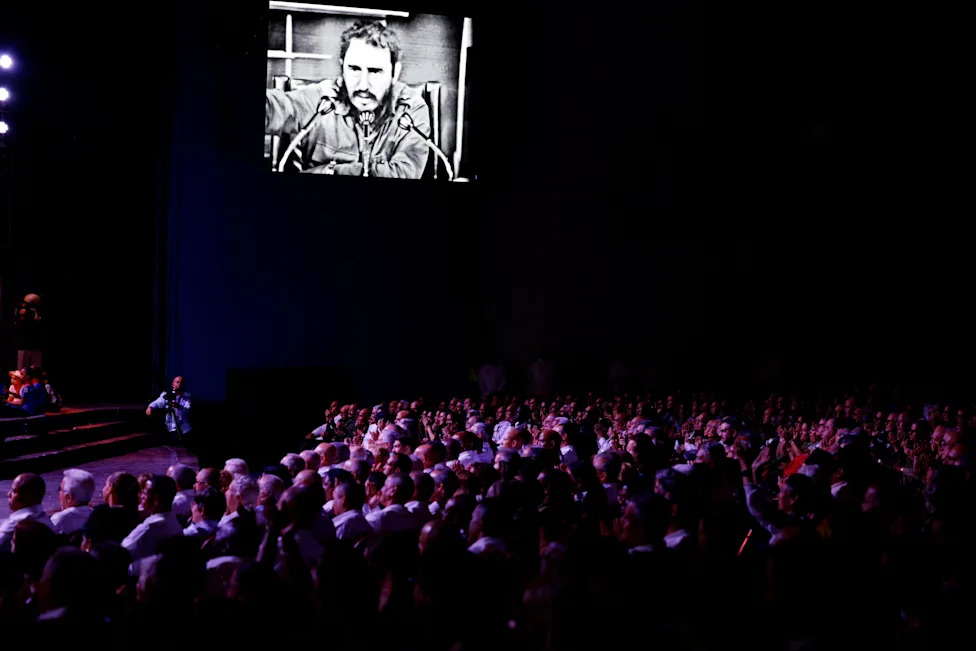
A screen shows an archival black-and-white video of the late Cuban President Fidel Castro speaking, during a political and cultural show paying tribute to him as Cuba marks what would have been his 100th birthday, in Havana, Cuba, on Aug. 13, 2026.(Norlys Perez, Reuters)
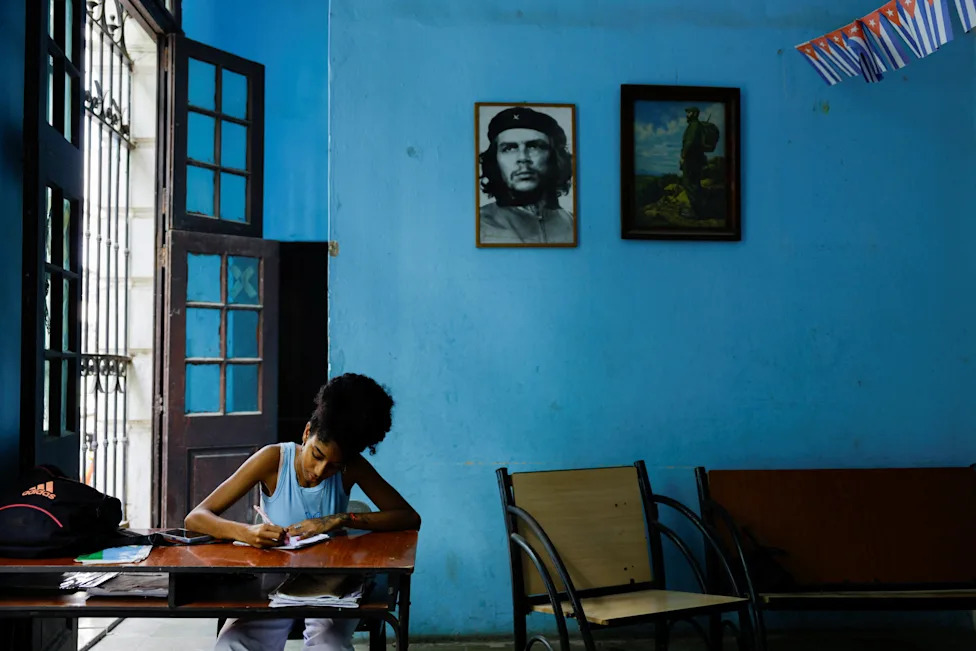
A teacher writes in a notebook, as Cuba marks what would have been late Cuban leader Fidel Castro's 100th birthday, in Havana, Cuba, on Aug. 12, 2026.(Norlys Perez, Reuters)
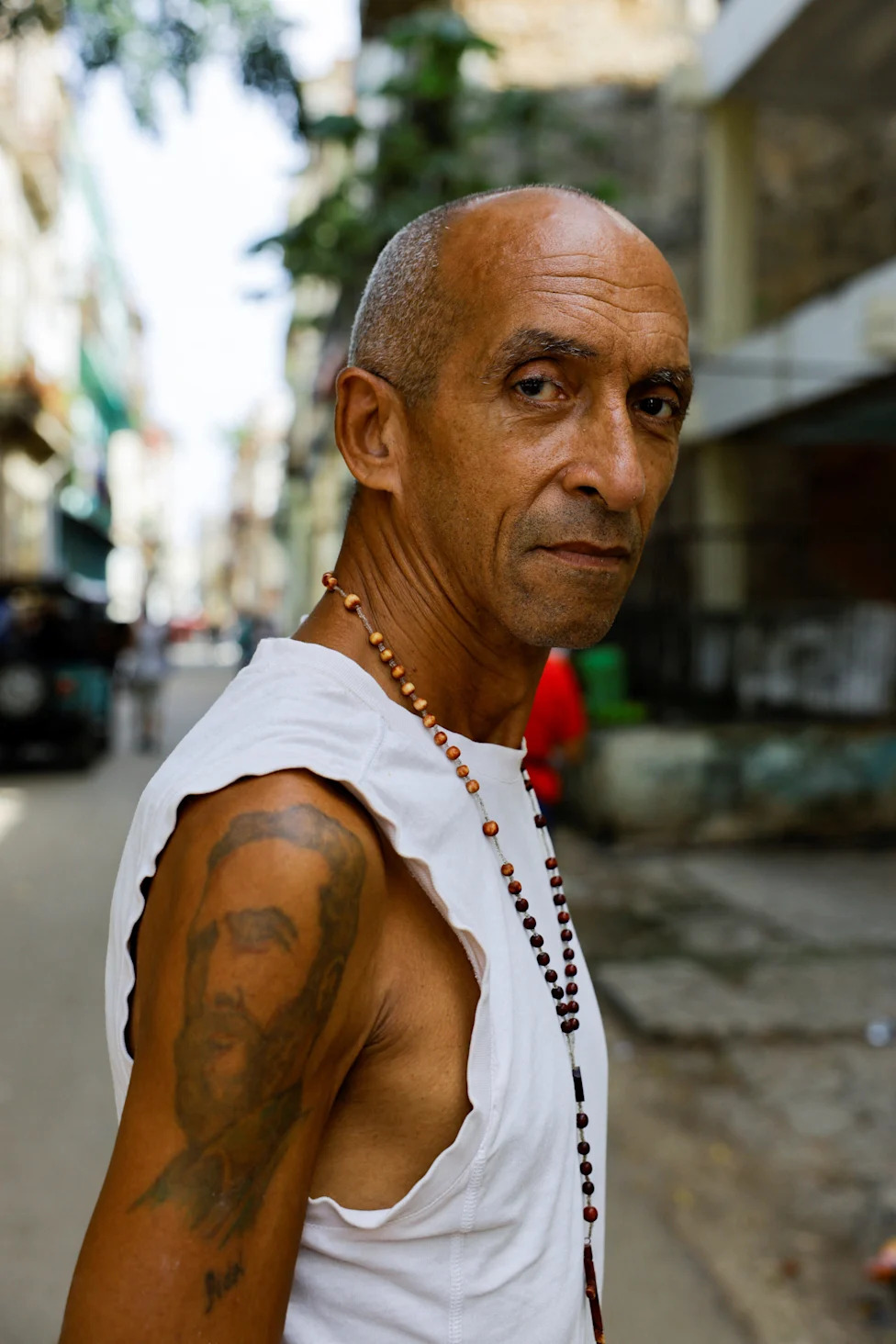
Former prisoner David Ramos, 60, shows a tattoo of late Cuban President Fidel Castro, as Cuba marks what would have been his 100th birthday, in Havana, Cuba, on Aug. 12, 2026.(Norlys Perez, Reuters)
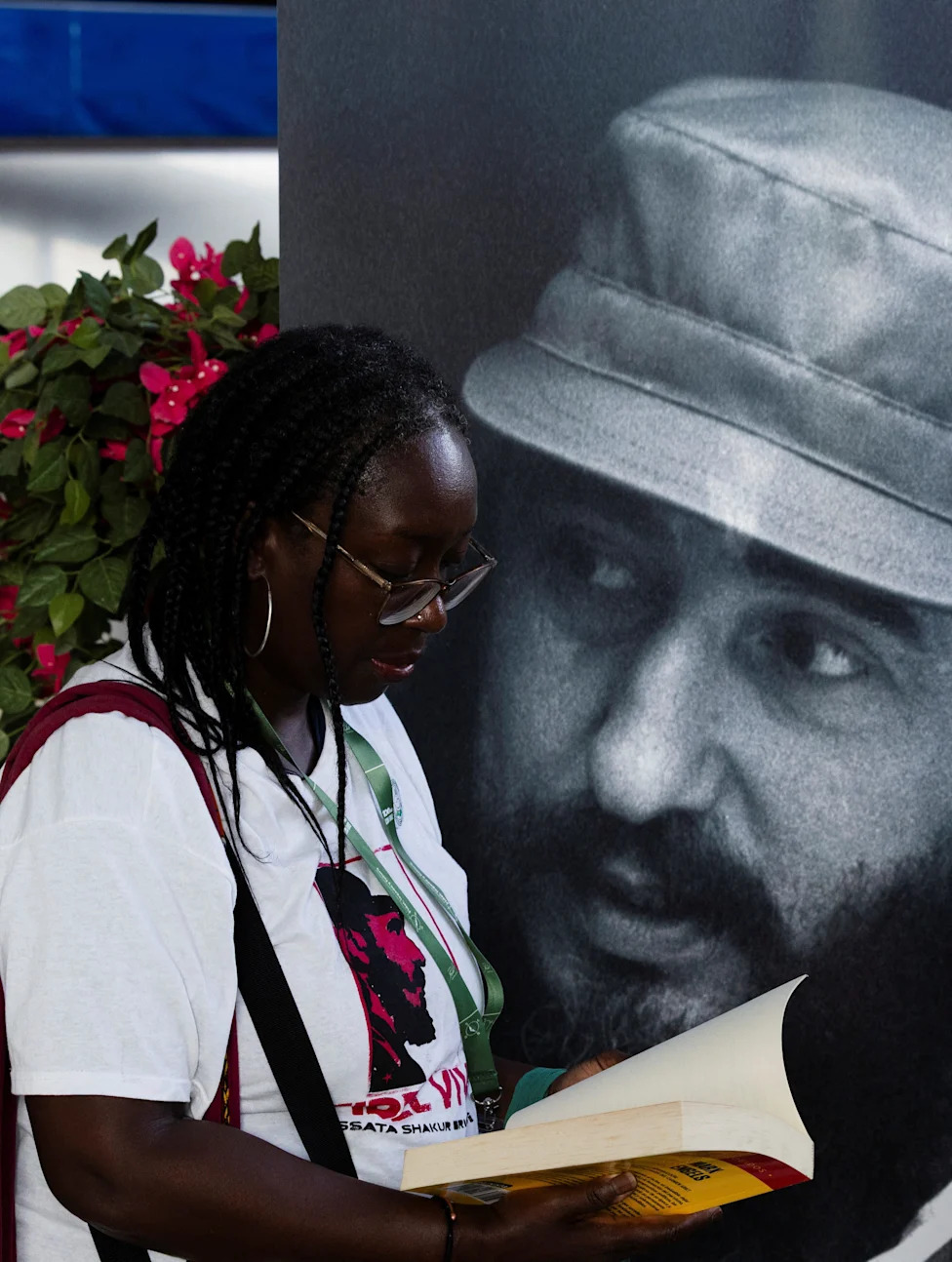
A woman flips through a book in front of an image of the late Cuban President Fidel Castro, as Cuba marks what would have been his 100th birthday, in Havana, Cuba, on Aug. 10, 2026.(Norlys Perez, Reuters)
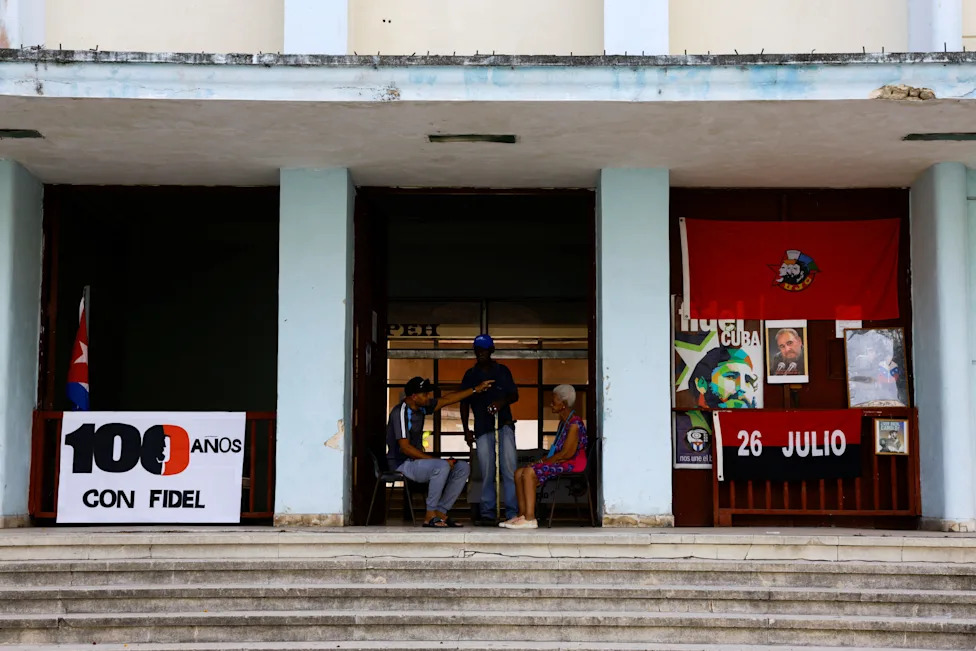
School workers gather at the entrance near posters dedicated to the late Cuban President Fidel Castro, as Cuba marks what would have been his 100th birthday, in Havana, Cuba, on Aug. 12, 2026.(Norlys Perez, Reuters)
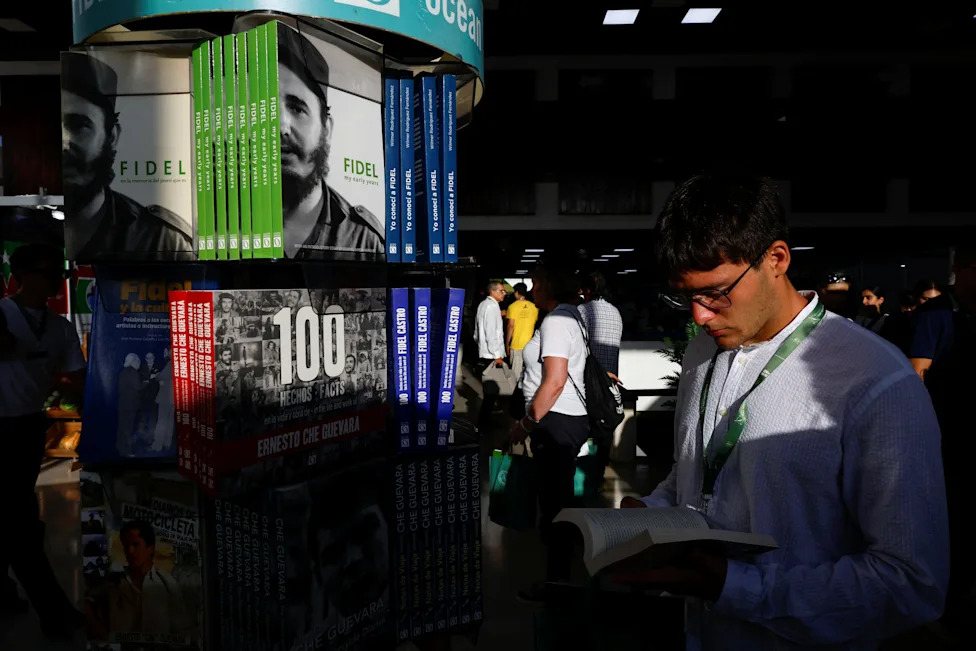
A man reads a book at a stand selling books dedicated to the late Cuban President Fidel Castro, as Cuba marks what would have been his 100th birthday, in Havana, Cuba, on Aug. 10, 2026.(Norlys Perez, Reuters)
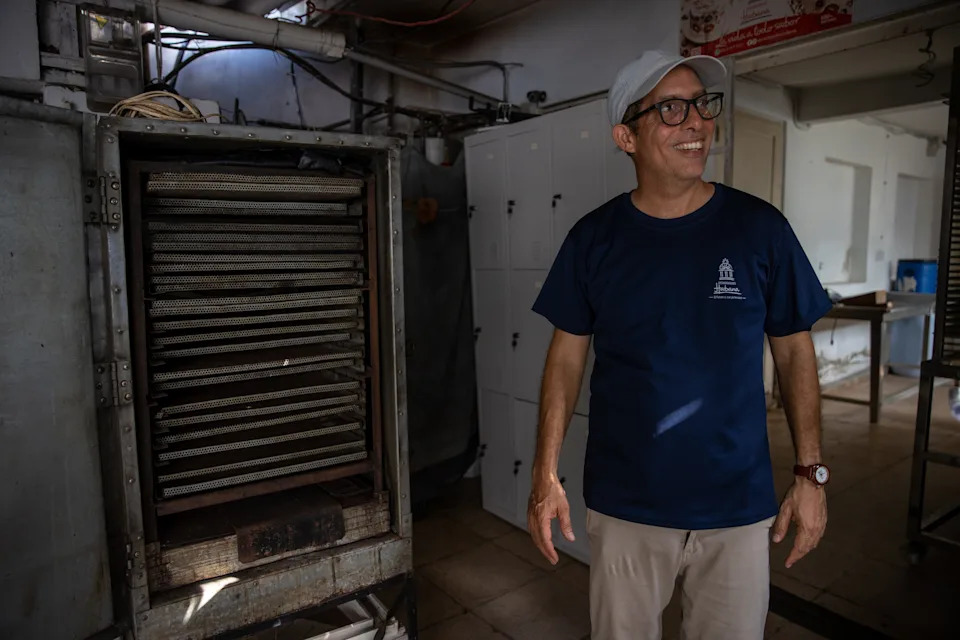
Oscar Fernández, owner and chief executive of Deshidratados Habana (Dehydrated Havana), which sells dried mango, pineapple and other fruit, stands in front of a former pizza oven he converted to an early dehydrator. Fernández's dream to one day sell his dried fruit to Trader Joe's and Whole Foods in the U.S. is stymied by recent sanctions and longstanding restrictions on the communist island.
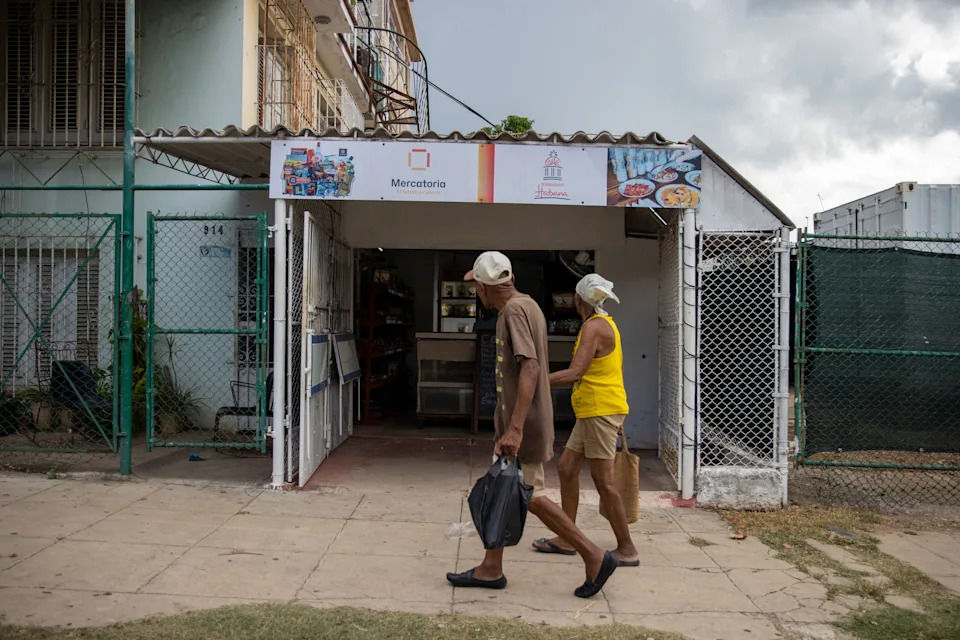
Residents stroll past Deshidratados Habana (Dehydrated Havana) storefront in Havana's Miramar neighborhood, which sells packages of dried mango, pineapple and other fruits. Company officials would like to sell to Trader Joe's and Whole Foods in the U.S. some day but recent sanctions and longstanding restrictions prevent it from doing so.
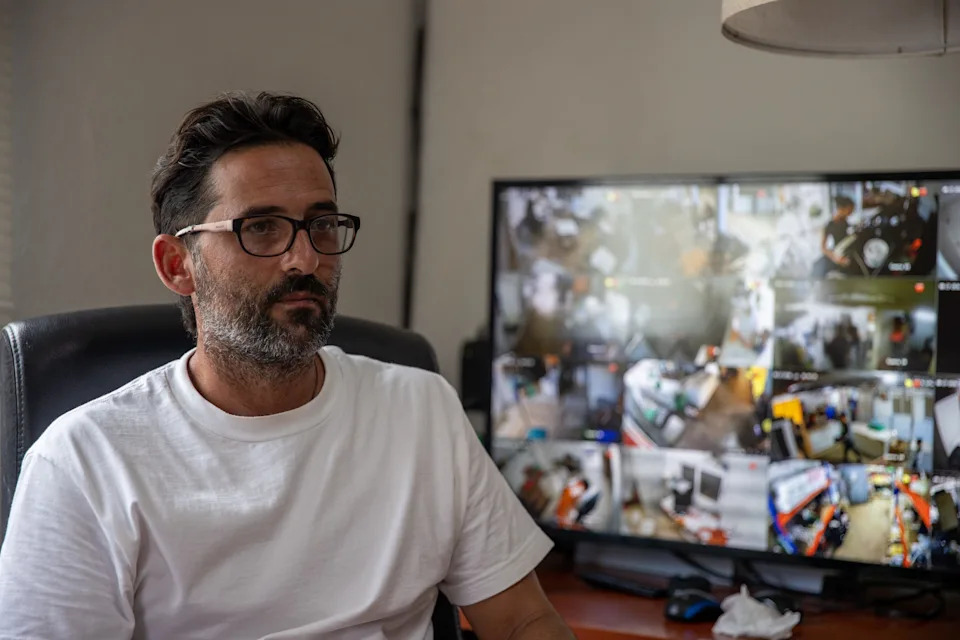
Juan Carlos Blaín Noste started delivering hamburgers to classmates in college and grew the business into a chain of market/restaurants around Havana named "Juanky's Pan." He says U.S. sanctions and restrictions are strangling further growth of his business.
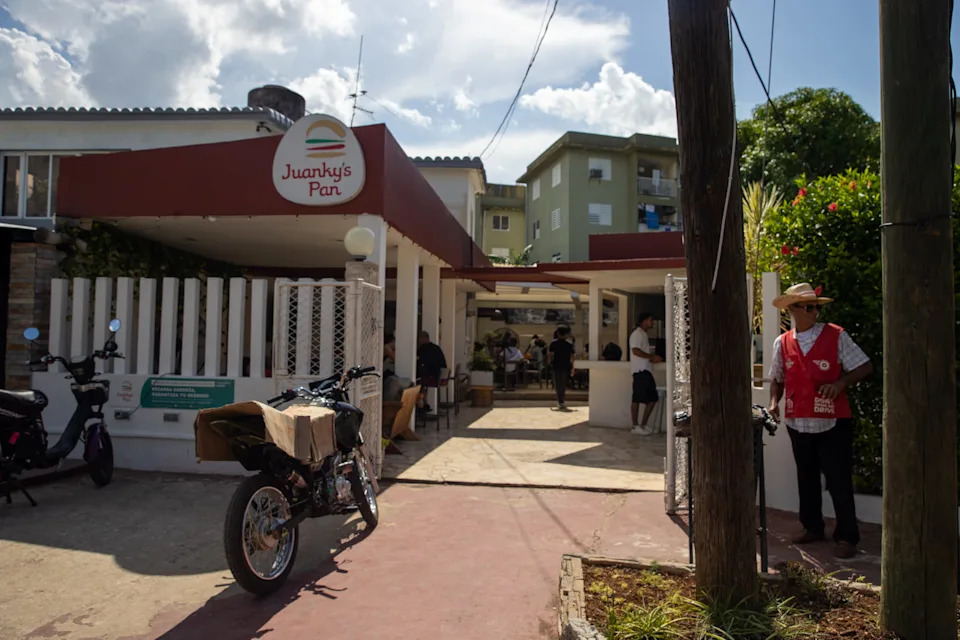
"Juanky's Pan" started as a hamburger delivery service for college students and grew into a chain of market/restaurants across Havana. Its owner, Juan Carlos Blaín Noste, says U.S. sanctions and restrictions are strangling further growth of his business.
Help us improve.