The UAE's leader, Sheikh Mohamed bin Zayed Al Nahyan, began a state visit to Germany expected to produce multibillion-euro agreements in energy, technology and AI. Berlin staged a formal welcome with military honours and heightened security. The trip aims to deepen trade and investment ties—bilateral trade topped about $15 billion last year—and follows rising regional tensions that have prompted countries to diversify partnerships. Human Rights Watch urged German officials to raise concerns about the UAE's human rights record during the visit.
UAE Leader's State Visit to Germany Expected to Produce Multibillion-Euro Deals in Energy, Tech and AI
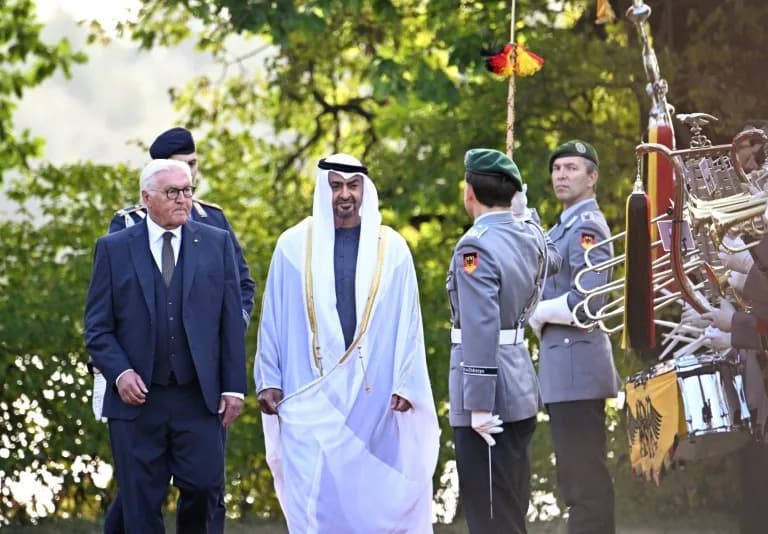
German President Frank-Walter Steinmeier and UAE President Mohamed bin Zayed Al-Nahyan reviewing a military honour guard in Berlin (Tobias SCHWARZ)
The leader of the United Arab Emirates, Sheikh Mohamed bin Zayed Al Nahyan, began a state visit to Germany on Thursday that is expected to yield multibillion-euro agreements across energy, technology, artificial intelligence and investment, Emirati officials said.
Formal Reception and Tight Security
Berlin provided a formal welcome: President Frank-Walter Steinmeier received Sheikh Mohamed with full military honours, and the Emir was scheduled to meet Chancellor Friedrich Merz later in the visit. Security was heightened across the German capital, with flag-lined streets closed and significant police deployments to secure official routes and venues.
Deals and Economic Ties on the Agenda
Senior UAE diplomat Lana Nusseibeh told reporters before the trip that "Over the course of this visit, the UAE and Germany will make a number of key announcements and multibillion-euro agreements across investment, business, technology, AI and energy." The visit is intended to deepen trade and investment ties: the UAE is Germany's largest trading partner in the Gulf, with bilateral trade topping about $15 billion last year.
Numerous major German companies operate in the UAE, including BMW, Siemens, ThyssenKrupp and rail operator Deutsche Bahn. Emirati investors have likewise made sizeable investments in Germany, targeting sectors such as the chemical industry and offshore wind power.
During Chancellor Merz's February trip to the Gulf, German energy group RWE and Abu Dhabi National Oil Company (ADNOC) signed a memorandum of understanding covering LNG imports for the coming decade—one example of growing energy cooperation between the two countries.
Security, Defence And Strategic Context
The visit takes place against a backdrop of heightened regional tensions involving Iran, which has prompted many midsize powers to diversify their strategic and economic partnerships. Gulf states have long been purchasers of German defence equipment and have recently shown interest in startups developing drone technology that could contribute to NATO deterrence efforts regarding Russia.
Trade Talks And Human Rights Concerns
As Europe's largest economy, Germany supports talks toward an EU free trade agreement with the UAE—an initiative both sides view as economically significant. Human Rights Watch used the visit to urge German leaders to publicly address the UAE's human rights record and its role in regional conflicts.
“We expect a number of key announcements and multibillion-euro agreements across investment, business, technology, AI and energy,” said Lana Nusseibeh.
No joint press conference between Chancellor Merz and Sheikh Mohamed was scheduled for the visit.
Help us improve.