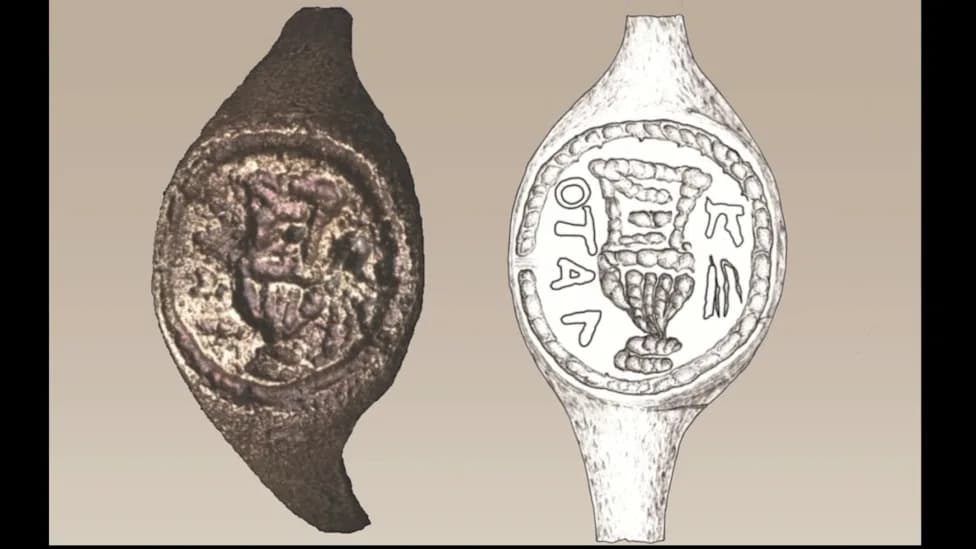
A modest copper-alloy signet ring excavated at Herodium in 1968–1969 and cleaned in 2018 bears the Greek inscription ΠΙΛΑΤΟ. UCLA’s Catherine Bonesho argues the inscription is a transliteration of the Latin dative PILATO, meaning "for Pilate," and that the ring functioned as an administrative stamp rather than the governor’s personal signet. The crude execution and unusual ending suggest it was used by a low-ranking Judean worker or former slave to mark property belonging to Pontius Pilate’s office. The find highlights everyday administrative practices and language interactions in Roman Judea.
2,000-Year-Old Ring Inscribed “PILATO” Likely a Servant’s Stamp, Not Pontius Pilate’s Personal Signet
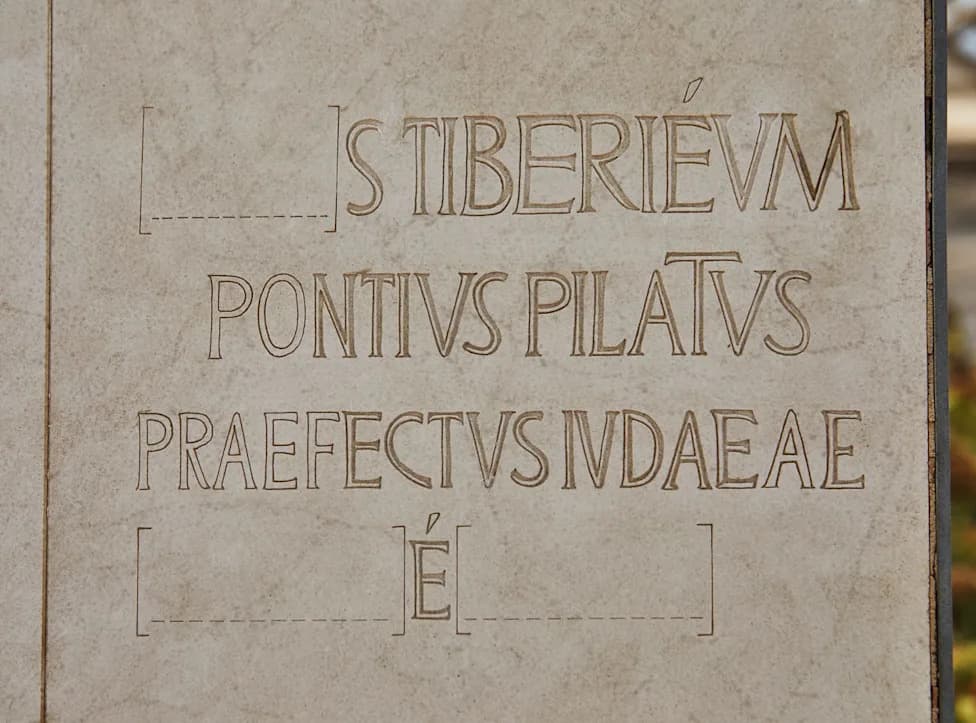
Archaeologists Solved Pontius Pilate Ring MysteryAlexander Donin - Getty Images
In the rubble of Herodium’s deserted palace and fortress, archaeologists rediscovered a modest copper-alloy signet ring that lay hidden for nearly two millennia. Excavated in the 1968–1969 season by a Hebrew University team led by Gideon Foerster, the ring was cleaned and reexamined in 2018, revealing faint engravings that reignited debate about its owner and purpose.
The bezel bears a stamped image of a calyx krater flanked by Greek letters reading ΠΙΛΑΤΟ (PILATO). At first glance some speculated the ring might have belonged to Pontius Pilate, the Roman prefect of Judea. But the ring’s crude manufacture, its unusual inscription, and the archaeological context suggest a more prosaic explanation.
How the Inscription Was Reinterpreted
Professor Catherine Bonesho of UCLA reassessed the ring’s lettering and argued that ΠΙΛΑΤΟ is a Greek transliteration of the Latin dative form PILATO — meaning “for Pilate” — rather than a nominative or possessive form indicating personal ownership. Transliteration between Latin and Greek was common in Roman Judea because Greek was the region’s lingua franca and many local craftsmen and administrators did not write Latin script.
Several details support Bonesho’s reading: the engraving is roughly executed, the letters are arranged around a pre-stamped decorative motif (forcing a clockwise reading), and the terminal letter is an omicron (Ο) rather than the more expected Greek endings such as sigma (Σ) or upsilon (Υ). Rather than showing that Pilate personally wore the ring, these features suggest the ring served as an administrative stamp used to mark crates, jars, or documents belonging to Pilate’s office.
Who Wore the Ring?
Bonesho proposes that the ring was probably worn by a low-ranking Judean worker — possibly a formerly enslaved person — who handled marking and sealing tasks for Pilate’s administration at Herodium. Local elites or officials could have commissioned a workshop to produce a practical tool to identify municipal or prefectural property, using Greek letters to ensure readability by the many Greek speakers in the area.
Significance: The ring offers a small but valuable glimpse into the daily workings of Roman administration in Judea: the interactions between Latin-speaking officials and Greek-speaking local craftsmen and workers, and the tangible ways authority and property were managed.
The artifact and Bonesho’s interpretation were published in Palestine Exploration Quarterly. Whether or not the ring ever touched Pilate’s own hand, it illuminates the multilingual, multiethnic administrative realities of Roman Judea about eight miles southeast of Jerusalem.
Help us improve.