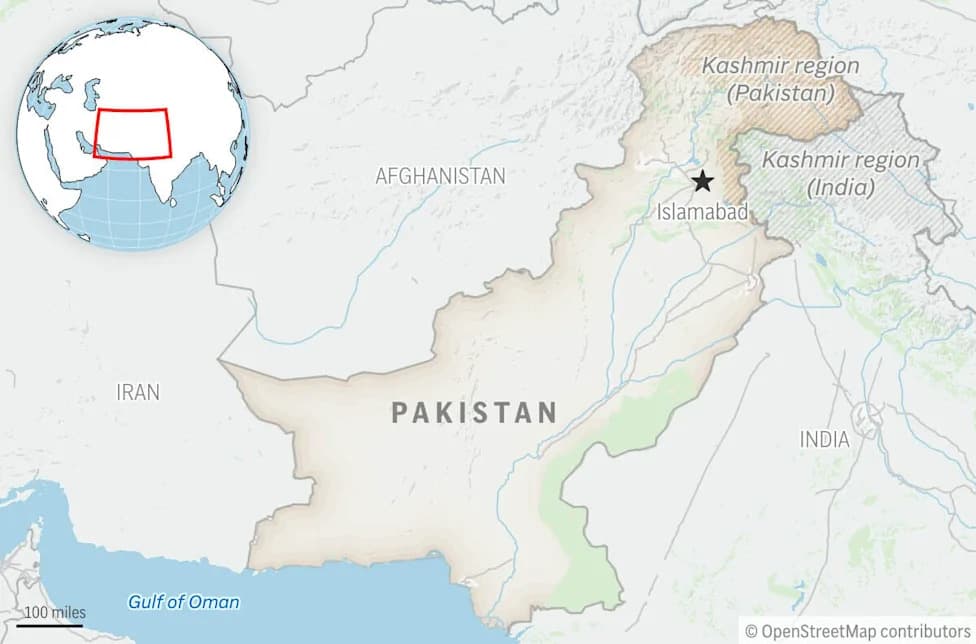
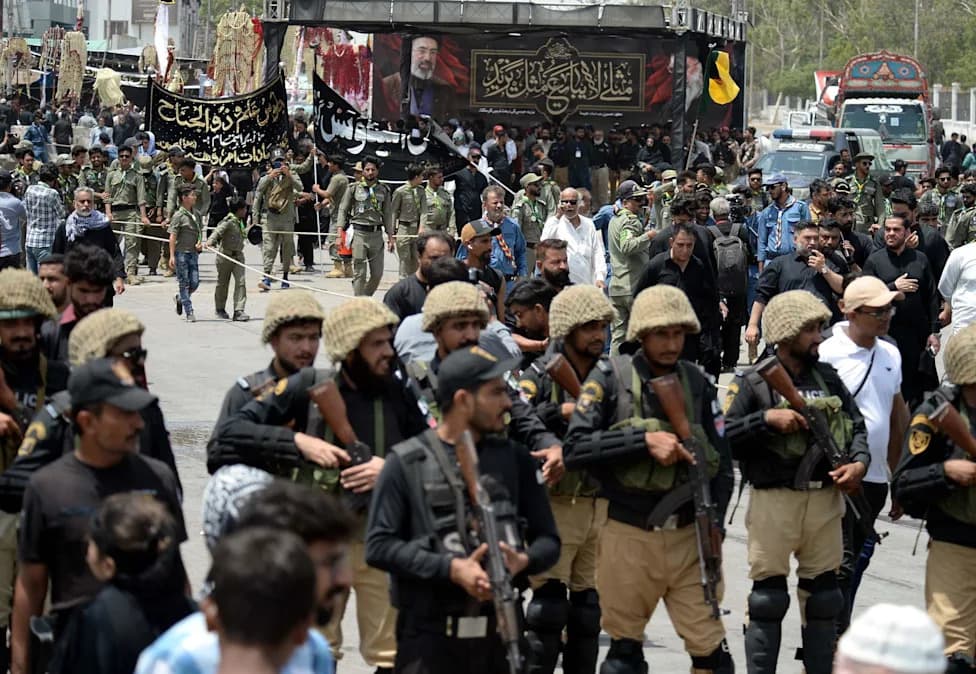
Balochistan's Pashtun-majority districts have experienced a sharp rise in violence since June 2026, pushing the province past Khyber Pakhtunkhwa as Pakistan's most violent region. Attacks claimed by the TTP and BLA have targeted security forces and major highways (N-25, N-40, N-50), killing dozens and disrupting trade. Islamabad has reassigned senior counterterror officials and sent military leadership to Quetta to coordinate a response. Analysts warn the spread reflects broader strategic shifts and risks deepening local economic and political grievances.
New Front Opens In Balochistan: Violence Spreads Into Pashtun Districts, Trade Routes Disrupted
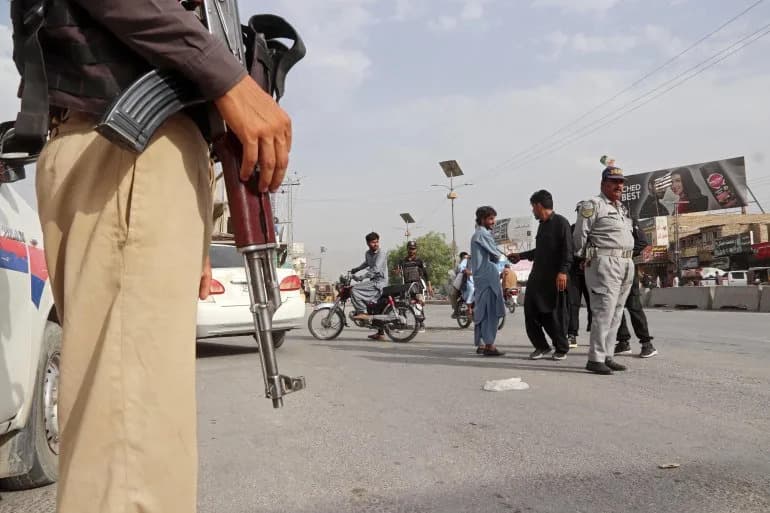
Pakistani security officials check people and vehicles at a checkpoint in Quetta, Pakistan, on July 20, 2026. The Balochistan government agreed to establish a judicial commission after nine police personnel were killed when fighters overran a checkpoint near Mangi Dam earlier this month [Fayyaz Ahmad/EPA]
Violence has surged since June across Pashtun-majority districts of Balochistan, a region that had largely avoided the province's long-running unrest until mid-2026. The escalation has seen attacks on security forces and key transport corridors, deepening economic disruption and prompting a high-level security response.
Key Incidents And Claims
On September 1, security forces said they repelled an assault on a customs facility at Ziarat Cross in Pishin district, about 100 km northeast of Quetta. Authorities reported several armed attackers and six security and customs personnel were killed. On September 3, gunmen ambushed a paramilitary convoy returning from Ziarat; a police officer speaking on condition of anonymity told Al Jazeera that more than a dozen paramilitary personnel were killed.
The Balochistan Liberation Army (BLA) claimed responsibility for that ambush, while the Tehreek-e-Taliban Pakistan (TTP) claimed other recent strikes. Pakistan's military media wing, the Inter-Services Public Relations (ISPR), did not publicly acknowledge the September 3 incident when asked. Al Jazeera said it sent seven questions to the ISPR and received no reply; provincial home department officials also did not respond to requests for comment.
Widening Violence And Official Response
Data from Pakistani monitoring groups shows Balochistan overtook neighbouring Khyber Pakhtunkhwa as the country's most violent province in 2026. The Pakistan Institute for Conflict and Security Studies (PICSS) described July as the "deadliest month of 2026," recording 25 attacks and 102 deaths in Balochistan during the first week of that month and noting increasing TTP activity in northern districts. In August, PICSS recorded security forces killing 115 fighters in Balochistan, the highest toll among regions it tracks.
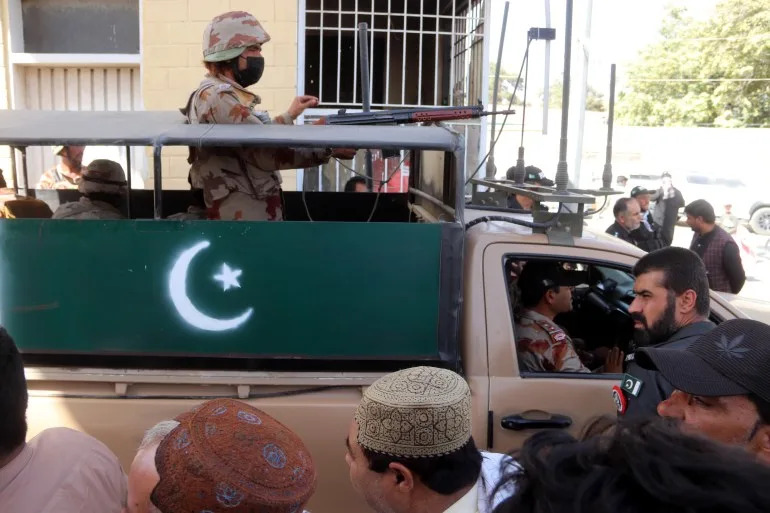
Pakistani security personnel stand guard during funeral prayers for a police officer killed in the Ziarat attack in Quetta, Pakistan, on July 18, 2026 [Fayyaz Ahmad/EPA]
In response, Islamabad reassigned senior security officials. Faisal Naseer, formerly director-general for counterintelligence at Islamabad's Inter-Services Intelligence (ISI), was appointed national coordinator of the National Counter Terrorism Authority (NACTA) on September 4. Army chief General Asim Munir visited Quetta and received briefings on measures to maintain "peace and stability" across the province. Naseer also met provincial leaders, including Balochistan Chief Minister Sarfraz Bugti, to coordinate a security strategy.
Geography, Groups And Possible Coordination
Open-source monitoring by the Durand Dispatch showed 11 Pashtun-majority districts — Zhob, Sherani, Qila Saifullah, Loralai, Musakhail, Duki, Barkhan, Pishin, Qila Abdullah, Ziarat and Harnai — recorded no armed-group attacks between January and May. That changed on June 10 when coordinated strikes hit police installations across four of those districts. Since June, Pashtun-majority districts have seen at least 13 attacks, including an incident in July in which 27 police personnel guarding a dam project near Ziarat were killed.
Analysts say the pattern suggests either expanding operational reach by the BLA and the TTP or opportunistic attacks by whichever group can access particular areas. Rafiullah Kakar, a policy analyst, warned that the BLA’s willingness to strike beyond traditional strongholds raises questions about tactical coordination with the TTP. Iftikhar Firdous of The Khorasan Diary noted that the TTP has worked to build outreach in Balochistan since 2019 and that TTP leader Noor Wali Mehsud has signalled a desire for alliances with local fighters.
Impact On Trade And Daily Life
Transport corridors have been particularly hard hit. The N-50 (linking Zhob and Ziarat via Quetta to South Waziristan), the N-40 (Taftan–Quetta) and the N-25 (Quetta–Karachi) have been repeatedly targeted, causing businesses to curtail operations. Haji Amin Sumalani of the Balochistan Goods Trucks Owner Association said drivers have avoided these highways for months; more than 100 trucks were torched in recent months and two drivers were killed. Muhammad Ayoub Miryani, president of the Quetta Chamber of Commerce, estimated about 90% of chamber trade has halted, with businesses losing tens of millions of rupees.
What Comes Next
Experts caution that this shift should not be seen as the result of a single trigger. Imtiaz Baloch described insurgency in Balochistan as an evolving conflict driven by cumulative grievances and strategic calculations. Observers warn that expanding violence into the Pashtun belt risks deepening local grievances — particularly if communities feel the economic burden of tighter security and suffer rising violence at the same time.
Note: All incident attributions and casualty figures are drawn from security statements, monitoring organizations and media reporting at the time of publication. Some claims remain unverified and official agencies did not respond to requests for comment.
Help us improve.