
Overview: Mojtaba Khamenei has placed veteran IRGC figures into Iran’s top security posts in a reshuffle on August 9–10, filling vacancies created by wartime deaths. Analysts say the moves signal a return of the IRGC "old guard" and a shift toward a more confrontational, wartime posture with the United States. Key appointees include Mohsen Rezaei (Supreme National Security Council), Hossein Taeb (Basij commander), Ahmad Vahidi (IRGC commander‑in‑chief) and Ali Abdollahi (chief of general staff). The changes raise doubts about near‑term diplomacy with Washington and increase the risk of domestic repression.
Iran's Hardline Shake-Up: IRGC 'Old Guard' Installed in Top Security Posts, Signaling Greater Confrontation With the U.S.
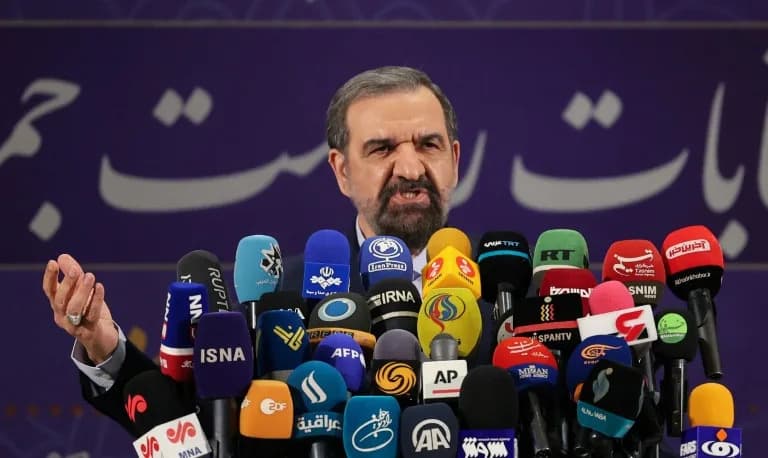
Iranian former chief of the Revolutionary Guards Mohsen Rezaei is seen as being part of a reactionary old guard (ATTA KENARE)
Earlier this month, Iran's newly installed supreme leader, Mojtaba Khamenei, overhauled Tehran's top security team, placing long-serving Revolutionary Guard (IRGC) veterans into senior roles. The appointments, announced on August 9 and 10, fill positions left vacant after wartime deaths and are widely read as a move to prepare the Islamic Republic for an extended confrontation with the United States.
Mojtaba Khamenei—who the article reports assumed power following the death of his father, Ali Khamenei, at the start of the US‑Israeli war against Iran—has not yet been seen publicly since taking the top job. Observers say his health and political authority remain uncertain, even as he quickly stamped his authority on the security apparatus.
Analysts’ take: Jason Brodsky, policy director at the US think tank United Against Nuclear Iran (UANI), described the appointments as "indicative of the adoption of a more risk‑ready, confrontational stance." He added that the moves reflect Iran preparing to remain on a "wartime footing for the foreseeable future" and represent a return to the IRGC "old guard."
The reshuffle also raises questions about the prospects for diplomacy with Washington. A 60‑day deadline for an agreement has expired, and while negotiation efforts were led by parliament speaker Mohammad Bagher Ghalibaf—viewed as a comparatively less hardline figure—these new personnel choices may complicate any near‑term thaw.
Key Appointments
Mohsen Rezaei — Secretary, Supreme National Security Council
Mohsen Rezaei, 71, served as commander of the IRGC for much of the 1980s and 1990s during the prolonged Iran–Iraq war and has remained a prominent figure in Iran’s politics. His elevation to the top security council post—previously held by Ali Larijani, who was killed in the war—surprised some observers given his past unsuccessful bids for the presidency and long-standing public profile.
Rezaei has made provocative statements in recent months, warning in April that Iran would sink American ships in the Strait of Hormuz if the US attempted to "police" the waterway, and in June saying any American attack would be met by a "deluge" of missiles. A 2020 US sanctions designation accused him of suspected involvement in the 1994 attack on a Jewish community centre in Argentina.
Hossein Taeb — Commander, Basij
Hossein Taeb, 63, a cleric and long-time IRGC intelligence chief, was named commander of the Basij—the IRGC’s broad volunteer militia known for enforcing security in neighborhoods and suppressing dissent. Taeb ran the IRGC intelligence arm for nearly 15 years until his abrupt replacement in June 2022 amid unexplained circumstances and reports of leaked plots.
Seen as close to Mojtaba Khamenei, Taeb’s return to prominence is widely interpreted as a signal the leadership is preparing to counter renewed domestic unrest as economic pressures mount. Analysts warn the Basij could play a leading role in quashing potential protests.
Ahmad Vahidi — Commander‑in‑Chief, Islamic Revolutionary Guard Corps
Ahmad Vahidi, a former interior and defence minister, was confirmed as IRGC commander‑in‑chief—the third to hold the post in under a year after the wartime deaths of his predecessors. Vahidi maintained a low profile during the conflict and made his first public appearance only at the funerals of Ali Khamenei in July. US sanctions have accused him of responsibility for "serious human rights abuses" in the wake of the 2022 protests.
Ali Abdollahi — Chief Of General Staff Of The Armed Forces
Ali Abdollahi, previously head of Khatam al‑Anbiya (the inter‑service central military command), now serves as chief of the General Staff, coordinating operations between Iran’s regular armed forces and the IRGC. Abdollahi was relatively visible during the war and warned in June that any renewed US attack would provoke a "harsher response than before," with broader regional consequences.
Implications: The appointments strengthen IRGC influence across Iran’s security institutions, reduce the likelihood of conciliatory moves toward Washington in the near term, and increase the chances that internal security forces—particularly the Basij—will be used to deter or suppress domestic unrest.
Reported by AFP. Sourced comments: Jason Brodsky (UANI).
Help us improve.





















