
SpaceX aims to establish a human presence on Mars with Starship as the cornerstone vehicle. Prediction markets are estimating the odds of a SpaceX landing on Mars before 2030, and the company says cargo flights would not begin before 2028. Upcoming NASA Artemis missions in 2027 and early 2028 will test lunar landing capabilities that dovetail with SpaceX’s broader plans. While Starship testing is accelerating, significant technical and operational challenges must be resolved before a reliable trip to Mars is possible.
Clock's Ticking: SpaceX’s Race To Land On Mars — Can Starship Deliver By 2030?
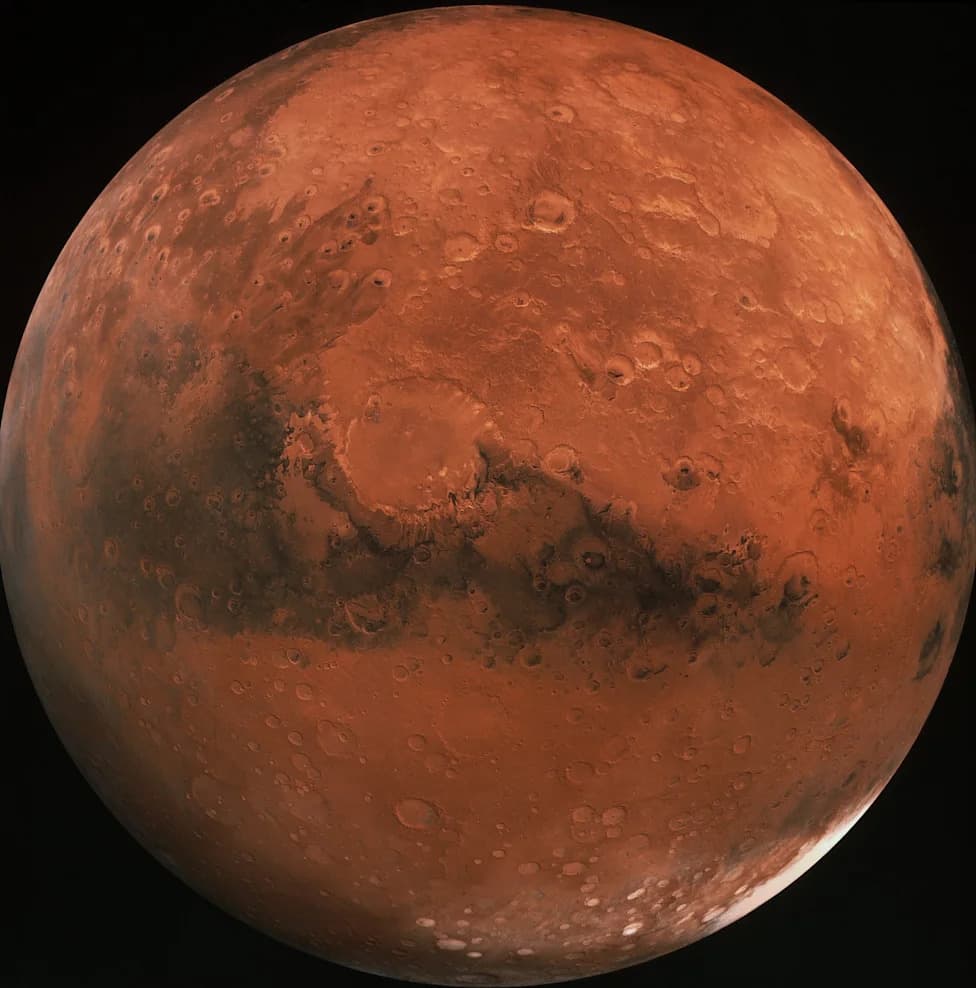
Close-up color photograph of Mars. Impact craters are visible on the surface of the planet.
SpaceX's long-term objective is to establish a sustained human presence on Mars, and Starship is the centerpiece of that plan. As testing accelerates, prediction markets and industry observers are trying to assess when—if ever—SpaceX will achieve a landing on the Red Planet.
Where Starship Fits In
Starship is central not only to SpaceX's Mars ambitions but also to its role in NASA's Artemis program. NASA has tapped SpaceX to provide heavy-lift and lunar landing capabilities, and upcoming Artemis missions will be important demonstrations of Starship's crewed and cargo operations in deep space.
Key Near-Term Milestones
NASA currently targets Artemis III for 2027 to validate critical lunar landing systems in space, with Artemis IV planned for early 2028 to further return astronauts to the Moon and refine operations beyond low Earth orbit. SpaceX says cargo flights to Mars for research and exploration would not start before 2028, leaving a narrow window for an uncrewed Martian landing prior to 2030.
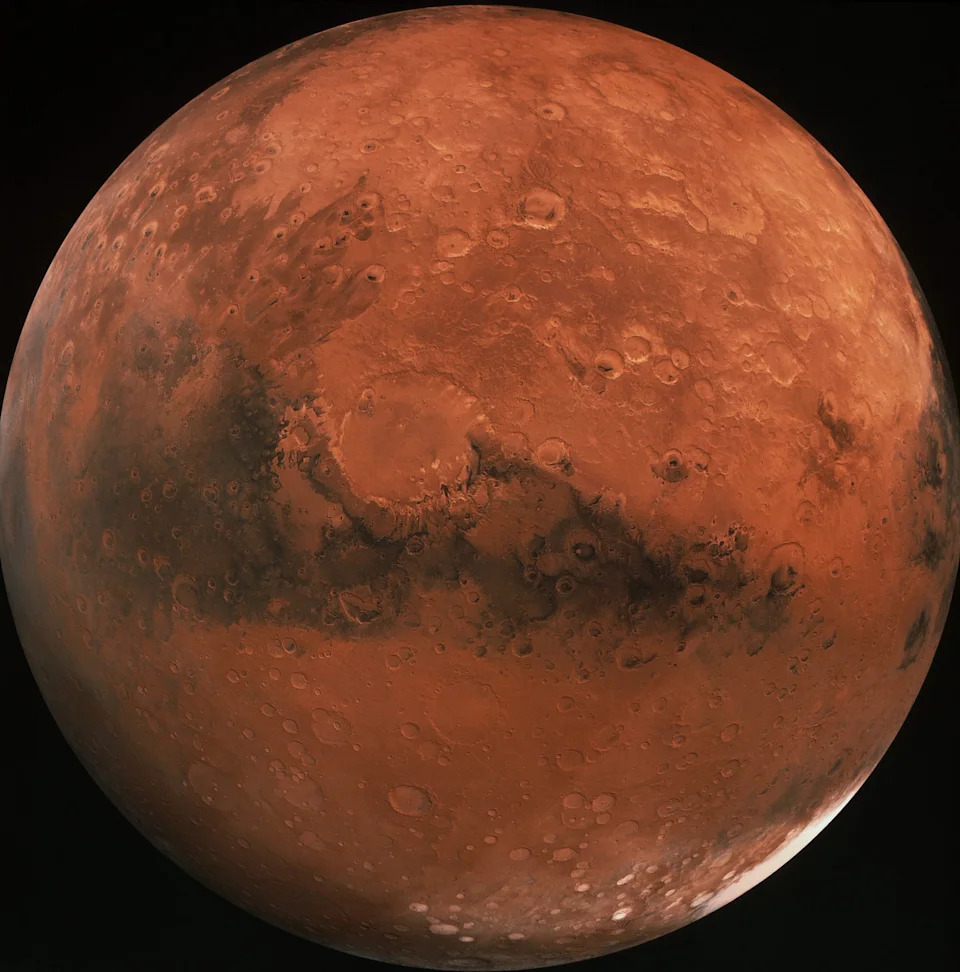
Close-up color photograph of Mars. Impact craters are visible on the surface of the planet.
Prediction Markets And The 2030 Question
Because SpaceX has framed aggressive timelines, prediction markets have been used to price the odds that something from SpaceX—possibly an uncrewed Starship carrying cargo or scientific instruments—will touch down on Mars before 2030. Those markets reflect uncertainty around both technical progress and regulatory, logistical, and programmatic factors.
Technical Challenges Remain
Every Starship test flight brings the program closer to Mars, but major technical hurdles remain. Key issues include reliable orbital refueling and transfer, atmospheric entry and heat-shield performance at Mars velocities, precise descent and landing systems, and the complex logistics of operating a spacecraft across interplanetary distances. Solving those challenges is essential before routine or crewed missions can proceed.
Bottom line: Starship is making measurable progress and is tightly linked to upcoming Artemis milestones, but the pathway to a Martian landing—especially a crewed mission—still depends on overcoming significant engineering and operational obstacles. Prediction markets and SpaceX's own timeline suggest a possible uncrewed landing before 2030, but that outcome is far from assured.
Help us improve.





















