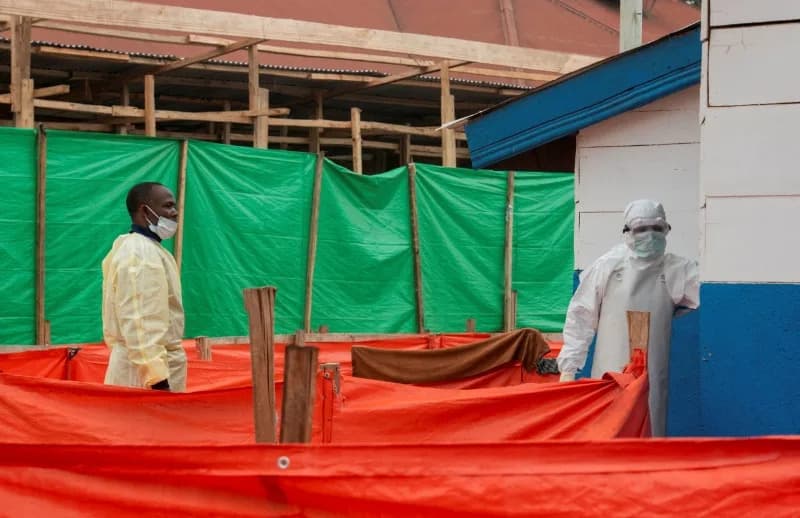
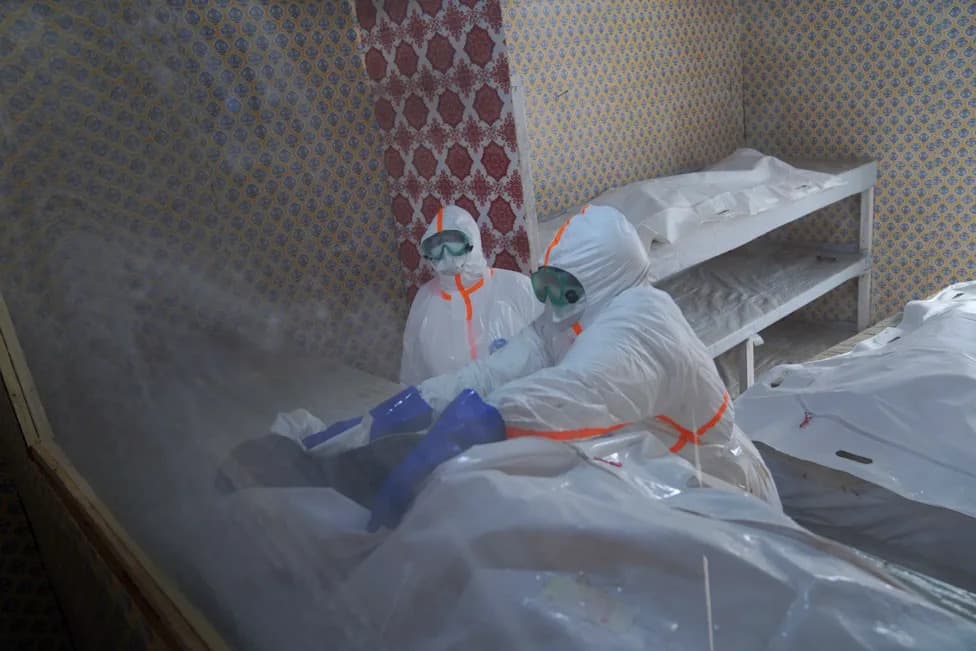
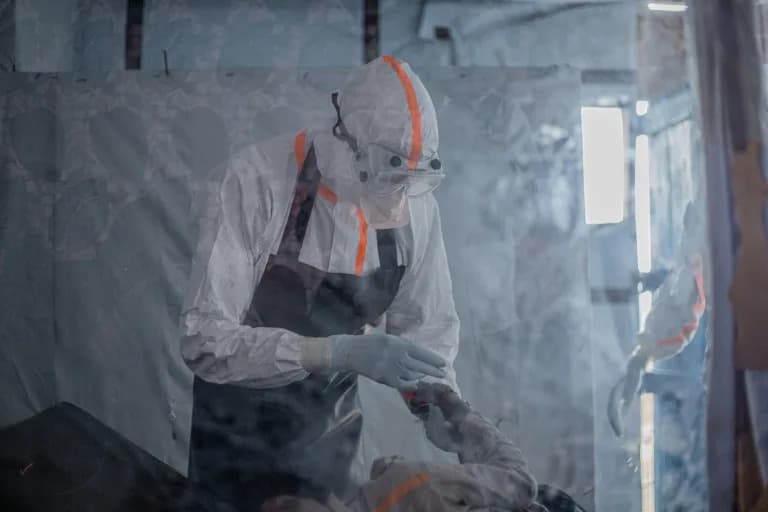
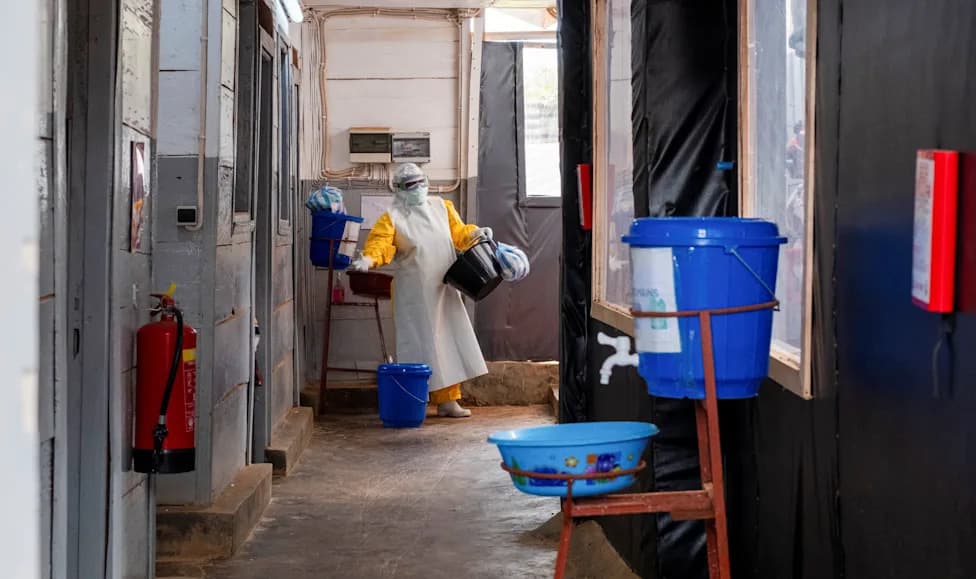
The Ebola outbreak in the Democratic Republic of Congo has surpassed 5,000 cases, with 5,021 infections and 2,378 deaths reported as of Sunday. Caused by the Bundibugyo species—without approved vaccines or treatments—the epidemic is spreading faster than any prior Ebola event and has reached crisis speed within three months of the May 15 declaration. WHO warns the risk of further national and international spread remains high, while insecurity and attacks on health teams, particularly in Ituri province and Aru territory, are severely hampering the response.
Ebola in DR Congo Surpasses 5,000 Cases as Outbreak Spreads at Record Pace
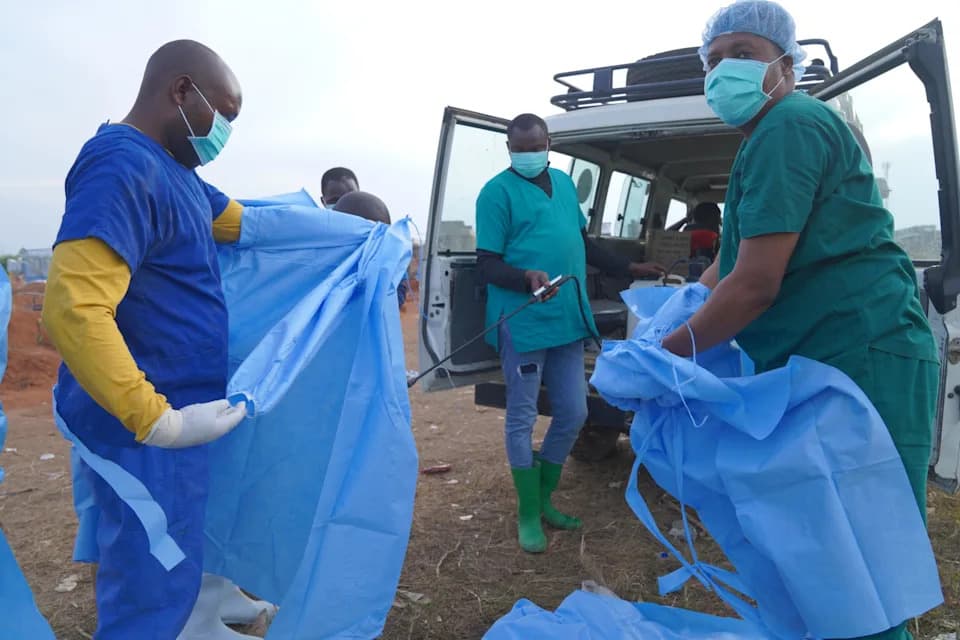
A health worker sprays a colleague with disinfectant after taking part in a burial service on Aug. 18, 2026, for a 3-year-old child who died of Ebola in Bunia, Ituri province, eastern Congo. / Credit: AP Photo / Dieudonne Dirole
Bunia, DR Congo — Official government figures released Wednesday show the Ebola outbreak in the Democratic Republic of Congo has exceeded 5,000 cases, and responders warn the disease is advancing at an unprecedented speed that is outpacing containment efforts in some of the country’s most remote and insecure regions.
Current Situation
Data from the DRC Ministry of Health reported 5,021 cases and 2,378 deaths as of Sunday. The epidemic is caused by the Bundibugyo species of Ebola (Bundibugyo ebolavirus), for which there are currently no approved vaccines or targeted treatments—a factor that complicates containment and care.
Rapid Spread and Comparisons
The outbreak has accelerated more quickly than any previous Ebola event, reaching these totals roughly three months after it was declared on May 15. From the first detected case, the epidemic has spread at about three times the rate of the 2014–2016 West Africa outbreak—the deadliest on record with more than 11,000 deaths.
“The outbreak has spread rapidly and the risk of further national and international spread remains high,” said WHO Director-General Tedros Adhanom Ghebreyesus. “We must be frank: The epidemic is far from being under control.”
Operational Challenges
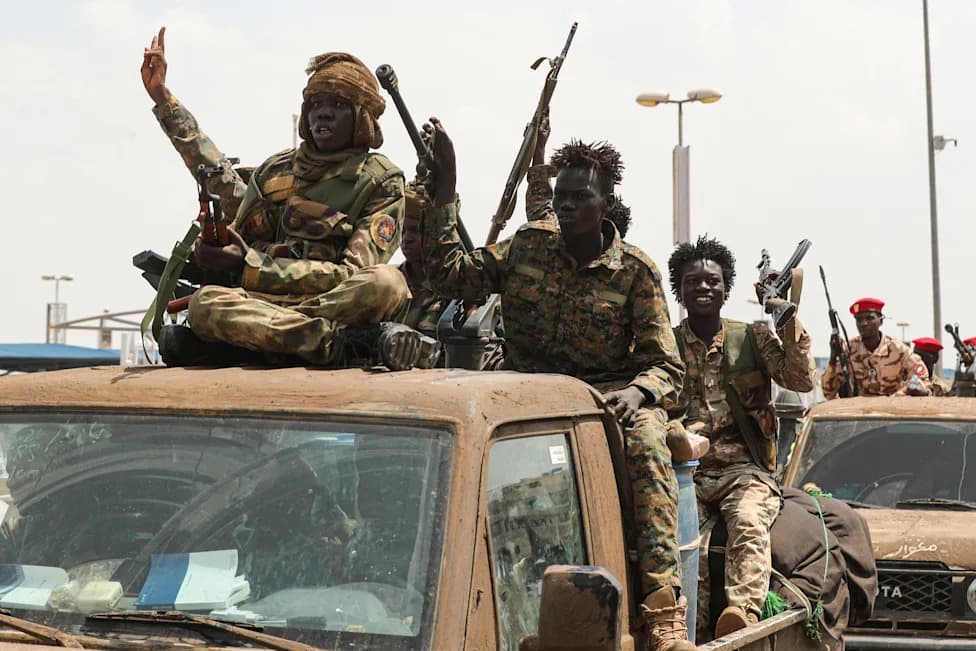
Response efforts are being hampered by severe security challenges, population displacement and intense movement across affected areas. Health workers and teams have been directly targeted; in the Aru territory of Ituri province, residents attacked a health team on Monday after a suspected case was reported, setting fire to an ambulance and damaging two other vehicles, Michael Wani, president of the Union of Cultural Associations for the Development of Ituri, said.
Ituri province remains the hardest-hit area, and ongoing insecurity is limiting surveillance, contact tracing and the safe movement of medical teams and supplies. The outbreak marks the DRC’s 17th recorded Ebola epidemic, underlining the persistent challenge the disease poses in the region.
The international community and local authorities face an urgent need to expand protective measures for responders, accelerate case finding and isolation, and scale community engagement to reduce fear and violence that undermine control efforts.
Help us improve.