
Chinese state media Xinhua reports that the first stage of a Zhuque-3 reusable rocket was recovered on land after a Wednesday morning launch, marking China's first on-land booster retrieval and its first use of deployable landing legs. This is China’s second-ever rocket-stage recovery, following a July sea-platform net-capture of a Long March-10B booster. The milestone comes as Japan and private U.S. firms also advance reusable-rocket techniques to lower launch costs and expand access to space.
China Recovers Zhuque-3 Rocket Stage On Land in Reusable-Rocket Breakthrough
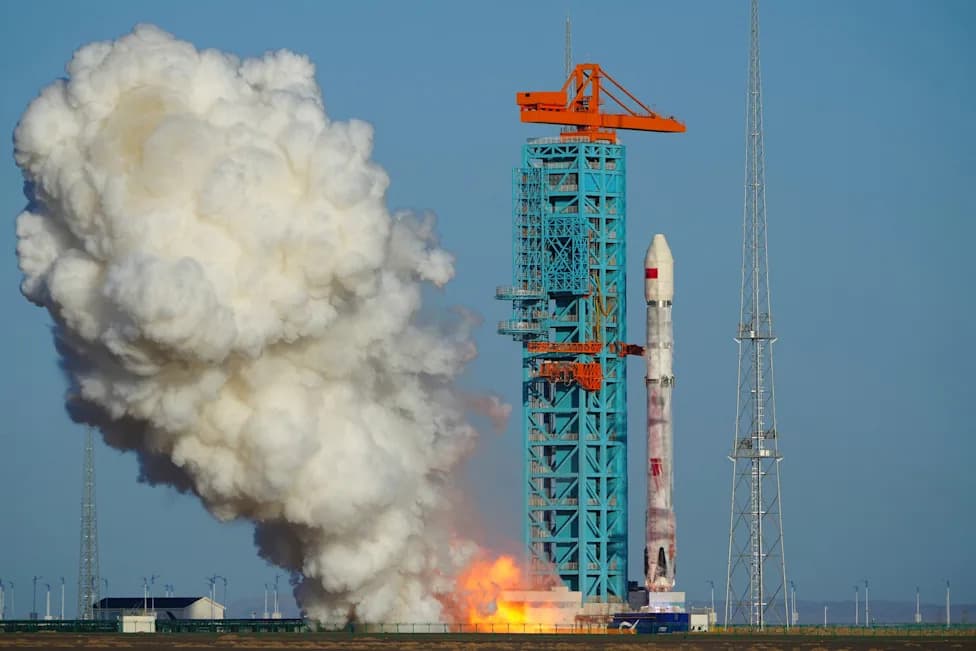
In this photo released by Xinhua News Agency, the Zhuque-3 Y2 rocket takes off at the Dongfeng commercial space innovation pilot zone in northwestern China Wednesday, Aug. 19, 2026. (Wang Jiangbo/Xinhua via AP)
Chinese state media Xinhua reported Wednesday that China successfully recovered the first stage of a Zhuque-3 reusable rocket on land following a morning launch, marking the nation's first on-land booster retrieval and a notable step in its reusable-launch development.
Mission Details: According to Xinhua, Zhuque-3 lifted off Wednesday morning and the rocket's first stage separated and returned to a terrestrial landing site where recovery teams secured the booster. The agency said the mission represented China's first use of deployable landing legs, calling the outcome "a major breakthrough in the country's reusable rocket technology."
Context and Regional Activity
China's on-land recovery follows an earlier milestone in July when the first stage of a Long March-10B rocket was recovered on a sea platform after separation. That July 10 recovery used a net-capture system to secure the booster on a platform at sea. The Zhuque-3 landing thus represents the country's second recorded rocket-stage recovery but the first to touch down on land.
The development comes amid a wider regional push: on July 11, Japan carried out the first test flight of an experimental reusable rocket, successfully launching and landing the vehicle. Meanwhile, U.S. private firms such as SpaceX and Blue Origin have been routinely recovering and reusing boosters since 2015, a practice that has significantly reduced launch costs by salvaging hardware that would otherwise be discarded.
Why It Matters: Recovering a rocket stage on land using deployable landing legs is an important technical achievement. Reusable boosters can lower the cost of access to space, shorten turnaround times between launches and help nations and companies scale satellite deployment and other space operations more affordably.
"A major breakthrough in the country's reusable rocket technology," Xinhua wrote, framing the mission as a step forward for China's ambitions in lower-cost, repeatable launch capability.
While state media framed the outcome as a technological win, independent verification and further details on the recovery site, refurbishment plans, or reuse timeline were not included in the Xinhua report. Observers will be watching for subsequent missions and technical disclosures that confirm operational reuse and cost impacts.
Help us improve.





















