Earthjustice sued the U.S. government seeking to halt plans to lease about 33 million acres of seabed off American Samoa for potential deep-sea mining, arguing federal agencies ignored requirements under the Endangered Species Act. The complaint emphasizes risks to endangered sea turtles, whales, corals and culturally sacred species, and warns that mining could damage critical habitats and traditional ways of life. Environmental groups and many nations have pushed for a moratorium as no commercial seabed mining has been established worldwide.
Earthjustice Sues To Block Plans To Lease 33 Million Acres Off American Samoa For Deep-Sea Mining
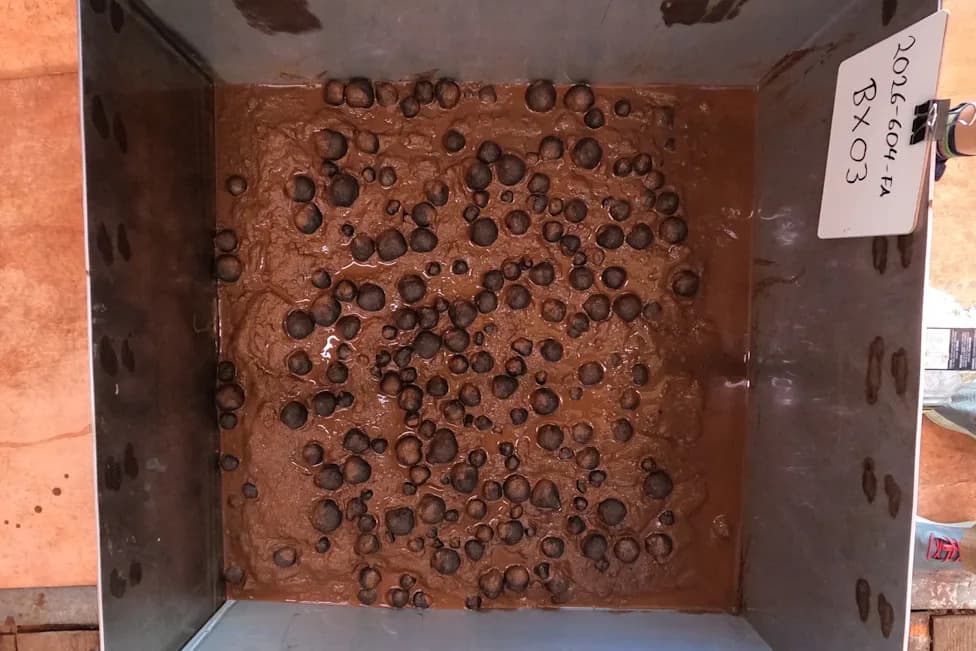
FILE - This photo provided by the U.S. Geological Survey shows polymetallic nodules in a sample from the seafloor that was collected on April 14, 2026, in U.S. waters off American Samoa. (USGS via AP, File)
Earthjustice filed a federal lawsuit on behalf of Fa'asao Amerika Samoa and the Conservation Council for Hawai'i, asking a judge to stop the U.S. government from moving forward with plans to lease roughly 33 million acres (13.4 million hectares) of seabed around American Samoa for potential deep-sea mining.
The complaint targets the National Marine Fisheries Service and the U.S. Department of Commerce, alleging the agencies failed to comply with the Endangered Species Act and other federal laws before concluding leasing would not harm critical habitat or threatened and endangered species.
"The United States has never opened its waters to deep-sea mining. Until now," the filing says, adding that the Samoan people depend on a healthy ocean ecosystem that feeds households, protects shorelines and sustains cultural practices that have existed for centuries.
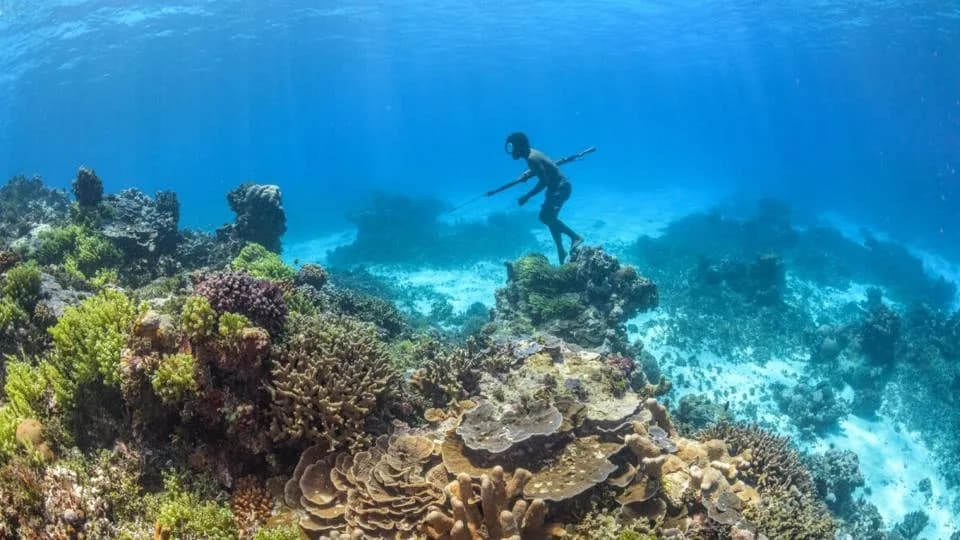
Earthjustice and local plaintiffs say the proposed lease area is home to rare and diverse marine life — including five sea turtle populations, four whale species, multiple coral species and the giant manta ray — and that mining exploration and commercial recovery could destroy critical habitat or drive species closer to extinction.
The suit also highlights cultural ties between American Samoa and Hawaii, noting many animals migrate between the regions and some species — for example, sea turtles called "i'a sa" or "sacred fish" — hold deep cultural and spiritual significance. Local bans on catching or harming whales, sharks and manta rays reflect those traditions.
Government documents identify mineral-rich deposits of nickel, cobalt and manganese in the proposed area. Federal officials have argued critical minerals are important to national security, economic strength and supply-chain resilience. Acting Marine Minerals Administration Director Matt Giacona said the U.S. cannot rely solely on foreign sources for those resources.
Environmental groups and many countries have urged a moratorium on deep-sea mining, warning of potentially severe environmental harms from noise, light, and plumes of sediment that can smother marine life. To date, there has been no established commercial seabed-mining operation anywhere in the world.
Internationally, the International Seabed Authority has issued exploration licenses but has not authorized commercial mining. Because the United States has not ratified the U.N. Convention on the Law of the Sea, U.S. regulation of seabed minerals falls largely under NOAA and the Department of Commerce.
Separately, the government recently proposed leasing about 69 million acres around the Northern Mariana Islands, part of a broader push to speed approvals for mineral development on the seabed despite scientific concerns and local opposition.
Help us improve.