Summary: A grassroots coalition—the Joint Awami Action Committee (JAAC)—mobilized mass protests in Pakistan-administered Kashmir over steep utility costs and economic hardship. A May 2024 long march forced Islamabad to offer a relief package worth about 23 billion rupees, but core problems remain: federal control over key appointments, 12 legislative seats reserved for refugees outside the territory, and a dominant military presence. A subsequent ban on JAAC and a violent crackdown ahead of July–August elections underscore the deeper demand for representation and accountability.
The Other Side of Paradise: How Pakistan Suppressed Protests in Kashmir
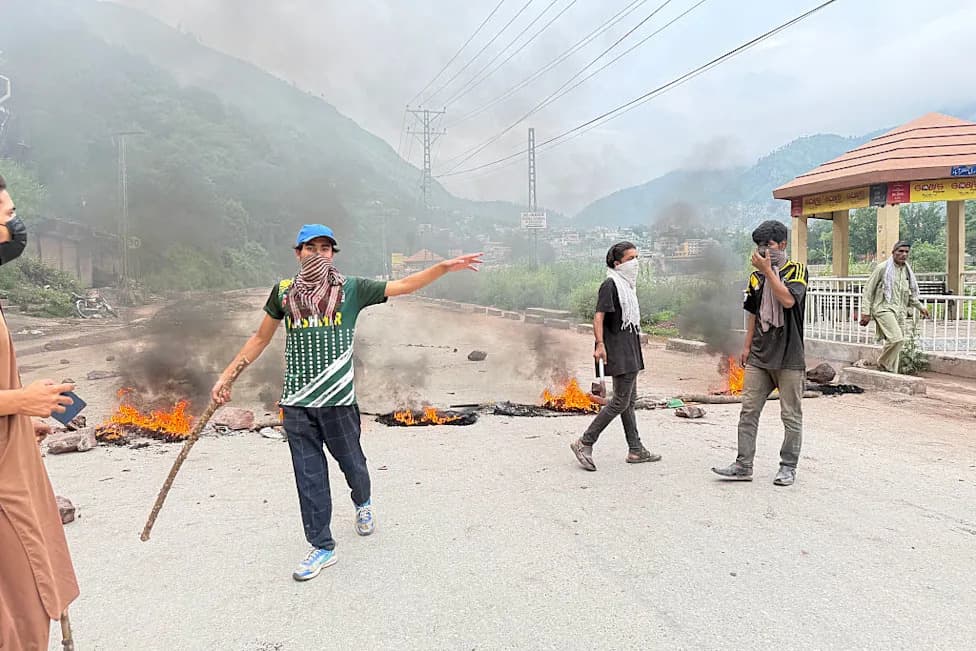
Protestors burn tyres along a road after clashes with police in Muzaffarabad in Pakistan-administered Kashmir on July 31, 2026. —Sajjad Qayyum-AFP via Getty Images
Irish poets and American presidents have long invoked Kashmir for its beauty and its perils. But recent events in Pakistan-administered Kashmir have cast a harsh light on the political and economic realities behind that romantic image.
Background
The dispute over Kashmir has shaped India and Pakistan since the end of British rule and the partition of August 1947. Both countries claim the entire region, have fought multiple wars over it, and each administers a separate portion. International commentary has focused most often on the India–Pakistan dispute or on unrest in Indian-administered Kashmir; Pakistan-administered Kashmir has received less sustained attention—until the recent protests.
Economic Grievances Fuel a Political Movement
Since an outbreak of protests in June, human rights groups and local leaders say more than 80 people have been killed by security forces in Pakistan-administered Kashmir, though numbers remain contested. What began as demonstrations over soaring electricity bills, rising food prices and widespread unemployment became a broader expression of frustration with governance and accountability.
The region supplies major hydropower projects to Pakistan’s national grid, and many residents resent that local tariffs do not reflect their contribution. Nationwide economic pressures—high inflation, energy shortfalls and repeated IMF programs—have led federal governments to cut subsidies and raise utility rates, intensifying local anger.
The Rise of the Joint Awami Action Committee (JAAC)
Local citizens’ committees—formed by traders, lawyers, students and community leaders—coalesced in September 2023 into the Joint Awami Action Committee (JAAC). The JAAC positioned itself as a nonpartisan coalition demanding lower wheat and electricity prices, an end to official privileges for ministers and bureaucrats, and stronger powers for elected local governments.
Despite arrests, restrictions on meetings and limits on communications, the JAAC organized shutdowns, transport strikes and local protests. Its decentralized network of chapters in small towns and villages proved difficult for authorities to contain.
May 2024: Mass Mobilization and a Federal Response
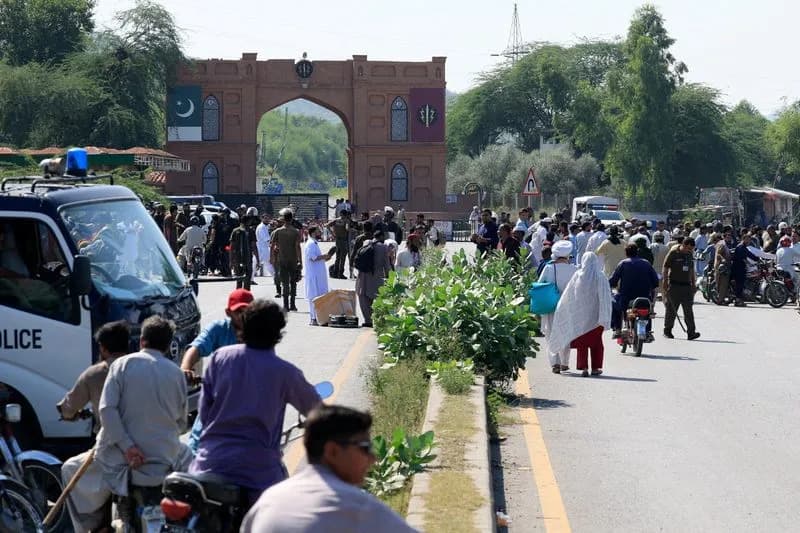
After officials delayed meaningful concessions, JAAC called a long march and shutdown in May 2024 that drew hundreds of thousands to the regional capital, Muzaffarabad. Clashes during the mobilization left at least four people dead, including three protesters and a police officer. Islamabad intervened with a relief package reportedly worth about 23 billion rupees (roughly $82.9 million) offering subsidized electricity and cheaper wheat.
While the relief package addressed immediate economic demands, it did not resolve deeper questions about political authority and autonomy.
Political Structure and Limits on Local Authority
Pakistan-administered Kashmir has its own president, government, legislative assembly and courts, but Islamabad retains decisive power over administration, security and external affairs. A council once chaired by Pakistan’s prime minister was a major conduit of federal control; a 2018 constitutional amendment weakened that council, but the federal government still appoints key officials, including the chief secretary and the inspector general of police.
These arrangements create a persistent gap between political responsibility and political authority: elected local officials are expected to answer to voters, yet many decisions that shape daily life are taken in Islamabad.
Electoral Controversy: The Refugee Seats
The regional legislature has 53 seats. Of the 45 general seats, 33 are elected by residents of the territory and 12 are reserved for refugees from Indian-administered Kashmir who live elsewhere in Pakistan. Critics argue the 12 refugee seats dilute local voters’ influence and give Islamabad an easy lever to shape the assembly.
In June the region’s top court ruled those 12 seats enjoy statutory protection and that changing them would require a formal constitutional amendment, leaving the legal status quo intact while the political debate continues.
Security Forces, Crackdown, and the Military’s Role
Pakistan’s military exerts a strong influence on national politics, and Pakistan-administered Kashmir reflects a concentrated version of that dynamic. The Pakistan Army’s 12th Infantry Division—headquartered in Murree—exercises operational control over the territory’s security. Human rights observers and JAAC leaders report that the military and intelligence agencies have long constrained political activity and free expression.
In June authorities banned the JAAC under anti-terrorism laws and launched a broad crackdown ahead of regional assembly elections scheduled between July 27 and August 10. JAAC leaders reported dozens of deaths in late July; official counts and claims remain disputed. The state’s use of security laws to label largely economic and civic protests as terrorism deepened perceptions that dissent will be met with force rather than dialogue.
Elections, Turnout, And Political Stakes
The JAAC called for a boycott of the polls and made abolition of the 12 refugee seats a central demand. Preliminary turnout figures for the first two phases were around 46% and 50%—lower than the roughly 60% recorded in 2016 and 2021. Early results gave the Pakistan Muslim League–Nawaz 24 general seats, though delayed contests meant the election was not fully settled.
Observers say that when Islamabad’s ruling party can draw on state resources and the security establishment’s backing, the electoral environment and the composition of the legislature are shaped well before ballots are cast.
What This Means
Short-term relief cannot substitute for genuine political accountability. The protests reflect a deeper struggle over affordability, legitimacy and representation. Young people’s widespread support for JAAC signals rising impatience with political subordination justified by geopolitical arguments.
Conclusion
Kashmiris in Pakistan-administered territory are asking for more than lower bills: they want respect, representation and a meaningful say in decisions that affect their lives. For Islamabad, the path to stability requires not only economic measures but reforms that close the gap between political responsibility and political authority. Suppressing dissent may achieve short-term quiet, but lasting stability depends on granting citizens credible political rights and accountable institutions.
Help us improve.