
JWST and ALMA have captured the earliest direct evidence of planet formation around HOPS-315, a roughly 100,000-year-old protostar about 1,300 light-years away in Orion. JWST detected SiO gas condensing into crystalline silicates — the first solid grains that seed rocky planets — while ALMA pinpointed this activity to a disk region comparable to our asteroid belt and revealed jets that signal ongoing accretion. The observations provide a rare glimpse of "time zero," linking theoretical models to the mineral record preserved in meteorites.
We’re Watching a Baby Solar System: JWST and ALMA Capture Planet-Forming 'Time Zero' Around HOPS-315
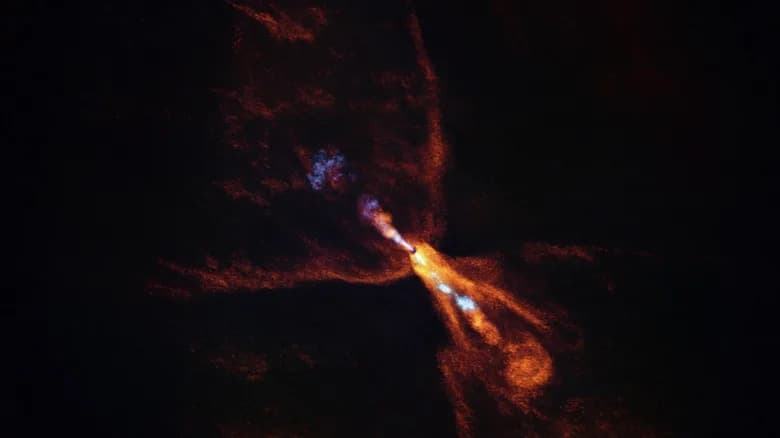
ALMA(ESO/NAOJ/NRAO)/M. McClure et al.
For the first time, astronomers have directly observed the very earliest stage of planet formation — often called "time zero" — around a newborn star. The James Webb Space Telescope (JWST), paired with the ALMA radio observatory in Chile, has produced complementary observations of HOPS-315, a protostar about 1,300 light-years away in Orion. At roughly 100,000 years old, HOPS-315 is surrounded by a rotating disk of gas and dust that contains the raw materials for building planets.
Direct Detection of the First Solids
JWST detected spectral signatures of silicon monoxide (SiO) gas beginning to condense into crystalline silicate minerals — the very first solid grains that seed rocky planets and asteroids. ALMA's millimeter-wave imaging then located this mineral-forming activity in a compact region of the protoplanetary disk at a distance from the star comparable to our Solar System's asteroid belt. Together, the observations provide both the chemical evidence and the spatial context for the onset of planet formation.
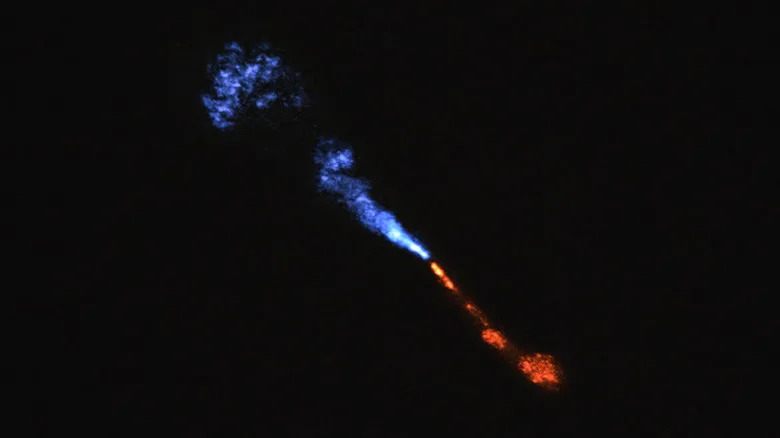
ALMA(ESO/NAOJ/NRAO)/M. McClure et al.
Signs of a Dynamic, Growing System
ALMA also revealed collimated jets of carbon monoxide (CO) and silicon monoxide streaming from the disk — clear indicators that the protostar is actively accreting material and driving energetic outflows. These dynamics help explain how material is redistributed and processed in the disk as solids form and begin to stick together.
"For the first time, we have identified the earliest moment when planet formation is initiated around a star other than our Sun," said Melissa McClure, lead author of the study.
Why This Discovery Matters
Most previously studied systems were observed at later stages, when disks show gaps, rings or young planets already sculpting their surroundings. HOPS-315 offers a rare, earlier snapshot: minerals and crystalline silicates are appearing while the disk is still young and active. That timing helps bridge astrophysical models with the physical evidence preserved in meteorites on Earth, many of which contain similar crystalline silicates.
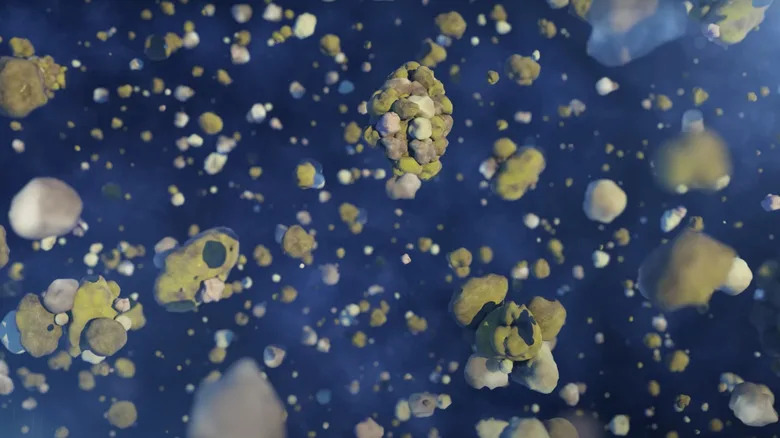
ESO Chasing Starlight/ YoutTube
Co-author Logan Francis noted that these minerals form in the same disk locations where silicates appear in Solar System asteroids, strengthening the idea that the processes that gave rise to Earth’s building blocks operate elsewhere too. Merel van 't Hoff described the observations as "a picture of the baby Solar System," underscoring how closely this system resembles the conditions that likely existed in our own Solar System's infancy.
Looking Ahead
By combining JWST's chemical sensitivity with ALMA's spatial precision, astronomers now have a powerful toolkit to study the earliest steps of planet formation in other systems. HOPS-315 will serve as a live case study for testing theories about how solids condense, grow, and ultimately assemble into planets.
Key facts: HOPS-315 is ~100,000 years old, ~1,300 light-years away, shows SiO gas condensing into crystalline silicates, and has CO and SiO jets indicating active accretion and disk processing.
Help us improve.





















