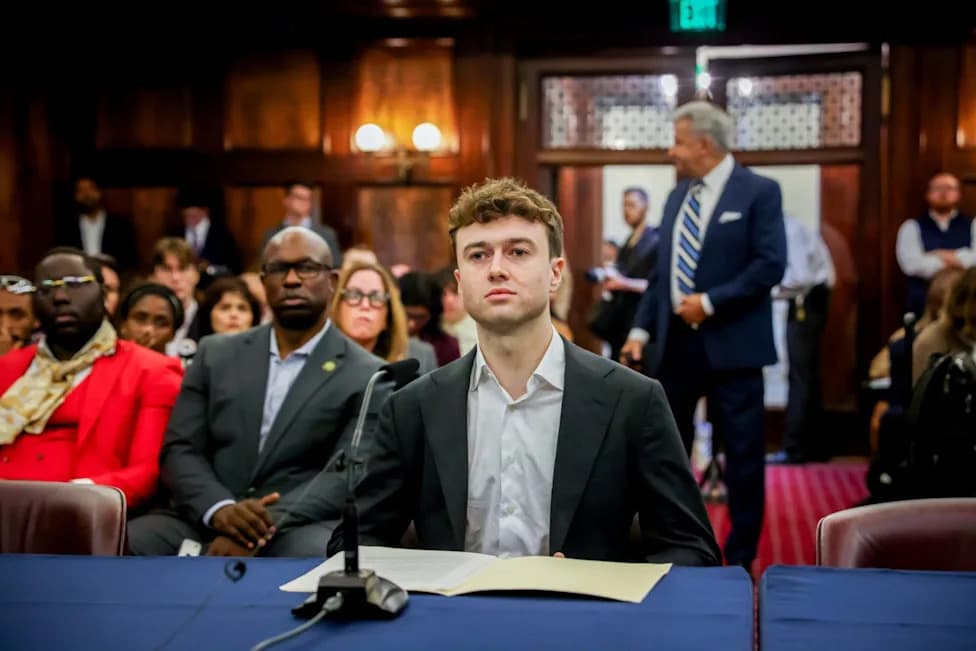
The U.S. military has achieved a recruiting rebound, with all active-duty services meeting targets for the third straight year. Interviews and Pentagon data show most recruits cite steady pay, education benefits and career training — not politics — as the main reasons they enlist. Operational fixes like preparatory courses and streamlined medical screening helped convert near-qualified candidates, while critics warn that partisan rhetoric and some policy changes could risk narrowing the talent pool over time.
Recruitment Rebound: Young Americans Say Pay, Benefits and Jobs — Not Politics — Drive Enlistment
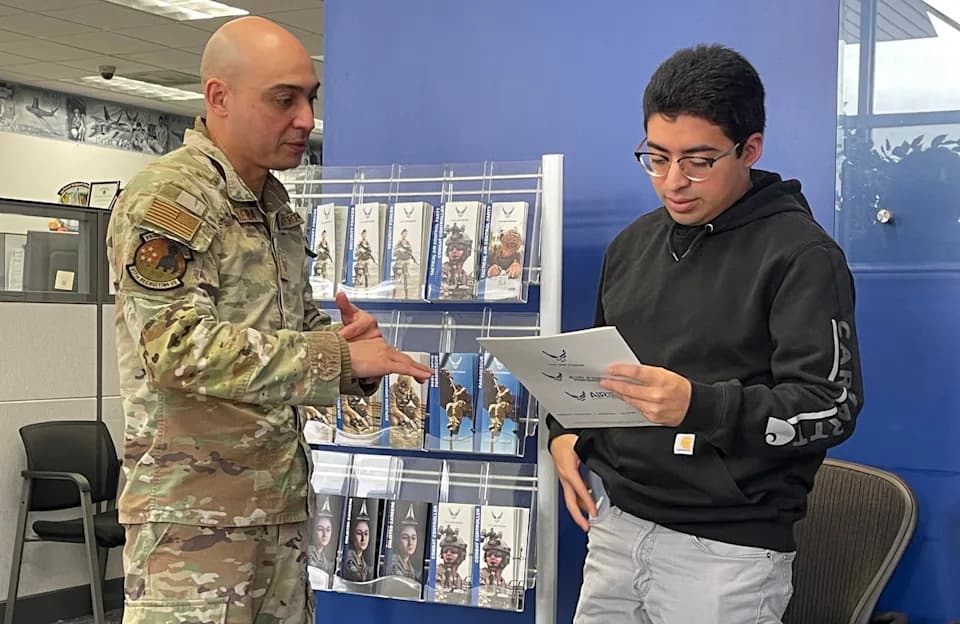
Steven Beynon/ABC News - PHOTO: Tech Sgt. Omar Herrera goes over Air Force career opportunities with a potential recruit.
By midday at a northern Virginia high school, students filled the corridor outside the cafeteria — finishing homework, swapping jokes and playing video games. Off to the side, Tech Sgt. Omar Herrera of the Air Force sat behind a modest recruiting table stacked with brochures, foam model jets and Air and Space Force–branded water bottles. His approach was low-key and practical: he answered questions, described career paths and explained how the military can be a route to steady pay, training and education.
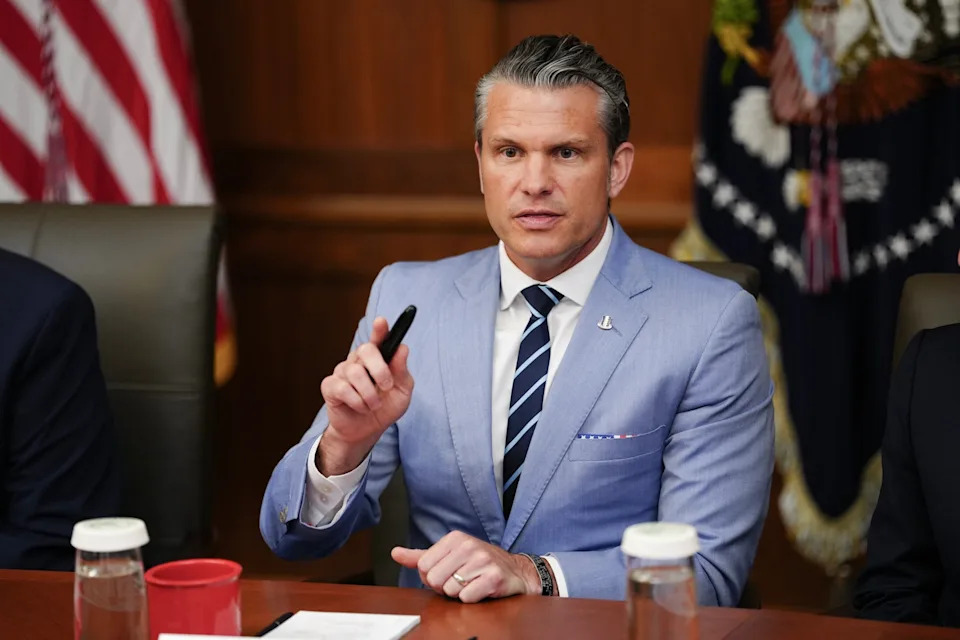
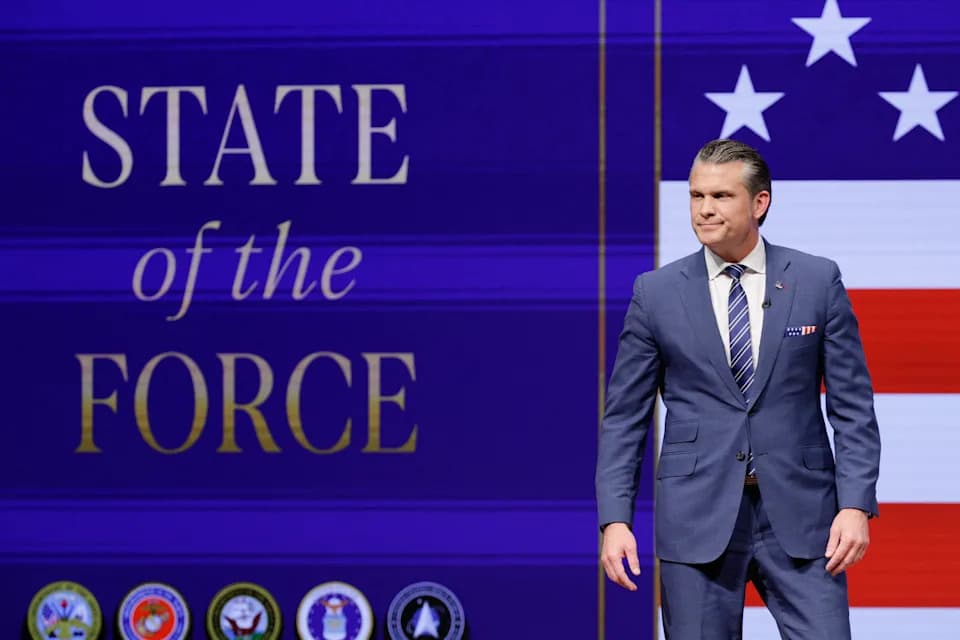
Aaron Schwartz/AFP via Getty Images - PHOTO: Secretary of Defense Pete Hegseth speaks during a Cabinet meeting hosted by US President Donald Trump at Camp David in Maryland, July 31, 2026.
Recruiting Is Back — But Why?
After years of shortfalls, all active-duty services have met their recruiting goals for a third consecutive year. The Army signed 61,500 active-duty soldiers for fiscal 2026, the Navy reached 45,000 sailors, the Air Force recruited nearly 33,000 airmen and Space Force enlisted roughly 730 new guardians. The turnaround began before Election Day 2024 and accelerated as services fixed operational bottlenecks and expanded outreach.
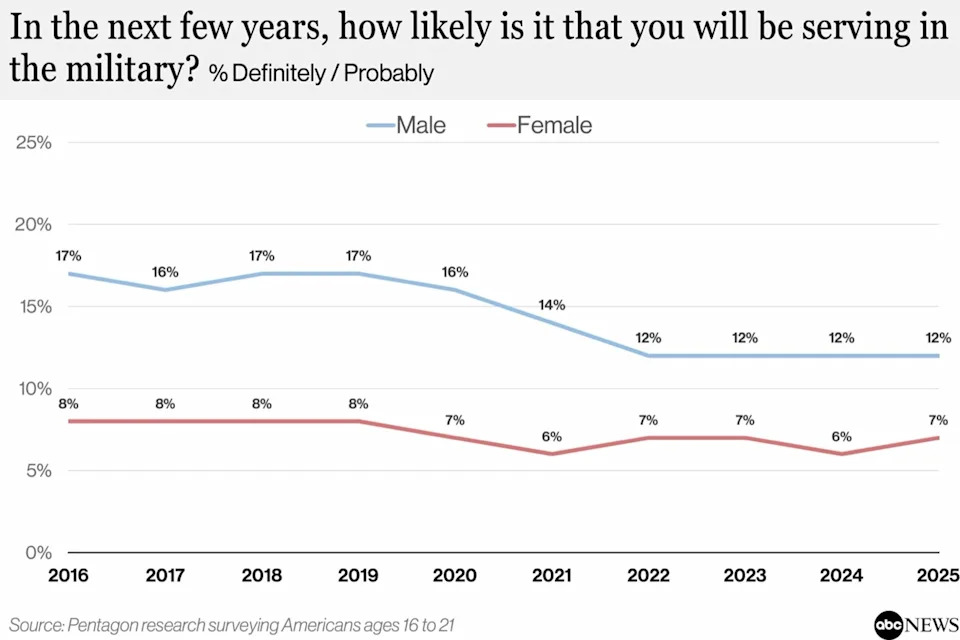
The Pentagon - PHOTO: Military service likelihood
What Recruits Say Matters Most
ABC News interviews with nearly 40 recruits and dozens of recruiters and defense officials show a consistent theme: most young Americans make enlistment decisions based on economic and career considerations — not partisan politics. Steady pay, education benefits, technical training and a clear pathway to the middle class top the list of reasons to join. Pentagon survey data similarly ranks financial compensation and benefits among recruits' primary motivations.
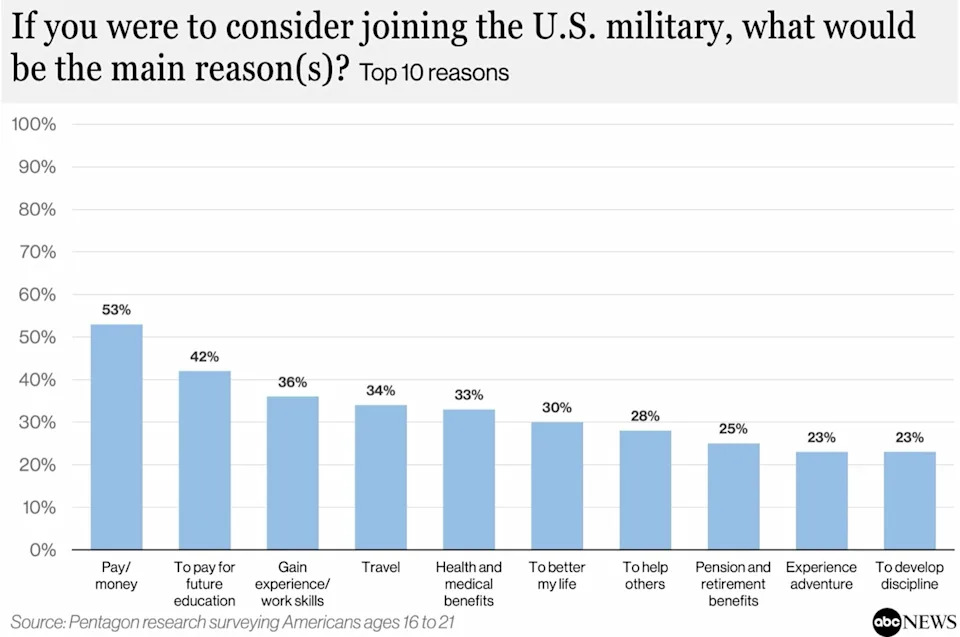
The Pentagon - PHOTO: Main reasons for military service
Numbers And Context
Some additional context helps explain the rebound: about 80% of recruits report having a family member who served, reinforcing the role of military tradition in recruitment. At the same time, the Pentagon estimates roughly 75% of Americans ages 17 to 24 are ineligible to serve for reasons that include obesity and unmet academic standards, constraining the talent pool.
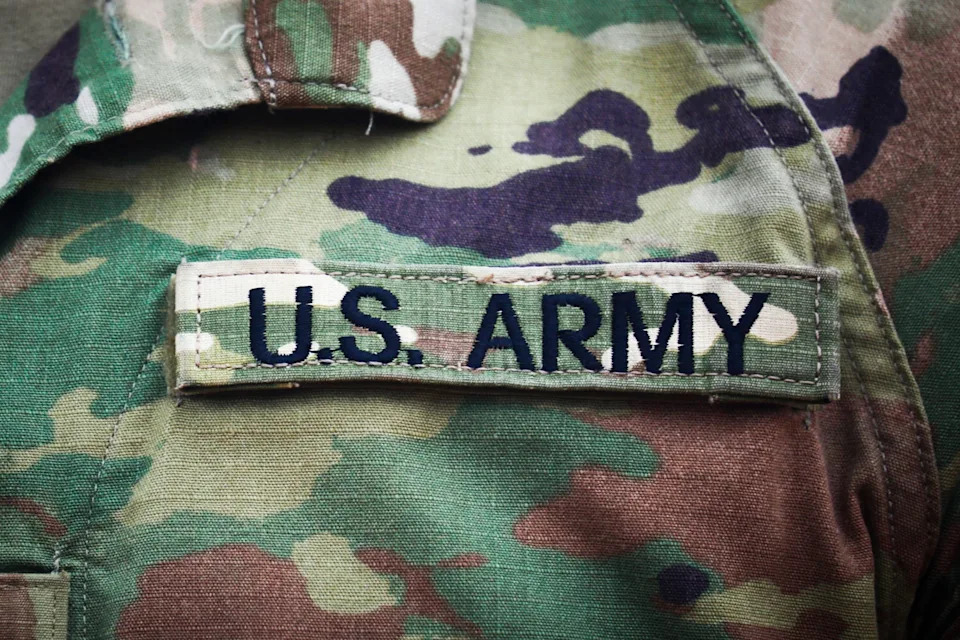
Beata Zawrzel/NurPhoto via Getty Images - PHOTO: U.S Army badge is seen on a uniform of American soldier who attends a ceremony at the Kosciuszko Mound in Krakow, Poland, Aug. 4, 2020.
Operational Fixes And Outreach
Service leaders identified and addressed several practical barriers: expanded pre-basic training programs such as the Army's Future Soldier Preparatory Course helped candidates who narrowly missed body-fat or academic cutoffs become qualified. The Pentagon also streamlined medical screening processes after electronic health records initially flagged minor historical issues that slowed enlistments. Those operational fixes, plus deeper recruiting pushes into large cities and targeted outreach, helped lift numbers.

Steven Beynon/ABC News - PHOTO: New Air Force recruits conducting a fitness test to qualify them to try out for special operations.
Politics, Rhetoric And Diversity Concerns
Defense Secretary Pete Hegseth has framed recruitment gains as validation of his leadership and a broader cultural shift in the Pentagon. Critics say that political rhetoric and policy changes — including rolling back long-standing shaving exemptions for pseudofolliculitis barbae and pulling recruiting resources from some demographic-focused events — risk narrowing the recruiting pool and could affect retention, especially among women and racial minorities.
Many junior recruits and prospects view Pentagon leadership and political debates as distant from their personal decisions. For most, enlistment is a sequence of career choices rather than an endorsement of any administration. Still, defense officials warn that sustained culture-war rhetoric or policies perceived as exclusionary could erode trust over time and make some candidates — and current service members — reconsider their commitment.
Bottom Line
The recent recruiting rebound reflects a mix of enduring incentives (pay, education and training), operational fixes and broader outreach efforts rather than a single political cause. While short-term numbers are strong, leaders caution that long-term success will require protecting access to diverse talent, maintaining clear standards and addressing health and academic barriers that limit eligibility.
Help us improve.