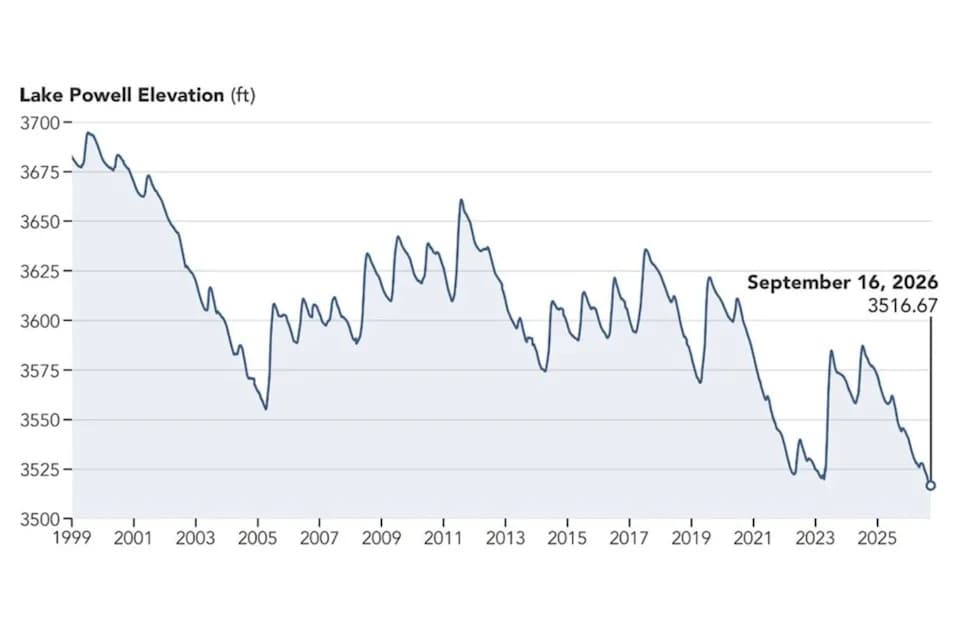
Lake Powell reached a record low of 3,519.91 feet on Aug. 15, edging closer to the roughly 3,490-foot minimum power pool that could threaten hydropower generation. Federal managers are releasing upstream water to delay power losses, but projections show the reservoir may near the minimum power pool by next spring and could ultimately reach "dead pool," forcing severe cuts to municipal and agricultural supplies. The decline reflects reduced Colorado Rockies snowpack, increased regional demand and prolonged drought exacerbated by climate change; proposed responses range from stricter conservation to large engineering projects and even removing Glen Canyon Dam.
Lake Powell Falls to Record Low — Reservoir Nears Critical Power Threshold
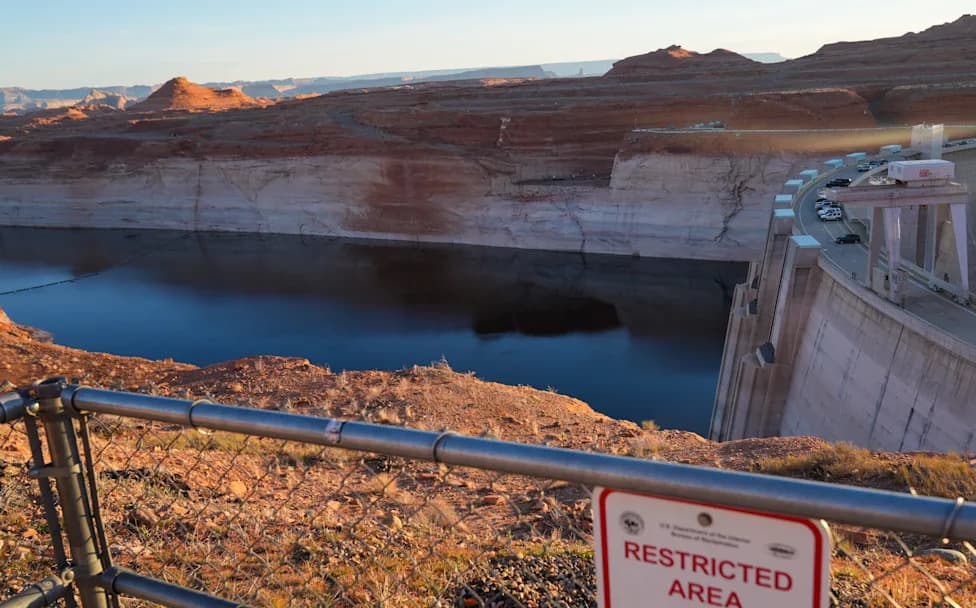
The 710-foot-high Glen Canyon Dam that impounds the Colorado River is an important source of hydroelectric power in the area, generating 1,320 megawatts of power to serve upward of 1 million homes in the Southwest, although the amount of power the dam generates has been dropping along with the water levels in Lake Powell. The white “bathtub ring” shows the highest level the lake ever reached.(Trevor Hughes/USA TODAY)
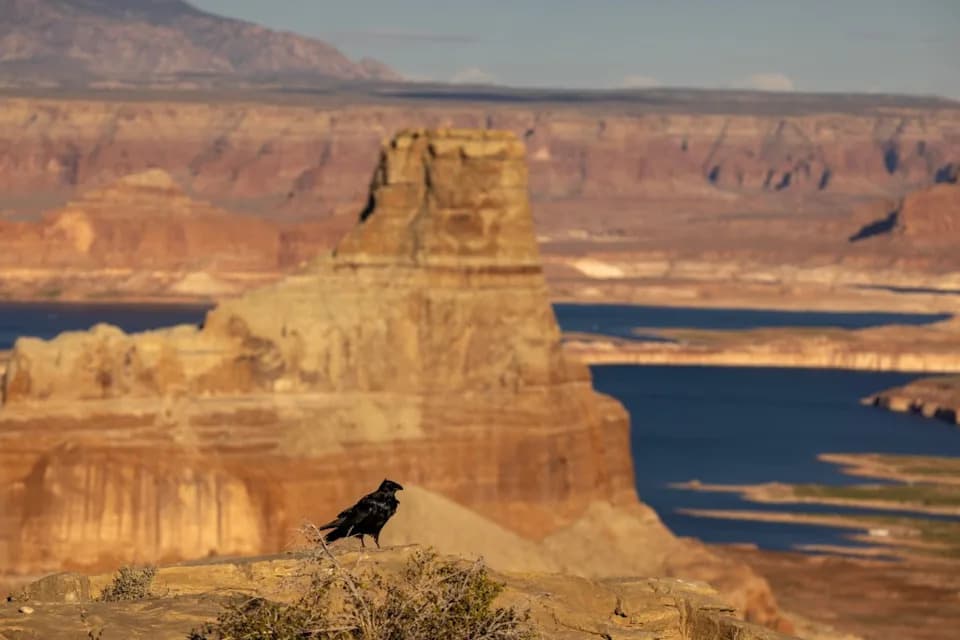
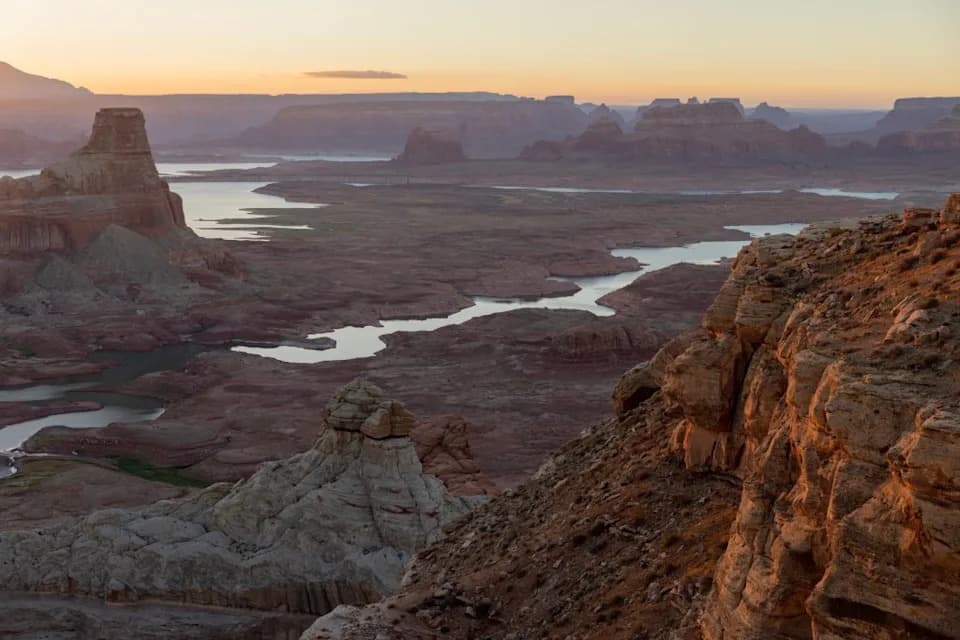
Lake Powell, the vast reservoir on the Utah–Arizona border that provides hydroelectric power, drinking water and recreation for millions across the American West, dropped to a record low of 3,519.91 feet above sea level on Aug. 15, the Bureau of Reclamation's automated gauge reported.
This narrowly tops the previous low of 3,519.92 feet recorded in April 2023 and brings the lake closer to the critical "minimum power pool" near 3,490 feet — the elevation below which Glen Canyon Dam may no longer generate electricity. To delay that outcome, federal managers have been releasing water from smaller upstream reservoirs.
What the Decline Could Mean
Federal projections indicate Lake Powell could approach the minimum power pool as early as next spring. If levels fall further, the reservoir could reach "dead pool," a condition where water can no longer pass through the dam to downstream users. Dead pool would force severe cuts to municipal and agricultural water supplies and could disrupt hydropower generation — potentially affecting farms roughly 500 miles away in California's Imperial Valley.
The Bureau of Reclamation notes that daily automated gauge readings are subject to later revision, but Powell has been on a steady downward trend for months. Management decisions must now balance water deliveries, power generation and environmental needs for both Lake Powell and downstream Lake Mead — which hit its own record low on Aug. 7 and continues to decline.
Human, Economic and Environmental Impacts
Lake Powell attracts about 4 million visitors each year for houseboating, water skiing, kayaking and sightseeing among its side canyons and landmarks such as Rainbow Bridge. Lower water levels threaten recreation businesses and local economies, reduce hydropower revenue, and increase stress on cities, tribes, farms and native ecosystems that rely on Colorado River flows.
"Now we're at the point where we've seen it coming for 20 years and so now it's going to be both really hard and really urgent," Aaron Weiss, executive director of the Center for Western Priorities, told USA TODAY in June. "Whatever the solutions are, they're going to have to happen rapidly."
Responses under consideration range from standard conservation steps — limiting lawn irrigation, incentivizing reduced farm water use, and stricter urban restrictions — to large engineering proposals such as piping water from the Mississippi River, towing icebergs, or building nuclear-powered desalination plants off the California coast. Some environmental groups have proposed bypassing or removing Glen Canyon Dam to drain Lake Powell into Lake Mead and restore more natural river conditions.
The Powell–Mead system was designed to capture surplus water in very wet years and release it during dry periods. Long-term trends, however, show diminishing snowpack in the Colorado Rockies and rising water demand as the West grows — trends that have been intensified by prolonged drought and climate warming. A new federal plan calls for significantly reducing releases from Lake Mead, which would make irrigation more difficult for farmers in California and Arizona and likely require additional conservation in many cities.
Neither reservoir is expected to gain substantial new water until the next wet season, and only if winter precipitation is above average. Scientists caution that even a wet season or a strong El Niño would likely provide only short-term relief and would not reverse the long-term declines in Colorado River flows driven by warming and chronic drought.
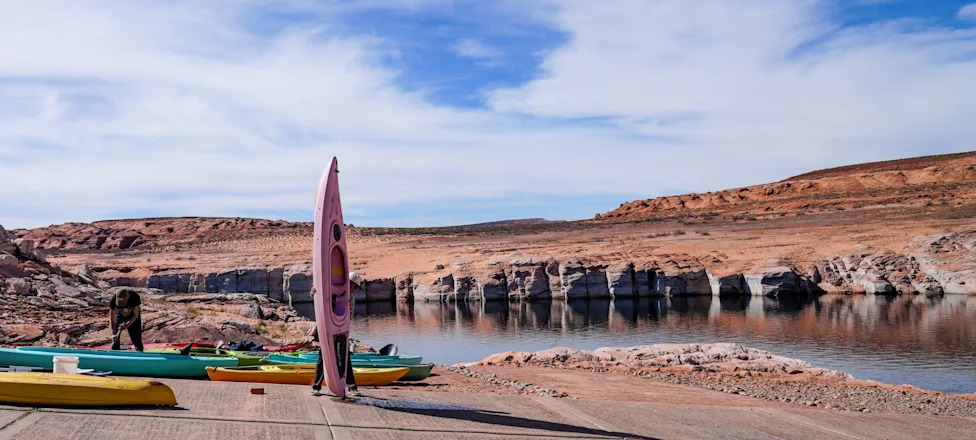
A worker drains water from a kayak after a tour to Antelope Canyon on Lake Powell in February 2026 when water levels are very low.(Trevor Hughes/USA TODAY)
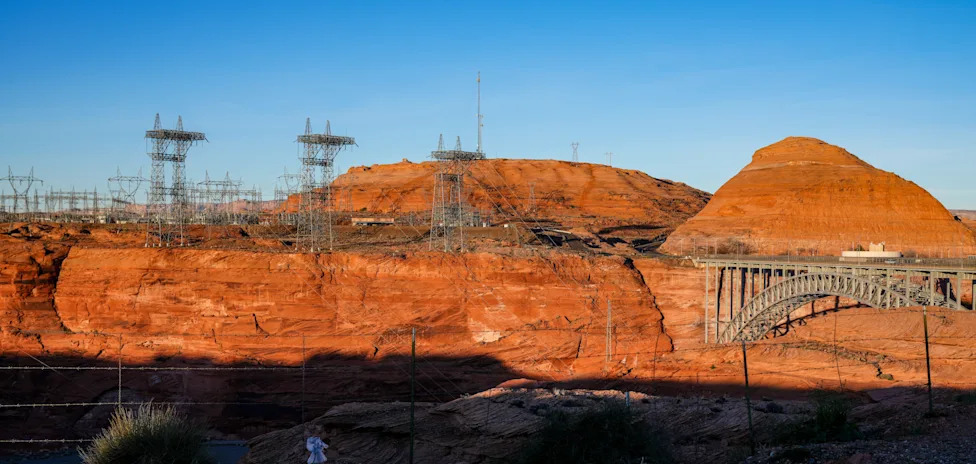
The 710-foot-high Glen Canyon Dam that impounds the Colorado River is an important source of hydroelectric power in the area, generating 1,320 megawatts of power to serve upward of 1 million homes in the Southwest, although the amount of power the dam generates has been dropping along with the water levels in Lake Powell.(Trevor Hughes/USA TODAY)
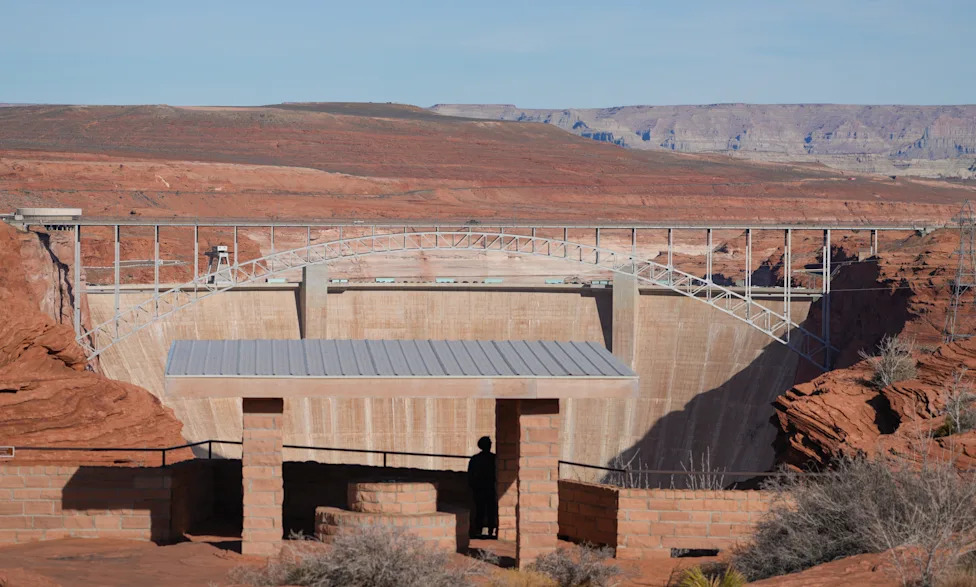
A person stands in a shade structure and looks at the Glen Canyon Dam holding back the Colorado River to create Lake Powell in this February 2026 image.(Trevor Hughes/USA TODAY)
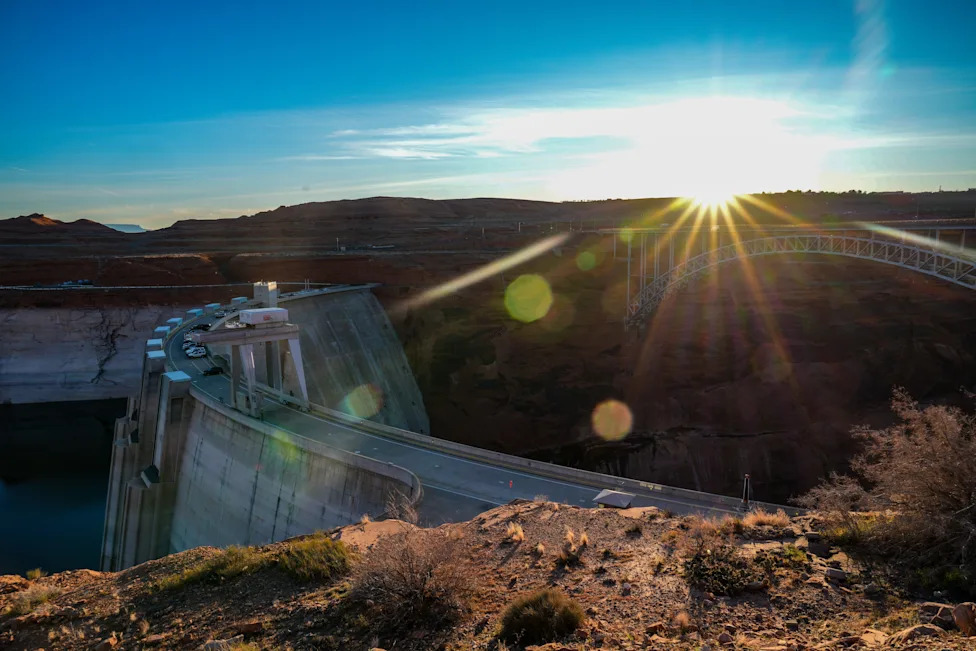
The 710-foot-high Glen Canyon Dam that impounds the Colorado River is an important source of hydroelectric power in the area, generating 1,320 megawatts of power to serve upward of 1 million homes in the Southwest, although the amount of power the dam generates has been dropping along with the water levels in Lake Powell.(Trevor Hughes/USA TODAY)
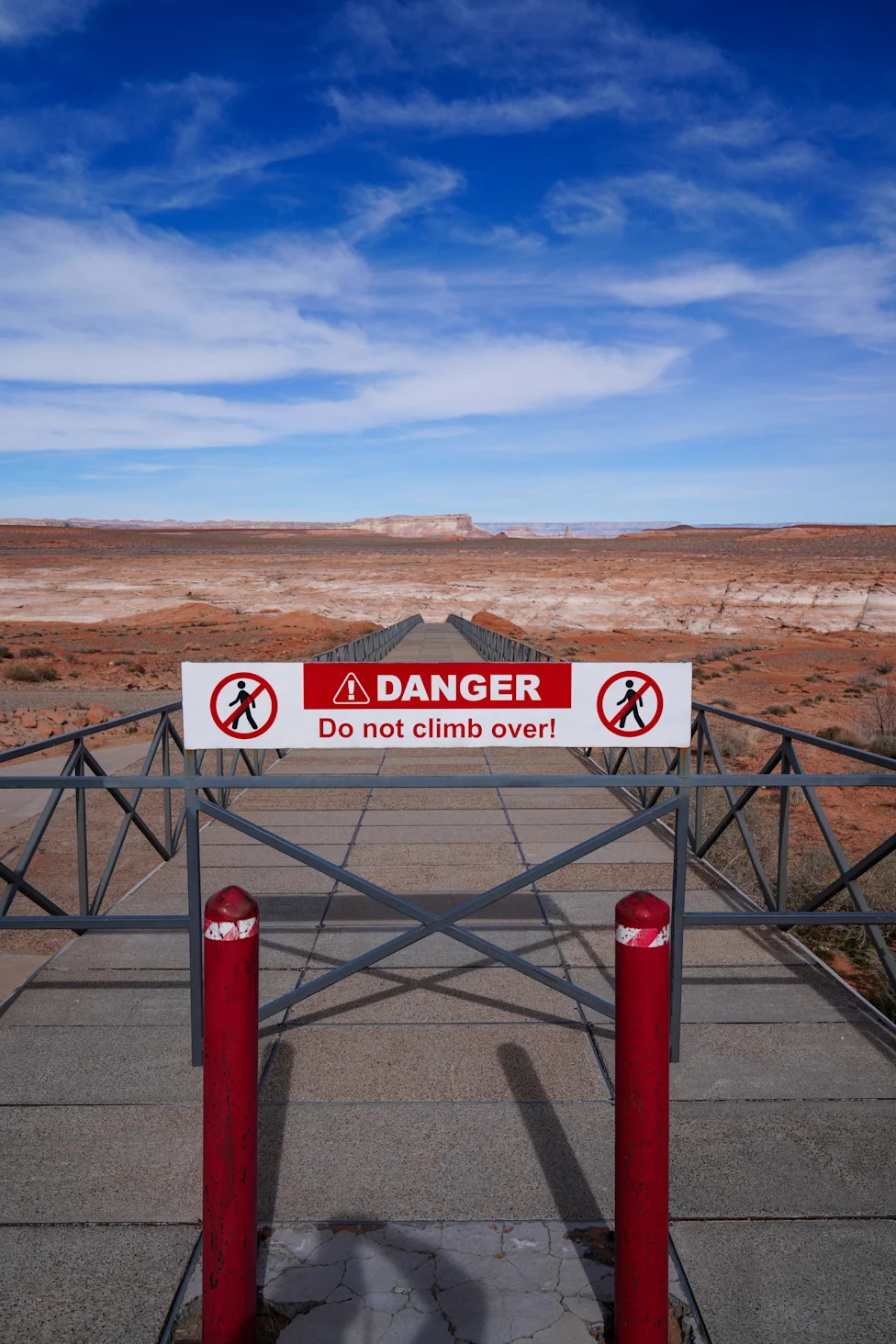
A sign warns visitors not to walk on what would ordinarily be a floating dock on Lake Powell at Antelope Marina, but is instead hundreds of feet away from the water in this February 2026 image.(Trevor Hughes/USA TODAY)
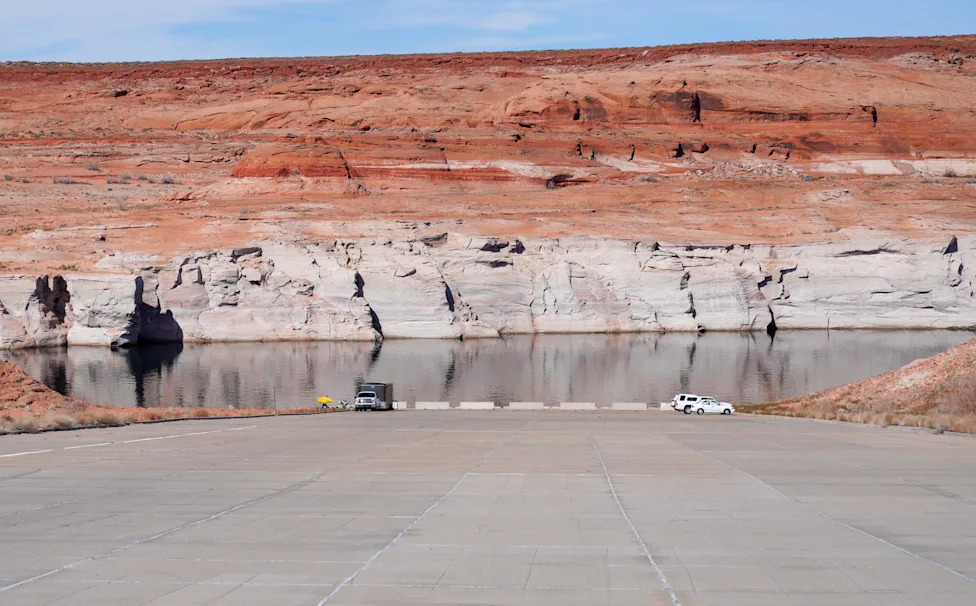
A boat launch at Lake Powell ends well short of the water in this February 2026 image. The white ring on the rocks indicates where the water level once reached.(Trevor Hughes/USA TODAY)
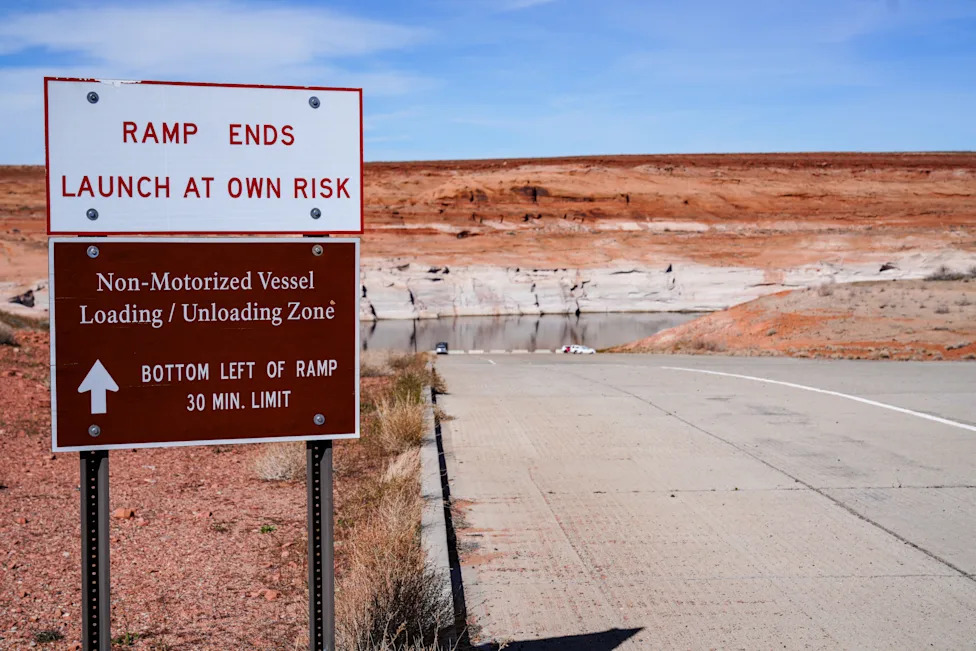
A boat launch at Lake Powell ends well short of the water in this February 2026 image. The white ring on the rocks indicates where the water level once reached.(Trevor Hughes/USA TODAY)
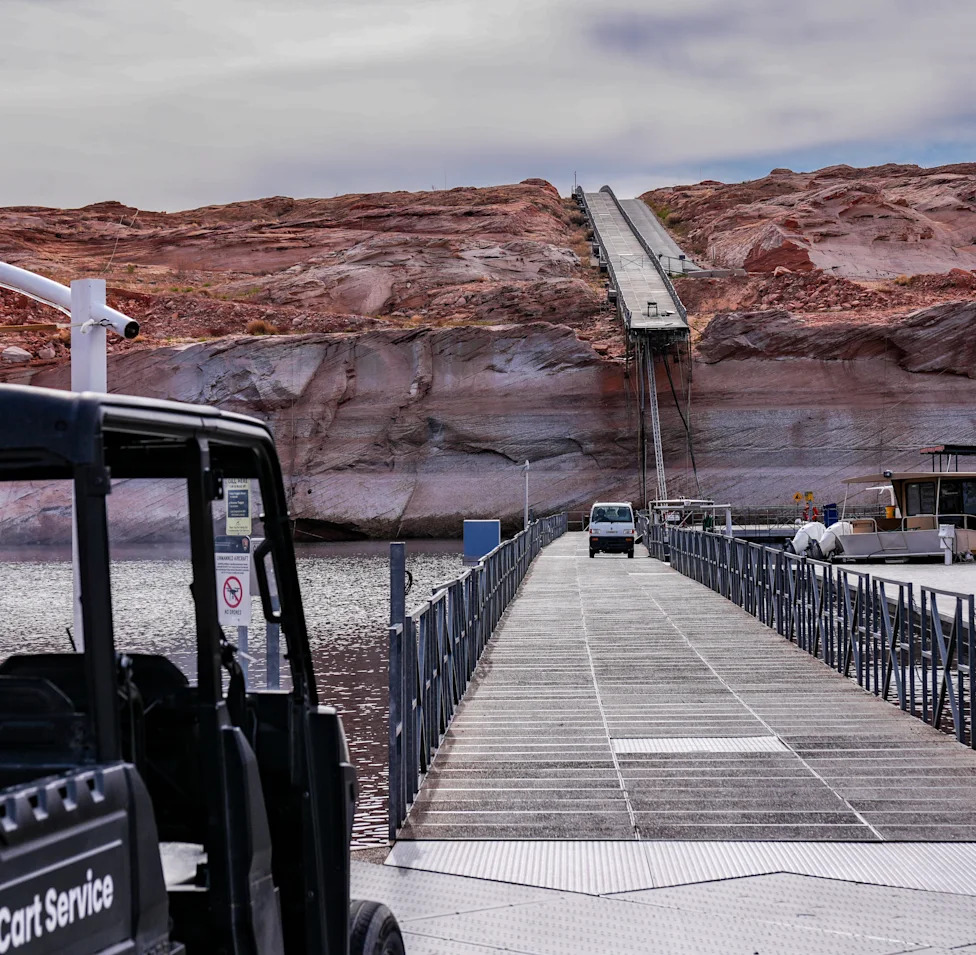
Low water levels in Lake Powell are apparent in this February 2026 image showing the end of a floating dock hanging off a cliff at Antelope Marina in Page, Arizona. Workers carved a new path to the water through the solid rock.(Trevor Hughes/USA TODAY)
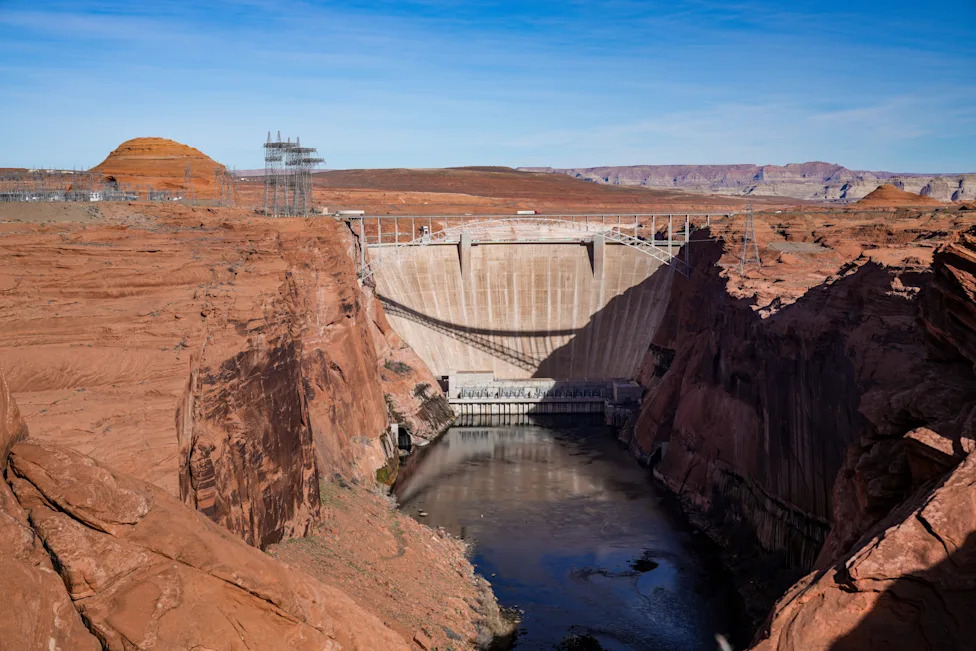
The Glen Canyon Dam holds back the Colorado River to create Lake Powell, as seen in this February 2026 image.(Trevor Hughes/USA TODAY)
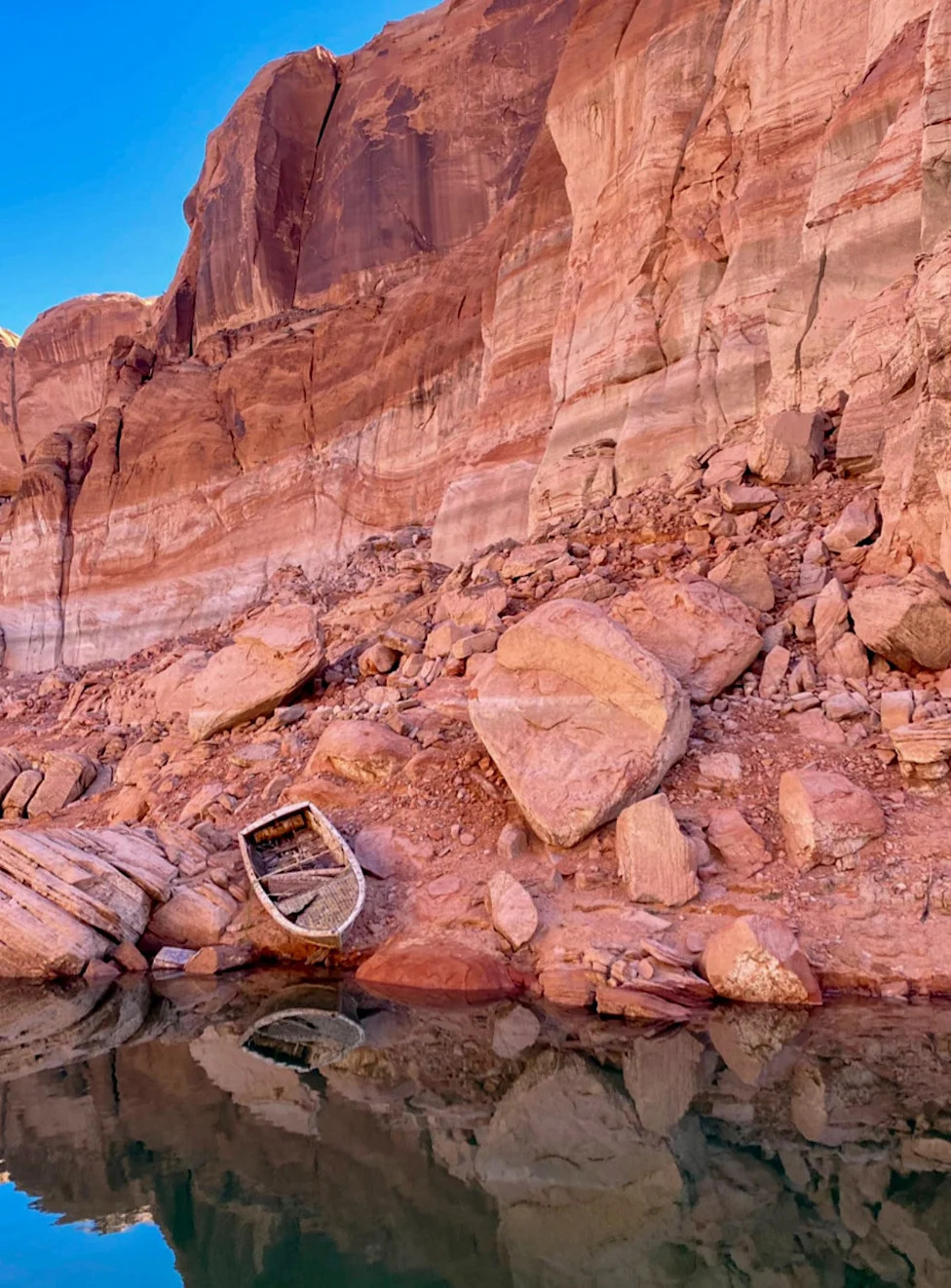
An abandoned and once-sunken boat sits along the shoreline of Lake Powell in this May 2022 file photo. The white ring above shows how high the water level was when the lake was full.(Trevor Hughes/USA TODAY)
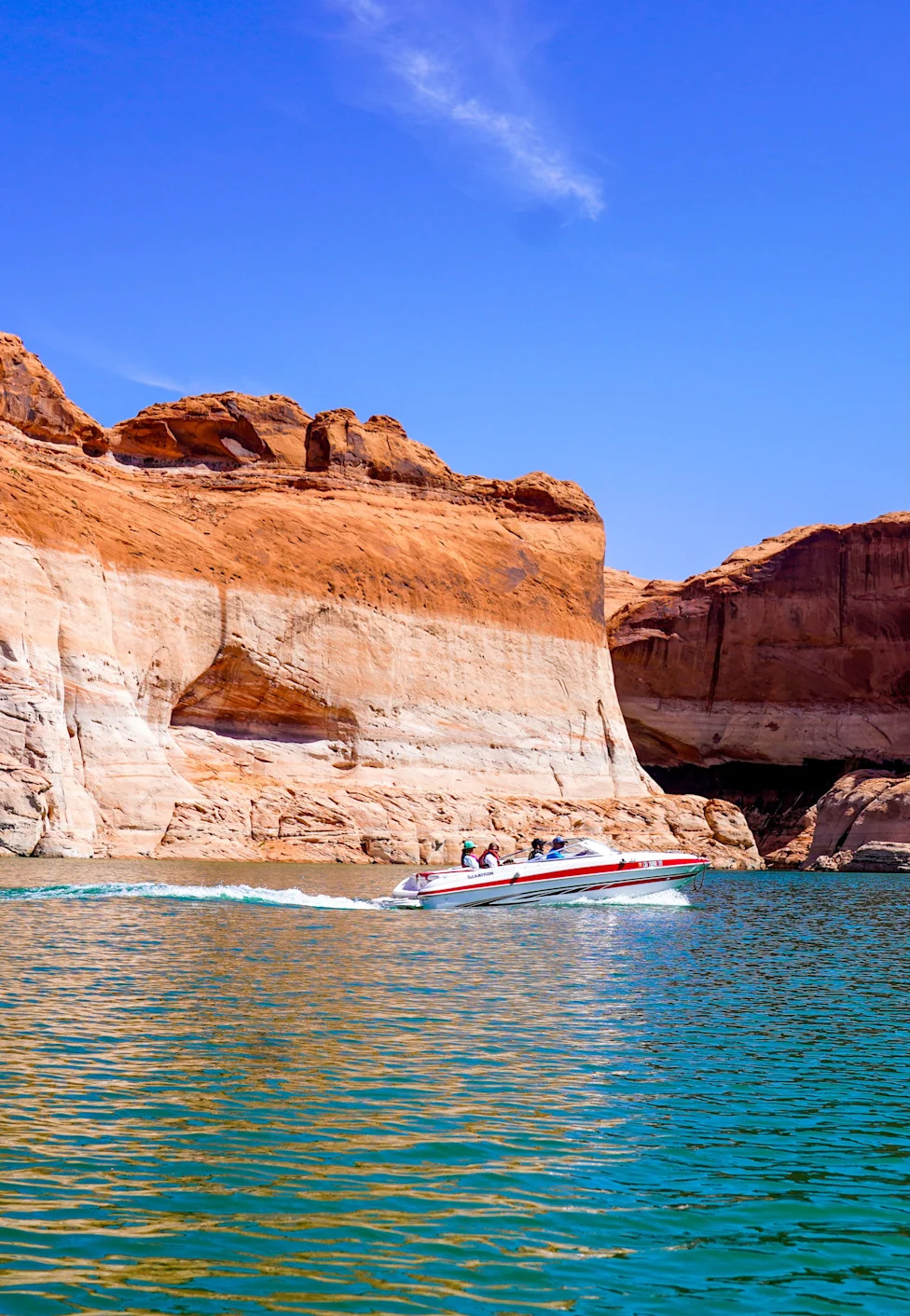
A powerboat passes the towering canyon wall containing Lake Powell in this May 2022 file photo. The white ring shows the height of the lake when it was last full.(Trevor Hughes/USA TODAY)
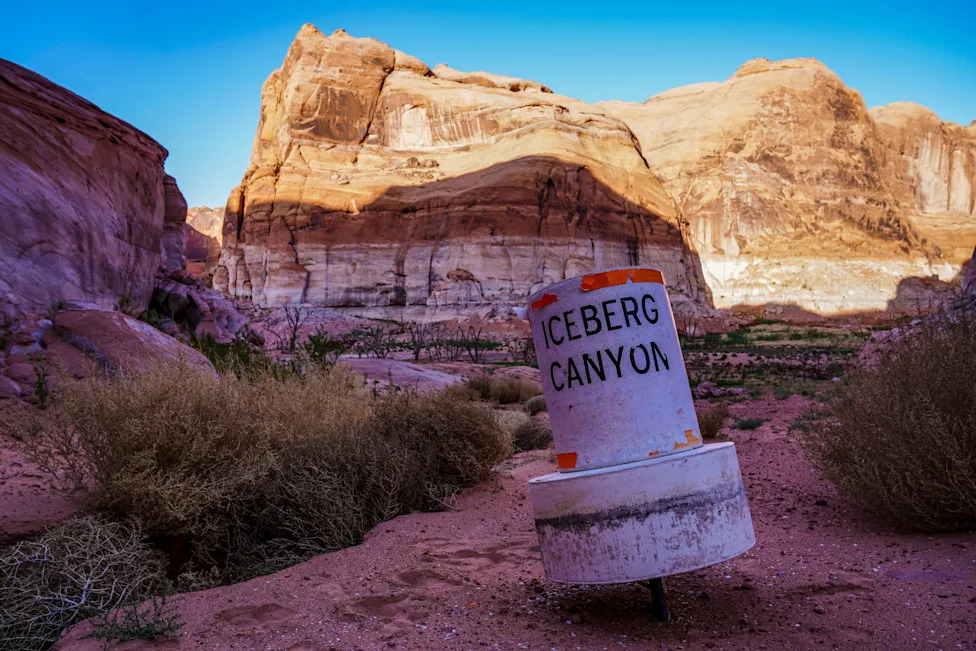
A buoy that once floated in Lake Powell's popular Iceberg Canyon sits high and dry in this May 2022 file photo.(Trevor Hughes/USA TODAY)
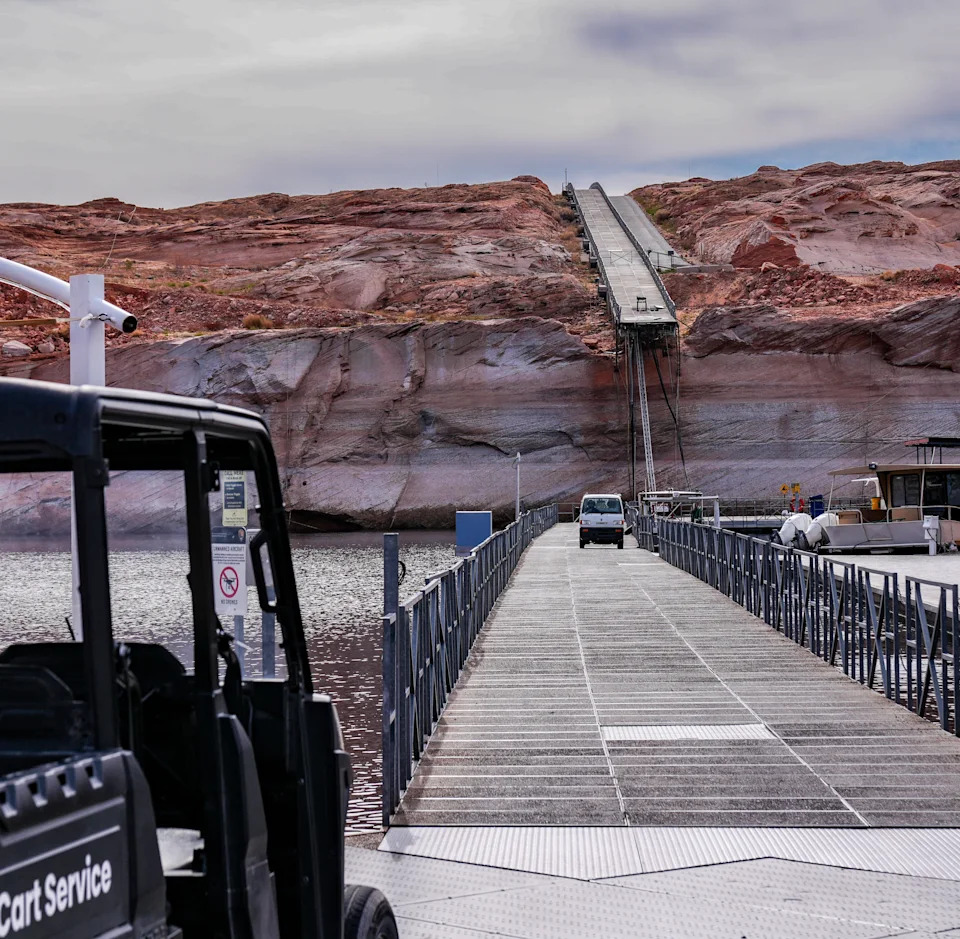
Low water levels in Lake Powell are apparent in this February 2026 image showing the end of a floating dock hanging off a cliff at Antelope Marina in Page, Arizona. Workers carved a new path to the water through the solid rock.
Help us improve.