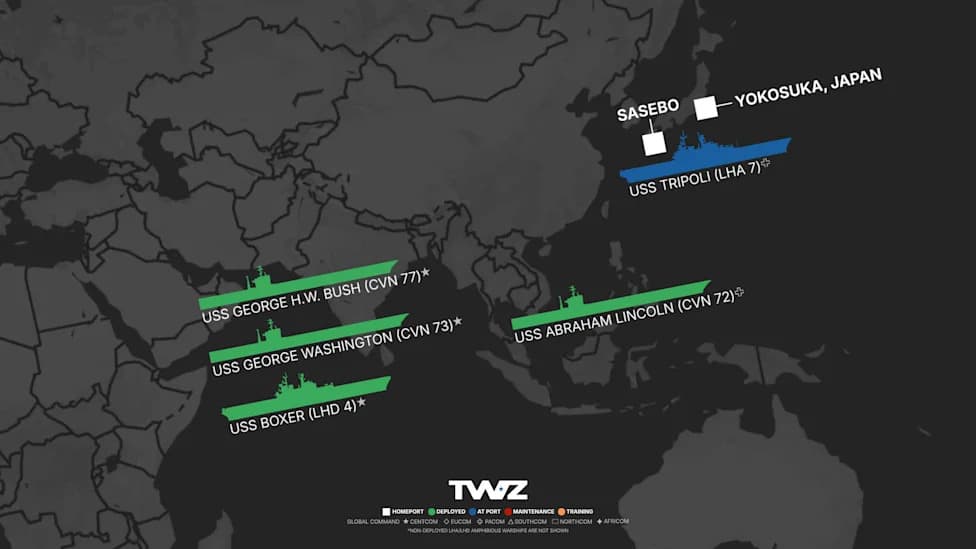
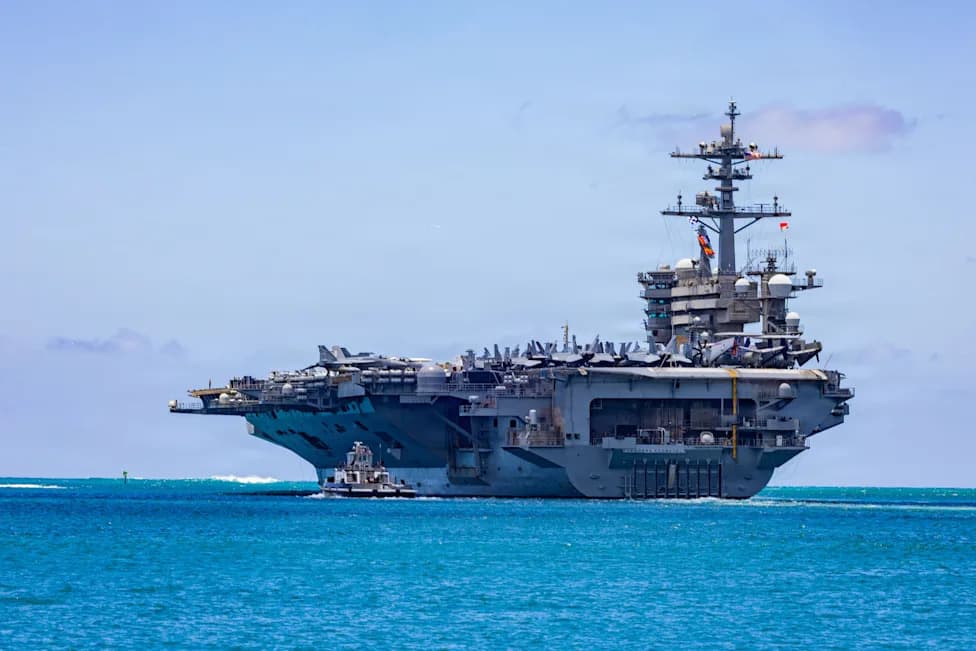
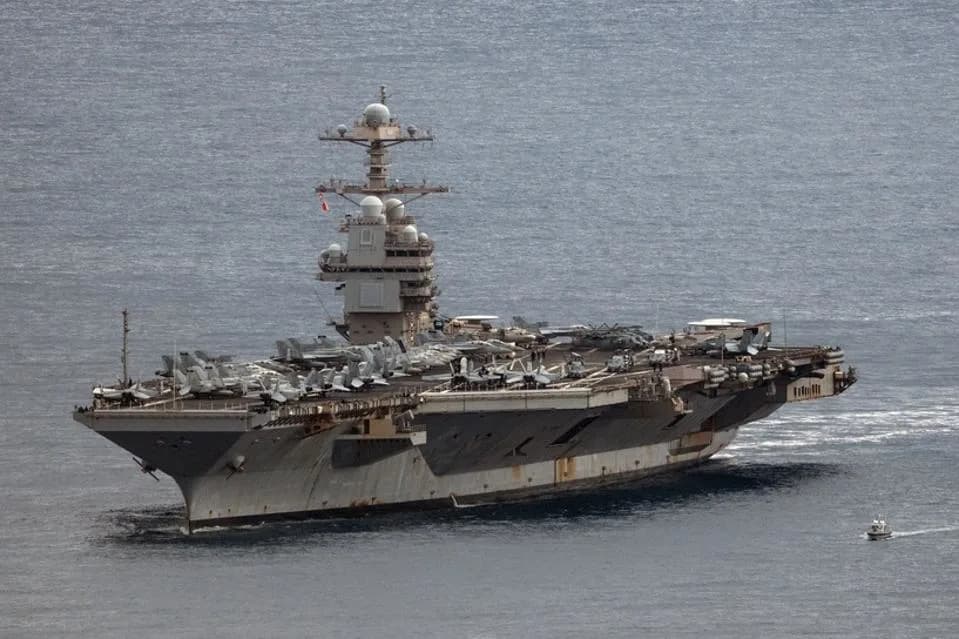
The USS George Washington has left the western Pacific to replace the USS Abraham Lincoln in the Middle East, briefly leaving the region without a U.S. carrier. Extended deployments — including the Lincoln's 240+ days at sea and the Gerald R. Ford's 11-month tour — have strained crew welfare and readiness. Analysts warn the carrier gap unsettles allies, gives China an opportunity to project strength, and could create long-term maintenance bottlenecks as the Navy juggles limited carrier assets.
U.S. Pulls Last Carrier From Western Pacific as Focus Shifts to Iran and the Western Hemisphere
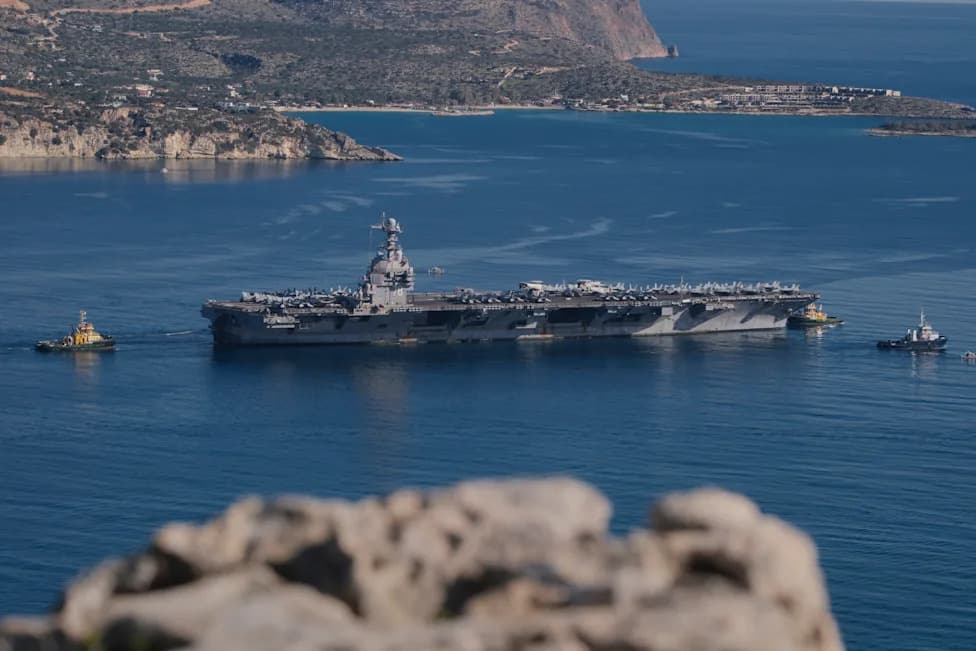
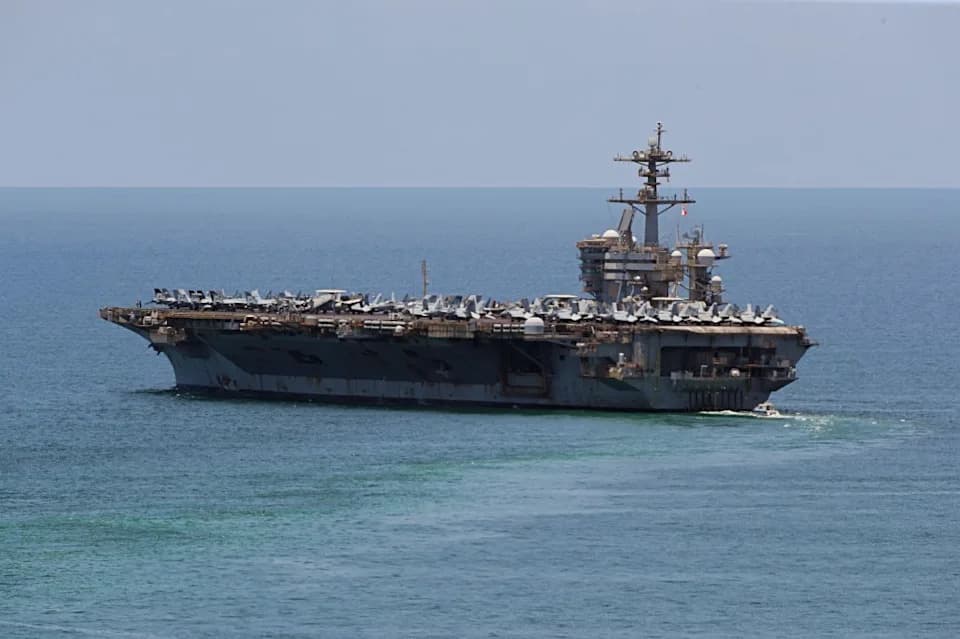
FILE - The USS Gerald R. Ford departs from Souda Naval Base near Chania on the island of Crete, Greece, Feb. 26, 2026. (AP Photo/Giannis Angelakis, File)(AP Photo/Giannis Angelakis)
The United States has temporarily left the western Pacific without an aircraft carrier as the USS George Washington sails to the Middle East to relieve the long-deployed USS Abraham Lincoln. The Lincoln's return — originally scheduled for May — was postponed after an exceptionally long deployment, and Navy leaders say the move is part of a broader reallocation of forces to address tensions with Iran and prioritize operations closer to the Western Hemisphere.
Strain on Crews and Readiness
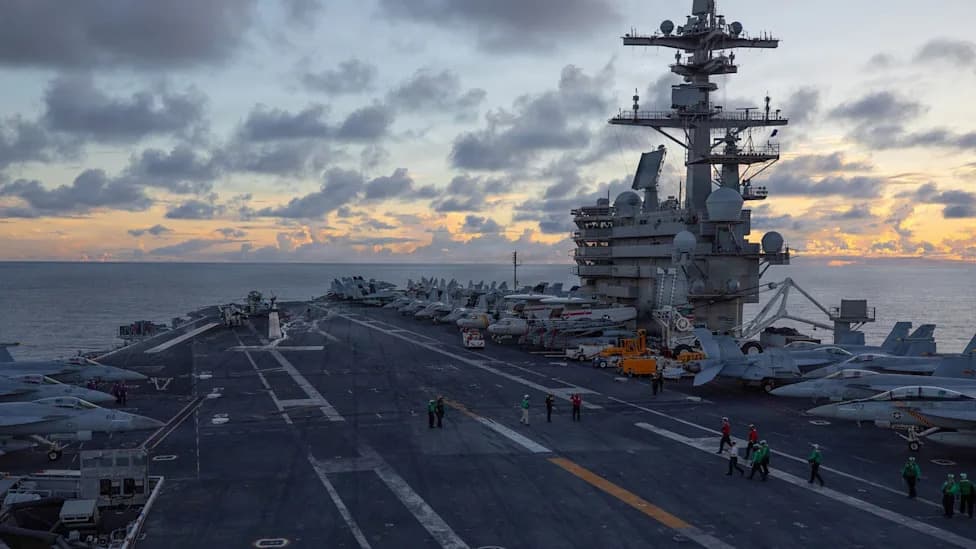
Analysts and lawmakers have raised concerns about the human and material costs of extended carrier deployments. The Abraham Lincoln has spent more than 240 consecutive days at sea, while the USS Gerald R. Ford returned in mid-May after an 11-month deployment — the longest since the Vietnam War — following a laundry-space fire that forced repairs and disrupted living arrangements for hundreds of sailors.
"People don't get enough rest. It's psychologically exhausting," said Robert Farley, a national security scholar at the University of Kentucky, describing the limits on a crew's capacity to operate at top efficiency over prolonged missions.
Regional Implications
The temporary absence of a carrier in the western Pacific has unsettled some U.S. allies and given Beijing an opening to demonstrate naval strength, analysts say. China has recently held joint drills with Indonesia, conducted live-fire drills near Japan's Okinotori island and carried out operations near the Scarborough Shoal in the South China Sea — a feature disputed with the Philippines.
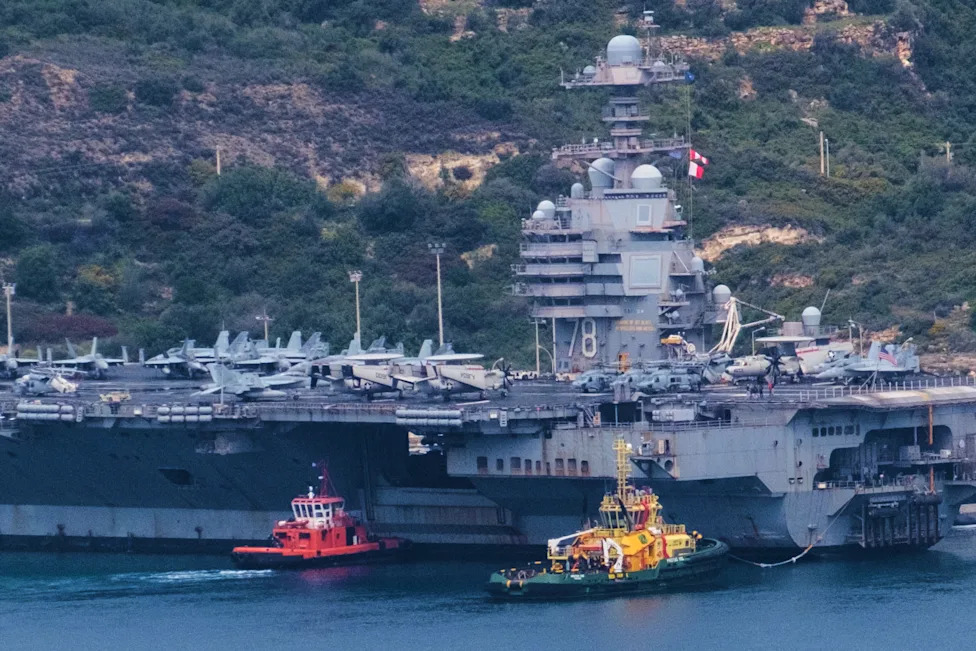
FILE - The USS Gerald R. Ford aircraft carrier is docked at Souda Naval Base near Chania on the island of Crete, Monday, March 23, 2026. (AP Photo/Giannis Angelakis).(AP Photo/Giannis Angelakis)
"They're using this as part of the narrative to demonstrate to the Philippines, to Japan, to Indonesia and others that the U.S. is not the big dog in the western Pacific anymore," said Bryan Clark, a former Navy submariner and defense analyst at the Hudson Institute.
U.S. Reassurances and Strategic Questions
U.S. military officials have sought to reassure partners. Adm. Frank Bradley, head of U.S. Special Operations Command, visited Manila and pledged stepped-up joint exercises; he is also expected to travel to Japan to emphasize continued U.S. engagement in the region.
Experts note aircraft carriers provide important psychological assurance to allies, even if their absence does not immediately change the strategic balance. Evan Sankey of the Cato Institute said the gap "adds to the general sense that the U.S. is distracted by events in the Middle East." At the same time, analysts warn that shifting more carriers to a prolonged campaign will create maintenance bottlenecks at the Navy's limited carrier repair facilities and a multi-year "maintenance debt."
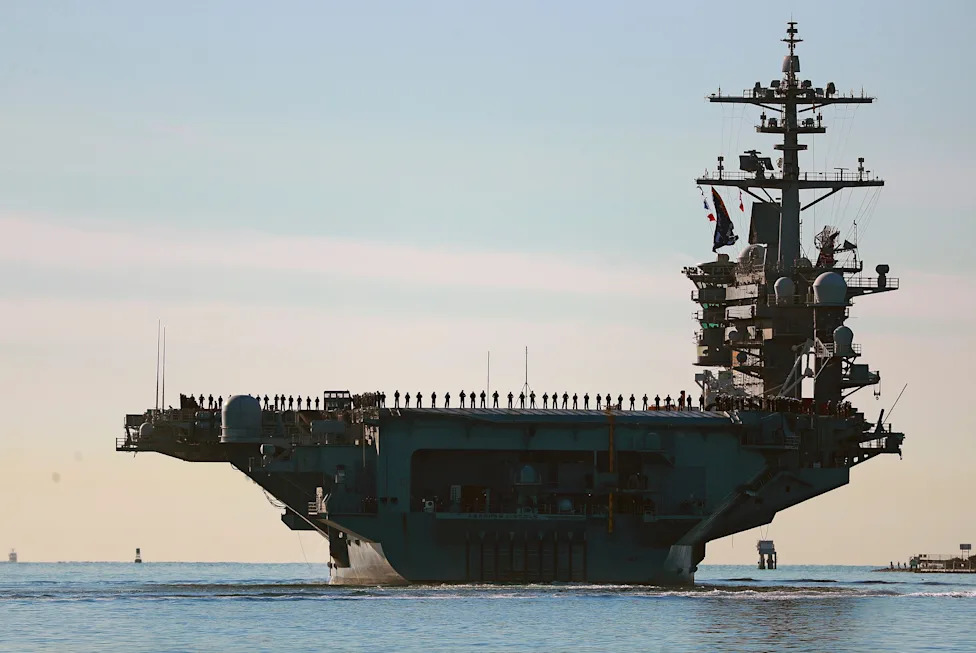
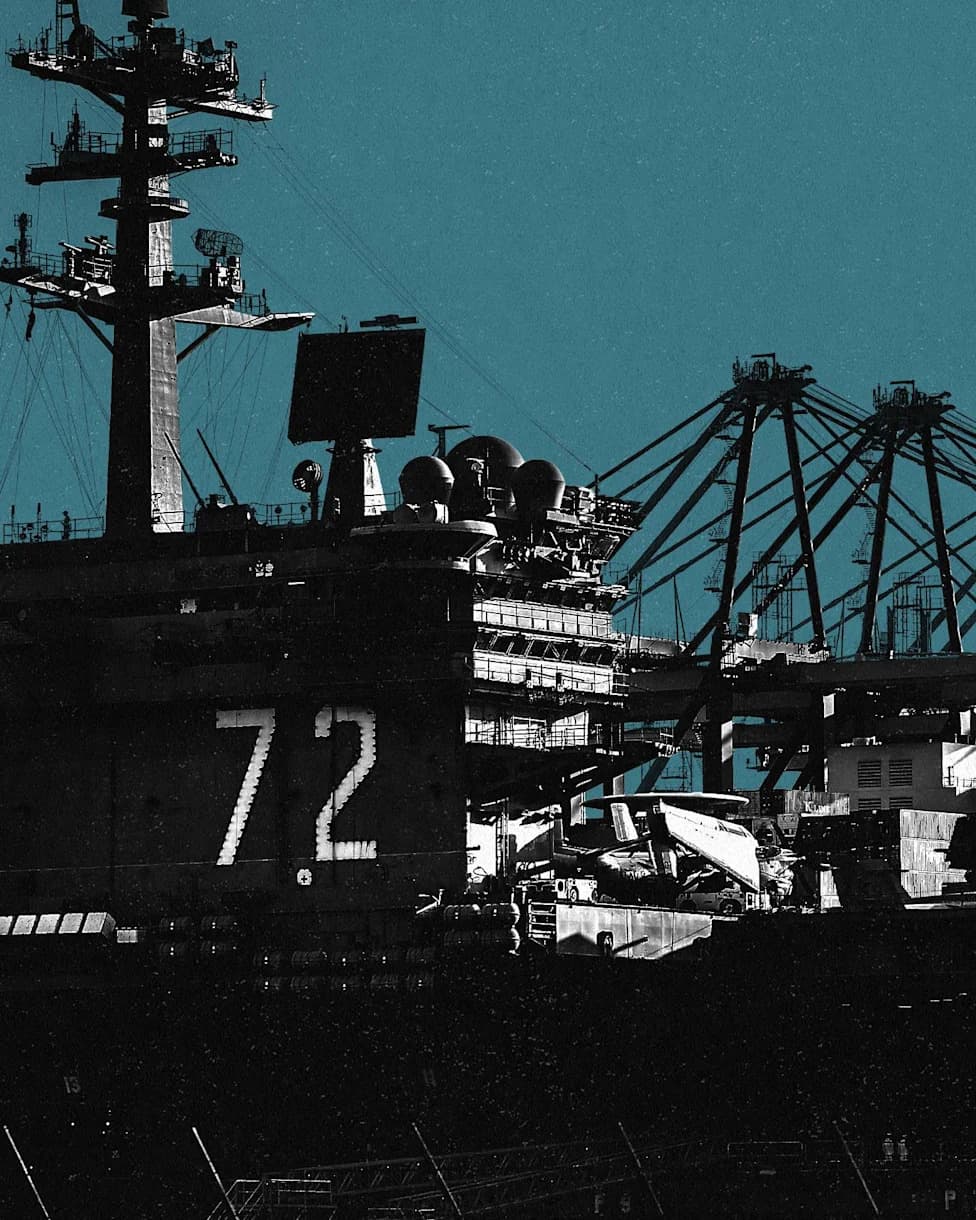
FILE - Sailors and Marines line the deck of aircraft carrier USS Abraham Lincoln (CVN-72) as it deploys from San Diego, Jan. 3, 2021. (K.C. Alfred/The San Diego Union-Tribune via AP, File)(K.C. Alfred/The San Diego Union-Tribune via AP)
Fleet Capacity and Future Posture
The U.S. Navy fields 11 nuclear-powered aircraft carriers and typically deploys two or three at a time. Officers say deployments could temporarily increase if the USS Theodore Roosevelt or another carrier is ordered to leave San Diego for the Middle East, which could allow the Washington to return to the Pacific. But heavier operational tempo and deferred maintenance could reduce carrier availability in coming years.
Some analysts and senior Navy leaders are also debating the long-term role of supercarriers. Michael Swaine of the Quincy Institute and others point to new threats — including drones and long-range anti-ship missiles — that make large decks more vulnerable and raise questions about whether a mix of smaller ships, submarines and other assets should play a larger role.
Adm. Daryl Caudle, the Navy's chief of naval operations, has said he wants commanders to consider using smaller, newer ships and different assets rather than defaulting to carrier strike groups for every contingency.
Bottom line: The short-term gap in carrier presence in the western Pacific highlights tensions between finite fleet resources and multiple global commitments. It has raised concerns about crew welfare, maintenance backlogs and the signal sent to allies and competitors in the region.
Help us improve.