
Hezbollah deputy leader Sheikh Naim Qassem condemned Lebanese officials for accepting a U.S.-brokered framework with Israel, calling it a "sinful mistake" that surrendered Lebanese sovereignty after seven rounds of negotiations. He said the accord amounted to "Israeli dictates," cited continued Israeli strikes despite Lebanese Army deployments to pilot zones, and praised Iran–U.S. talks in Islamabad for helping reduce escalation and enable returns of displaced people. Qassem vowed Hezbollah would resist what he called an existential aggression and rejected any notion of capitulation.
Hezbollah Urges Reversal Of U.S.-Brokered Framework With Israel, Calls It A 'Sinful Mistake'
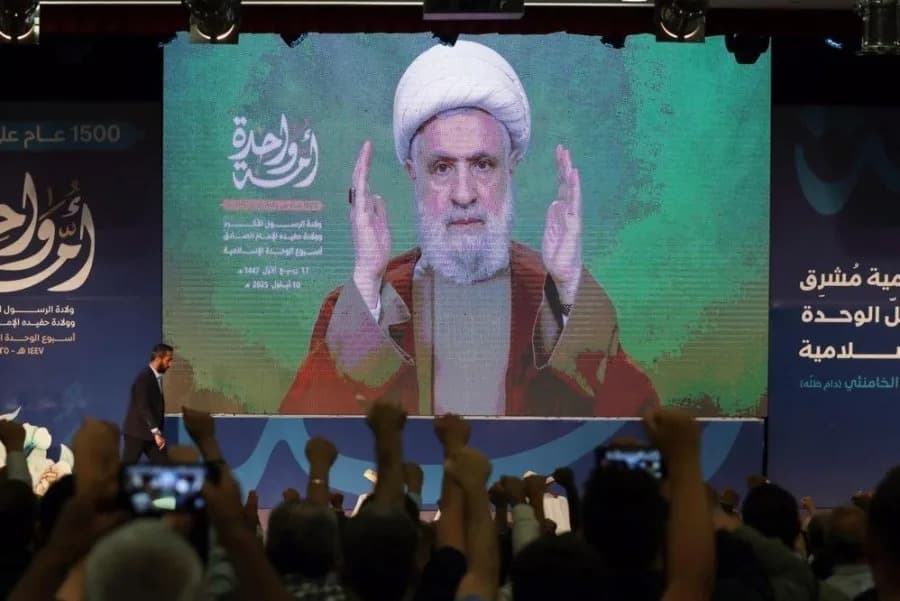
Hezbollah Secretary General Sheikh Naim Qassem called Friday for "reversing the sinful, disgraceful and humiliating mistake" of Lebanon negotiating peace with Israel. File Photo by Wael Hamzeh/EPA
Beirut — Hezbollah deputy leader Sheikh Naim Qassem on Friday sharply criticized Lebanese officials for accepting a U.S.-brokered framework agreement reached on June 26 with Israel, calling the deal a "sinful mistake" that surrendered Lebanese sovereignty and produced no tangible gains after seven rounds of talks.
Qassem's Criticism
Speaking on Hezbollah-run Al Manar TV, Qassem demanded an end to what he described as "the humiliation" and urged authorities to retract the agreement. He said the initial accord — a conditional, phased process intended to end the state of war — effectively amounted to "Israeli dictates," granting Israel "everything it wants," while Lebanon lost sovereign control over parts of its territory.
"Reversing the sinful, disgraceful and humiliating mistake" is necessary, Qassem said, calling into question "what these officials are doing."
Background And Developments
Qassem framed the confrontation in a wider timeline: Hezbollah opened a support front for Gaza on Oct. 8, 2023, and resumed operations in solidarity with Iran on March 2 of this year. That escalation prompted a heavy Israeli military response, which Qassem said significantly degraded Hezbollah and caused widespread destruction in southern Lebanon.
He accused Israel of reducing roughly 70 border villages to rubble and of occupying a roughly six-mile buffer zone — claims he attributed to ongoing Israeli operations — and said Israel has insisted it will not withdraw forces unless Hezbollah is disarmed.
Framework And Its Aftermath
The U.S.-pressured framework, negotiated by Lebanese and Israeli teams, envisioned a phased Israeli pullback from occupied parts of southern Lebanon and the Lebanese Army restoring effective sovereign authority, beginning with deployment to two pilot zones. The accord also included provisions addressing the disarmament of Hezbollah.
Despite the Lebanese Army's deployment to Zawtar al-Gharbieh — the first pilot zone — Qassem noted that Israeli strikes, demolitions and attacks on tunnels and military infrastructure reportedly continued.
Diplomacy And Positions
Qassem credited diplomatic progress to separate Iran–U.S. discussions in Islamabad, saying those talks helped secure a cease-fire and the return of displaced residents to southern Lebanon rather than the direct Lebanese–Israeli negotiations. He accused Lebanese negotiators of effectively "surrendering" by remaining in talks that, in his view, produced only concessions to Israel.
Qassem described the conflict as "an existential war of aggression," vowed that Hezbollah would "stand firm and defeat the Israeli project," and warned that those betting on capitulation were "betting on a mirage."
Note on Reporting
Most claims about battlefield damage, the scale of destruction and the motivations of foreign governments were attributed to Qassem in his speech. Independent verification of specific figures and some assertions cited in his remarks may vary among international observers and official sources.
Help us improve.





















