
Britain has launched Step, a state-backed programme intending to build a 100MW fusion prototype at West Burton by about 2040 and to establish a domestic industrial base for fusion components. The Culham campus houses the UK’s fusion science effort, focusing on HTS magnets, gyrotrons, robotics and tritium research. Tritium supply and achieving high commercial Q-factors remain the sector’s biggest technical hurdles, but private investment and UK spin-outs aim to accelerate progress.
Britain’s Fusion Gamble: Inside Step — The Race To Build A 100MW Prototype By 2040
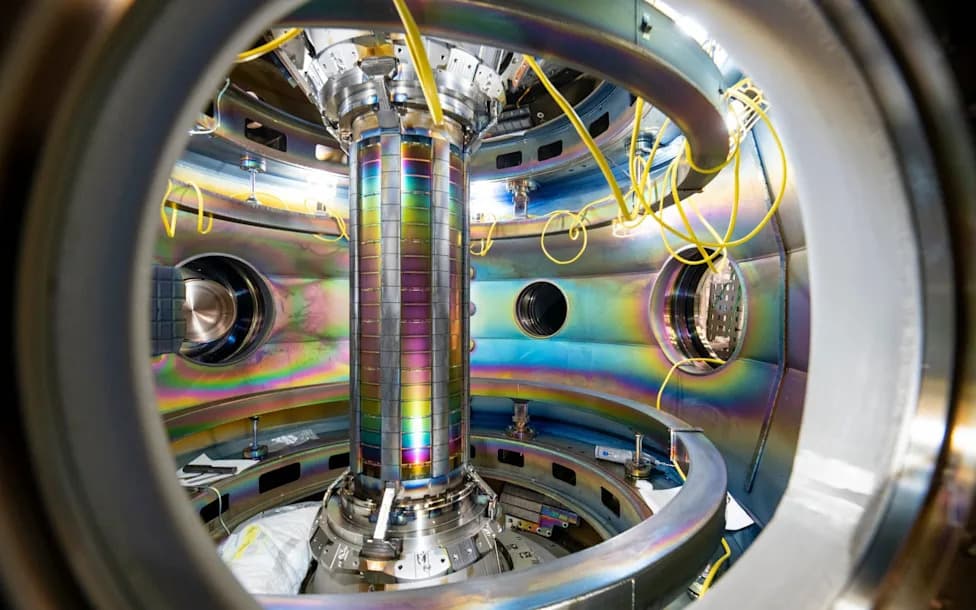
Oxford's Tokamak Energy is the poster-child for the UK's push to crack nuclear fusion - Geoff Pugh for the Telegraph
Most of Britain may not realise it, but the government has quietly launched a Manhattan-scale engineering effort to turn fusion — the process that powers the stars — into electricity for the grid. At the heart of that effort is Culham’s Centre for Fusion Energy, a 160-acre campus where roughly 2,600 scientists and engineers are working to move fusion from laboratory demonstration to a commercial reality.
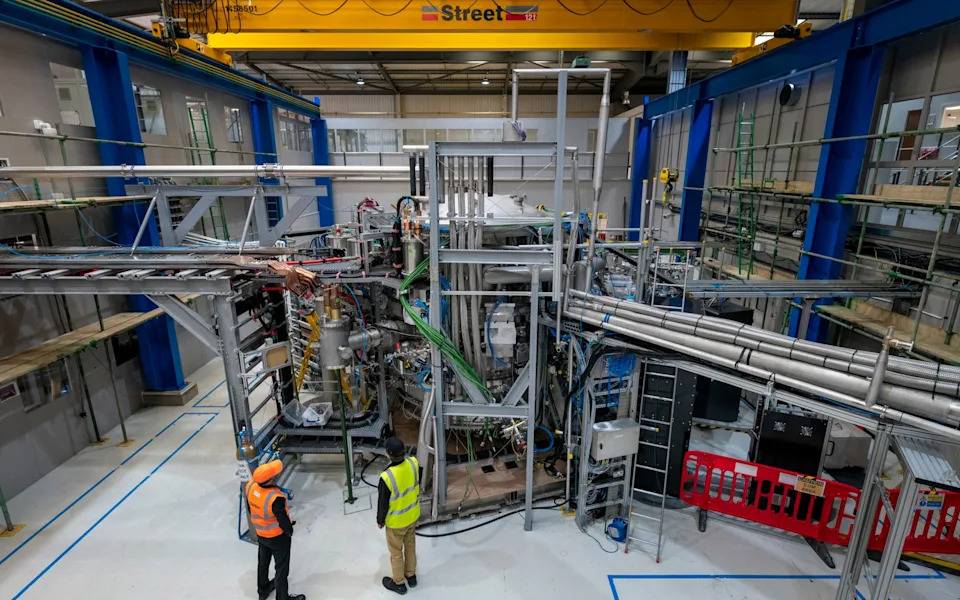
Britain's Spherical Tokamak for Energy Production programme, based in West Burton, is developing reactors that will generate power by 2040 - Geoff Pugh for The Telegraph
From Quiet Countryside To Cutting-Edge Labs
Culham looks like a tranquil corner of Oxfordshire until you pass the hedgerows: inside are some of the world’s hottest plasmas and experimental machines that have produced temperatures reported to be many times those in the sun’s core. After decades of experiments, the UK has committed to build Step — the Spherical Tokamak for Energy Production — a state-backed programme intended to deliver a commercial prototype fusion power plant.
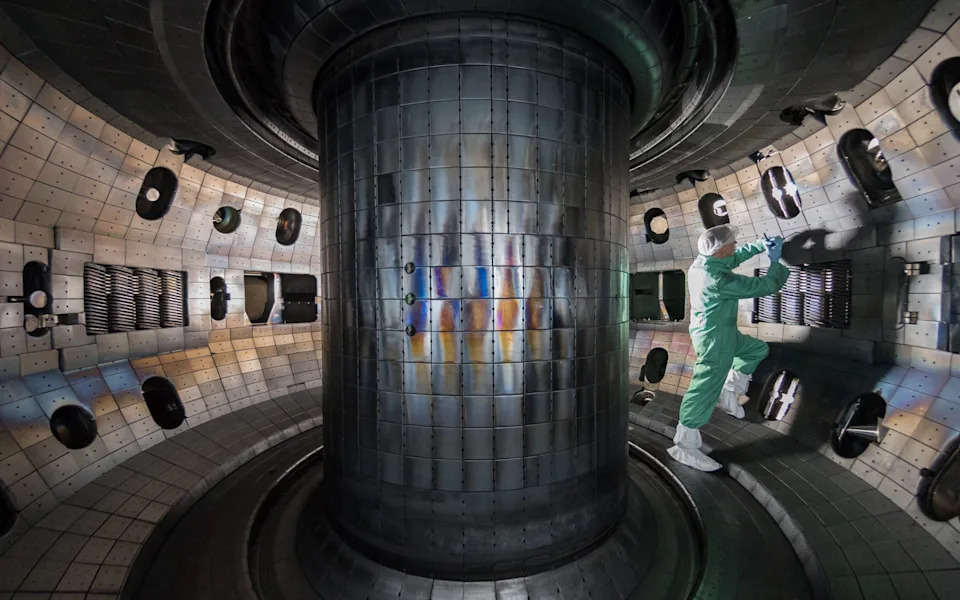
Scientists at the National Fusion Facility in San Diego, California, routinely heat hydrogen plasma to 200 million degrees Celsius
Step And The West Burton Site
Step is planned for West Burton in Nottinghamshire on land that once hosted a coal-fired station. The first Step plant targets roughly 100 megawatts of electrical output by about 2040 — modest compared with legacy coal stations, but designed as a proof point that can lead to larger, economically viable plants.
Practical Engineering, Not Just Experiments. UKAEA and industry leaders emphasise that this project will prioritise practical engineering: fuel sustainment, maintenance, component manufacturing and the systems needed to run reliably at scale.
How Fusion Works And The Technical Hurdles
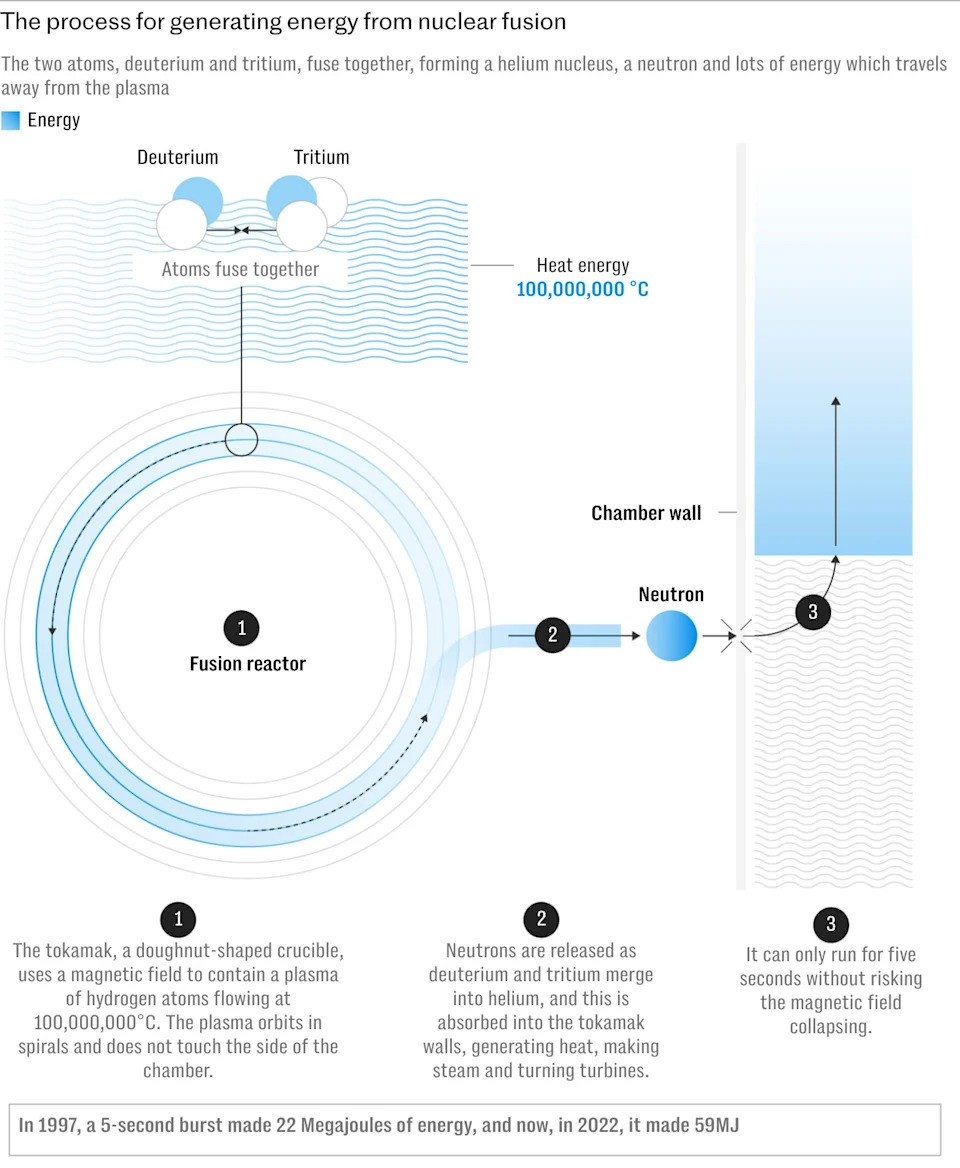
Fusion joins light atomic nuclei to release energy. Unlike fission reactors, fusion produces minimal long-lived radioactive waste and cannot cause large-scale contamination — a failed reaction damages the plant but does not create a radioactive exclusion zone. Yet achieving reliable, net-positive fusion on an industrial scale requires solving enormous engineering problems.
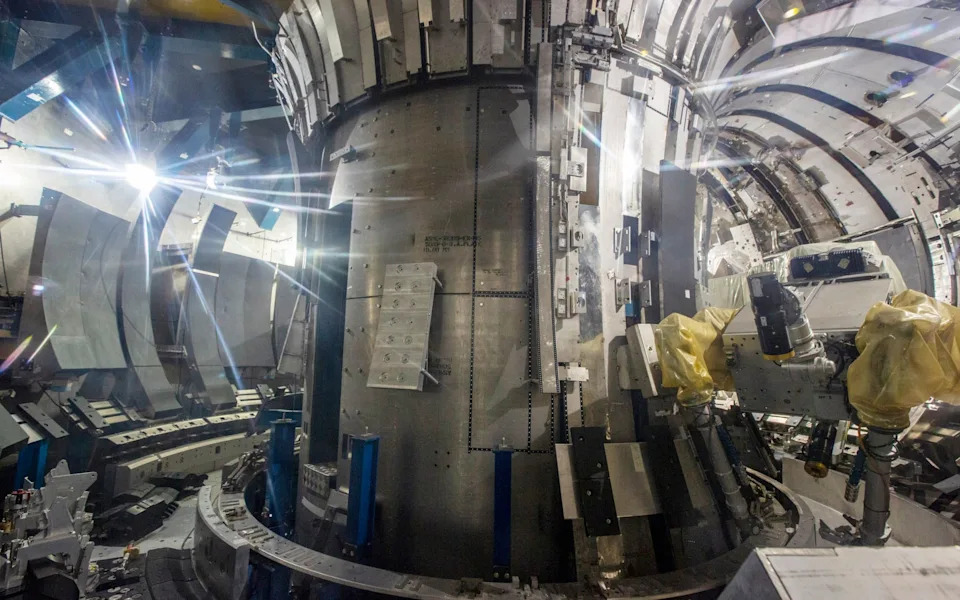
The Joint European Torus fusion plant was designed to study fusion in conditions approaching those needed for a power plant - Heathcliff O'Malley for The Telegraph
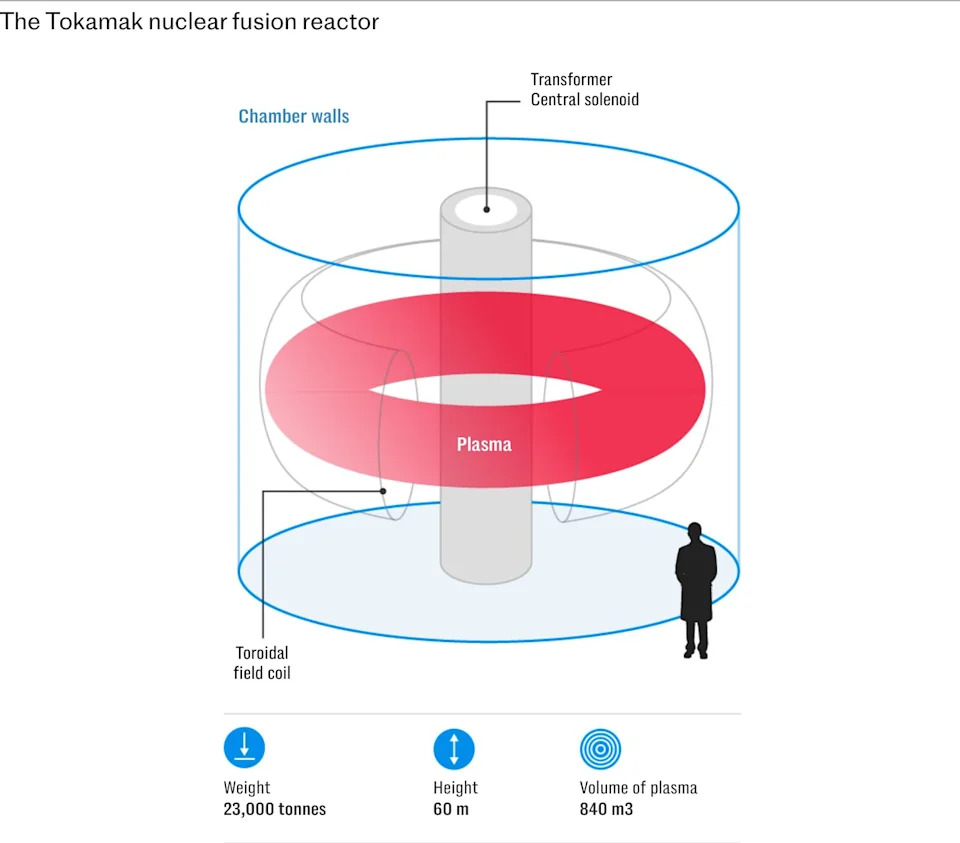
There are two dominant approaches: magnetic confinement (tokamaks and stellarators) that hold a seething plasma with powerful magnetic fields, and inertial confinement that compresses tiny fuel pellets with lasers or particle beams. Progress is often measured by the Q factor — the ratio of energy out to energy in — and commercially useful plants need Q values far above break-even.
Industry, Supply Chains And The UK Advantage
Step is not just a single plant: it aims to seed a domestic industrial base capable of mass-producing fusion components. Key technologies include high-temperature superconducting (HTS) magnets, gyrotrons (very powerful microwave sources used to heat plasmas), advanced robotics for in-vessel maintenance, and precision simulation software. For example, Step could require on the order of 200 gyrotrons — while only a handful of firms worldwide can currently make them in small numbers.
UK firms and spin-outs from Culham — such as Tokamak Energy and MuWave — are developing HTS magnets and microwave heating tech. The UKAEA has also invested in robotic systems and a tritium research centre to tackle fuel handling and recycling.
The Achilles’ Heel: Tritium
Fuel is fusion’s dirty secret. One fusion fuel isotope, deuterium, is abundant in seawater; the other, tritium, is rare and radioactive. Today tritium production is limited and ITER has claimed much of the available supply. A start-up commercial reactor may require several kilograms of tritium to begin operations. The long-term solution is to breed tritium inside the reactor’s blanket so the plant becomes self-sustaining — and the UK’s programme explicitly targets tritium sustainment as a central challenge.
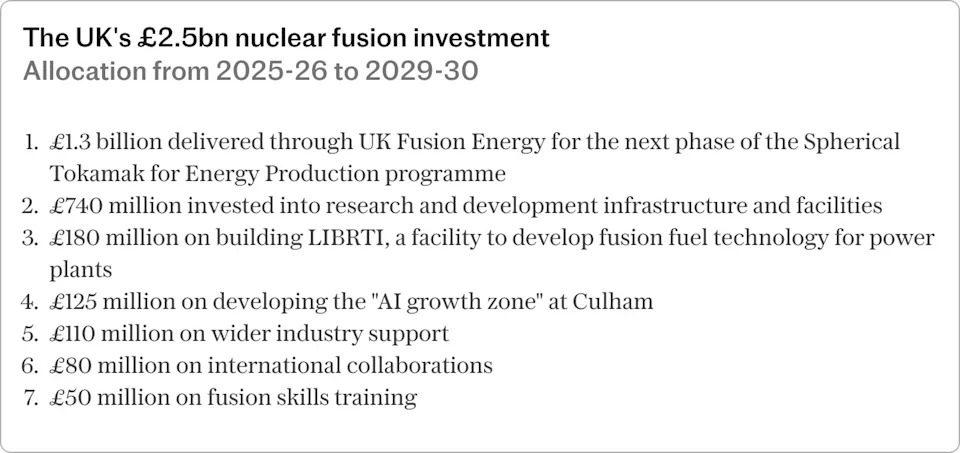
Global Context And Private Capital
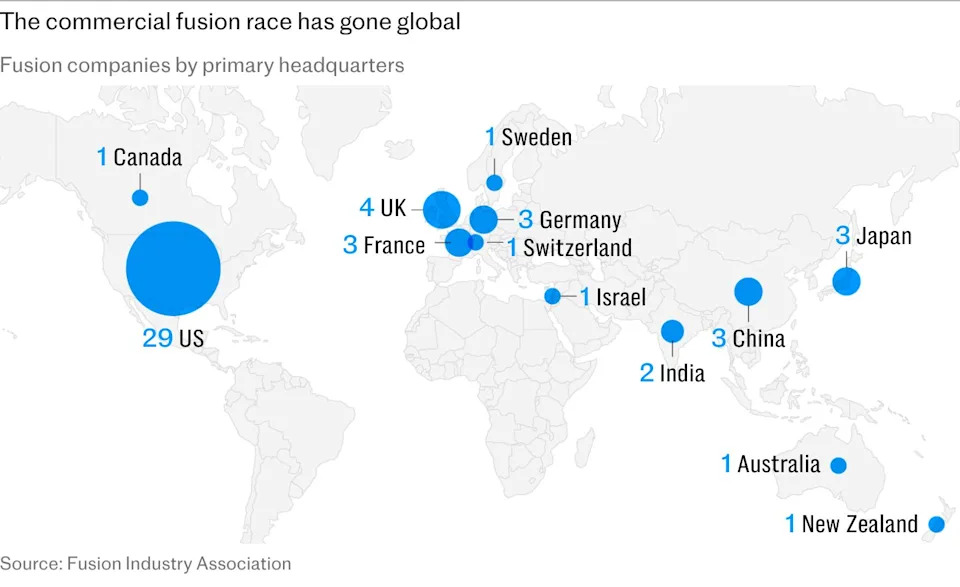
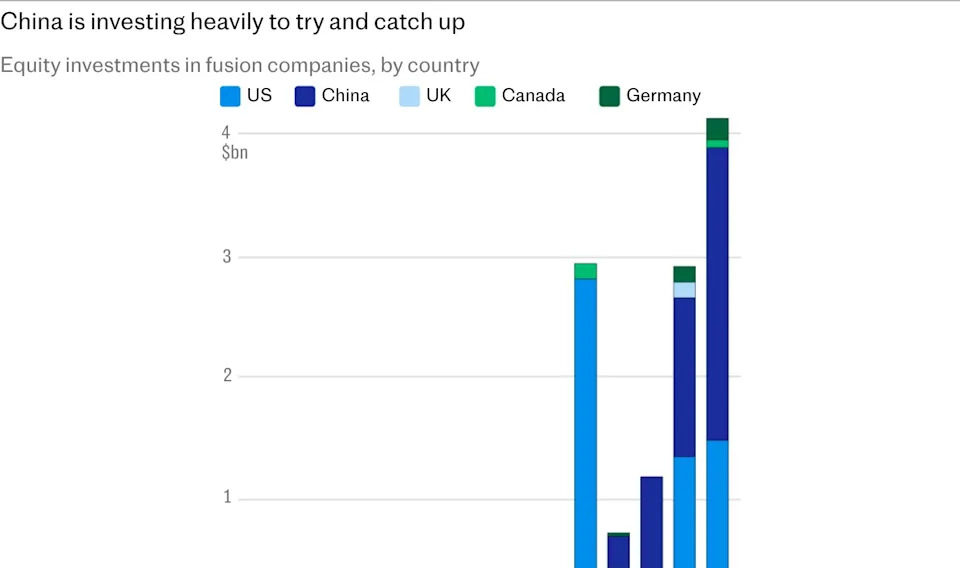
Fusion today blends national labs and private startups. Since about 2020 the sector has attracted a surge of private capital — more than $14.5bn globally — and scores of companies pursuing diverse designs. ITER in France remains the multinational experimental flagship and is expected to demonstrate key physics in coming decades, but many private ventures pursue faster, smaller, or alternative routes to commercialisation.
Regional Benefits And The Long View
Beyond energy, proponents see Step as an industrial strategy: creating skilled jobs, reviving regional supply chains and manufacturing, and exporting advanced technologies. The timeline is long; most experts expect fusion to contribute meaningfully to electricity grids in the second half of this century. But supporters argue that early leadership could deliver outsized economic and strategic benefits.
Final Thought
Fusion remains one of the most ambitious engineering challenges of the modern era: the promise is vast — abundant, low-waste energy — but the path is hard, requiring breakthroughs in fuel cycles, materials and mass manufacturing. Step represents Britain’s attempt to move beyond experiments and build the industrial ecosystem that would make fusion a practical source of power.
Help us improve.





















