Dr. Jonathan Reiner, a cardiologist and GWU professor, publicly raised seven questions in a New York Times op-ed about President Trump’s health after observers noted bruises, swollen ankles and repeated episodes appearing to nod off. The White House responded with a sharp personal attack from spokesperson Davis Ingle, which Reiner rejected, saying he made no diagnosis and merely sought transparency. Reiner called the administration’s explanations inadequate and argued the public has a right to clear medical information about a national leader.
Top Doctor Demands Answers After White House Dismisses Concerns About Trump’s Health
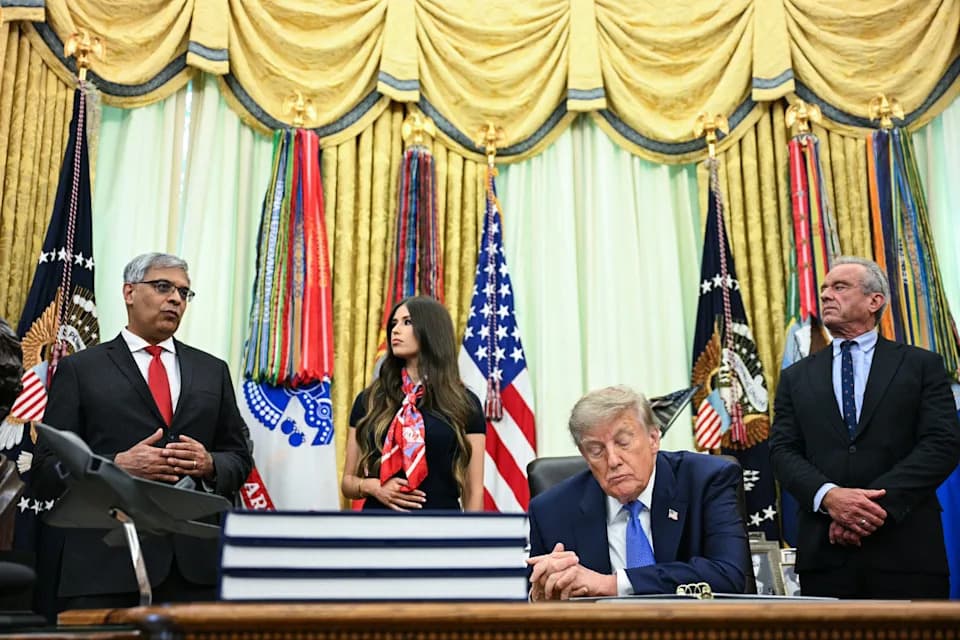
President Donald Trump appeared slightly slumped with his eyes closed as the director of the National Institutes of Health (NIH) Jay Bhattacharya speaks before Trump signed an executive order calling for more research and flexibility on vaccines, in the Oval Office of the White House on August 10, 2026. / Jim Watson/AFP via Getty Images
Dr. Jonathan Reiner, a cardiologist and professor of medicine and surgery at George Washington University who once served as former Vice President Dick Cheney's cardiologist, publicly pressed the White House for clear answers about President Donald Trump’s health in a New York Times op-ed and subsequent media appearances.
In his op-ed, Reiner listed seven specific questions for the administration to address after observers noted several visible signs — including recurring bruises on the president’s hands, swollen ankles and repeated public episodes in which Trump appeared to struggle to stay awake. Trump, 80, has prompted growing scrutiny since returning to office.
The White House responded with a terse statement from spokesperson Davis Ingle that attacked Reiner personally, calling him an “a**-hat” for offering what the statement labeled armchair diagnosis. Reiner pushed back on CNN, noting he had not offered a medical diagnosis but was asking measurable, observable questions and seeking transparency for the public.
Reiner: “I haven't made any diagnosis. I simply ask questions about things that are visible to everyone… If the White House wants to provide the diagnosis for why the president has bruises on his hands, swelling in his legs, and particularly why he struggles to stay awake, I'm all ears.”
The White House has suggested that some bruising could result from frequent handshakes combined with aspirin use. Reiner called those explanations inadequate and said the pattern of signs — taken together — is “troubling” and “disturbing to see.”
Reiner also pointed out that the White House previously recognized his service to its medical unit with a certificate last year, a detail he cited to underscore the disconnect between the administration’s praise and its current dismissal of his concerns.
Why This Matters
Reiner and others argue that, in a representative democracy, the public has a legitimate interest in the health of a head of state whose decisions carry significant consequences. He called for clear, factual medical information rather than opaque or dismissive statements, saying unanswered questions about the president’s condition justify public explanation.
For now, the debate centers on whether visible signs warrant fuller disclosure and who should provide it: the White House, the president’s medical team, or independent experts. Reiner maintains he is seeking transparency, not political point-scoring.
Help us improve.